
We had a deadline coming fast.
I was helping source parts for a small batch of custom metal brackets.
I chose metal injection molding because I thought it would be quicker. I didn’t ask enough questions.
It ended up slowing everything down.
We should’ve used die casting. That one decision set us back, and cost us more than time.
If you’re reading this, you’re probably trying to avoid a mistake like that. Maybe you’re building a new product. Maybe you’re in charge of picking a supplier. Or maybe you’re just learning how this all works for your own design.
Whatever the reason, you need a clear answer. Which one should you use, die casting or metal injection molding?
I’ve worked through this decision many times now, across different roles and projects. In this article, I’ll explain what I’ve learned:
- how each process works
- when to use one over the other
- what they cost
- and what to watch out for
My goal is simple, to help you pick the right process with confidence.
Let’s dive in!
1. What is Metal Injection Molding (MIM)
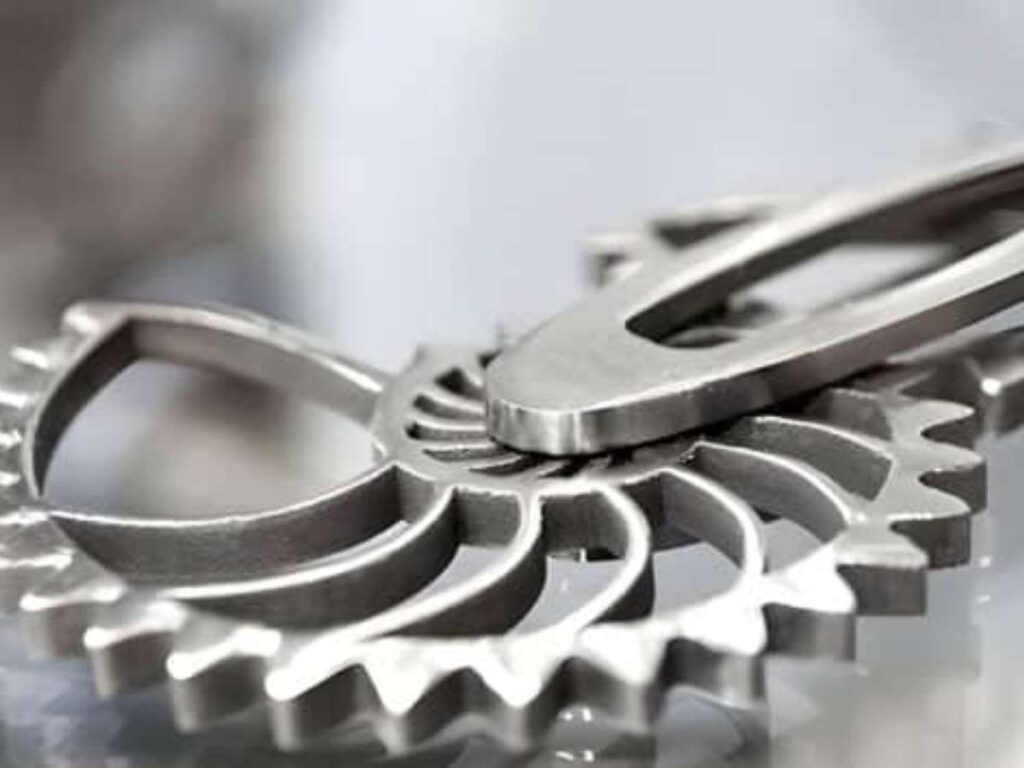
You know that feeling when you’re holding a part so clean and sharp, you wonder if it was cut by a laser?
That’s what I thought the first time I held a MIM component. It was tiny, but the edges were crisp and it needed zero finishing. Honestly, I was shocked.
Metal Injection Molding (MIM) is what gives you that kind of result. It combines the best of 2 worlds: the design flexibility of plastic injection molding, and the strength of solid metal. You get the freedom to design complex, high-performance parts—without the usual price tag of precision machining.
And yes, at MachMaster they offer full-service MIM production, engineered for high accuracy and scalability.
How It Works
The MIM process involves four key stages:
- Mixing: Fine metal powders are blended with a thermoplastic binder to form a moldable feedstock.
- Injection Molding: This feedstock is injected into a mold, just like plastic.
- Debinding: The binder is removed using heat or solvents, leaving a porous part.
- Sintering: The part is heated to near its melting point, fusing the metal particles into a dense, solid component.
The result is a fully metal part with mechanical properties comparable to wrought metals—often ready to use without further machining.
Key Characteristics
MIM is known for its ability to produce parts that are:
- Suited for Small, Intricate Components: Ideal for features that are too complex or costly to machine.
- High Precision and Surface Finish: Tolerances as tight as ±0.3% and fine surface finishes, often eliminating the need for secondary finishing.
- Complex Geometries Achievable: Supports undercuts, threads, thin walls, and internal features not possible with casting or CNC.
Common Applications
You’ll find MIM parts in many high-performance industries, including:
- Medical Instruments: Surgical tools, orthodontic brackets, minimally invasive devices
- Watch Components: Gears, clasps, and detailed housings
- Firearm Parts: Trigger components, safety levers, slide locks
- Automotive Sensors: Sensor housings, mounts, small structural parts
2. What is Die Casting
You ever walk through a factory and feel the rhythm of production?
I remember standing beside a die casting machine for the first time—metal flying, parts dropping like clockwork. Every 6 seconds, another solid, ready-to-use component slid off the line. Clean. Reliable. Fast.
That’s when I knew: this is the go-to process when speed and volume matter.
If you’re building products that need repeatability, strength, and scale, die casting is likely already on your radar. And if it’s not—it should be.
At MachMaster, they help you move from prototype to high-volume die casting with speed and precision.
How it Works
Here’s the simple version:
You take molten metal, shoot it into a hardened steel mold at high pressure, and let it cool—fast.
That’s it at a glance. But under the hood?
- High-Pressure Metal Injection: Molten aluminum, zinc, or magnesium is injected into the mold using extreme pressure for precise fill.
- Rapid Solidification: The metal cools and hardens within seconds, locking in the desired shape.
- Ejection and Trimming: Once solid, the part is ejected, trimmed, and optionally sent for surface finishing or machining.
You get parts that are strong, accurate, and repeatable—with cycle times that make production planners very, very happy.
Key Characteristics
Die casting isn’t delicate. It’s rugged, reliable, and efficient—the workhorse of high-volume metal manufacturing.
It’s especially useful when:
- Ideal for Medium to Large Parts: Die casting excels when you’re producing structural or load-bearing components at scale.
- Excellent Dimensional Stability: Great for parts that need to maintain consistent shape and size across large production runs.
- Good Surface Finish with Post-Machining: Produces clean surfaces, but often requires trimming, deburring, or machining on critical areas.
Unlike MIM, which leans into micro-precision, die casting plays its strength in scale and structure. You won’t get mirror-smooth finishes out of the gate—but what you will get is speed, and a ton of it.
Common Applications
You’ve seen die cast parts all around you—even if you didn’t know it.
They’re hiding in your car, your laptop, your appliances. And here’s where they dominate:
- Automotive Housings: Engine covers, transmission casings, heat-dissipating brackets
- Consumer Electronics Frames: Laptop shells, speaker bodies, smart device enclosures
- Appliance Hardware: Blenders, dishwashers, vacuum components—anything that’s metal and molded
A client once came to us in a panic—they needed 25,000 power tool housings yesterday.
MIM was off the table. CNC? Too slow. But with die casting, we helped them set up a second cavity, doubled production speed, and hit their shipment window without compromising quality.
3. Production Volume and Lead Time
If there’s one thing I’ve learned after years in production planning, it’s this: choosing the right manufacturing process can make or break your timeline—and your budget.
Whether you’re scaling to millions or launching a custom batch of 5,000 units, understanding how Metal Injection Molding (MIM) and Die Casting handle volume and lead times is critical.
Let’s break it down:
Metal Injection Molding (MIM)
MIM thrives in medium-to-high production volumes, but it isn’t a fast starter.
- Tooling Lead Time: 6–12 weeks, sometimes longer for complex geometries
- Cycle Time: Longer due to the multi-stage process—inject, debind, sinter
- Output Pace: Lower daily volume compared to die casting
- Best Fit: 10,000–500,000 parts per year where precision and complexity matter
That said, once you’ve cleared the setup and sintering phases, MIM becomes a cost-effective workhorse for precision parts that would otherwise require expensive machining or assembly.
I’ve seen projects where the up-front timeline hurt us, but the per-part savings over time more than made up for it. If your launch isn’t rushed and quality is king, MIM pays off in the long run.
Die Casting
Die casting is all about volume and speed—it’s built for it.
- Tooling Lead Time: 4–8 weeks, generally faster due to fewer post-processing stages
- Cycle Time: Often measured in seconds—seriously
- Output Pace: Thousands of parts per shift, depending on size and complexity
- Best Fit: 100,000+ units annually, especially for larger parts with simpler geometries
If you’re in automotive, consumer electronics, or any industry where volume equals value, die casting gives you scale with speed. It’s also ideal when your production line demands consistent, repeatable parts on tight timelines.
One of our partners once needed 50,000 gearbox housings within six weeks. MIM couldn’t touch that timeline. Die casting delivered, and even allowed a second mold to double capacity when needed.
4. Surface Finish and Post-Processing
When your part comes out of the mold, it’s not just about function—it’s about finish. Whether it’s visible to the end user or buried inside a complex assembly, surface quality can affect performance, fit, and even brand perception.
If you’ve ever had a part rejected for burrs, pits, or rough edges, you know exactly what I’m talking about.
Let’s compare how Metal Injection Molding (MIM) and Die Casting perform when it comes to surface finish and the steps required after molding.
Metal Injection Molding (MIM)
MIM produces a naturally smooth, clean surface finish—often better than what you’d get from machining or casting right out of the gate.
- Surface Finish Quality: Around 1–2 µm Ra (fine enough for many visual and functional surfaces)
- Flash or Burrs: Minimal to none, especially with proper mold design
- Post-Processing Needs: Often limited to debinding residue removal or optional heat treatment/coating
- Appearance: Matte gray to dark metal—easy to polish, coat, or plate
I once held a freshly sintered MIM part that looked showroom-ready with zero polishing. That was the moment I realized how much cost and time can be saved by reducing or skipping secondary operations.
Die Casting
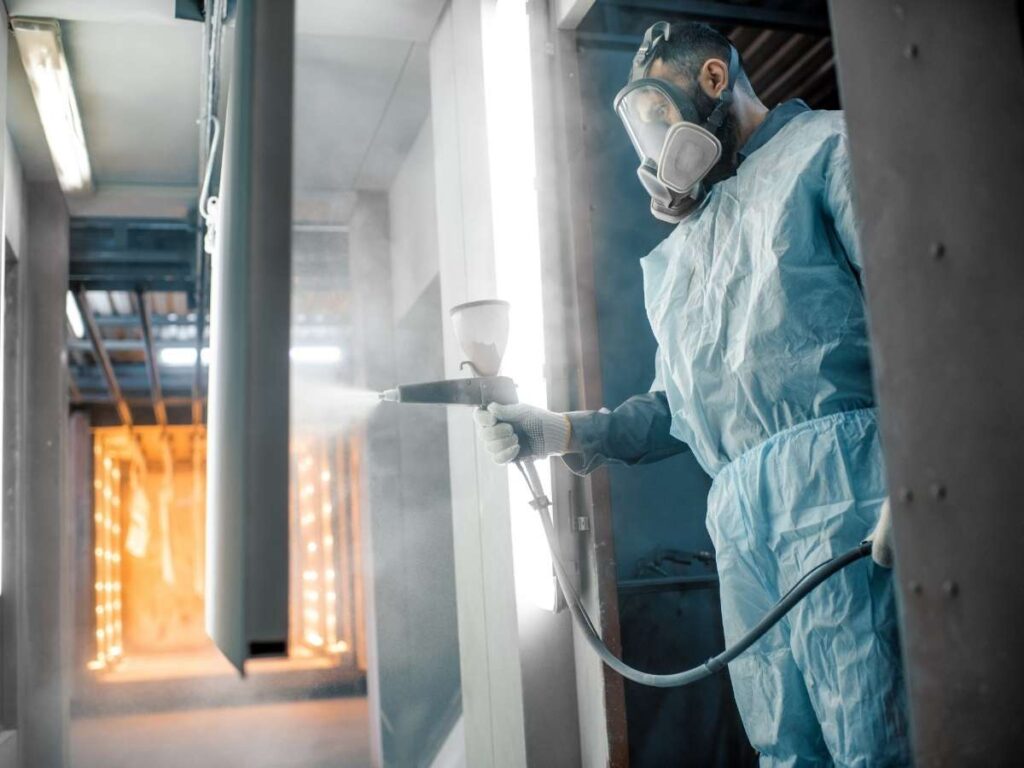
Die casting also delivers a good surface finish—especially for higher-end tools—but it’s not always ready to ship straight off the machine.
- Surface Finish Quality: Typically 2–4 µm Ra, depending on alloy and mold condition
- Flash or Burrs: Common—especially at parting lines, vents, and ejector pin locations
- Post-Processing Needs: Often requires trimming, deburring, machining, or surface treatments
- Appearance: Silvery, with slightly grainy texture—can be anodized, painted, or powder coated
In one project, we underestimated how much post-machining our die cast parts would need. That mistake set us back two weeks.
Lesson learned: always account for the finishing steps when quoting lead times.
5. Materials and Mechanical Properties
The material you choose, and how the process treats it, has a major impact on performance, durability, and cost. Whether your part needs to withstand high stress, resist corrosion, or meet regulatory standards, your choice between Metal Injection Molding (MIM) and Die Casting can make all the difference.
Below is a detailed comparison to help you understand how each process handles materials and what mechanical properties you can expect:
| Factor | Metal Injection Molding (MIM) | Die Casting |
| Material Options | Wide range of high-performance metals: • Stainless steel (17-4PH, 316L) • Tool steels • Titanium alloys • Copper alloys • Cobalt-chrome • Inconel | Limited to non-ferrous metals with low melting points: • Zinc alloys • Aluminum alloys • Magnesium alloys • Copper (limited use) |
| Tensile Strength | High—comparable to wrought materials: • Up to 1,300 MPa depending on alloy | Moderate to high, but lower than MIM: • Typically 200–400 MPa for aluminum • Up to ~500 MPa for zinc |
| Elongation / Ductility | Varies by alloy, generally lower than wrought: • 1%–10% typical | Higher ductility in some alloys: • Zinc ~10–20% • Magnesium ~6–15% |
| Density / Porosity | High density (up to 98–99% of wrought) Porosity minimal with proper sintering | Porosity more common due to trapped air or shrinkage Can affect strength and surface quality |
| Corrosion Resistance | Excellent, especially with stainless and titanium alloys Passivation or coating optional | Good to moderate, depending on alloy Protective coatings often required |
| Thermal & Electrical Conductivity | Moderate depending on alloy Not ideal for heat sinks or conductive components | Higher, especially with aluminum and copper alloys Commonly used for heat-dissipating parts |
| Hardness / Wear Resistance | Excellent, especially with tool steels or post-sintering treatments | Varies—zinc is relatively hard, but aluminum/magnesium may require surface treatment |
| Fatigue Strength | High, especially in fully dense parts Used in high-performance mechanical assemblies | Lower than MIM Micro-porosity and inclusions can reduce fatigue life |
| Post-Treatment Options | Heat treatment, HIP (Hot Isostatic Pressing), plating, passivation | Machining, shot blasting, anodizing, powder coating, painting |
Takeaway:
- MIM gives you access to premium alloys that you simply can’t use with die casting. If your part must meet strict performance, strength, or corrosion resistance standards, MIM wins, no contest.
- Die casting materials are faster and cheaper to work with, especially for applications where high volume and moderate mechanical strength are acceptable.
I’ve worked on projects where MIM gave us the material reliability of a forged part, while still hitting volume goals. But I’ve also seen die cast housings perform beautifully in millions of automotive units with zero issues because they didn’t need extreme strength, just speed, consistency, and decent durability.
6. Cost Analysis
Cost isn’t just about price per part. It’s tooling. It’s time. It’s a waste. And most importantly, it’s about the long game. One method might be cheaper per unit, but if it delays your launch or needs more post-processing, it can bleed your budget dry.
Let’s unpack the real costs behind Metal Injection Molding (MIM) and Die Casting across five major dimensions that every smart manufacturing decision should be built on.
Tooling and Setup Costs
Tooling is your first big investment, and for both methods, it’s not cheap.
- MIM: Tooling is highly customized and often more expensive due to tight tolerances and precise cavity requirements. You may also need separate fixtures for debinding and sintering. Range: $15,000–$75,000+ depending on complexity
- Die Casting: Tooling is also expensive, especially for high-pressure machines and hardened steel dies. However, fewer steps mean fewer total tools. Range: $10,000–$60,000+
If you’re producing at volume, that tooling cost spreads out fast. But for small batches or frequent design changes? It stings.
Per-Unit Manufacturing Cost
Here’s where volume starts to shift the math.
- MIM: Costs drop significantly at medium-to-high volumes, especially for small, complex parts. Per-unit pricing can go as low as $1–$5 for bulk runs, but higher for low-volume.
Best For: precision parts with high geometric complexity
- Die Casting: Offers a much lower per-unit cost for high-volume production. Once tooling is in place, parts can be produced for pennies to a few dollars each, especially for aluminum or zinc components.
Best for: large production runs with simpler geometries
I’ve seen MIM parts that cost $9 in low-volume suddenly drop to $2.50 when scaled. But if you’re ordering 500,000 bracket housings? Die casting wins every time.
Post-Processing and Secondary Operations
This is where many underestimate the cost.
- MIM: Often near-net-shape, requiring little to no machining. Minimal post-processing (cleaning, coating) means fewer labor hours and faster throughput.
- Die Casting: Frequently requires trimming, deburring, surface treatments, and sometimes precision machining, especially for mating surfaces or tapped holes.
Always budget for finishing. The part price might look good on paper, but if every unit needs 10 minutes on a lathe, your margins disappear.
Total Cost of Ownership (TCO)
It’s not just about today—it’s about lifetime cost over your product cycle.
- MIM: Higher tooling and longer setup, but lower labor, less waste, and minimal rework. If precision and reliability are non-negotiable, MIM can reduce total cost.
- Die Casting: Faster to scale, cheaper per part, and easier to find suppliers globally. If your part tolerances are flexible, TCO stays low over massive volumes.
Choose MIM when your part is complex, tolerance-critical, and produced in mid-to-high volumes. Choose Die Casting when speed, simplicity, and scale are top priorities.
7. Tips on How to Choose Between MIM and Die Casting
By now, you’ve seen the numbers, the finish, the materials, and the timelines. But even with all that detail, one question remains: How do I make the right call for my actual product?
This section is where it all comes together. I’ve worked with business owners and production teams who wasted months choosing the wrong process, not because they lacked data, but because they lacked perspective.
Let’s walk through the key factors that really matter when choosing between Metal Injection Molding (MIM) and Die Casting, so you can make the decision confidently.
#1 Part Size and Design Complexity
If your part is small, highly detailed, or has internal features that would be impossible to machine, it’s probably a fit for MIM. The process excels in complexity.
On the other hand, if you’re dealing with something larger or more structurally simple, like a housing or a bracket, die casting will give you the speed and scale you need without overcomplicating things.
I’ve seen clients try to force simple parts into MIM, only to realize the added cost wasn’t justified. Your part’s geometry should guide your process, not the other way around.
#2 Tolerance and Surface Expectations
Precision can be expensive, but not with MIM. If your part needs tight tolerances and a near-finished surface right out of the mold, MIM is often the better fit. You’ll spend less on secondary machining and less on rejected parts.
Die casting, by contrast, does offer a decent surface and repeatability, but it often needs deburring, trimming, or light machining—especially at critical interfaces.
It’s not just about how the part looks—it’s about how well it fits with everything else in your system. Tolerance stack-up issues? That’s where MIM really shines.
#3 Production Volume and Scale
Die casting was built for volume. If you’re manufacturing hundreds of thousands or even millions of units, and you want consistent output at the lowest per-unit cost, it’s hard to beat.
MIM becomes economically viable somewhere between 10,000 and 100,000 parts per year, especially when complexity is high. Below that range? You might want to consider CNC or 3D metal printing.
One of the biggest mistakes I’ve seen is choosing MIM for a short-run project, only to get hit by slow tooling ROI and long lead times. Know your volume—and plan realistically.
#4 Material Requirements
This one’s simple but critical. If your part needs to be made from stainless steel, titanium, tool steel, or other high-performance metals, die casting isn’t an option. MIM offers a much wider material library, especially when corrosion resistance or strength-to-weight ratio are key.
Die casting materials are limited to non-ferrous, low-melting-point alloys like aluminum, zinc, and magnesium. They’re great—but not always enough.
Conclusion
That bracket job I told you about?
We fixed it, but it took time, money, and trust to recover.
Now, you know better.
You’ve seen how metal injection molding vs die casting stack up.
You know what they cost, how they work, and when to use them.
Choosing the right process starts here. Don’t guess like I did.
Read back through the key parts if you need to. Then, take the next step for your project.
Ready to choose the right method with confidence?
Let’s talk.
Contact us today. We’ve been where you are.
Explore More of Our Resources
If you’re searching for more choices, explore our full collection of products. We’ve picked out some great options for you:
- Anodizing Service
- Cnc Milling Service
- Cnc Turning Service
- Injection Molding Service
- Cnc Machining Service
Want to learn more? Here are some articles filled with valuable tips and information to guide you further:
Still haven’t found what you’re looking for? Don’t hesitate to contact us. We’re available around the clock to assist you.