
I still remember walking into the factory on my first day.
The heat hit me first. Then the noise—machines pounding away—and a supervisor rattling off terms like “die casting” and “injection molding” like they were basic vocabulary.
I nodded along, pretending to get it. Truth was, I had no clue what he meant.
If you’re in that same boat right now, don’t worry. You’re not alone.
Both processes use molds. Both shape parts. But they work differently—and choosing the wrong one can wreck your budget, delay production, or leave you with a part that just doesn’t do the job.
Over the years, I’ve worked with product designers, machinists, and suppliers who’ve made these choices hundreds of times. And I’ve seen how the right call saves time, money, and headaches.
This article breaks it all down—clearly and simply.
- What is die casting?
- What is injection molding?
- Which one fits your part, your budget, and your timeline?
By the end, you’ll know what each process does—and which one to pick with confidence.
Let’s get started!
Quick Comparison Chart
Before we dig deeper, here’s a quick side-by-side to help you compare die casting and injection molding at a glance.
| Category | Die Casting | Injection Molding |
| Material Type | Metals like aluminum, zinc, magnesium | Plastics like ABS, PP, PC, Nylon |
| Part Strength | High—strong under load and heat | Moderate—good for flexible or impact-resistant parts |
| Surface Finish | Good, but often needs post-machining | Smooth with high detail right out of the mold |
| Wall Thickness | Typically 2–4 mm | Can go below 1 mm |
| Design Flexibility | Limited for undercuts, tighter draft angles needed | High—can handle complex shapes and inserts |
| Tolerances | ±0.1 mm (typical) | ±0.01 mm (with precision tooling) |
| Tooling Cost | $$20,000$$100,000+ | $$3,000$$50,000 (lower for prototypes) |
| Lead Time | 6–12 weeks (longer setup) | 2–4 weeks (faster with rapid tooling) |
| Tool Lifespan | 50,000–100,000 shots (heat wear over time) | Up to 500,000+ shots (with good maintenance) |
| Production Volume | Best for high volumes (50,000+ parts) | Works for low to high volumes |
| Ideal For | Structural metal parts, engine housings, brackets | Plastic casings, consumer goods, packaging, medical parts |
Now that you’ve seen the overview, let’s break down each method in detail.
1. What Is Die Casting?
When I first saw a die casting machine in action, I was amazed.
Hot, glowing metal shot into a steel mold. A few seconds later, out came a solid part—clean, smooth, and detailed.
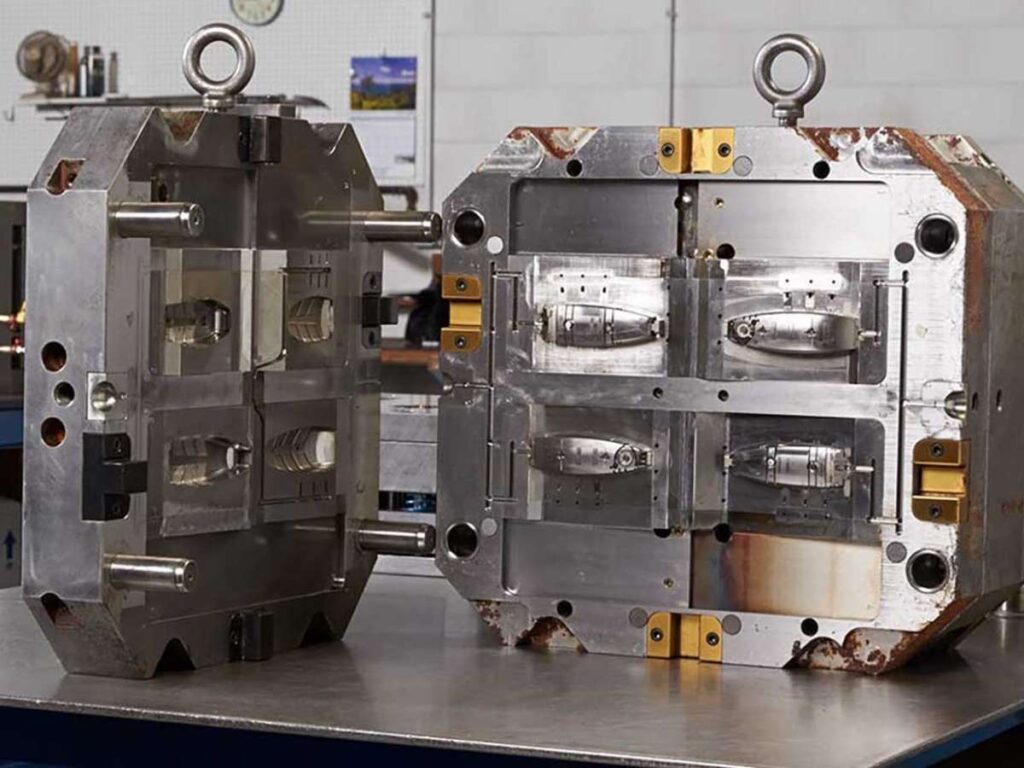
Die casting is a process where molten metal is forced into a mold using high pressure. The mold is made from hardened steel. The metal fills every corner, then cools and hardens into shape.
In simple words:
- Die casting turns liquid metal into strong, precise parts—fast.
At MachMaster, we’ve used die casting to produce thousands of parts that meet tight tolerances right out of the mold. It saves time, cuts costs, and avoids extra machining. That’s one reason many of our clients keep coming back for repeat production.
Not all metals work with this process. The most common ones are:
- Aluminum: light, strong, and corrosion-resistant
- Zinc: very easy to cast, great for small parts
- Magnesium: lightweight with good strength
These metals melt at lower temperatures than steel, so they’re easier on the mold and faster to work with.
You’ve probably seen die-cast parts without even knowing it. They’re everywhere:
- Automotive: engine blocks, gear housings, transmission covers
- Electronics: metal cases, heat sinks, structural frames
- Everyday items: door handles, locks, kitchen tools
Why do so many industries use it?
- Parts come out nearly finished
- Very little machining is needed
- They’re strong and last a long time
Die casting is simple, fast, and reliable—and it shows in the final part.
2. What Is Injection Molding?
I still remember holding my first molded plastic part—warm from the mold, sharp edges, no sanding needed. Just perfect right out of the machine.
That’s what injection molding does. It turns melted plastic into clean, detailed parts—fast and repeatable, whether you need ten or ten thousand.
Injection molding is a process where molten plastic is injected into a mold cavity. It cools, hardens, and then pops out as a solid part shaped exactly like the mold.
At MachMaster, we’ve used this process to produce everything from test-run prototypes to high-volume production parts. It’s especially useful when our customers need fast turnarounds and consistent quality across every batch.
You’ve got options depending on your part’s job. Here are some common plastics used in injection molding:
- ABS (Acrylonitrile Butadiene Styrene): strong and impact-resistant
- PP (Polypropylene): light, flexible, used in containers
- PC (Polycarbonate): clear and tough, often used for covers
- Nylon: great for gears and mechanical parts
Each type melts differently and gives you a different finish or strength.
Injection-molded plastic is all around you. These are some of the most common uses:
- Consumer electronics: phone cases, chargers, remote controls
- Food packaging: lids, caps, and tubs
- Medical parts: syringes, handles, test kit enclosures
One time, I helped someone source a plastic housing for a sensor. The vents, logo, and screw holes were all made in one mold—no trimming or extra work.
Injection molding makes it possible to get complex shapes quickly, with little waste and a smooth finish.
3. Tooling and Production Setup
Tooling is where most projects get real: it’s the step where ideas meet steel, and getting it wrong can cost you time, money, and peace of mind.
Tooling Cost
Tooling refers to the mold or die that shapes your part.
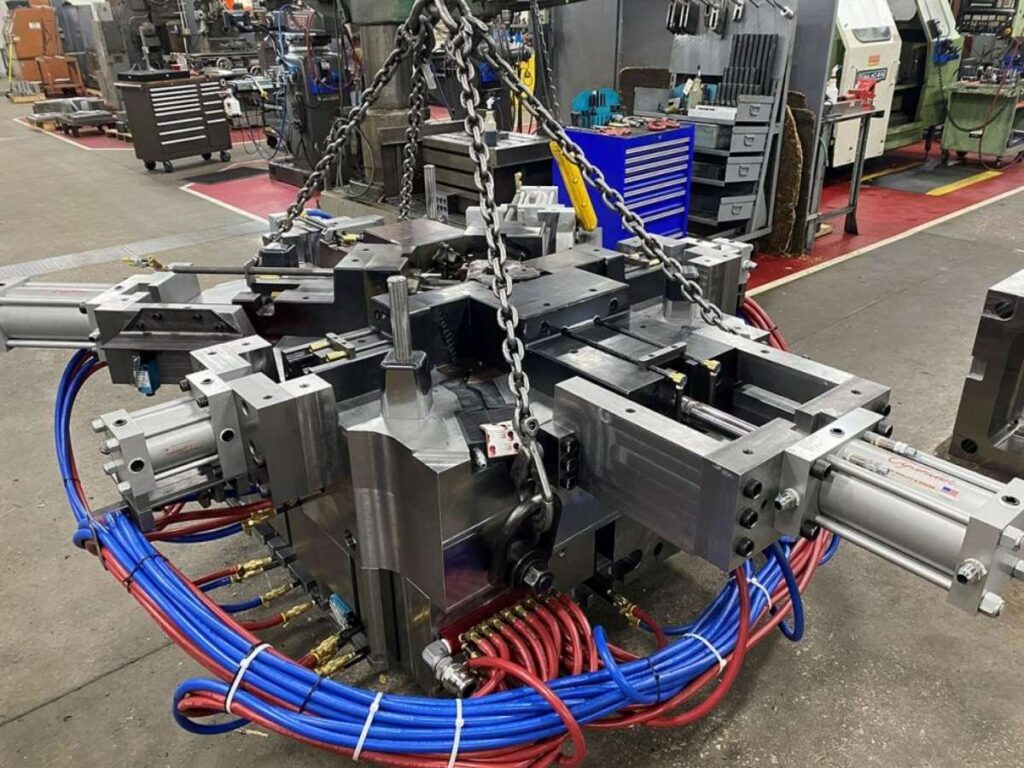
Die casting tools are built to take serious heat and pressure:
- Made from hardened steel
- Designed to handle molten metal
- Cost: $20,000–$100,000+ depending on size and part detail
Why so high? Because the tool has to survive extreme stress—cycle after cycle.
Injection molding tools, in most cases, cost less:
- Mold temperature is lower
- Plastic causes less wear
- Cost: $3,000–$50,000, with smaller or prototype molds going even lower
If you’re starting with a limited budget, injection molding may be easier to manage.
Lead Time
This is the time it takes to build the tool before production starts.
Die casting has a longer wait:
- Steel dies take time to machine and heat-treat
- Expect 6 to 12 weeks before first parts
Injection molding is faster:
- Especially when using aluminum tools for testing
- Some shops can deliver molds in 2 to 4 weeks
If you need to launch fast or test early, that shorter lead time matters.
Tool Lifespan & Maintenance
How long will your tool last? That depends on the process and how you treat it.
Die casting tools wear down faster:
- Heat and metal flow cause cracks and erosion
- Expect around 50,000 to 100,000 cycles
Injection molds usually last longer:
- Plastic is easier on the tool
- With proper material and care, you can get 500,000+ cycles
Still, both types need maintenance: Clean them, inspect them, and repair them when needed—or you’ll risk downtime.
4. Design Flexibility & Limitations
Designing a part sounds easy—until you have to match your ideas to what the machine can actually make.
I’ve been there: great-looking models that just couldn’t be molded or cast the way we planned.
Understanding the limits of each process can save you time, money, and redesign headaches.
Wall Thickness
Wall thickness matters more than most people think.
If it’s too thin, the part won’t fill. Too thick, and it may warp or crack.
Injection molding lets you go thinner:
- Walls can be under 1 mm if the material flows well
- Great for lightweight plastic parts like casings or clips
Die casting needs thicker walls:
- Most designs use 2 mm to 4 mm thickness
- Thin walls may cool too fast or not fill properly
If your design has thin, delicate sections, plastic molding gives you more freedom.
Draft Angles & Undercuts
Draft angles help your part release from the mold.
No draft? The part may stick or get damaged.
Injection molding allows more flexibility:
- Draft angles: as little as 1°, sometimes less with smooth surfaces
- Inserts or slides can handle undercuts, ribs, and fine details
Die casting is stricter:
- Needs larger draft angles, often 2° or more
- Undercuts are limited because of high pressure and tool wear
If your design has deep pockets, side holes, or clips—molding might be a better fit.
Tolerance and Repeatability
Tolerance means how much variation is allowed in part size.
Too loose, and parts won’t fit together. Too tight, and you’ll spend more on tooling.
Die casting offers decent precision:
- Common tolerance: ±0.1 mm
- Good enough for most housings and brackets
Injection molding goes tighter:
- With high-precision tools, ±0.01 mm is possible
- Used for parts like gears, lenses, or medical parts
5. Surface Finish, Strength & Tolerance Comparison
Surface quality, strength, and tolerance might sound like small details—but they can decide if your part works or fails.
I’ve seen glossy samples that looked perfect but cracked under stress, and strong parts that needed hours of post-processing just to clean up.
Surface Finish
If looks matter to your part, this is the section to focus on.
Die casting gives you a good finish:
- Surfaces come out smooth, often with fine grain
- But critical spots—like holes or mating faces—often need machining
- Expect some tool marks or parting lines, especially on complex shapes
Injection molding is better for clean visuals:
- Fine textures, patterns, and logos can be molded right in
- No extra polishing needed for most plastic parts
- Good for visible products like cases, caps, or packaging
Strength
Now let’s talk about how tough your part needs to be.
Die casting wins in raw strength:
- Made from metals like aluminum or zinc
- Works well for parts that carry weight or face mechanical stress
- Ideal for engine housings, brackets, and structural frames
Injection molding isn’t as strong—but it has its own benefits:
- Some plastics bend instead of breaking (like ABS or Nylon)
- Good for snap-fit parts, wearable items, or flexible enclosures
Tolerance Consistency
This is about how close your parts stay to the original design—every single time.
Injection molding offers higher repeatability:
- Tighter control in small parts
- Good for gears, clips, and precision plastic parts
Die casting is solid, but:
- Heat and tool wear can shift dimensions over time
- Best for larger parts where small changes don’t hurt performance
6. Production Volume Suitability
Choosing the right process isn’t just about design or materials—it’s also about how many parts you need. I’ve seen people spend thousands on a die, only to make 500 parts. That’s a tough pill to swallow.
Low-Volume Production
If you’re starting small, injection molding gives you more breathing room. You can use aluminum molds or soft tooling to speed things up and cut costs.
- Good for 100 to 10,000 parts
- Quick turnaround
- Lower upfront investment
I once worked with a client who needed 2,000 plastic housings.
We used a rapid tooling service. The parts were done in two weeks—and the mold paid for itself in the first batch.
Die casting, on the other hand, is harder to justify for low volumes. The dies are expensive. The setup takes longer. And the payback just isn’t there unless you’re making a lot.
- Less cost-effective under 10,000 parts
- Dies may cost $20,000+, even for simple parts
Unless your part needs to be metal for strength or heat resistance, molding is usually the better choice for short runs.
High-Volume Production
This is where die casting shines. Once the tooling is paid for, the part cost drops fast.
- Best for runs of 50,000 parts or more
- High output speed
- Great for automotive, appliance, or heavy-duty parts
Injection molding also works great at scale. Tool wear is lower. Machines can run for weeks. And part cost stays low.
- Works well from 10,000 to 1,000,000+ parts
- Especially good for consumer goods, packaging, or electronics
7. How to Choose Between Die Casting and Injection Molding
In many projects, the choice between die casting and injection molding creates delays—not because the team isn’t skilled, but because the fit between design and process isn’t always obvious at first.
Across sourcing, prototyping, and full-scale production, outcomes tend to shift depending on geometry, surface expectations, production volume, and material needs.
Here’s how those factors usually shape the decision between the two processes.
Geometry
Injection molding tends to align better with detailed geometry.
- Supports undercuts, snap fits, and inserts
- Allows tool actions like side pulls or sliders
- Often used for parts with tight features and fine detail
Die casting is more commonly applied when part geometry is straightforward.
- Suits smooth, solid shapes with clean outlines
- Fewer moving tool elements are needed
- Often preferred for wall thicknesses that stay uniform
Appearance
Injection-moldedparts typically meet surface expectations straight from the tool.
- Textures, logos, and fine surface patterns form cleanly
- Finishing steps are rarely needed
- Well-suited for consumer-facing products or parts with visual standards
Die cast parts often go through a second round of finishing.
- Tool marks and seams may be visible as-cast
- Post-processing like polishing or machining is common
- Surface expectations influence lead time and cost
Quantity
Injection molding usually fits low to mid-volume manufacturing needs.
- Shorter lead times for tool builds
- Tooling costs are generally lower
- Useful for early production cycles or market testing
Die casting becomes more cost-effective at higher volumes.
- Tooling is more complex and expensive
- Better suited to long production runs where the setup cost is recovered over time
- Fewer design changes once production begins
Material
Die casting is used when the part must be metal.
- Provides high strength, heat resistance, and wear durability
- Common in aluminum, zinc, or magnesium parts
- Often found in mechanical housings or support components
Injection molding applies when plastics are acceptable—or preferred.
- Allows for lighter, flexible materials
- Offers design freedom and faster molding cycles
- Often chosen for ease of handling and assembly in multi-part system
Understanding these factors helps set the direction early—before quoting, tooling, or testing begins. While each method has strengths, their fit depends heavily on the part itself and how it needs to perform in production.
Conclusion
I started this journey confused by quotes, unsure which process fits.
Now you’ve got the full picture—how die casting and injection molding compare in cost, detail, volume, and material.
Use this guide when you need clarity. Revisit each section. Rethink your specs.
Your product deserves the right start. Don’t wait until the tooling is wrong or the budget’s blown—start smart.
What’s holding your part back right now?
Contact us today we’ll help you get it right the first time.
Explore More of Our Resources
If you’re searching for more choices, explore our full collection of products. We’ve picked out some great options for you:
- Anodizing Service
- Cnc Milling Service
- Cnc Turning Service
- Injection Molding Service
- Cnc Machining Service
Want to learn more? Here are some articles filled with valuable tips and information to guide you further:
Still haven’t found what you’re looking for? Don’t hesitate to contact us. We’re available around the clock to assist you.