
I used to get stuck comparing surface finishes.
Not because I didn’t care, but because every supplier said something different.
One would push chrome. Another insisted zinc was “good enough.” No one explained why.
That left me guessing. And the wrong guess? It cost time, money, and a few angry follow-up emails.
Now I help clients avoid that. I’ve spent years working with teams that make and plate parts. I’ve tested both options. I’ve learned what holds up, and what just looks good for a while.
This article shares what I’ve seen firsthand.
You’ll learn how chrome and zinc plating really perform. How they compare in cost. And when to use each one.
Simple. Honest. Practical.
Let’s dive into it!
1. What is Chrome Plating
Chrome plating, also known as chromium plating, is a finishing process where a thin layer of chromium is electroplated onto the surface of a metal or plastic part.
This layer improves surface hardness, enhances appearance, and provides moderate corrosion protection depending on the application. It’s a widely used technique in both decorative and industrial settings.
Types of Chrome Plating
Through my experience, I’ve seen companies struggle because they didn’t know there are different types of chrome. One client used decorative chrome for a high-friction mechanical part, it looked great, until it failed under pressure. That taught me to always match the type of chrome to the job.
Decorative Chrome Plating
- Purpose: Aesthetic enhancement and light corrosion resistance
- Layer Thickness: Typically around 0.005 mm (5 microns)
- Base Layer: Usually applied over nickel or copper to achieve a bright, mirror-like finish
- Common Use: Found in consumer goods and commercial products where appearance is key
- Examples: Faucet fixtures, motorcycle parts, car bumpers, household appliances
Hard Chrome Plating (Also Called Industrial Chrome)
- Purpose: Improve wear resistance, surface hardness, and durability
- Layer Thickness: Ranges from 0.025 mm to over 0.25 mm (25–250 microns)
- Characteristics: Has a duller finish than decorative chrome but is extremely tough
- Common Use: Ideal for components that face friction, heavy load, or mechanical stress
- Examples: Hydraulic rods, pistons, molds, rollers, engine components
At MachMaster, we also provide professional chrome plating services for both industrial and decorative applications.
Common Applications of Chrome Plating
Whether for its durability or visual appeal, chrome plating is used across several industries:
- Automotive Industry: Wheels, exhaust tips, trim, bumpers, engine parts
- Tool Manufacturing: Wrenches, sockets, cutting tools for corrosion and wear resistance
- Consumer Appliances: Handles, frames, and aesthetic elements on kitchen or bathroom products
- Industrial Machinery: Hydraulic cylinders, printing rollers, piston rods, shafts
2. What is Zinc Plating
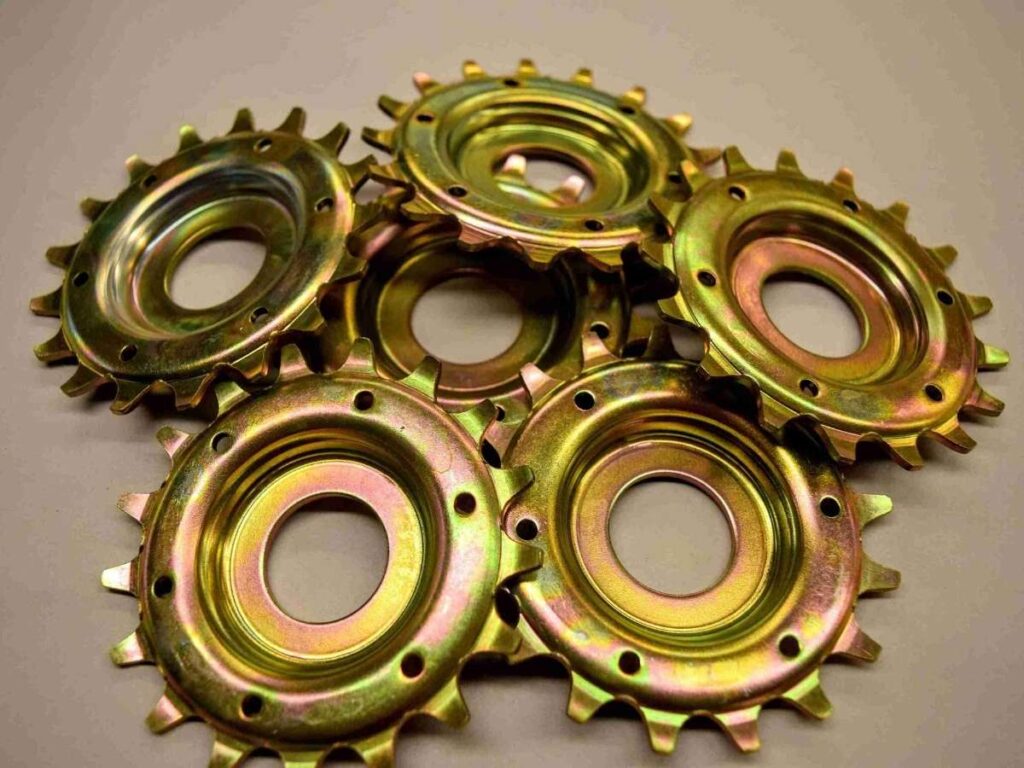
Zinc plating is a widely used electroplating process that involves coating a metal surface with a thin layer of zinc. The main purpose of zinc plating is to protect the base metal from corrosion by creating a sacrificial barrier, meaning the zinc layer will corrode first, shielding the metal beneath it.
This process is especially popular in industrial manufacturing and fastener production, where low-cost, large-volume protection is needed without sacrificing basic appearance or function.
Types of Zinc Plating Finishes
The final appearance and performance of zinc plating can vary depending on the type of post-treatment (known as chromate conversion coating). Each type offers a different level of corrosion resistance and visual appeal:
- Clear (Blue) Zinc Plating
- Common and economical
- Moderate corrosion resistance
- Silvery-blue finish
- Yellow Zinc Plating
- Higher corrosion protection
- Iridescent yellow-gold tone
- Often used in automotive and hardware applications
- Black Zinc Plating
- Contains additional carbon or dye
- Offers a dark, matte or semi-gloss finish
- Moderate corrosion resistance with decorative appeal
- Green Zinc Plating
- Less common
- Sometimes used for identification or military specs
Common Applications of Zinc Plating
Zinc plating is used extensively across manufacturing sectors where cost-effective corrosion protection is key:
- Fasteners: Bolts, nuts, screws, and washers
- Electrical Hardware: Brackets, enclosures, switchgear parts
- Sheet Metal Components: HVAC systems, panels, guards
- Automotive Parts: Brake components, clips, clamps
- Construction Materials: Hangers, supports, and framing hardware
At MachMaster, we specialize in providing high-quality zinc plating solutions for industrial and commercial clients.
3. Corrosion Resistance
When it comes to plating, corrosion resistance is often the #1 deciding factor, especially for parts exposed to moisture, chemicals, or harsh environments. Understanding how chrome and zinc perform under corrosion pressure is critical for avoiding product failures, recalls, and long-term cost issues.
Chrome Plating
Chrome plating provides moderate corrosion resistance, but it’s important to clarify that chrome itself is not a sacrificial layer.
It protects by forming a hard, dense surface that resists oxidation, but if the chrome layer is scratched, cracked, or improperly applied, corrosion can begin underneath.
- Decorative chrome is especially vulnerable because the chromium layer is extremely thin (about 0.005 mm). It usually depends on an underlayer of nickel or copper for added protection. Without it, corrosion may appear quickly in humid or salty environments.
- Hard chrome plating, used on industrial equipment, is more durable due to its thickness. However, it’s typically applied without a corrosion-resistant undercoat. It’s better suited for wear resistance than for prolonged corrosion exposure.
Zinc Plating
Zinc plating shines when it comes to corrosion protection, not because it’s harder, but because it’s sacrificial. When exposed to air and moisture, zinc oxidizes first, forming a protective patina (zinc oxide) that delays rust from reaching the base metal.
- Zinc plating offers excellent short- to mid-term corrosion resistance, especially in indoor or controlled environments.
- When combined with chromate conversion coatings (clear, yellow, black), corrosion resistance improves significantly.
- In salt spray tests, yellow zinc plating can protect for up to 96–200+ hours, depending on thickness and coating quality.
4. Appearance and Aesthetics
While performance matters, how a part looks can make or break its market value, especially in consumer-facing or premium products.
Whether you’re producing for automotive, electronics, or appliance industries, the visual finish plays a key role in brand perception, customer satisfaction, and design alignment.
In this section, we’ll explore the aesthetics of both plating methods, plus their consistency, color variation, and long-term appearance.
Chrome Plating
Chrome plating is known for its mirror-like, high-luster finish that reflects light and adds visual value to almost any product. It’s the go-to choice when appearance is a selling point.
- Decorative chrome offers a flawless, shiny surface that enhances product appeal in cars, motorcycles, home fixtures, and electronics.
- It gives off a cool, metallic tone that feels high-end and professional.
- Used strategically, it can signal durability, cleanliness, and luxury.
However, chrome can highlight imperfections if the base surface isn’t smooth. It also tends to show fingerprints, scratches, or dirt easily unless coated with protectants.
Zinc Plating
Zinc plating is more about protection than polish, but it still offers a range of acceptable finishes depending on the chromate treatment:
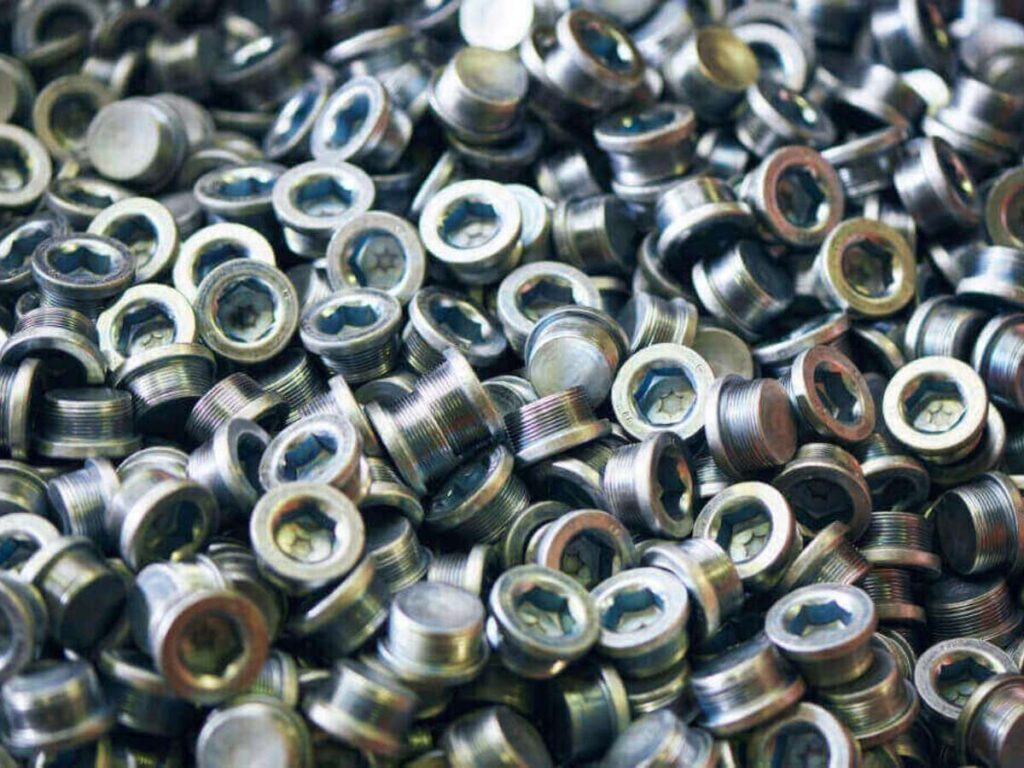
- Clear zinc (blue tint): Neutral, bright silver tone, clean but not flashy.
- Yellow zinc: Iridescent, gold-ish tone often used in industrial hardware.
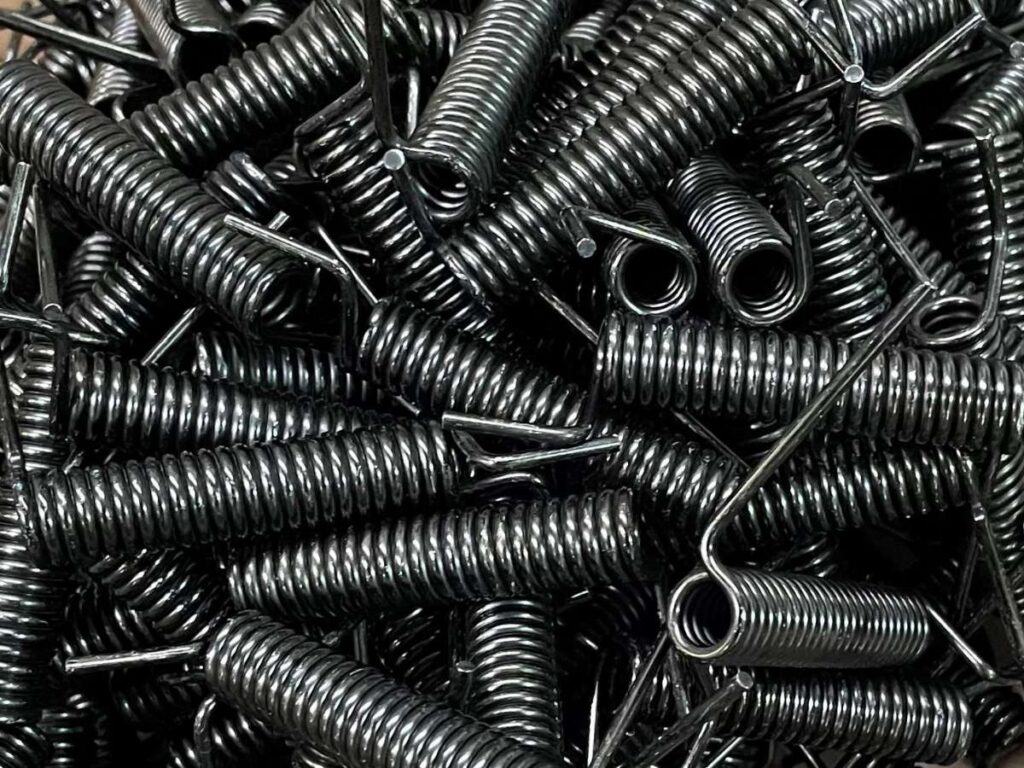
- Black zinc: Matte, dark coating with a rugged or tactical feel.
- Green zinc: Rare, typically used for coding or military parts.
The finishes are more muted and utilitarian than chrome, making zinc suitable for fasteners, hidden components, or industrial applications where looks are secondary to performance.
5. Plating Thickness and Coverage
Plating thickness may seem like a small detail, but in manufacturing, microns can make a major difference. Thickness impacts everything from corrosion resistance and wear tolerance to part fitting, electrical conductivity, and even cost per unit.
Let’s break down how chrome and zinc plating compare in both thickness and coverage reliability.
Thickness of Chrome Plating
There are 2 common categories:
- Decorative Chrome Plating
- Thickness: ~0.005 mm (5 microns)
- Designed for aesthetic value, not heavy-duty protection
- Usually applied over a base layer of nickel or copper for added support
- Hard Chrome Plating (Industrial Chrome)
- Thickness: Ranges from 0.025 mm to over 0.25 mm (25–250 microns)
- Built for mechanical strength, wear resistance, and durability
- Typically applied directly to base metal
While decorative chrome is thin and sleek, hard chrome can significantly build up on part surfaces, which must be factored into part tolerances, especially for moving or tight-fit components.
Thickness of Zinc Plating
Zinc plating is much thinner overall, but still effective due to its sacrificial protection.
- Standard Zinc Thickness: ~0.005 mm to 0.015 mm (5–15 microns)
- Heavy-Duty Zinc Plating: Up to 0.025 mm (25 microns) or more in special applications
- The actual corrosion resistance depends heavily on both zinc thickness and chromate conversion coating
Thicker zinc coatings provide longer protection, but may affect threading or precision fits if not managed carefully.
Plating Thickness Comparison Chart
| Feature | Decorative Chrome | Hard Chrome | Zinc Plating (Standard) | Zinc Plating (Heavy-Duty) |
| Typical Thickness | ~5 microns | 25–250 microns | 5–15 microns | Up to 25+ microns |
| Primary Purpose | Appearance | Wear resistance | Corrosion protection | Extended corrosion life |
| Impact on Fit/Tolerance | Minimal | Significant | Low | Moderate |
| Coverage on Complex Shapes | Moderate | Moderate | Good | Good |
If your part requires tight dimensional control, zinc is often the safer choice. For heavy-duty or high-friction environments, thicker hard chrome may be worth the added processing effort, but only if fit and coverage can be managed.
6. Cost Comparison
In manufacturing and procurement, cost decisions go far beyond unit price. What seems economical upfront can become expensive over time, and what appears costly may pay off with better performance, lower maintenance, or fewer product failures.
To help you make a smarter choice, here’s a breakdown of plating costs across four real-world decision areas.
Material and Process Cost
This includes everything from raw materials and plating chemicals to labor, power, and equipment:
- Chrome-based processes are generally more complex and costly due to the use of regulated substances, higher voltage, and tight tolerances.
- Zinc-based processes are faster, cheaper to run, and use more accessible materials, ideal for high-volume production.
If budget is your leading concern, zinc plating is often 2x to 5x cheaper per part, depending on the finish type and part complexity.
Operational and Compliance Cost
Your actual spend doesn’t stop at the plating line. Consider:
- Environmental regulations: Chrome plating, especially hexavalent chrome, comes with significant safety and disposal requirements. These increase overhead for factory owners and may limit vendor options.
- Worker safety & audits: Chrome involves stricter health controls, which can raise inspection, PPE, and insurance costs.
- RoHS/REACH compliance: Zinc plating is far easier to certify under global green standards, especially in electronics or export goods.
If you operate in a heavily regulated market or care about ESG (Environmental, Social, Governance) performance, zinc has a clear compliance edge.
Lifecycle and Performance Cost
Upfront pricing doesn’t reflect the cost of failure, maintenance, or replacement:
- Chrome plating (especially hard chrome) may last longer under mechanical stress or wear, but it’s expensive to repair or reapply.
- Zinc plating offers strong corrosion protection and is often more forgiving in terms of minor surface damage or wear. Recoating is simpler and faster.
If your product’s lifecycle is short or the plating doesn’t face mechanical abuse, zinc is a better long-term value. For high-load or sliding parts, chrome may cost more now, but save later.
Supply Chain and Volume Impact
Cost also depends on how your plating choice fits into your production and fulfillment pipeline:
- Lead Times: Zinc plating has quicker turnaround due to more widespread vendor availability and simpler processes.
- Capacity: Zinc is scalable. Chrome processes may have lower throughput and longer queues.
- Part Fit and Rework: Thicker chrome coatings may require post-machining or fit adjustments, increasing secondary costs.
7. Factors to Consider When Choosing Between Chrome and Zinc Plating
Making the right plating choice goes beyond surface appearance. It requires aligning your selection with the specific technical, environmental, and business needs of your application. In this section, we’ll walk through the key factors that influence whether chrome or zinc plating is the better fit.
Operating Environment and Corrosion Exposure
Where and how your product will be used should guide your decision. Corrosive environments, such as chemical-rich conditions, require more than just surface shine. Zinc plating excels here by providing sacrificial corrosion protection that shields the base metal even when the surface is scratched or worn.
In comparison, chrome plating only offers surface resistance. Once it’s chipped or compromised, rust can creep underneath. Chrome works well in dry, indoor, or controlled environments but isn’t ideal for harsh exposure unless layered with nickel for additional protection.
Mechanical Load and Wear Resistance
If your parts will experience motion, friction, or mechanical impact, wear resistance becomes essential. Hard chrome plating is designed for these conditions and is the better choice for:
- Hydraulic rods and cylinders
- Molds and dies
- Shafts, bearings, and sliding components
Zinc plating doesn’t hold up under similar stress. It’s soft and designed for static applications. Use it for components like:
- Brackets
- Enclosures
- Fasteners in low-stress areas
Aesthetics and Product Perception
For products that are visible to end-users, the finish matters. Chrome plating delivers a high-gloss, reflective surface that conveys quality and durability. It’s ideal for products where appearance adds perceived value, such as:
- Automotive trims
- Faucets and appliance parts
- Premium consumer hardware
Zinc plating comes in more subdued finishes, clear (blue), yellow, black, or green chromates. While functional and clean-looking, these finishes are more utilitarian and may vary slightly in color.
For hidden components or cost-sensitive designs, zinc works just fine. For brand-forward or design-heavy products, chrome is often the preferred visual choice.
Conclusion
Back then, the choice felt like a shot in the dark.
Now, you’ve got the facts.
You know what chrome and zinc plating really offer, how they perform, where they work, and what they cost.
This article gave you a tool to choose with clarity.
And if you’re working on a part right now, trying to lock in the right finish, Machmaster can help. They support manufacturers every day with real testing, honest advice, and fast turnaround.
What matters most to you, durability, cost, or both?
Contact MachMaster today. We’ll help you get it right.
Explore More Helpful Resources
There’s more to explore! Check out our additional product selections to find exactly what you’re looking for:
- Anodizing Service
- CNC Milling Service
- CNC Turning Service
- Injection Molding Service
- CNC Machining Service
Curious for more? These additional articles offer even more insights and advice:
Still haven’t found what you’re looking for? Don’t hesitate to contact us. We’re available around the clock to assist you.