
A few years ago, a new customer came to us with a part they needed fast.
The drawings looked solid. The price was good. And the supplier promised everything was under control.
But 3 weeks later, the castings showed up full of holes, bent out of shape, and way behind schedule.
That one mistake cost them over $32,000, just in delays and fixing the mess.
I’ve been in the manufacturing world for 18 years, and I’ve seen this kind of thing too many times.
That’s why my team and I work hard to help people like you avoid problems like that before they happen.
I know what really goes on inside a foundry. I’ve worked through tough problems with casting engineers and cleaned up the damage when things go wrong.
If you’re trying to understand how casting works, the real behind-the-scenes stuff, so you can make better decisions, this guide is for you.
So let’s begin!
Step#1 Pattern Creation
Let’s start where every casting project truly begins: with the pattern.
This isn’t just a mold-shaped block of material, it’s the first decision in a long chain of outcomes. A smart pattern sets the tone for accuracy, efficiency, and cost. A bad one? That’s how you lose money before the metal even melts.
I learned that the hard way on a tooling project that looked good on paper but ended up 3 weeks late in real life, because the pattern wasn’t designed with production in mind. It fits the design file, sure. But it didn’t fit the process.
That’s a key distinction you need to be aware of.
What Is a Pattern, Exactly?
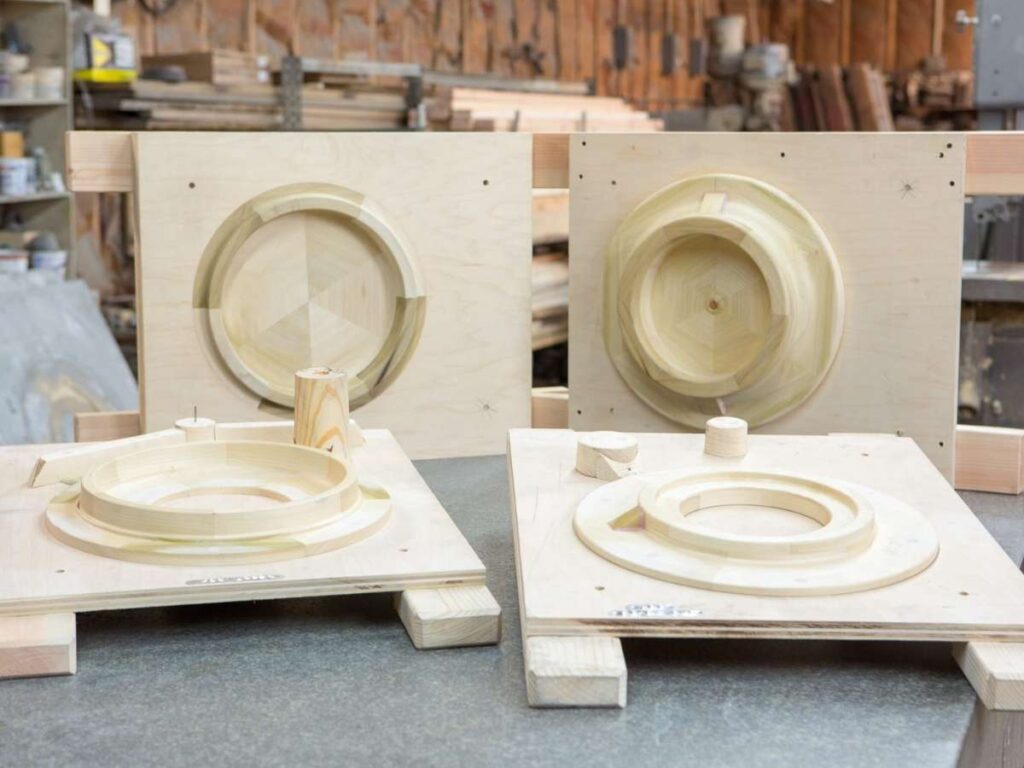
In casting, the pattern is a replica of your final part, usually made from wood, plastic, metal, or wax. Think of it like a prototype, but its only job is to create a cavity where molten metal will eventually be poured.
This is not the final product. But every mistake here will show up in your final part.
You’re not just sculpting a shape.
You’re laying the foundation for:
- Mold accuracy
- Surface finish quality
- Material flow behavior
- And ultimately, your production timeline and cost
Importance of Design
If your engineering team or designer thinks they can just export the CAD file and call it a day, pause. Casting patterns require something called “pattern allowances.”
You need to account for:
- Shrinkage (metal contracts as it cools)
- Draft angles (to remove the pattern from the mold)
- Machining allowances (extra material for post-processing)
That means your pattern is deliberately not identical to the final part. It’s strategically adjusted to get the result you want after metal solidifies, cools, and gets finished.
Pattern Materials
Here’s where your decision directly impacts both cost and flexibility:
- Wood: Low-cost, good for prototyping or short runs, wears out faster
- Plastic (like ABS): More durable than wood, still relatively easy to machine
- Metal (aluminum, steel): High durability, best for long production runs
- Wax: Used in investment casting, melts out cleanly for ultra-precise parts
Your choice here depends on your production volume, tolerance requirements, and how often you expect to reuse the pattern.
Step#2 Mold Making
This is where your pattern turns into power.
The mold is the vessel that gives your casting its final shape. It holds the molten material. It controls the surface finish. It determines whether your final part is crisp and clean, or flawed and frustrating.
And if you’re managing a production run, you need to get this part right. Because once molten metal is inside a mold, there’s no turning back.
Mold Overview
A mold is a cavity formed around your pattern, into which molten metal will be poured. It’s like a negative imprint of your part. The quality of your mold impacts:
- Dimensional accuracy
- Surface texture
- Cooling rate (which affects internal structure)
- How easily the part releases when finished
If your mold isn’t precise or durable enough, you’re not just wasting metal. You’re wasting time, labor, and money.
Types of Molds
Let’s simplify this.
- Expendable Molds: Used once, then broken to remove the casting. Common for complex shapes and custom parts.
- Permanent Molds: Reused across many cycles. Ideal for high-volume, consistent production.
Here’s a quick breakdown:
- Sand Mold: Versatile, cheap, but less precise. Great for large parts and short runs.
- Ceramic Shell (used in investment casting): High detail, smooth finish. Ideal for complex, high-precision parts.
- Metal Mold: Durable, fast cycle times. Used in die casting for large production volumes.
Choosing the Mold
- Need flexibility for low-volume runs? Go with sand casting.
- Chasing ultra-precision and surface finish? Think investment casting with ceramic molds.
- Scaling to tens of thousands of units? You’ll want permanent metal molds (often with die casting).
Remember: no one-size-fits-all. The right mold depends on your product goals, budget, and production scale.
Step#3 Melting Metal or Material
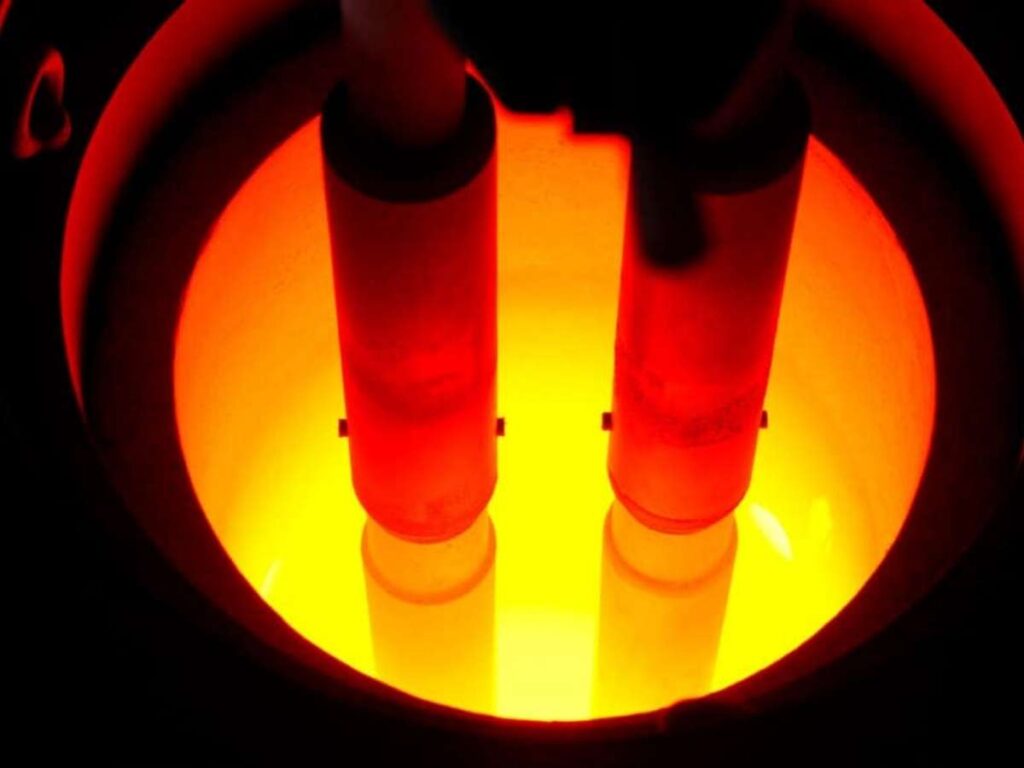
Melting is the moment you transition from raw material to something ready for transformation. But it’s also the stage where so much can go wrong if it’s not controlled with precision.
Miscalculating temperature. Using the wrong alloy. Rushing the process. Each mistake here creates ripple effects: structural flaws, internal defects, even full production failure.
And if you’re managing the business side, you need to understand what’s happening at this stage, because mistakes made here? They’re the kind that show up on your balance sheet.
Importance of Melting
It’s more than just heating metal until it’s liquid. You’re balancing:
- Material purity
- Alloy composition
- Exact melting point ranges
- Energy consumption
- Safety conditions
Every metal behaves differently. Some melt clean. Others oxidize or absorb gases if handled poorly. This step isn’t just about reaching a temperature—it’s about managing a controlled transformation.
Common Metals and Their Melting Points
Here’s a snapshot for quick reference:
- Aluminum: ~660°C (1220°F)
- Steel: ~1370°C (2500°F)
- Bronze: ~950°C (1740°F)
- Cast Iron: ~1200°C (2200°F)
Knowing these temperatures isn’t just technical trivia. It helps you understand why your energy usage, furnace type, and process timeline all shift depending on the material you’re working with.
Different Furnace Types
- Induction Furnace: Fast, clean, and energy-efficient. Great for steel and non-ferrous metals.
- Electric Arc Furnace: High-heat capability, often used for recycled materials or steel.
- Gas-Fired Furnace: Cost-effective, used in smaller foundries or for lower-temp metals.
- Crucible Furnace: Simple and flexible, often used for small batches or prototyping.
Pro tip: If you’re working with a new supplier, ask what kind of furnace they’re using. The answer gives you insight into their scalability, energy efficiency, and even environmental standards.
Step#4 Pouring the Molten Material
Now we reach the point of no return.
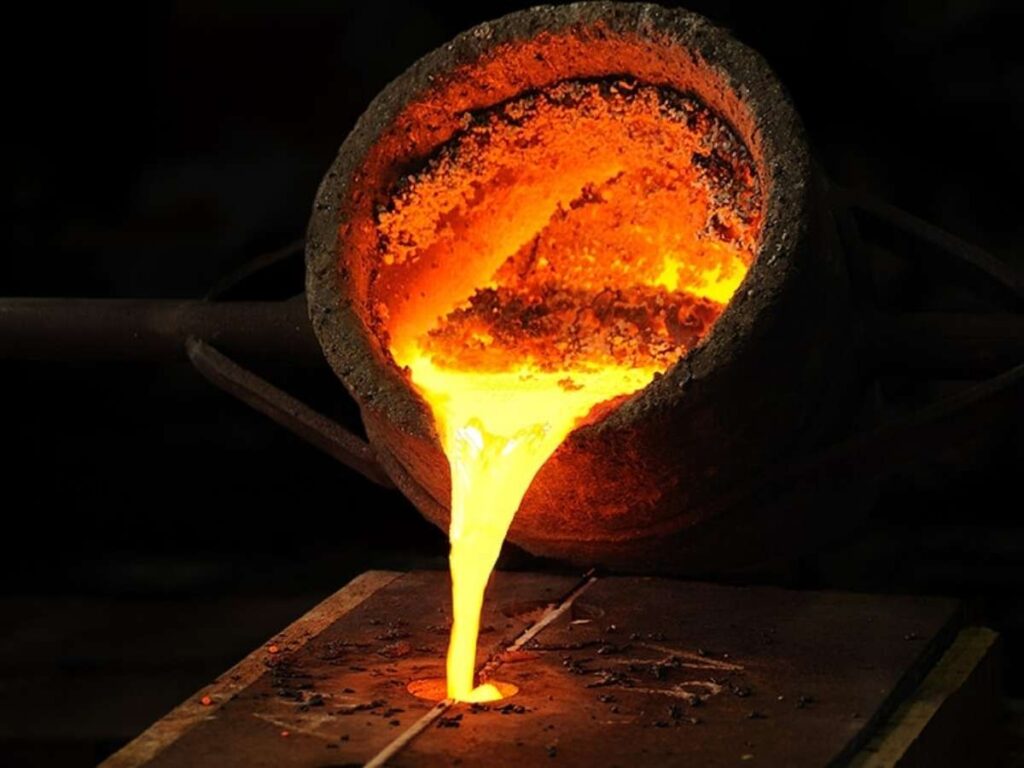
This is where all the prep work—the pattern, the mold, the melt—comes down to one critical move: pouring molten metal into the mold.
It sounds simple. But in the world of casting, it’s one of the most sensitive stages. If this goes wrong, everything before it becomes a sunk cost.
It’s Not Just Pouring—It’s Precision
You’re not just dumping hot liquid into a cavity. You’re controlling:
- Pouring speed (too fast = turbulence; too slow = misruns)
- Pouring temperature (too hot = gas absorption; too cool = incomplete fill)
- Metal flow path (gating systems, risers, vents—all need to be tuned)
This isn’t just about moving liquid metal. It’s about controlling how it moves, where it flows, and what happens when it hits the mold walls.
Manual or Machine: How It’s Done
- Manual Pouring: Still common in small foundries. Relies heavily on skilled operators. Good for low-volume or custom jobs.
- Automated Pouring: Precise, repeatable, and ideal for high-volume production. Helps avoid human error.
Tip: Ask your foundry, “Do you monitor pouring temperature and timing in real time?” That tells you how much control they really have.
Design Impacts the Pour
If you want a clean, complete pour, it starts with good design:
- Gates: control how metal enters
- Risers: feed more metal during cooling
- Vents: let gas escape
A bad flow design can ruin even the best pour. Make sure your team or supplier gets this right.
This is where a partner like MachMaster makes all the difference. They don’t just pour metal—they engineer every casting step with precision controls, from real-time temperature monitoring to optimized gating design.
Step#5 Cooling and Solidification
This is the quiet phase—but don’t let that fool you. Once the molten metal is poured, the mold might look calm from the outside.
But on the inside, everything is still changing.
Cooling and solidification is where the final shape of your part is truly born. The structure. The strength. The surface finish. All of it is shaped in this moment, not during the pour, not during the melt.
I used to think this stage was passive. “Just wait till it cools, right?”
Wrong.
Why Cooling Time Matters
Cooling too fast or too slow can cause:
- Cracks
- Distortion
- Shrinkage defects
- Weak grain structure
Every metal and mold material cools at its rate.
If your cooling process doesn’t match your design and material? Your part is already compromised, and you haven’t even opened the mold yet.
Solidification
Here’s what’s really happening inside the mold:
- The outer layer solidifies first (that’s your surface finish)
- The inner core cools more slowly
- If cooling isn’t controlled, it leads to internal stress and shrinkage voids
This is why risers (those extra reservoirs of molten metal) are critical. They feed the part as it cools and shrinks, helping avoid internal cavities.
Cooling Control
Professional foundries use methods like:
- Chilled inserts to cool specific sections faster
- Insulating sleeves to slow down other areas
- Temperature monitoring to track solidification in real time
If you’re sourcing cast parts, ask your supplier: “How do you control cooling rates for this alloy?” Their answer will show you if they understand metallurgy, or if they’re just guessing.
Step#6 Mold Removal (Shakeout)
Up until now, everything’s been hidden inside the mold.
Now it’s time to break it open and see what you’ve actually made.
This step—called shakeout—might look like brute force from the outside. But don’t be fooled. Mold removal is more than just hammering and shaking. It’s the first chance to see if all your work paid off.
And as a decision-maker, this is where you start to see the results of your process choices.
What Happens During Shakeout
Once the metal has fully solidified and cooled, the mold needs to be removed.
- In expendable molds (like sand or ceramic), the mold is destroyed—cracked, shaken, or blasted off the casting.
- In permanent molds, the part is carefully released and the mold reused for the next cycle.
Even this step can introduce problems:
- Too much force? You damage the casting.
- Poor timing? You crack it while it’s still too hot.
- Incomplete removal? You spend more on finishing.
It’s all about balance.
Tools and Techniques Used
Depending on the mold material and part size, foundries might be used:
- Mechanical vibrators to shake sand loose
- Water jets or air blasts for delicate areas
- Robotic arms in automated lines
- Manual hammers and chisels in small shops
What matters is that the mold is removed completely, without harming the part.
Watch for These Red Flags
During mold removal, you can spot early signs of casting issues:
- Cracks or fractures
- Incomplete fill
- Flash (extra material leaking into mold gaps)
- Broken cores (internal voids collapsed)
These are your first quality control checkpoints.
If a batch starts showing the same issue over and over? It’s not bad luck. It’s a process flaw upstream—and this is your warning.
Step#7 Finishing and Post-Processing
Here’s where good castings become great products.
The raw casting straight out of the mold? It’s not ready for your customer, your assembly line, or your final packaging. It needs finishing.
And this step, while often underestimated, is where precision, polish, and performance all come together.
It’s also where you either protect your brand or risk delivering something that’s not ready for the real world.
Importance of This Step
Even with the most precise molds and cleanest pours, raw castings still have:
- Leftover sand or ceramic
- Sharp edges or flash
- Surface roughness
- Inconsistent dimensions
- Potential micro-defects
That’s why post-processing isn’t optional—it’s essential.
Common Finishing Processes
Depending on the part, your industry, and your specs, finishing may include:
- Trimming: Removing excess metal (runners, risers, flash)
- Grinding & Sanding: Smoothing rough surfaces and edges
- Machining: Achieving precise tolerances (CNC, milling, turning)
- Heat Treatment: Strengthening or stress-relieving the material
- Surface Coating: Painting, powder coating, anodizing, or plating
- Inspection & Testing: Dimensional checks, x-ray, ultrasonic, or dye-penetrant
Each step serves a purpose. Together, they turn a basic shape into a functional, ready-to-use part.
At MachMaster, this is one of our strengths. We don’t just pour metal, we finish what we start. Our team understands that you’re not just buying a casting. You’re buying performance, reliability, and brand reputation.
Conclusion
Casting isn’t just about molten metal, it’s a process that affects cost, quality, and speed at every level. You’ve now seen how each step connects, from pattern to final finish.
Remember when I stood on the factory floor, not knowing what came next? Now you do.
So if you’re ready to stop guessing and start making better casting decisions, start now.
Because your next project deserves more than luck.
Let’s talk. Contact us today—we’ll get it right, from the first pour to the final polish.
More Guides and Tips to Explore
Not quite what you’re looking for? Explore our wider product range for more choices:
- Anodizing Service
- Cnc Milling Service
- Cnc Turning Service
- Injection Molding Service
- Cnc Machining Service
We’ve got more for you! These articles provide more tips and guidance to keep you on track:
Still haven’t found what you’re looking for? Don’t hesitate to contact us. We’re available around the clock to assist you.