

You’ve probably heard the word “sandblasting” before. But maybe you’re not exactly sure what it does—or when to use it.
I get it. I was in that same spot years ago, working on my first aluminum prototype. I thought I could just jump in, blast the surface clean, and move on.
I ended up ruining the part. The finish was uneven, and the coating wouldn’t stick.
Back then, I didn’t understand how surface prep really worked. But after working with engineers, business owners, buyers, and students, I’ve learned a lot.
And I’ve made my share of mistakes so you don’t have to.This article will walk you through the basics:
- What sandblasting is
- How it works
- And where it’s used in real life
Whether you’re managing a shop, designing parts, sourcing materials, or just trying it out on a weekend project—this guide will give you a solid start.
Let’s start!
Quick Chart
Need a fast reference? This list covers the key uses of sandblasting in a single glance. We’ll go deeper in the next sections.
| Use Case | What It Solves | Common Materials | Where It’s Used |
| Surface Prep for Painting & Coating | Removes dirt, old paint, and mill scale for better adhesion | Steel, aluminum, iron | Fabrication shops, automotive, aerospace |
| Rust & Corrosion Removal | Strips rust and oxidation to expose solid base metal | Carbon steel, iron | Bridges, tanks, trailers |
| Equipment Cleaning & Maintenance | Removes grease, grime, and baked-on residue | Stainless, coated metals | Factories, food plants, machine shops |
| Building & Structure Restoration | Clears soot, paint, and graffiti from old surfaces | Brick, concrete, stone | Historical buildings, city infrastructure |
| Surface Texturing & Finishing | Adds grip or a matte finish, softens sharp edges | Metal panels, tools, concrete | Product design, architectural finishing |
| Mold & Tool Contaminant Removal | Cleans molds and dies without disassembly or damage | Steel, aluminum, composites | Injection molding, casting, 3D printing |
| Etching & Engraving | Carves text, patterns, or logos using stencils and fine media | Glass, stainless, granite | Signage, awards, control panels |
| Industrial & Commercial Use Cases | Speeds up prep, cuts labor, and improves consistency | All major industrial metals | OEMs, job shops, service teams |
Each of these has its own story—let’s walk through them together in the sections ahead.
1. Surface Preparation for Painting and Coating
When I started out, I thought a quick wipe was enough before painting. The coating failed, and I had to redo it.
Proper surface prep, especially sandblasting, makes all the difference. It clears rust and grime so coatings bond and last under tough conditions.
Why It Works
- Removes Dirt: Blasting clears off dust, oil, and other loose particles that can interfere with coating adhesion.
- Strips Old Paint: Quickly removes previous layers of paint or coating without damaging the base metal.
- Cleans Mill Scale: Essential for newly manufactured steel that still has surface oxidation from the rolling process.
- Creates Profile: Leaves a rough texture that helps the coating bond mechanically to the surface.
- Increases Lifespan: With a clean and prepped surface, coatings are more likely to last through harsh
- conditions.
Typical Applications
- Automotive: Prepping car frames, wheels, or chassis before repainting or powder coating.
- Construction: Treating beams and panels before applying protective primers on-site or in fabrication shops.
- Aerospace: Prepping parts for paint and sealants that must endure tough operating conditions.
- Industrial Equipment: Cleaning machine surfaces before applying anti-corrosion coatings.
- Consumer Products: Getting a smooth, even finish on grills, brackets, or appliances during the manufacturing process.
Skipping surface prep might seem like a shortcut. But it often leads to peeling paint, early corrosion, and extra work. Sandblasting helps you make sure the surface is truly ready for what comes next.
2. Rust and Corrosion Removal
Rust often hides until it’s too late. I once tapped a steel gate and watched the topcoat flake off, revealing deep corrosion.
Corrosion spreads fast and weakens metal. Sandblasting is a trusted way to stop it and restore the surface.
Why It Works
- Breaks Through Oxidation: Abrasive material strikes rusted areas with enough force to remove even deep corrosion.
- Reaches Pits and Corners: Tools often miss crevices—sandblasting hits them all, especially on complex parts.
- Preserves Base Material: With the right media and pressure, metal is cleaned without grinding away the solid layer beneath.
- Exposes Trouble Areas: Blasting makes weak spots and holes visible for proper repair.
- Fast Cleanup: Unlike sanding or brushing, blasting clears large areas in a fraction of the time.
Typical Applications
- Shipyards: Restoring hulls and decks affected by years of saltwater exposure.
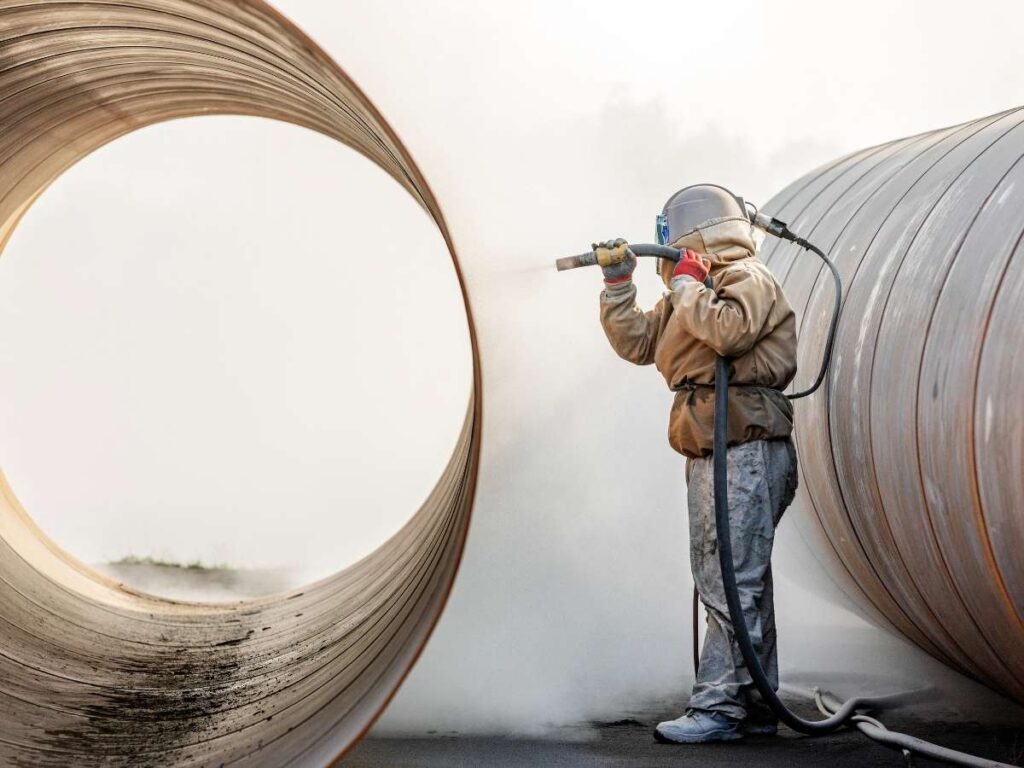
- Bridges and Infrastructure: Removing rust from steel supports and railings before repainting.
- Manufacturing Plants: Cleaning rust from storage tanks, frames, or piping systems.
- Agricultural Equipment: Removing surface rust from plows, trailers, and frames during off-season maintenance.
- Fencing and Railings: Stripping years of oxidation from wrought iron or steel fence sections for repainting.
Rust removal isn’t just for looks—it’s about keeping the structure safe and strong. And when you see clean metal come back to life under that rust, it’s like giving it a second chance.
3. Cleaning and Maintenance of Industrial Equipment
I’ve seen machines run better and last longer just from a proper blast cleaning. Grease, grime, and buildup don’t stand a chance.
Sandblasting works fast, reaches tight spots, and skips water or harsh chemicals—keeping equipment clean without the hassle.
Why It Works
- Removes Thick Deposits: Grease, tar, baked-on layers—all can be blasted off quickly.
- Cleans Hard-to-Reach Areas: Blasting media gets into corners, seams, and cavities without disassembly.
- No Water Needed: Avoids introducing moisture into sensitive or rust-prone machinery.
- Safe for Surface Prep: Helps prep machines for repainting or inspection.
- Non-Chemical Option: Cuts out the need for harsh solvents in many environments.
Typical Applications
- Food Processing Plants: Using soda blasting for safe cleaning without contamination.
- Textile Machinery: Removing lint, dye, and chemical residue from rollers and enclosures.
- Printing Equipment: Cleaning ink and buildup without dismantling entire systems.
- Tool Shops: Keeping cutting tools and fixtures free from accumulated grime.
- Mining Equipment: Clearing compacted debris from drill heads, shovels, and frames.
When downtime costs you money, fast and reliable cleaning makes a difference. Getting a machine back to full function with just a cleaning can feel like a quiet win. Under all that grime, your equipment still has more to give—and sandblasting helps you bring that back.
4. Restoration of Buildings and Structures
Some of the most satisfying jobs happen on-site, not in the shop. Restoring surfaces with sandblasting reveals their original look.
It removes paint, grime, and graffiti without damaging the base material—perfect for buildings and architectural details.
Why It Works
- Cleans Deep Contamination: Smoke, soot, and grime embedded in porous materials like stone or brick are lifted out with abrasive blasting.
- Adjustable Pressure: Operators can control the power and media type to suit fragile surfaces like wood or aged masonry.
- Removes Graffiti: Paint and marker stains that resist regular cleaning come off quickly with fine abrasives.
- Strips Paint from Historic Surfaces: Prepares buildings for repainting without harsh chemicals.
- Exposes Original Texture: Reveals original finishes on metal, concrete, or stone without completely smoothing or altering the material.
Typical Applications
- Historic Building Restoration: Removing decades of dirt and failed coatings to restore heritage details.
- Public Infrastructure: Cleaning train stations, monuments, bridges, or tunnels exposed to traffic and pollution.
- Graffiti Cleanup: Clearing vandalism from public walls, walkways, and storefronts.
- Fire Damage Recovery: Stripping soot and char from brick, wood, or steel after a fire.
- Facade Cleaning: Refreshing brick, limestone, or concrete on commercial or industrial exteriors.
There’s something powerful about seeing a building’s character return. Under the layers of time and damage, there’s often craftsmanship worth saving. Sandblasting helps bring that back—and standing there when it happens is a moment that still sticks with me.
5. Surface Texturing and Finishing
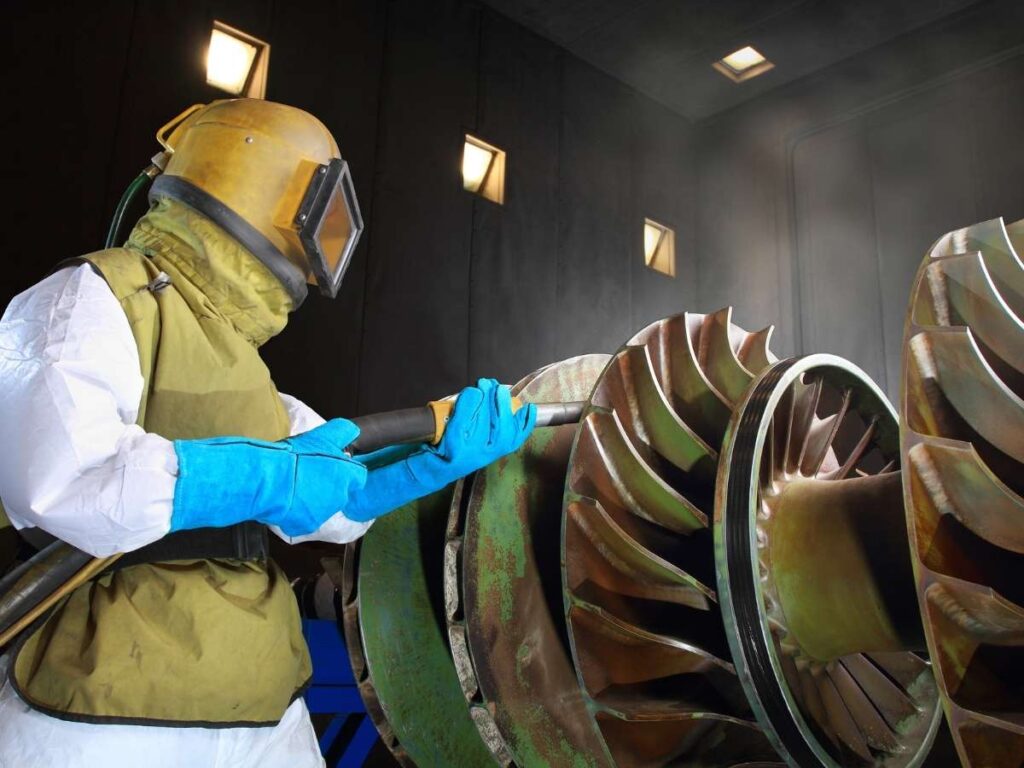
Sometimes your goal isn’t to clean a surface—it’s to give it the right look or feel. Maybe you’re working on something like aluminum panels and want a soft, matte finish instead of a shiny one.
Sandblasting helps you get that result in your project.
Why It Works
- Creates Uniform Matte Finishes: Blasting smooths out irregularities and dulls reflective surfaces without removing too much material.
- Softens Sharp Edges: Ideal for parts coming straight off milling machines or laser cutters.
- Improves Coating Adhesion: Textured surfaces hold powder coat or paint more consistently.
- Increases Grip: Useful for walkways, tool handles, or foot pedals.
- Prepares Parts for Further Processing: Acts as a finishing step before anodizing, plating, or bonding.
Typical Applications
- Consumer Goods: Giving kitchen tools, phone cases, or display hardware a smooth matte finish.
- Architectural Panels: Dulling reflectivity on large metal sheets for buildings or signs.
- Medical Devices: Adding grip or finish consistency to instruments and implants.
- Tools and Handles: Improving feel and safety on handheld equipment.
- Electronics Housings: Creating a clean, professional finish before branding or assembly.
Working with textures is like tuning an instrument—even small adjustments can completely change how a product looks, feels, and performs. That’s why it’s important to partner with a reliable supplier.
At MachMaster, precision and performance go hand in hand. Whether it’s a one-off custom job or a full-scale production run, the team brings experience, accuracy, and consistency to every project.
6. Mold and Contaminant Removal in Manufacturing
Keeping your molds and tools clean is part of the job—but it’s not always easy.
You deal with heat, buildup, and tight tolerances. Sandblasting helps you keep things running by safely cleaning tools and dies without damaging surfaces or slowing down production.
Why It Works
- Non-Destructive Cleaning: Targets surface residue without cutting into mold or die geometry.
- Consistent Results: Cleans with uniform pressure and finish across the entire surface.
- Speeds Up Turnaround: Greatly reduces the time needed between production cycles.
- Media Versatility: From soda to plastic beads, different materials allow gentle or aggressive cleaning.
- Supports Precision Tolerances: Maintains the detail and dimensions critical for molding applications.
Typical Applications
- Plastic Injection Molds: Removing burnt resin, mold release, and flash without polishing.
- Die Casting Tools: Cleaning alloy residue and buildup between runs.
- Rubber Mold Equipment: Blasting off rubber and silicone leftovers from cavities and vents.
- 3D Printing Beds and Fixtures: Clearing resin and powder from custom holders and setups.
- Extrusion Dies: Maintaining smooth surfaces inside tooling used for profiles and tubes.
Every second counts in manufacturing. When cleaning becomes faster and safer, production moves smoother. I’ve seen shops transform their workflow just by introducing sandblasting. It’s a quiet upgrade—but one that saves time, money, and frustration every cycle.
7. Etching and Engraving
Sandblasting isn’t just about cleaning or prepping—it’s also a creative tool. I once saw one whop worked with used blasting for more than just industrial prep; they were customizing glassware, metal plates, and even stone signage. What seemed like a rough process at first turned out to be surprisingly precise.
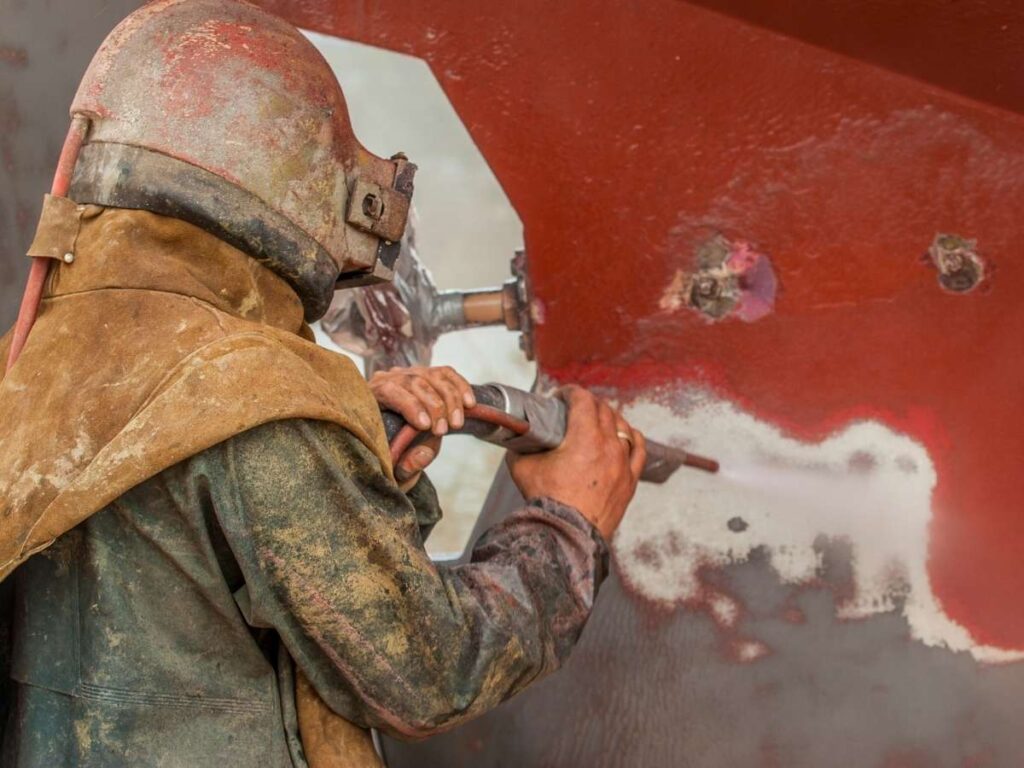
Etching and engraving with sandblasting involves using stencils and controlled pressure to remove the top layer of a material.
Why It Works
- Controlled Depth: Adjusting air pressure and media type makes it possible to control how deep the design goes.
- Clean Edges: Stencils hold sharp borders, and fine abrasives preserve detail.
- Works on Many Surfaces: Metals, stone, ceramics, and glass can all be etched.
- No Heat Damage: Unlike lasers, blasting doesn’t overheat or warp the material.
- Batch or One-Off Friendly: Great for both small runs and custom one-off pieces.
Typical Applications
- Awards and Plaques: Personalizing glass, acrylic, or metal with names or logos.
- Architectural Signage: Creating dimensional letters or logos in stone or aluminum.
- Kitchenware Customization: Etching logos or art into metal cutlery or glass.
- Monuments and Memorials: Adding text and artwork into granite or marble.
- Control Panels and Tags: Marking identifiers directly onto enclosures or faceplates.
Watching your design come through the surface feels different when you do it yourself. It’s satisfying to see something look good and last. You don’t need expensive equipment—just the right setup and technique to make it happen.
If you’re looking for a service provider that understands both precision and performance, MachMaster is ready to help. From one-off custom jobs to scaled production runs, we bring experience, accuracy, and consistency to every project.
8. Industrial and Commercial Case Studies
I’ve walked through countless shops and job sites, and one thing always stands out—sandblasting keeps things moving when time and quality matter most. Whether I’m in a repair garage or a fabrication yard, blasting consistently proves its value.
Why It Works:
- Saves Cost on Replacements: Cleans up parts that would otherwise be scrapped.
- Boosts Turnaround Speed: Blasting cuts prep time in half for large production runs.
- Improves Worker Efficiency: Less manual scrubbing or grinding frees up team time.
- Reliable Results: Delivers consistent surface finish batch after batch.
- Fits Into Existing Workflows: Easily added to production lines or maintenance routines.
Typical Applications:
- Fabrication Shops: Prepping multiple parts before coating or shipping.
- Repair Garages: Restoring old machinery, vehicle frames, or brackets.
- Construction Yards: Cleaning steel beams and fixtures before installation.
- Maintenance Crews: Stripping off old coatings during routine servicing.
- OEM Production Lines: Integrating blasting into automated prep before final assembly.
There’s something steadying about seeing a clean, consistent result in a place where chaos usually rules. Blasting doesn’t always get attention—but for the folks on the floor, it’s often what helps everything else fall into place.
Conclusion
I ruined that first part because I didn’t understand sandblasting. Now you don’t have to make the same mistake.
You’ve learned what it is, how it works, and why surface prep matters more than it seems.
Whether you’re removing rust, prepping for paint, or cleaning up welds, sandblasting gives you control.
So—is your surface truly ready? Or just clean outside?
Contact MachMaster today and get expert guidance on blasting solutions that work!
Learn More: Recommended Reads
Want to see more products? We’ve got plenty of options that might just be the perfect fit for you:
- Anodizing Service
- CNC Milling Service
- CNC Turning Service
- Injection Molding Service
- CNC Machining Service
We’ve gathered a few more articles that could help you out. Check them out for more great advice:
Still haven’t found what you’re looking for? Don’t hesitate to contact us. We’re available around the clock to assist you.