One time, a woman running a new business rushed into our shop.
She looked stressed. Her deadline was close, and her budget was tight.
She pointed to two finishes and asked, “Which one costs less—powder coating or anodizing?”
I paused.
Because that’s not really the best question.
What she really needed to ask was,
“Which one will make my product look better, last longer, and keep my customers happy?”
We’ve helped lots of teams—designers, builders, and small business owners. And we’ve seen how picking the wrong finish can mess up a good product. It’s frustrating, and it costs money.
That’s why I made this guide.
It’s not just facts. It’s stuff we’ve learned by doing the work.
You’ll learn:
- What each finish does to your part
- When it works great—and when it doesn’t
- Simple tips to help you pick the right one
Let’s get started!
1. What is Powder Coating?
If you’ve ever dealt with chipping paint, you know how frustrating the wrong finish can be. We had that happen on a run of outdoor steel brackets—what looked fine on day one didn’t last a season.
That experience pushed us to explore better finishing methods. We switched to powder coating for durability. Around the same time, MachMaster referred us to a specialist for anodizing, and we’ve used both ever since, depending on what the product actually needs.
Powder coating is a dry finishing process that uses electrostatically charged powder, not liquid paint. The powder is sprayed onto the part, then cured in a high-heat oven where it melts, flows, and hardens into a solid, protective coating.
How It Works
To get the best results, surface prep is everything. Before anything is coated, the part has to go through a few critical steps:
- Cleaning: Removes oils, dirt, and surface contaminants.
- Degreasing: Ensures no residue is left to interfere with adhesion.
- Sandblasting or Abrasive Prep: Creates a slightly rough surface so the powder sticks better.
Once the part is clean and prepped, the powder is sprayed on using an electrostatic gun. This charges the powder particles, so they cling to the surface like a magnet.
Then comes the cure: parts go into an oven at around 350°F to 450°F (177°C – 232°C). The heat melts the powder into a smooth, uniform coating. Once it cools, the finish is locked in—no additional drying time needed.
I remember watching our first batch come out of the oven. The color was bold, the finish was flawless, and every part looked exactly the same. That’s when I knew we’d made the right call.
Key Characteristics
Here’s what makes powder coating a favorite in manufacturing and industrial design:
- Versatile Appearance: You get a massive selection of colors, gloss levels, and textures, from sleek metallics to rugged matte finishes. It’s one of the most visually flexible finishing methods out there.
- Thick, Even Coverage: The powder clings to corners, edges, and welds without dripping or sagging. That’s a big deal if you care about consistency and detail.
- Exceptional Durability: Powder-coated parts stand up to UV rays, moisture, chemicals, and impact. If your product is headed outdoors, into a warehouse, or into heavy use, this finish holds up.
- Environmentally Safer: No solvents. No VOCs. Less waste. Powder that doesn’t stick can often be reclaimed and reused. That can help you hit your sustainability targets without sacrificing performance.
2. What is Anodizing?
We once worked with a client who needed a clean, metallic finish that could hold up under daily wear—paint and powder weren’t going to cut it. That’s when MachMaster pointed us toward anodizing, and we’ve been using it for the right jobs ever since.
If you’re working with aluminum and need a finish that becomes part of the metal, not just something that sits on top, anodizing is your go-to process.
Overview
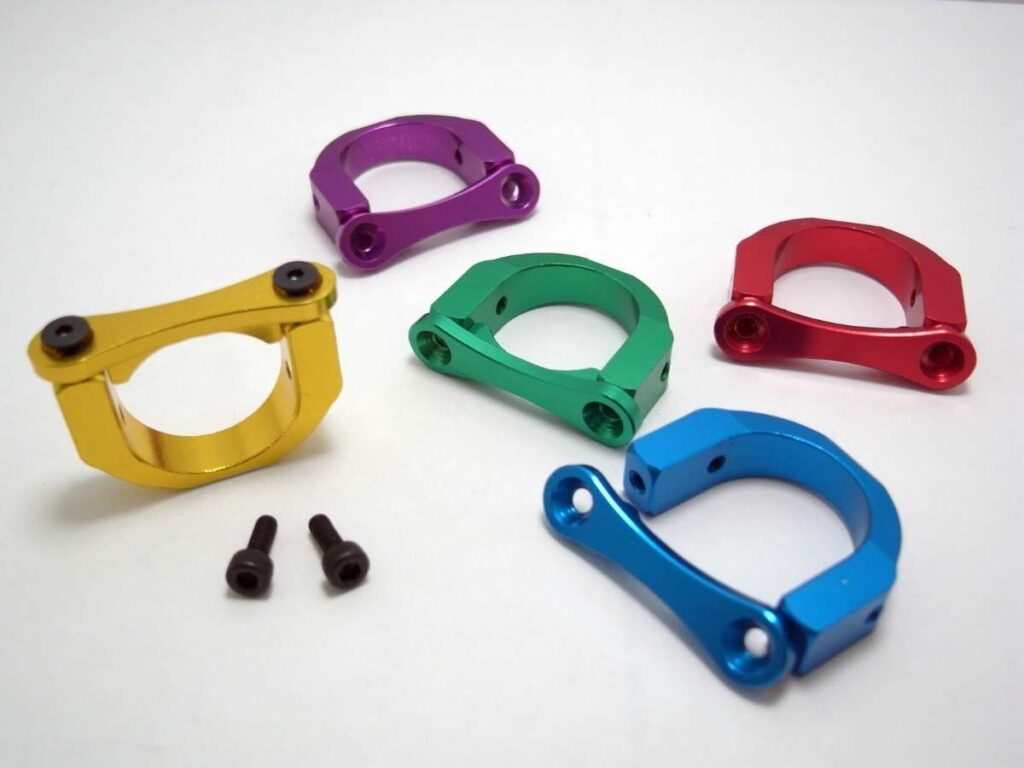
Anodizing is an electrochemical process that transforms the surface of a metal (usually aluminum) into a durable, corrosion-resistant oxide layer. It doesn’t apply a coating, it grows a protective shell from the material itself.
No flaking. No peeling. No mess. It’s not just tough—it’s precise.
How It Works
Anodizing might sound technical, but the process is surprisingly straightforward once you see it in action. Here’s what it looks like on the floor:
- Surface Preparation: Just like powder coating, the part must be thoroughly cleaned. Any oils, oxidation, or dirt must be removed to ensure the anodized layer forms evenly.
- Electrolytic Bath: The cleaned aluminum part is submerged in an acid-based electrolyte bath, usually sulfuric acid.
- Electrical Current Applied: A direct current flows through the bath. Aluminum acts as the anode (hence the name), and oxygen ions are drawn to its surface. These ions combine with the aluminum to build an oxide layer, essentially a reinforced skin.
- Optional Dyeing and Sealing: Before sealing the part, color can be added by introducing dyes into the porous oxide layer. After that, a final seal is applied to lock everything in and boost corrosion resistance.
What you get is a finish that won’t chip or wear off, because it’s not a layer added to the surface, it is the surface.
I still remember holding that first batch of anodized enclosures. Sleek. Satin. Every edge felt premium. The finish didn’t just look right, it was right.
Key Characteristics
If you’re dealing with aluminum components, here’s what anodizing brings to the table:
- Unmatched Durability: The anodized layer is harder than raw aluminum and resists scratches, corrosion, and wear over time—perfect for parts that get handled a lot or live in tough conditions.
- Natural Metallic Aesthetic: Anodized finishes offer a refined, satin-metal look. You can add color, but they’re generally more subdued than powder coating. Great for clean, professional-grade designs.
- No Peeling or Flaking: Since the oxide layer is part of the metal, it won’t separate, crack, or blister. That’s a big deal in high-precision or high-stress applications.
- Environmentally Friendly: Anodizing is a low-VOC, low-waste process. The byproducts are easier to handle than many coating systems, making it a greener choice for sustainability-conscious manufacturers.
3. Material Compatibility
Before you commit to a finishing method, you need to ask the most practical question first: Can this finish be applied to the material you’re using?
This is where powder coating and anodizing divide sharply. And I’ve seen what happens when teams skip this check. We once had a client request anodizing on a mild steel bracket—turns out, the surface never even reacted to the bath.
The part had to be scrapped. That kind of mistake is easy to avoid with the right comparison upfront. Here’s a side-by-side breakdown to help you make that call:
| Material | Powder Coating | Anodizing |
| Aluminum | Excellent adhesion and coverage | Best-suited material for anodizing |
| Steel (Carbon/Stainless) | Commonly powder coated with proper prep | Not suitable – won’t form an oxide layer |
| Galvanized Steel | Compatible after surface preparation | Not anodizable |
| Magnesium | Limited use, requires special coating | Can be anodized with specialized processes |
| Titanium | Rarely powder coated | Can be anodized for medical/aerospace use |
| Zinc Alloys | Tricky – outgassing risk during curing | Not recommended |
| Brass / Copper | Possible but limited durability | Not suitable |
| Plastics / Composites | Not compatible | Not compatible |
| Wood / MDF | Certain grades can be coated | Not applicable |
- If you’re using aluminum, both powder coating and anodizing are viable, but they serve different purposes.
- For steel, galvanized, or mixed alloys, anodizing is off the table. Powder coating is your best (and sometimes only) option.
- Exotic metals like titanium or magnesium? Anodizing is technically possible, but usually limited to industries like aerospace or medical devices.
- Neither process works for non-metals like plastics or composites. However, powder coating may still be applied to MDF or heat-resistant polymers under controlled conditions.
4. Aesthetic Options
Let’s face it, how a product looks and feels matters.
I’ve seen clients approve an entire project just by seeing a single sample part that “looked right.” And I’ve also seen deals stall because the finish didn’t reflect the brand’s visual identity. Aesthetics aren’t just a bonus—they’re a core part of the decision.
So how do powder coating and anodizing compare when it comes to visual impact, finish quality, and design flexibility?
Color Variety and Customization
Powder coating is the clear winner here. It offers an enormous range of colors, gloss levels, and specialty finishes. Whether you’re trying to match a corporate Pantone color, replicate a brushed steel look, or create a textured black matte, powder coating makes it possible.
Anodizing, on the other hand, is more subdued and technical. You’re typically working with natural metallic tones like silver, bronze, black, or gold. Color can be added through dyes, but it’s harder to control and often more muted. Great for industrial or high-end tech applications.
Texture and Surface Finish
Powder coating also gives you tremendous flexibility with surface feel. You can choose from finishes that are:
- Glossy or matte
- Smooth or textured
- Wrinkle, vein, or even soft-touch
It’s especially useful when your parts have cosmetic imperfections or weld marks you want to hide, because powder is thicker, it can mask those flaws.
Anodizing, on the other hand, delivers a clean, uniform satin finish. It won’t hide surface defects, but it will highlight sharp edges, machined surfaces, and fine details. The result is more “technical” and less “designed”—but often that’s exactly what’s needed in high-precision industries.
Fade Resistance and Long-Term Visual Stability
Both finishes perform well under UV and environmental exposure, but in different ways.
Powder coating resists fading extremely well if UV-stable powders are used. It holds up in outdoor environments, factory settings, and direct sunlight without yellowing or dulling. But over time, cheaper powders can chalk or fade, especially if color-matching wasn’t done properly.
Anodizing doesn’t fade—it’s built into the metal. The color (if dyed) is embedded in the oxide layer, and the base metallic finish won’t peel, chip, or degrade like surface coatings. If your application is about precision, permanence, and visual integrity, anodizing is a smart long-term move.
Branding and Design Implications
If you need to hit a specific color for brand or client requirements, powder coating is the only choice that gives you full control. It’s built for high-volume visual consistency.
Anodizing, however, is perfect for brands that lean into a minimal, engineered look, especially in electronics, aerospace, or architectural products where material honesty is part of the appeal.
5. Cost Analysis
Let’s talk numbers, because no matter how durable or attractive a finish is, it still has to make sense financially.
This is where most decisions are made or killed. You might love the look of anodizing. Or you might prefer the versatility of powder coating. But if the cost doesn’t align with your production goals, it won’t scale.
I’ve had projects approved with anodizing for prototypes, and then rejected for mass production when the unit cost came in 3x higher than expected. So here’s what you need to know:
Upfront Process Cost
- Powder Coating: Generally more affordable on a per-part basis, especially in high volumes. The equipment is common, the process is well-automated, and materials (powders) are competitively priced. Even for short runs, powder coating offers a good balance of cost, finish quality, and speed.
- Anodizing: Typically comes with higher upfront costs, particularly due to:
- The chemical baths required
- Additional handling and masking for parts
- Limited vendor availability for specialty anodizing
If you’re dealing with tight margins or mid-range products, that cost difference can add up fast.
Labor and Handling
Powder coating benefits from streamlined automation. Prep, coating, curing, it can all be done inline. Minimal handling, faster throughput.
Anodizing is more labor-intensive. Each part must be cleaned, racked, submerged, sometimes dyed, sealed, and then unracked with care. There’s more human involvement, which means higher labor costs and slower cycle times.
That may not matter for a small-batch precision part. But for high-volume industrial runs, it’s a cost factor you can’t ignore.
Rework and Reject Rates
With powder coating, mistakes can happen, like uneven coating, missed edges, or poor adhesion if prep wasn’t perfect. But they’re easy to identify and relatively easy to fix. Recoating is possible in many cases.
Anodizing, on the other hand, is less forgiving. Once a part has gone through the chemical bath, that finish is permanent. If the color’s off, or the surface didn’t react properly, the part may need to be scrapped entirely.
So even if the per-part anodizing cost looks okay, your rejection rate can silently drive up total project cost.
6. Application Scenarios
You’ve seen the specs, the aesthetics, the costs; now let’s bring it down to the real world.
Because choosing between powder coating and anodizing isn’t just about numbers on a spec sheet. It’s about how each finish holds up in the actual environments where your product lives, moves, and takes abuse.
Over the years, I’ve seen teams make the wrong call, using anodizing on an indoor product with zero wear, or powder coating a part that lives in constant salt spray. Both led to returns. Both damaged trust. You don’t want to be that case study.
Let’s break down where each finish performs best.:
Outdoor Environments
Powder Coating:
- Widely used for fences, gates, light poles, outdoor furniture, and enclosures
- Holds up well against UV and weather with the right prep and powder selection
- Can chip or scratch on impact, so edge protection and handling matter
Anodizing:
- Ideal for marine, aerospace, and architectural aluminum components
- Performs extremely well in salt air, humidity, and harsh sun
- Doesn’t chip or peel, even with long-term exposure
If you’re producing parts for long-term outdoor use, especially in corrosive or coastal settings, anodizing wins for aluminum. But if you’re finishing steel or mixed metals, powder coating is your only practical option.
Industrial and Heavy-Duty Use
Powder Coating:
- Great for machinery housings, tools, carts, and structural metalwork
- Provides impact resistance and corrosion protection
- Easy to touch up or recoat in the field
Anodizing:
- Perfect for high-precision, wear-prone parts—think gears, clamps, housings
- Common in medical, defense, and aerospace components
- Holds dimensional tolerances tightly because of the thin, integrated layer
If your part needs to withstand friction, handling, or dimensional requirements, anodizing offers unmatched stability without buildup.
Consumer Products and Electronics
Powder Coating:
- Excellent for visible consumer products like home appliances, gym equipment, fixtures, and accessories
- You get branding flexibility, color matching, and protective coating in one process
Anodizing:
- Used extensively in electronics, mobile devices, laptops, and luxury accessories
- Gives that “Apple-quality” satin-metal look
- Communicates technical elegance and premium feel without being flashy
If appearance drives customer value, anodizing elevates perception, while powder coating delivers standout color and durability for mid-range to high-traffic use.
Architectural and Structural Elements
Powder Coating:
- Used for interior and exterior metal framing, panels, handrails, and signage
- Large batch coating available, great for matching custom palettes
Anodizing:
- Favored curtain walls, aluminum window frames, and facade systems
- Maintains metallic appearance over decades, with no repainting required
When aesthetics and longevity both matter, like in architectural design, anodizing offers long-term payoff, especially for aluminum framing systems.
7. Tips for Choosing Between Powder Coating and Anodizing
By now, you’ve seen how powder coating and anodizing compare across process, aesthetics, cost, and performance. But let’s face it—when you’re staring down a production deadline or client spec sheet, you don’t always have time to weigh theory.
You just need to know: which one should I choose for my product?
Over the years, I’ve had to make this decision across hundreds of projects, sometimes with tight timelines and high customer expectations. These are the exact filters we use on our floor to avoid expensive mistakes and deliver finishes that hold up.
Here’s how to make the right call:
#1 Start with the Material
Aluminum? You’ve got the luxury of choosing either. Steel or mixed metals? Powder coating is your only viable option.
If your material isn’t compatible with anodizing, there’s no debate—move on and spec your powder line accordingly.
#2 Define the Product Environment
Ask yourself:
- Is this part used outdoors? In coastal or industrial conditions?
- Will it face wear, scratches, or constant handling?
- Is it a consumer-facing product that needs to look sharp for the long haul?
Use this rule of thumb:
- Harsh environments or long-term outdoor use. Go with anodizing (for aluminum).
- General-use or indoor structural parts. Powder coating typically delivers more value.
#3 Match Finish to Brand
If your client has specific color requirements, textures, or branding elements, powder coating gives you complete control over the final appearance. It’s ideal for products that need to visually pop or match an exact palette.
On the other hand, if your product needs to look technical, high-end, or minimal, anodizing delivers a refined, consistent metal finish, especially for electronics, aerospace, or luxury categories.
#4 Production Volume and Speed
- High volume? Tight deadlines? Powder coating is easier to scale, with more vendor availability and faster turnaround.
- Short-run prototypes or mission-critical parts? Anodizing gives you consistent quality and wear resistance, if you can absorb the lead time and higher cost.
If speed is your primary driver, powder coating has the edge. But if you’re building something meant to last and look flawless, anodizing may be worth the extra investment.
Conclusion
Choosing a finish isn’t just about price. It’s about performance, purpose, and people—your customers.
We walked through what powder coating and anodizing do, where each one fits, and why choosing right matters before you contact a fabricator.
That rushed founder? She took a pause, asked the right question, and avoided a costly mistake. You can too.
The goal is simple: durability, beauty, and confidence.
Need a hand figuring it out?
Let’s talk. Contact us today.
Check Out These Additional Resources
Need more ideas? Browse through our extended range of products and discover something new:
- Anodizing Service
- CNC Milling Service
- CNC Turning Service
- Injection Molding Service
- CNC Machining Service
For more in-depth knowledge, take a look at these recommended reads. We think you’ll find them useful:
Still haven’t found what you’re looking for? Don’t hesitate to contact us. We’re available around the clock to assist you.