
I remember messing up a product just because I picked the wrong metal finish. It looked great on paper.
But in real life? It scratched too easily. And it didn’t hold up.
Later, I made a similar mistake with plastic. I chose one that sounded familiar, without really knowing how it would perform. It failed testing. Then it failed in the field.
If you’ve ever felt stuck between ABS, Nylon, or PP, wondering which one is “right,” you’re not alone. I’ve been there too.
I started in product design, but over time, I worked with R&D teams, factory managers, and supply chain folks. Each time, I learned something new—what actually works in real-world products, and what breaks under pressure.
In this article, I’ll break down the most common plastics used for injection molding. I’ll explain what each one does well, what to watch out for, and how to match the plastic to your project.
By the end, you’ll feel ready to make the right choice. No guessing.
So, let’s get into it!
Quick Comparison Chart
Before choosing a plastic for your injection molding project, it’s important to weigh how each material performs across mechanical, thermal, and processing criteria. Below is a side-by-side comparison of the eight most commonly used plastics, designed to help you make fast, informed decisions.
| Plastic | Density (g/cm³) | Tensile Strength | Impact Resistance | Heat Resistance (°C) | Chemical Resistance | Moisture Absorption | UV Resistance | Surface Finish Quality | Mold Shrinkage (%) | Drying Required |
| ABS | 1.03–1.07 | Moderate (~40 MPa) | High | 85–100 | Moderate | Low | Poor | Excellent | 0.4–0.7 | Recommended |
| PP | ~0.90 | Moderate (~30 MPa) | Good | ~100 | Excellent | Very Low | Poor | Fair | 1.0–2.5 | No |
| PE (HDPE) | ~0.96 | Low–Moderate | Excellent | 80–100 | Excellent | Very Low | Poor | Moderate | 1.5–4.0 | No |
| PE (LDPE) | ~0.92 | Low | Good | 70–90 | Excellent | Very Low | Poor | Moderate | 1.5–3.5 | No |
| PC | 1.18–1.22 | High (~60 MPa) | Very High | ~135 | Moderate | Low | Moderate (w/ add.) | Excellent (optical) | 0.5–0.7 | Yes |
| Nylon (PA6/66) | 1.13–1.15 | High (~70 MPa) | Good | 100–120 | Good | High | Poor | Moderate | 0.8–2.0 | Yes |
| Polystyrene | 1.04–1.07 | Moderate (~45 MPa) | Low | 70–90 | Poor | Low | Poor | Excellent (glossy) | 0.3–0.6 | No |
| POM (Acetal) | 1.41 | High (~70 MPa) | Good | ~100 | Good | Very Low | Poor | Smooth | 1.5–2.0 | Yes |
| PVC | 1.30–1.58 | Moderate (~50 MPa) | Fair | 60–70 | Excellent | Low | Moderate (w/ add.) | Good | 0.2–0.6 | No |
This table helps you quickly assess which plastic best aligns with your project’s performance, cost, and processing goals. If tight tolerances, moisture stability, or impact resistance are a priority, this snapshot can guide your decision with clarity.
1. Acrylonitrile Butadiene Styrene (ABS)
ABS is that “go-to” plastic many manufacturers reach for when they need a strong, reliable material that’s also easy to mold.
It’s tough, but not brittle. Rigid, but not too stiff. It strikes a balance that makes it one of the most popular engineering thermoplastics in the injection molding world.
I still remember the first time I used ABS for a client’s custom housing project. They were skeptical at first—worried about finish and fit.
But the result? Clean edges, no warping, and a finish that looked premium right out of the mold.
If you need a plastic that can handle abuse, look good on the shelf, and doesn’t cost a fortune, ABS deserves your attention.
Common Applications
- Housings for power tools, printers, and appliances
- Automotive interior parts like dashboards and trims
- Prototyping and 3D printing models
- Luggage shells and protective gear
- Enclosures for electronics and industrial components
Key Properties
- High impact strength and toughness
- Good dimensional stability
- Low melting point (~200–250°C), making it easy to process
- Accepts colorants well and delivers a smooth surface finish
- Moderate resistance to chemicals and heat
Advantages and Limitations
Advantages
- Excellent Impact Resistance: It won’t shatter or crack easily, which makes it ideal for parts that take a beating.
- Aesthetic Finish: Even without painting, ABS can produce sleek, high-quality surfaces.
- Easy To Machine And Mold: You’ll see shorter cycle times, and it holds detail well.
- Cost-Effective: It gives you a professional-grade result without burning through your budget.
Limitations
- UV Sensitivity: Prolonged sun exposure degrades it, so outdoor use requires additives.
- Low Chemical Resistance: It’s vulnerable to acids, alcohols, and some solvents.
- Lower Heat Tolerance: It may deform under high-heat conditions or repeated exposure.
Molding & Processing Considerations
- Ideal Temperature Range: 200–250°C
- Drying Before Molding: Not always necessary, but drying at 80°C for 2 hours is recommended for best results
- Mold Shrinkage: Generally low (0.4–0.7%), which helps with dimensional accuracy
- Compatible With: Inserts, overmolding, chrome plating, and texturing
2. Polypropylene (PP)
If you’ve ever tried cutting costs without cutting corners, you’ve probably crossed paths with polypropylene.
This material is a favorite in mass production—lightweight, chemically resistant, and incredibly versatile. In fact, it’s the first plastic I recommend when clients want affordability and function, especially for high-volume runs.
I once worked with a buyer in the packaging industry who swapped out ABS for PP in a product line. Not only did they save on material costs, but the new parts held up better in storage and transit. That switch paid off fast.
If you’re looking for a cost-efficient, flexible plastic that performs well in everyday environments, PP might be exactly what you need.
Common Applications
- Hinged caps and snap-fit parts
- Food containers and kitchenware
- Automotive components (bumpers, battery trays)
- Medical syringes and labware
- Storage bins, bottles, and molded packaging
Key Properties
- Excellent chemical resistance (acids, bases, oils)
- Good fatigue resistance—ideal for parts that bend
- Lightweight, with a low density (~0.90 g/cm³)
- Semi-rigid with moderate impact strength
- Resistant to moisture and water absorption
Advantages and Limitations
Advantages
- Lightweight Structure: Great for reducing shipping weight and material cost.
- Excellent Chemical Resistance: Stands up to detergents, acids, solvents, and more.
- Fatigue-Resistant: Perfect for living hinges, snaps, and flex parts.
- Cost-Effective: PP is among the most economical plastics on the market.
- Moisture-Resistant: Doesn’t absorb water—ideal for humid or wet environments.
Limitations
- Poor UV Resistance: Degrades in sunlight without stabilizers.
- Flammable Without Additives: May require flame retardants for certain applications.
- Low Surface Energy: Tough to bond or paint without surface treatment.
- Limited Temperature Range: Warps under high heat (>100°C continuous use).
Molding & Processing Considerations
- Ideal Temperature Range: 220–280°C
- Drying Before Molding: Not usually required, as PP absorbs virtually no moisture
- Mold Shrinkage: Moderate (1.0–2.5%)—account for this in tight-tolerance parts
- Processing Notes: Use mold designs that allow venting and consistent cooling
- Compatible With: Living hinges, inserts, and snap-fit designs
PP is a solid choice if you’re mass-producing consumer goods, packaging, or automotive parts where flexibility and chemical resistance matter.
But if your part sits in direct sun, holds up something heavy, or needs strong bonding? You may want to keep shopping.
3. Polyethylene (PE – HDPE, LDPE)
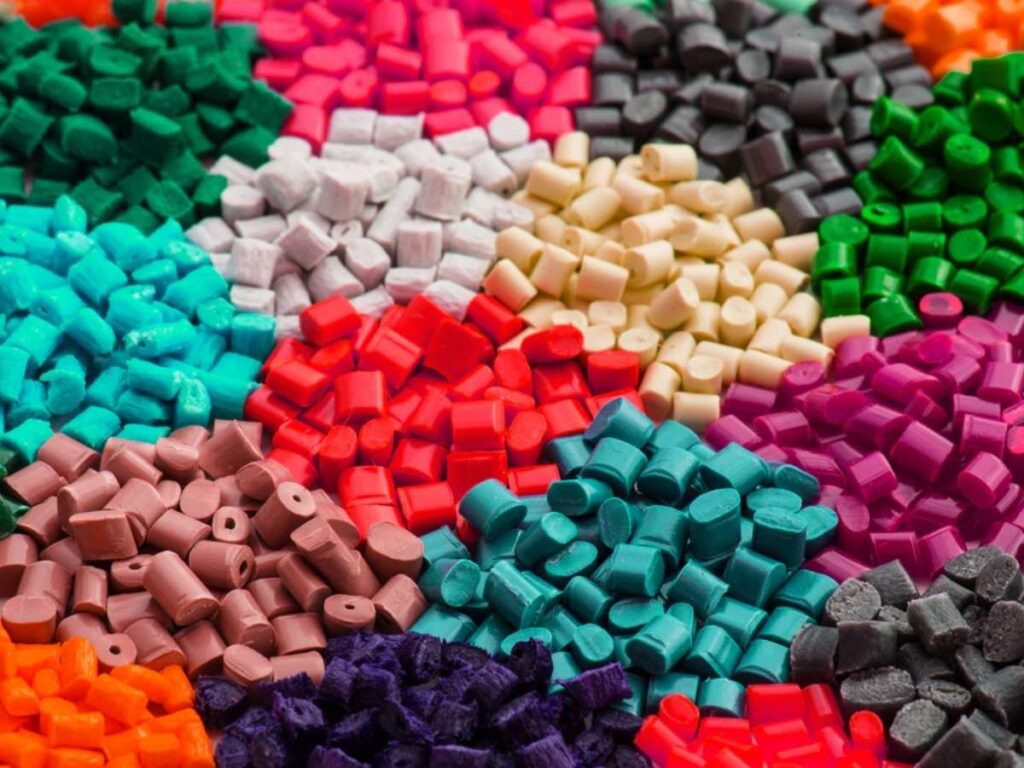
You’ve definitely handled polyethylene—even if you didn’t know it. From grocery bags to industrial tanks, PE shows up everywhere. And for good reason.
When we scaled up production for a line of large-capacity storage bins, HDPE was the hero. It molded clean, held its shape, and resisted just about every chemical our client threw at it. They still use it to this day—zero returns, zero cracks.
If you need a plastic that’s tough, flexible, and almost impossible to offend chemically, polyethylene should be on your shortlist.
Common Applications
- HDPE: Crates, fuel tanks, piping, outdoor furniture
- LDPE: Plastic bags, squeeze bottles, flexible lids
- Medical-grade PE: Lab containers, prosthetics, tubing
- Industrial bins, agricultural tanks, and liners
- Food storage and packaging components
Key Properties
- Excellent chemical resistance (detergents, acids, solvents)
- Low moisture absorption
- Flexible and impact-resistant, even at low temperatures
- Available in multiple grades: HDPE (rigid), LDPE (flexible)
- Low density (~0.91–0.96 g/cm³), making it lightweight
Advantages and Limitations
Advantages
- High Chemical Resistance: PE can handle harsh industrial and cleaning chemicals with ease.
- Great Impact Strength: Especially HDPE—tough under pressure and resists cracking.
- Moisture-Proof: Ideal for wet environments or water-contact parts.
- Food-Safe Grades Available: Used safely in food and medical applications.
- Flexible Processing: Comes in a variety of grades to suit different needs.
Limitations
- Low Surface Energy: Tough to paint, glue, or print on without pre-treatment.
- Poor UV Resistance: Tends to degrade in sunlight unless stabilized.
- Dimensional Instability: More shrinkage and warping risk, especially with LDPE.
- Lower Heat Resistance: Begins to soften above ~80–100°C (depending on grade).
Molding & Processing Considerations
- Ideal Temperature Range: 160–260°C, depending on grade
- Drying Before Molding: Not required—PE is non-hygroscopic
- Mold Shrinkage: High (1.5–4.0%)—design molds with proper tolerances
- Processing Notes: HDPE flows well but may need extra cooling time; LDPE is softer and more flexible
- Compatible With: Blow molding, overmolding, extrusion, and injection molding
4. Polycarbonate (PC)
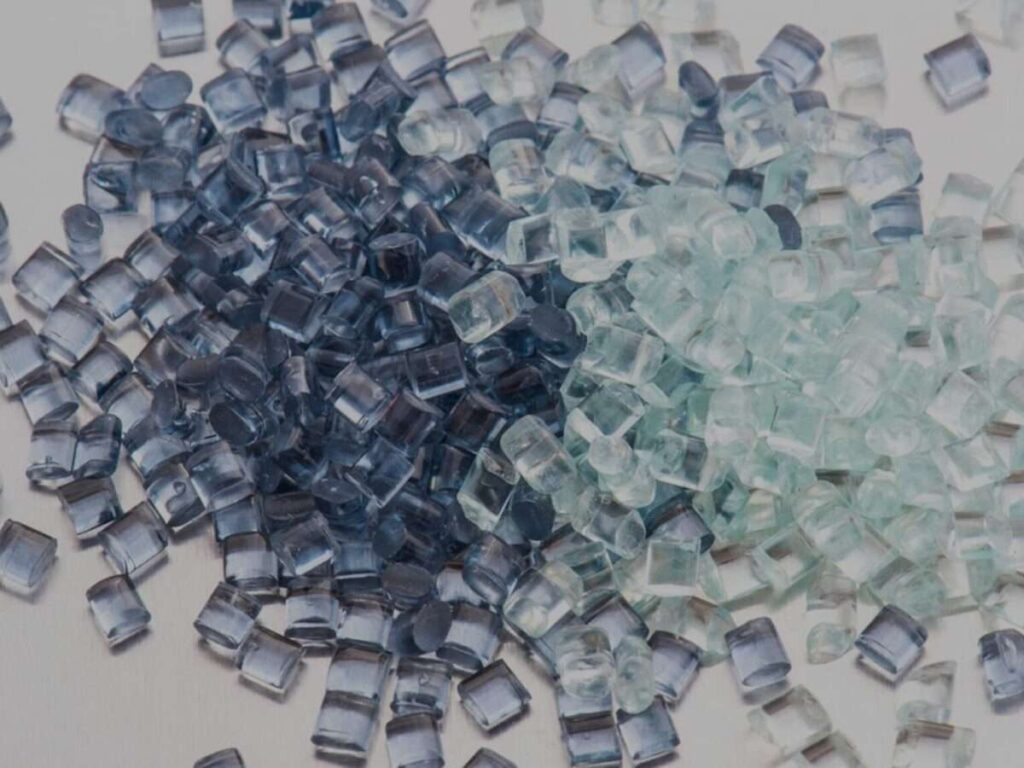
When strength and clarity matter, polycarbonate doesn’t just show up—it dominates. It’s one of the toughest plastics out there, and yet, it’s optically clear. That’s a rare combo.
We had a client in the industrial safety space who needed ultra-strong housings with high impact resistance—without sacrificing visibility.
We used PC through injection molding lines, and the results were flawless. Crystal-clear, strong enough to withstand drops and vibration, and consistent across every unit.
If you’re building parts that need to survive real-world abuse—especially in harsh or high-performance environments—polycarbonate might be your best move.
Common Applications
- Protective gear, safety visors, and riot shields
- Optical lenses, LED covers, and light diffusers
- Medical device housings
- Electronic components, connectors, and enclosures
- Aerospace and automotive interior panels
Key Properties
- High impact strength—250x stronger than glass
- Optical clarity with light transmission up to 90%
- Heat-resistant (up to ~135°C continuous use)
- Good dimensional stability
- Flame retardant (with additives) and electrically insulative
Advantages and Limitations
Advantages
- Exceptional Impact Strength: Nearly unbreakable under normal use—ideal for safety-critical applications.
- Transparent and UV-Stabilized Options: Offers clear or tinted designs for consumer and industrial use.
- High Heat Resistance: Maintains form and strength at elevated temperatures.
- Stable and Rigid: Delivers precise tolerances and retains structure under stress.
Limitations
- Scratches Easily: Requires hard coatings for scratch resistance in exposed surfaces.
- Prone to Stress Cracking: Sensitive to certain chemicals and oils.
- Expensive: Higher raw material and processing cost compared to basic plastics.
- Drying Required: Must be properly dried to avoid bubbling and brittleness.
Molding & Processing Considerations
- Ideal Temperature Range: 280–320°C
- Drying Before Molding: Essential—dry at 120°C for 3–4 hours to prevent moisture issues
- Mold Shrinkage: Low (~0.5–0.7%)—helps maintain dimensional accuracy
- Processing Notes: Requires high injection pressure and mold temperature control
- Compatible With: Coatings, overmolding, precision inserts, and clear part applications
5. Nylon (Polyamide – PA6, PA66)
Nylon doesn’t just perform—it endures. When you need a part to flex, bend, or bear weight under pressure, this material quietly gets the job done.
I once worked with a factory that switched to PA66 for their gear housings after repeated failures with cheaper plastics.
The change was night and day. Parts that used to wear out in months suddenly lasted through full production cycles—with zero deformation, even under load.
Nylon is a workhorse. Strong, tough, and self-lubricating—it’s perfect when you need durability over aesthetics.
Common Applications
- Gears, bushings, and bearings
- Automotive engine components
- Industrial conveyor parts and rollers
- Electrical connectors and insulators
- Power tool housings and mechanical components
Key Properties
- High mechanical strength and toughness
- Excellent wear and abrasion resistance
- Good thermal stability (up to 120°C continuous use)
- Low coefficient of friction—naturally slippery
- Available in reinforced versions (e.g., glass-filled)
Advantages and Limitations
Advantages
- Mechanical Strength: Handles heavy loads and repeated stress without deforming.
- Self-Lubricating: Great for moving parts and wear surfaces—often no grease needed.
- Heat and Chemical Resistance: Stands up to oils, fuels, and moderate heat.
- Low Friction Surface: Smooth movement in gears, hinges, and joints.
- Multiple Grades Available: You can tailor performance with PA6, PA66, or reinforced blends.
Limitations
- Moisture Absorption: Nylon pulls in water from the air, which can impact strength and dimensions over time.
- Higher Cost Than Commodity Plastics: More expensive than PP or PE.
- Drying Required Before Molding: Moisture can cause internal voids and brittleness if not dried properly.
- Can Be Brittle in Cold Environments: Needs modifiers for low-temperature performance.
Molding & Processing Considerations
- Ideal Temperature Range: 240–300°C (varies by grade)
- Drying Before Molding: Crucial—dry at 80–90°C for at least 4–6 hours
- Mold Shrinkage: Moderate to high (0.8–2.0%) depending on moisture and glass content
- Processing Notes: Needs controlled cooling to prevent warpage; reinforced grades are more dimensionally stable
- Compatible With: Inserts, reinforced fibers, threaded components, and structural parts
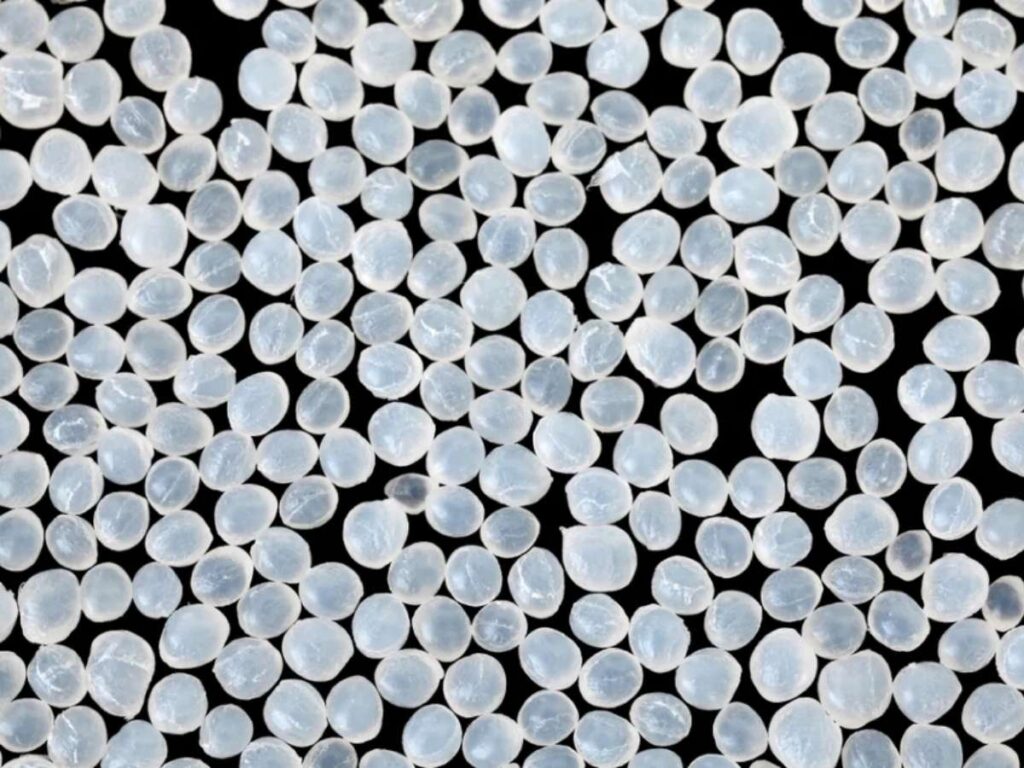
6. Polystyrene (PS)
Polystyrene is often underestimated—and honestly, I used to overlook it too. But if you’re producing high volumes of rigid, low-cost parts with decent surface finish, PS can actually be a smart play.
I once supported a production run of internal electronic casings for a budget device. The client needed something clean-looking and stiff, but without overspending.
We used GPPS (General Purpose Polystyrene), and it molded perfectly—fast, clean, and within spec. It wasn’t glamorous, but it worked.
If your part isn’t under mechanical stress or exposed to chemicals, PS might be the efficient, no-fuss solution you’re looking for.
Common Applications
- Disposable cutlery, cups, and trays
- Electronic housings and light diffusers
- Medical test kits and diagnostic trays
- CD/DVD cases, cassette covers
- Packaging inserts and cosmetic containers
Key Properties
- High rigidity and dimensional stability
- Glossy surface finish with excellent detail
- Easy to color and print on
- Good electrical insulating properties
- Low cost and fast cycle times
Advantages and Limitations
Advantages:
- Cost-Effective: Ideal for budget-conscious, high-volume projects.
- Good Surface Finish: Produces clean, shiny surfaces right out of the mold.
- Easy To Mold: Low melt temperature and high flowability.
- Dimensional Stability: Holds shape well during molding and cooling.
- Recyclable Grades Available: Easy to source and manage waste streams.
Limitations:
- Brittle: Cracks easily under impact—avoid for stress-bearing parts.
- Poor Chemical Resistance: Breaks down with solvents and some oils.
- Low Heat Resistance: Starts to soften around 70–90°C.
- UV Sensitive: Degrades under prolonged sunlight unless stabilized.
Molding & Processing Considerations
- Ideal Temperature Range: 180–250°C
- Drying Before Molding: Generally not needed—PS has very low moisture absorption
- Mold Shrinkage: Low (~0.3–0.6%)—great for detailed parts and tight tolerances
- Processing Notes: Rapid cooling is possible for faster cycle times
- Compatible With: Thin-walled parts, inserts, multi-cavity molds, and high-speed molding
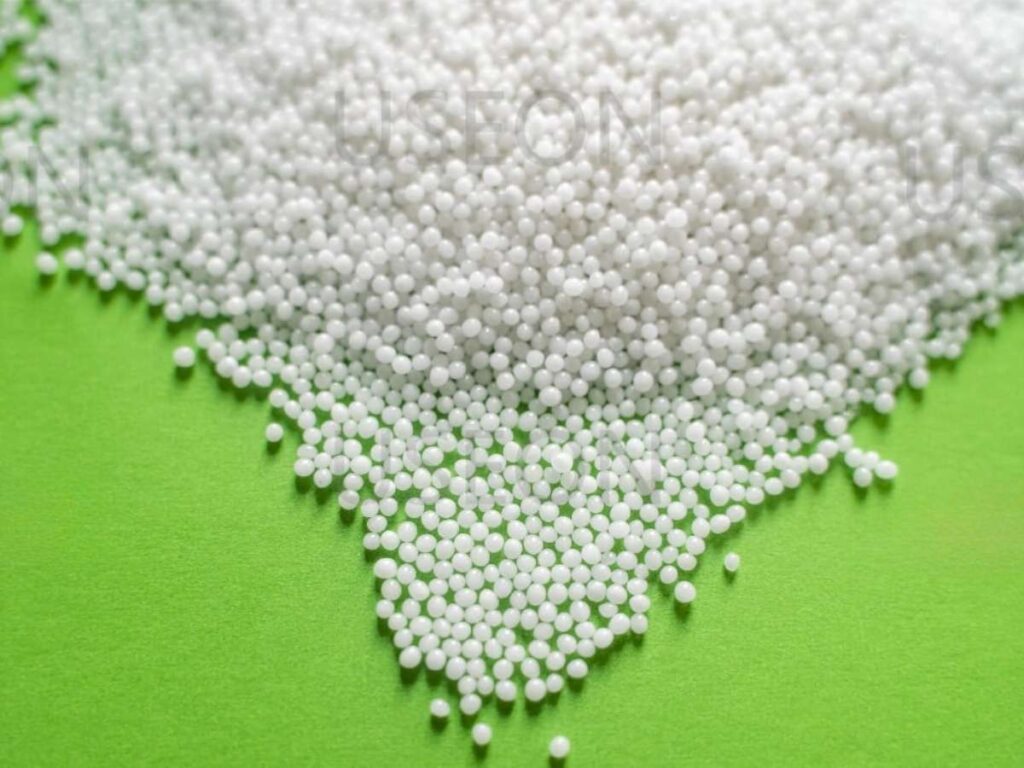
7. POM (Acetal/Delrin)
When precision, strength, and smooth motion are non-negotiable, POM steps in. Also known by the brand name Delrin, it’s one of the most reliable engineering-grade plastics for moving parts and tight-tolerance components.
I’ll never forget a project we took on for a manufacturer producing high-performance locking mechanisms. They’d been battling wear issues and jamming with cheaper plastics. We transitioned the design to POM and ran the parts through MachMaster’s precision molding system. The difference was instant—cleaner engagement, no sticking, and wear resistance that held up even under pressure.
If you’re working with gears, levers, or parts that require snap, glide, or exact fit—POM delivers that with confidence.
Common Applications
- Gears, cams, bearings, and bushings
- Locking mechanisms and latches
- Precision medical components
- Electrical insulators and connectors
- Automotive fuel system parts
Key Properties
- High stiffness and dimensional accuracy
- Low friction, self-lubricating surface
- Excellent fatigue resistance under repeated stress
- Low moisture absorption—better dimensional stability than nylon
- Good chemical resistance (excluding strong acids)
Advantages and Limitations
Advantages:
- Exceptional Dimensional Stability: Holds shape even in precision or tight-fitting applications.
- Self-Lubricating: Glides smoothly—ideal for moving and rotating parts.
- Strong and Stiff: Withstands repeated mechanical loads and stress.
- Low Moisture Absorption: Retains accuracy in humid or wet environments.
- Precision: Tooling and mold control systems are optimized for engineering plastics like POM, ensuring clean finishes and tight tolerances.
Limitations:
- Cost: More expensive than basic plastics like PP or PS.
- Chemical Sensitivity: Can degrade in contact with strong acids or chlorine-based solutions.
- Brittleness: Less impact-resistant than materials like ABS or PC.
- Drying Required: Needs pre-drying to avoid surface defects or voids.
Molding & Processing Considerations
- Ideal Temperature Range: 190–230°C
- Drying Before Molding: Recommended—dry at 80–100°C for 2–4 hours
- Mold Shrinkage: Low to moderate (1.5–2.0%), depending on grade and mold design
- Processing Notes: Requires smooth, polished molds to reduce friction and wear
- Compatible With: Precision tooling, multi-cavity molds, inserts, and functional prototyping
At MachMaster, we regularly mold POM for applications that demand precision and performance—especially in tight tolerance assemblies, locking systems, and high-wear components.
If your parts are functional, mechanical, and can’t afford to fail, POM might be exactly what you need.
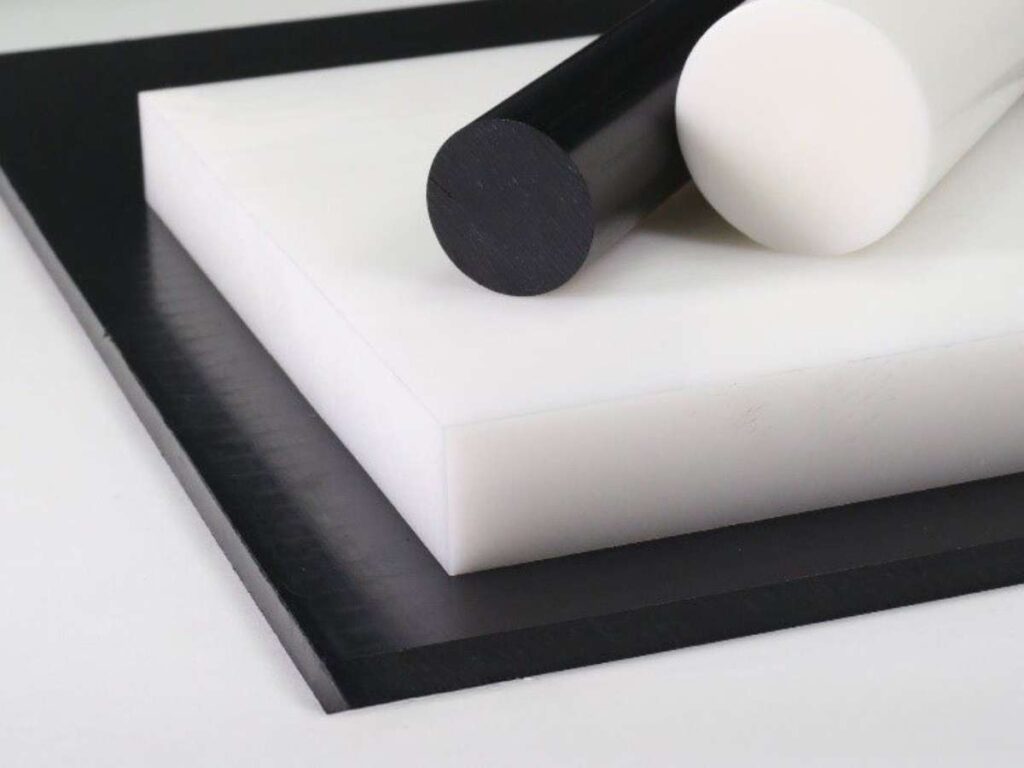
8. PVC (Polyvinyl Chloride)
PVC is one of those materials that surprises people. It’s rigid or flexible, cheap or specialized, depending on how you formulate it. And when you get it right, it performs beautifully—especially in electrical, medical, or construction-related applications.
I once collaborated on a project for a client producing compact enclosures for wall-mounted electronics. They needed a material that could handle indoor wiring environments without off-gassing or warping. PVC hit every requirement: stable, fire-retardant, easy to mold—and it looked clean right out of the press.
If your product lives near wiring, fluids, or indoor installations, PVC deserves a serious look.
Common Applications
- Electrical conduit and wiring housings
- Medical tubing, IV components, and fluid containers
- Plumbing fittings and valves
- Credit cards and ID cards
- Construction trim, wall plates, and custom profiles
Key Properties
- Naturally flame retardant
- Chemically resistant (acids, salts, alcohols)
- Available in rigid (uPVC) and flexible (plasticized) forms
- Good electrical insulating properties
- Low-cost and widely available
Advantages and Limitations
Advantages:
- Flame Retardant: Great for electronics, construction, and safety-focused products.
- Versatile Formulations: Available in soft or rigid variants to suit a range of uses.
- Chemical Resistance: Holds up against water, salts, alcohols, and most acids.
- Affordable: Among the most cost-efficient plastics in terms of both material and processing.
- Excellent Insulator: Common choice for cable sheathing and electrical housings.
Limitations:
- Toxic Fumes When Burned: Requires proper ventilation and safety controls during processing.
- Limited Heat Resistance: Begins softening around 60–70°C; not ideal for high-temp use.
- Environmental Sensitivity: Often scrutinized due to additives and plasticizers used in flexible grades.
- Brittle in Cold Temps: May crack or fail under impact in low-temperature environments without modifiers.
Molding & Processing Considerations
- Ideal Temperature Range: 160–210°C
- Drying Before Molding: Usually not needed, but keep the material dry to ensure surface quality
- Mold Shrinkage: Low to moderate (0.2–0.6%) depending on formulation
- Processing Notes: Needs corrosion-resistant tooling if chlorine exposure is prolonged
- Compatible With: Overmolding, multi-cavity molds, and products requiring flame rating
Conclusion
That early mistake taught me something important: choosing the right material isn’t just technical. It’s personal. It affects your product, your time, and your peace of mind.
Now, you know what each plastic can do. You understand where it works, and when it doesn’t.
You don’t have to guess like I did.
Take what you’ve learned and apply it to your next part, project, or prototype. Start now. Don’t wait for failure to be your teacher.
So, what part are you working on next?
Need help making the final call? Reach out today. I’d be happy to help.
Explore Related Resources
Want to see more? We’ve gathered additional product choices to give you even more variety:
Still haven’t found what you’re looking for? Don’t hesitate to contact us. We’re available around the clock to assist you.