
A few years ago, I lost a project because I couldn’t finish a complex part on time. My 4-axis machine wasn’t cutting it. That’s when I started looking into 5-axis machining.
You might be in a similar spot now, deciding if it’s time to upgrade or switch your supplier.
I’ve been running a metal fabrication shop for over a decade. I’ve worked with 4-axis machines for years and later added 5-axis to meet tougher demands. I’m not here to sell you anything.
This review is based on real jobs, real deadlines, and real trade-offs. Here’s what you’ll get in this article:
- A simple breakdown of how 4-axis and 5-axis machines work
- What each one can do, and where they fall short
- Clear points to help you choose the right option for your part or project
We’ll keep it simple, practical, and focused on what matters to you.
So let’s get down to it!
Quick Comparison Chart
Choosing between 4-axis and 5-axis CNC machines comes down to your project needs, complexity, and precision requirements. Below is a side-by-side comparison to help you evaluate which system fits your workflow best:
| Feature | 4-Axis Machining | 5-Axis Machining | Winner | Use Case Example | Key Consideration |
| Axes of Movement | X, Y, Z + A (rotates around X-axis) | X, Y, Z + A + B or C (dual rotary axes) | 5-Axis | Milling a curved slot on a cylinder | 5-axis offers more access to complex angles |
| Setup Complexity | Moderate – some manual repositioning may be needed | High – but allows single-setup for complex parts | Depends on skill | Fixturing a cube with 3 machined sides | 5-axis reduces repositioning but takes planning |
| Precision | High for simpler parts, but impacted by repositioning | Ultra-high with better surface finish and accuracy | 5-Axis | Medical implant or aerospace fin blade | 5-axis minimizes error with fewer setups |
| Programming Difficulty | Easier to learn, faster setup | Advanced CAM knowledge required | 4-Axis (for ease) | Simple prototypes or low-run parts | 5-axis pays off for complex jobs |
| Cost | Lower machine and tooling cost | Higher initial and maintenance costs | 4-Axis (budget) | Small workshop or startup | 5-axis is a bigger investment |
| Best Applications | Symmetrical parts, engraving, side milling | Complex contours, deep cavities, tight tolerances | Depends | Gears vs. impellers | Match complexity to capabilities |
1. What Is 4-Axis CNC Machining
If you’ve been relying on basic 3-axis setups and are starting to hit limits, 4-axis CNC machining is likely your next move.
I’ve been there. Years ago, I was quoting a part that needed holes on the sides and a pocket on top — nothing wild, but too much for my old 3-axis machine to handle efficiently. We could’ve done it, but with too many setups, too much risk, and wasted time. That job made me start using 4-axis — and I haven’t looked back.
How It Works
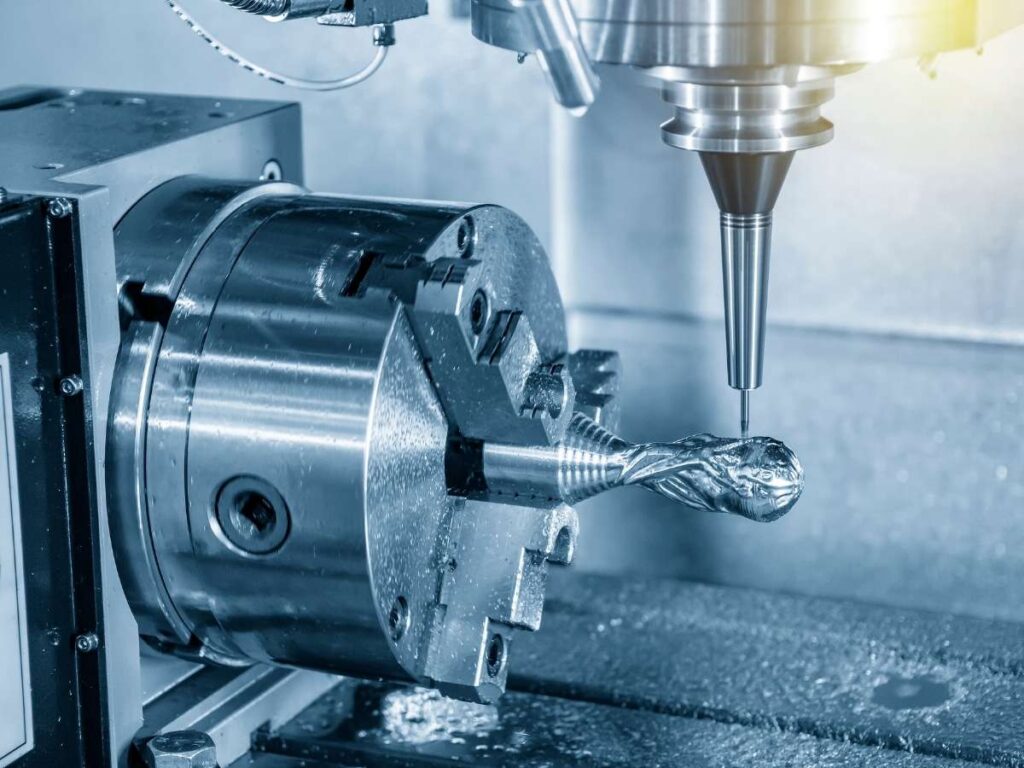
4-axis machining adds one rotating motion to the three standard directions — X (left to right), Y (front to back), and Z (up and down). The fourth is called the A-axis, and it lets the part spin around the X-axis.
Instead of stopping production to re-clamp or rotate a part by hand, the machine does it mid-process. That keeps things tight, quick, and consistent.
Types of 4-Axis Machines
Not all 4-axis setups are the same. You’ll usually see two types:
- Rotary Table on a Vertical Machine: The part sits on a table that spins. Great for round parts or features on different sides.
- Rotary Axis on the Spindle Side: Here, the tool head rotates instead. This layout is less common, but useful for long or heavy parts that are harder to spin.
Both give you more angles and more options — without adding complexity like a 5-axis system does.
2. What Is 5-Axis CNC Machining
When I first looked into 5-axis machining, I thought it was overkill for my shop.
The machines looked complicated. The price tag was hard to justify. But after taking on parts that required multiple angled cuts, sharp surface finishes, and fast turnarounds, I changed my mind.
If your parts are getting more complex or you’re tired of dealing with setup after setup, this might be the solution you need.
How It Works
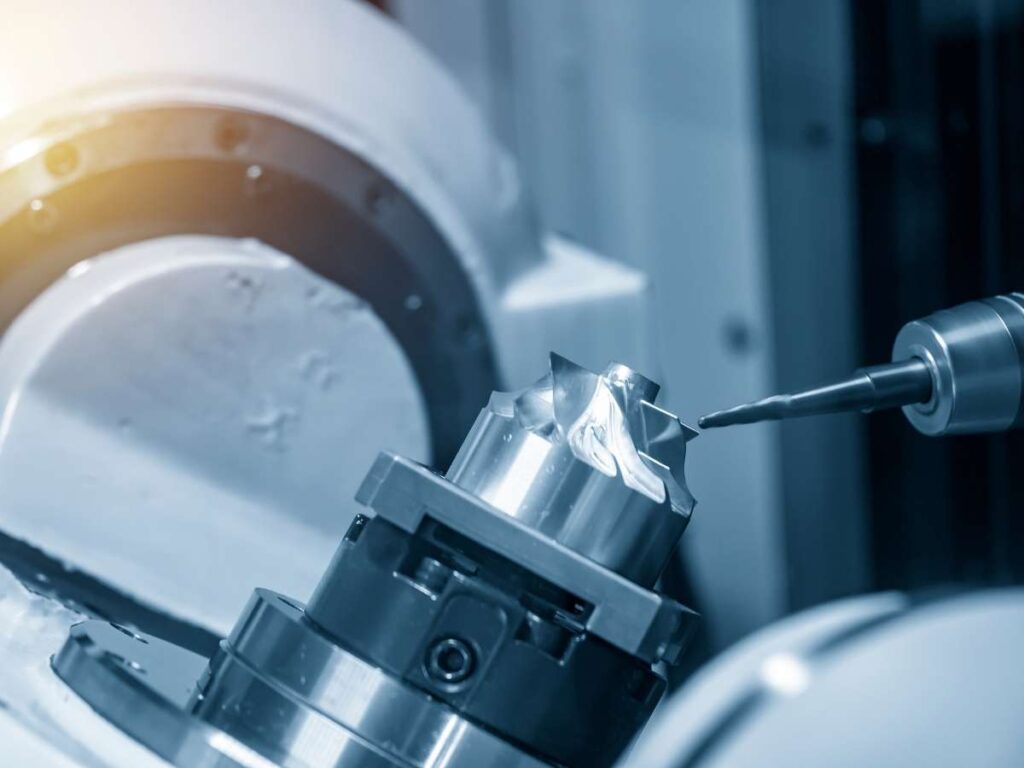
5-axis machining moves along the same X, Y, and Z directions, but adds two more rotating axes: the A-axis (rotation around X) and the B-axis (rotation around Y), or sometimes C-axis (rotation around Z), depending on the machine.
With five axes working together, the tool can reach nearly any angle in one setup. That means more freedom, fewer fixtures, and better results for detailed parts.
Types of 5-Axis Machines
Most shops use one of these two layouts:
- Trunnion Type: The part sits on a tilting table that moves under a fixed spindle. It’s better for larger metal removal and heavier parts.
- Swivel Head Type: The cutting tool tilts and rotates while the part stays in place. This works well for tight setups and taller parts.
Each setup has trade-offs, but both give you wide-angle access without having to stop and reset your workpiece.
3. Axes of Movement
Let’s break it down.
What do we really mean when we talk about axes in CNC machining? If you’ve ever wondered how machines move and cut with such precision, it all comes down to the number of axes they can operate on.
The more axes, the more control and flexibility you get. Here’s how it plays out for both 4-axis and 5-axis machines.
4-Axis Machining
Stepping up from a traditional 3-axis setup, 4-axis machining introduces a whole new level of movement. It’s a great middle ground if you’re looking to do more without going full throttle into 5-axis territory.
- X, Y, Z Linear Motion: These are the bread and butter of any CNC machine. The tool moves left to right (X), forward and back (Y), and up and down (Z). It’s how you get your basic shaping done—simple but essential.
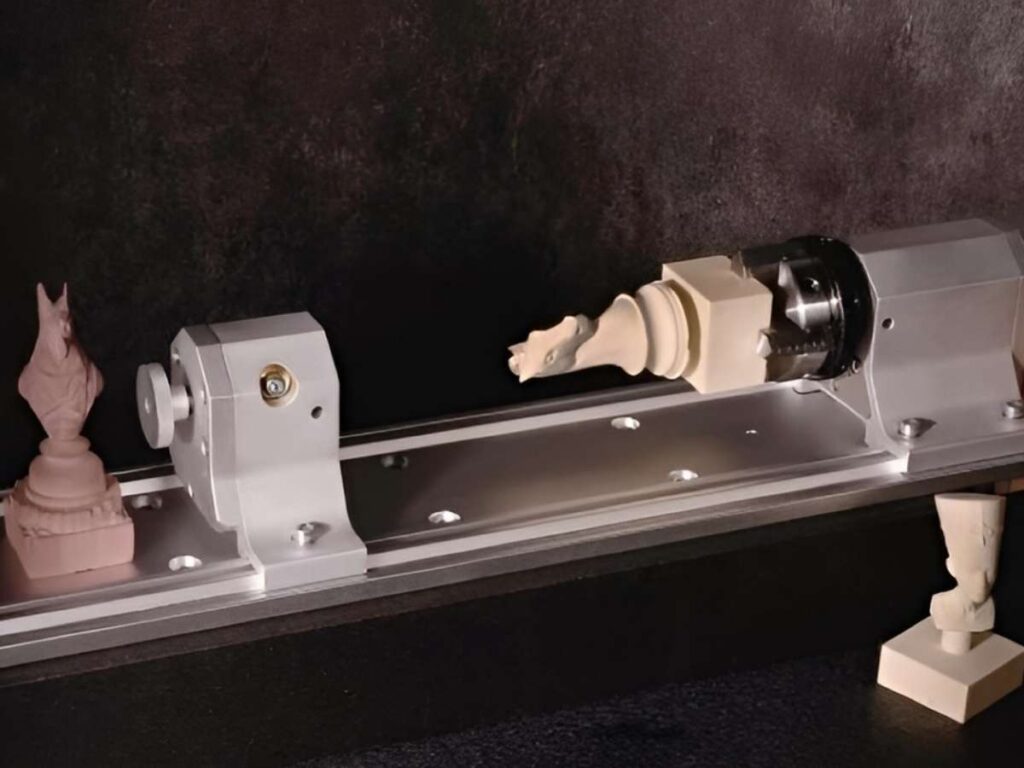
- Rotary Motion (A-Axis): Here’s where things get interesting. The 4th axis rotates around the X-axis, letting your part spin while being worked on. Think of it as the ability to work around a cylinder without stopping to reposition.
- Indexing for Easier Setup: With the A-axis, you can also “index” your part—rotate it to a set angle, stop, and machine a new face. It’s a real time-saver and helps you keep everything aligned and accurate without babysitting the setup.
5-Axis Machining
Now, if you’re ready to go all-in on precision and complexity, 5-axis is where the magic happens. This is the kind of tech that makes seemingly impossible parts possible.
- Two Rotary Axes (A and B or C): In addition to the spinning A-axis, 5-axis machines throw in either a B- or C-axis. That means the tool or part can tilt in even more directions—making tricky angles a breeze to reach.
- Simultaneous Movement on All Axes: This is the game-changer: all five axes can move at the same time. It’s like watching a perfectly choreographed dance, where the machine shapes the part from all sides without ever stopping.
- Better Finish, Fewer Setups: With this level of flexibility, you don’t have to keep flipping the part or re-aligning it. That means tighter tolerances, smoother finishes, and way less hassle for you on the shop floor.
4. Setup Complexity
Let’s talk about something that every machinist, engineer, or CNC shop owner thinks about, setup time.
Because let’s be real: it doesn’t matter how powerful your machine is if you’re spending hours just getting the part positioned right.
The difference in setup between 4-axis and 5-axis machines is more than just a few extra steps—it can completely change your workflow.
4-Axis Setup
A 4-axis machine gives you a solid boost in capability without overwhelming you during setup. It’s a nice balance of automation and control—perfect if you want more flexibility without diving into the deep end.
- Fewer Variables to Manage: With only one rotating axis added to the standard 3, you’re not juggling too many moving parts. This means setups are relatively fast, and it’s easier to predict tool paths and clearance.
- Manual Repositioning Still Common: While the rotary axis helps a lot, you’ll often still need to pause and manually reposition your part if it needs machining on complex angles. It’s manageable, but does interrupt the flow.
- Easier Learning Curve: If you’re stepping up from a 3-axis machine, the jump to 4-axis isn’t too intimidating. It’s straightforward enough to train on, especially for small shops or solo machinists.
5-Axis Setup
Here’s where things get a little more advanced—and, let’s be honest, a bit more intense. But the trade-off? You get incredible efficiency and precision once everything’s dialed in.
- More Axes, More Complexity: With two rotational axes in the mix, there’s more to consider—tool orientation, clearance, collision risk. Setup takes more planning and often relies on CAM software to do the heavy lifting.
- Minimal Manual Intervention: The upside? Once you’ve got it set up, you rarely need to touch the part again. The machine can access almost any surface in a single run, which is a huge win for time and accuracy.
- Requires Advanced Programming and Fixturing: There’s a steeper learning curve here, no doubt. But if you’re working on tight-tolerance or highly contoured parts, the investment in learning and setup time pays off fast.
5. Machining Precision
When it comes to CNC work, precision isn’t just a buzzword, it’s the whole game.
Whether you’re machining aerospace components or custom parts for a client, how closely you can stick to your design specs makes all the difference.
So how do 4-axis and 5-axis machines stack up in terms of pure accuracy? Let’s break it down.
4-Axis Precision
4-axis machines absolutely bring more precision than standard 3-axis setups, especially when you’re working with curved surfaces or cylindrical shapes. But there are still a few limitations you’ll want to keep in mind.
- High Accuracy on Simple to Moderate Parts: With proper calibration and setup, 4-axis machines can produce tight tolerances on most jobs. It’s more than enough for things like gears, housings, and symmetrical components.
- Repositioning Affects Consistency: Any time you manually reposition a part, you introduce a small chance of error. Over multiple setups, these tiny misalignments can add up—especially on complex geometries.
- Surface Finish May Require Post-Processing: If you’re machining a part with lots of contours or transitions, you might find that the finish isn’t perfect in one go. Some light sanding or secondary machining may be needed to dial it in.
5-Axis Precision
This is where 5-axis machines really shine. If you’re chasing ultra-high precision or working on parts with deep contours and tight angles, this is the tool for the job.
- Single-Setup Accuracy: The biggest advantage? You can hit multiple faces and angles in one continuous operation. That drastically cuts down on error margins and makes your parts more consistent, batch after batch.
- Superior Surface Finishes: Because the tool can maintain optimal contact with the surface throughout the cut, you get a smoother finish right off the machine. Less need for polishing or cleanup later.
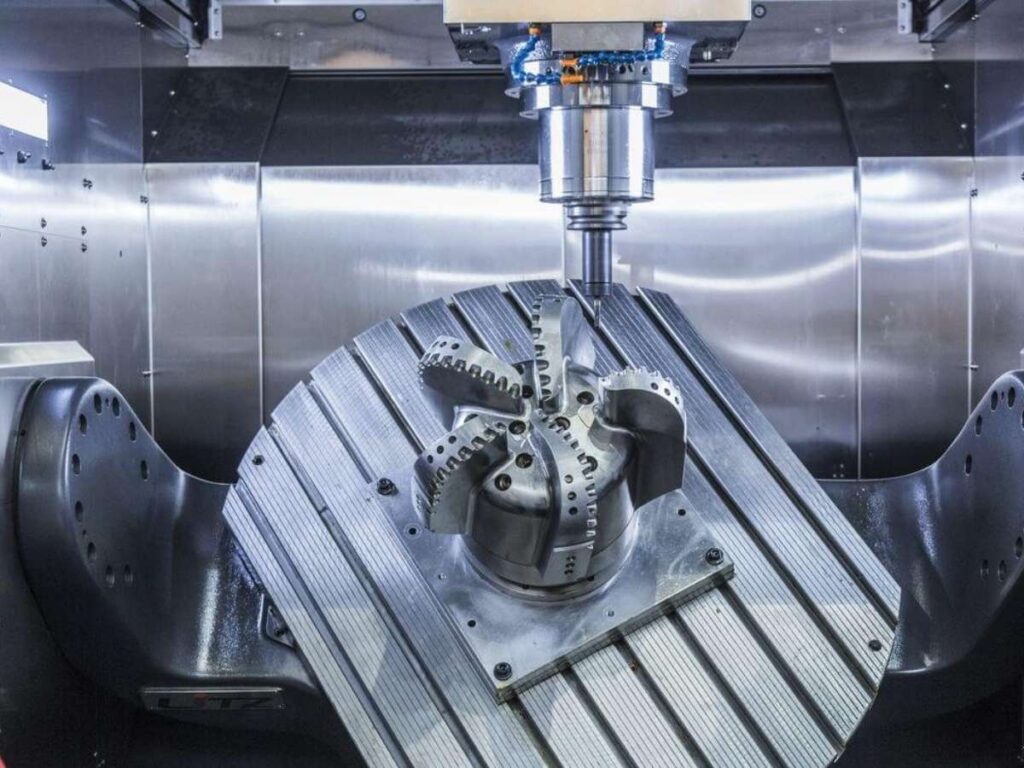
- Ideal for Complex, High-Tolerance Work: From aerospace blades to medical implants, 5-axis machining lets you hold extremely tight tolerances on complicated shapes. It’s built for jobs where precision isn’t optional—it’s critical.
6. Suitable Applications
Choosing between 4-axis and 5-axis CNC machining isn’t just about budget or capability, it’s also about fit.
The real question is: what kind of work are you doing, and what machine makes the most sense for it?
Let’s take a look at where each type really excels in the real world.
4-Axis Applications
If your work involves mostly flat surfaces, rotational symmetry, or moderate complexity, 4-axis might be your sweet spot. It offers a great balance between functionality and simplicity.
- Rotational Parts and Profiles: Think gears, cams, and pipe fittings. The rotary axis is perfect for wrapping toolpaths around cylindrical parts with speed and accuracy.
- Engraving and Slotting on Multiple Sides: Need to cut or engrave on several faces of a part? With 4-axis indexing, you can handle that without constant repositioning.
- Small to Medium Production Runs: For prototyping or low-volume batches, 4-axis machining gets the job done efficiently—without the overhead of full 5-axis programming or fixturing.
5-Axis Applications
If you’re tackling complex geometry, ultra-high precision, or tight access angles, 5-axis machining opens the door to things that just aren’t possible otherwise.
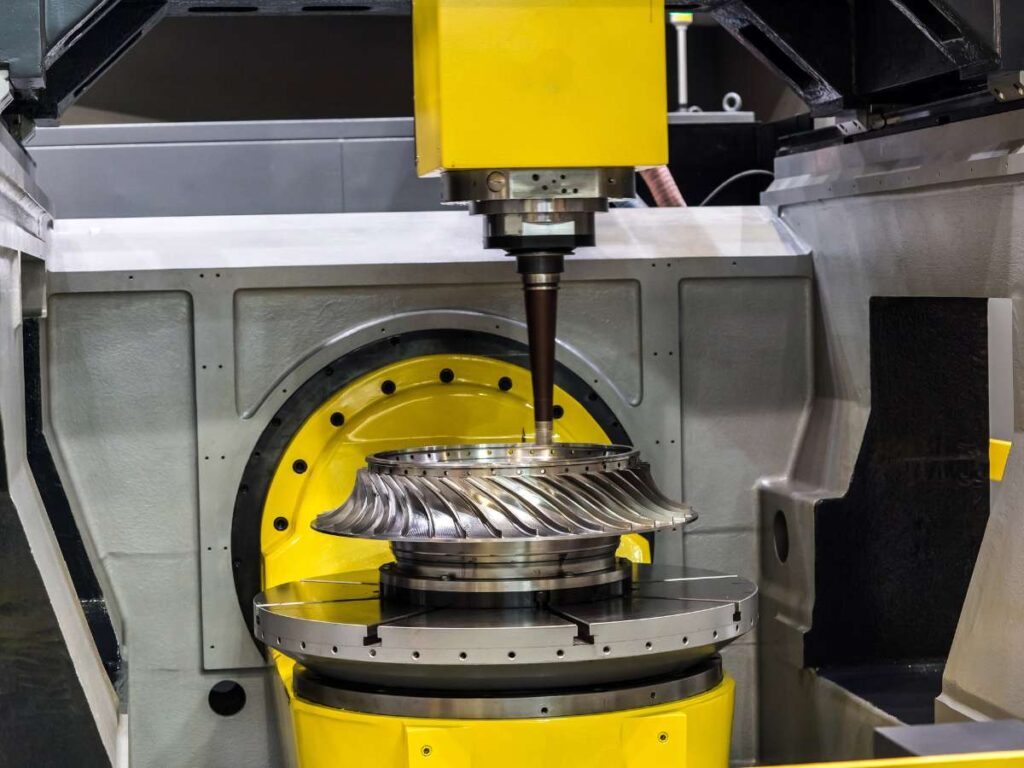
- Aerospace and Automotive Components: Parts like turbine blades, impellers, and engine housings often have intricate contours that demand simultaneous multi-axis movement and flawless surface finish.
- Medical Devices and Implants: Orthopedic implants, surgical tools, and other medical-grade parts need both extreme accuracy and smooth, contoured surfaces—right up 5-axis’s alley.
- Mold & Die Making: Creating molds with deep cavities, undercuts, or detailed textures? 5-axis machines can hit every nook and cranny in a single, continuous setup.
7. Tips for Choosing Between 4-Axis and 5-Axis CNC Machining
The decision between 4-axis and 5-axis machining can affect your cost, timeline, and final product quality.
Whether you’re sourcing parts or running production in-house, the right call depends on more than just machine specs.
Here are key tips to help you decide with clarity and confidence.
Know Your Part Geometry
Look at the shape, angles, and features of your part.
- Simple profiles or flat surfaces: A 4-axis machine can usually handle it
- Curved shapes or multi-angle features: You’ll need 5-axis to reach those areas in one setup
If your team or supplier needs to stop and reposition the part more than once, 5-axis may save time in the long run.
Consider Your Tolerance Requirements
How precise does the part need to be?
- 4-axis works well for standard tolerances and less complex features
- 5-axis offers tighter control when every angle matters
If parts must fit into assemblies, slide freely, or seal tightly — higher precision often justifies the added cost.
Think About Your Volume
Part quantity affects setup choices.
- High-volume runs of simple parts: 4-axis is often faster and more cost-effective
- Low- to medium-volume runs of complex parts: 5-axis can reduce time and waste by doing more in fewer steps
This is where setup time and repeatability start to matter more than individual cutting speed.
Review Your Budget and Timeline
Don’t look at machine time alone. Look at total cost and delivery.
Ask:
- Will multiple setups on a 4-axis machine delay my timeline?
- Will the 5-axis reduce inspection or rework time?
- What does a mistake or delay cost my operation?
The lowest hourly rate doesn’t always mean the lowest total cost.
Conclusion
You’ve learned the difference. 4-axis handles the basics, 5-axis handles the angles. You’ve seen when and why each one works.
I once chose the wrong machine and lost time. You can choose better. Start with what your part demands, not just what’s available.
Use this guide when you quote, plan, or source.
Contact MachMaster today if you want help choosing the right process for your next run.