
I remember the first time a client asked if we could make a part with 2 different colors on the same piece of aluminum. At the time, I had no idea how to do it, and I wasn’t sure if it was even possible.
That question led me down a long road of research and trial runs.
Over the years, I’ve worked closely with finishers, engineers, and product teams to figure out what works and what doesn’t. What I’ll share here is based on real experience.
In this article, you’ll learn:
- What two-color anodizing is and how it’s done
- What tools, materials, and skills it needs
- What to expect in cost, time, and design fit
If you’re thinking about using this process, this review will help you decide if it fits your needs.
Let’s take a closer look.
1. What is Two-Color Anodizing
The first time I heard about two-color anodizing, I was skeptical.
We had a client who needed high-end aluminum panels with sharp visual contrast. Paint wasn’t an option—they needed the finish to be durable, scratch-resistant, and clean enough for close inspection. That’s when a finishing expert introduced me to this process. At first, it seemed too complicated. But once we saw the results, it completely changed how we approached detailed aluminum work.
Now, let me break it down for you:
A Finish That Becomes Part of the Metal
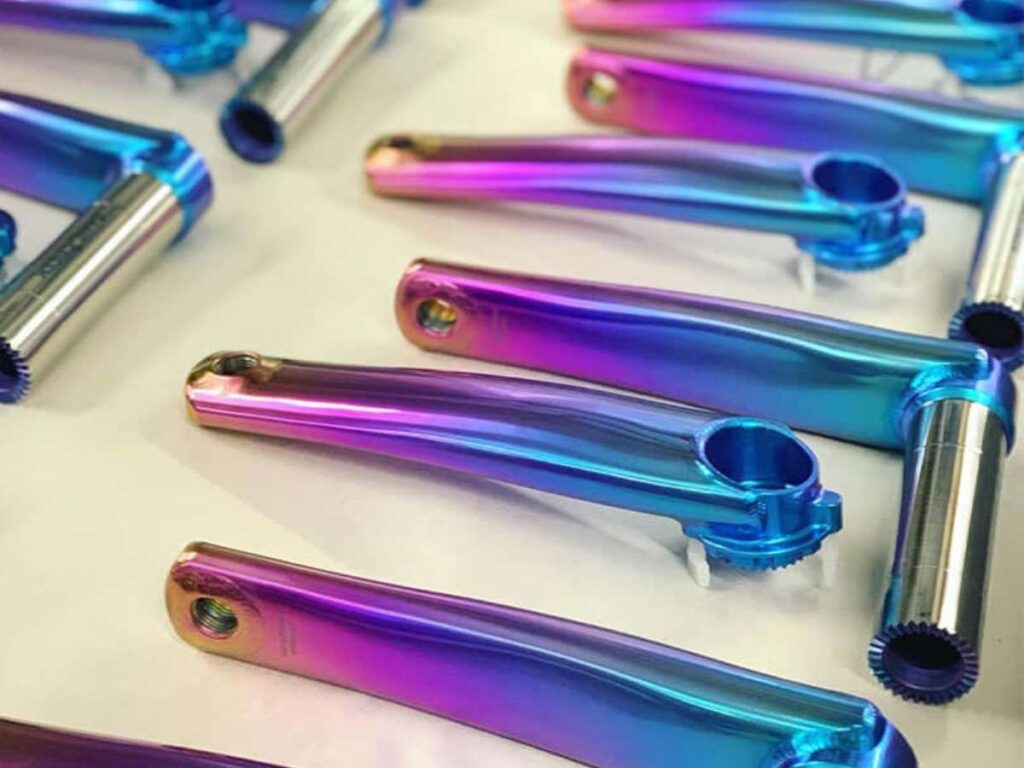
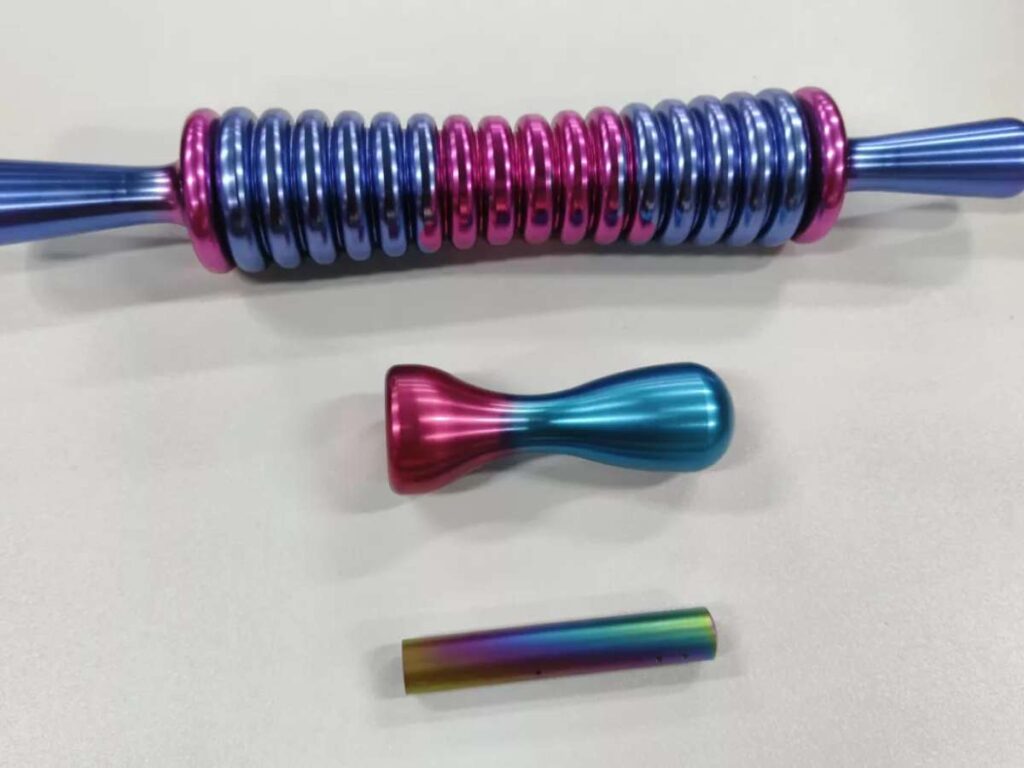
Two-color anodizing is a process used to add two separate colors to a single aluminum part.
This isn’t paint. The color becomes part of the aluminum by bonding into a hardened outer layer called the oxide layer. That layer is formed during anodizing.
This makes the finish:
- Long-lasting
- Fade-resistant
- Highly scratch-resistant
Why It’s Worth Considering
You should think about two-color anodizing if you need:
- Visual contrast for function or branding
- Durable surface color without stickers or labels
- A clean, finished look that holds up under wear
2. Benefits of Two Color Anodizing
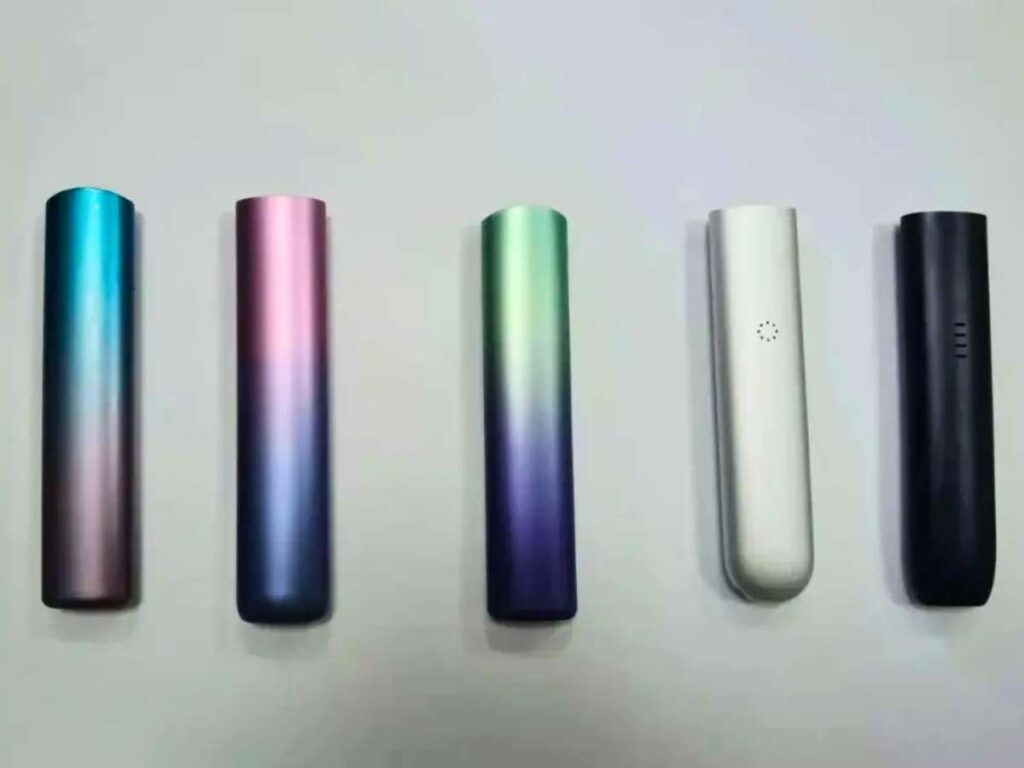
When I first used this process on a control panel, I wasn’t chasing looks. The goal was to function—making the buttons easier to identify with color. But once the parts came back, the clean contrast and solid feel surprised me. It looked sharp, and it held up after weeks of handling. That’s when I realized this process offers more than just appearance.
If you’re thinking about using two-color anodizing, here’s what it brings to the table.
Built-In Durability
Because the color is part of the metal surface, it won’t chip, peel, or rub off. It’s not like paint or stickers.
Once it’s there, it stays—even in rough use or exposed settings. This makes it a solid choice for:
- Equipment controls
- Tools and fixtures
- High-traffic components
At MachMaster, we provide high-precision two-color anodizing services tailored to both mass production and custom projects.
Visual Separation Without Extra Parts
You can highlight features or sections with color, all on a single piece.
That means no added layers, no assembly steps, and fewer failure points. This can be helpful when you need:
- Quick visual cues for function
- Branded areas (logos, zones, edges)
- Color coding in a clean, permanent way
Cleaner Designs, Fewer Materials
By adding 2 colors in one part, you remove the need for:
- Secondary coatings
- Inlays or decals
- Extra assembly steps
This keeps your design tight, while still delivering contrast and detail.
Less Maintenance Over Time
Since the finish resists wear, there’s less upkeep.
No touch-ups. No peeling paint. No replacements for worn stickers.
If you’re supplying parts for long-term use—or in places where cleaning is frequent—this is a finish that can hold up.
3. Types of Dye Used in Two Color Anodizing
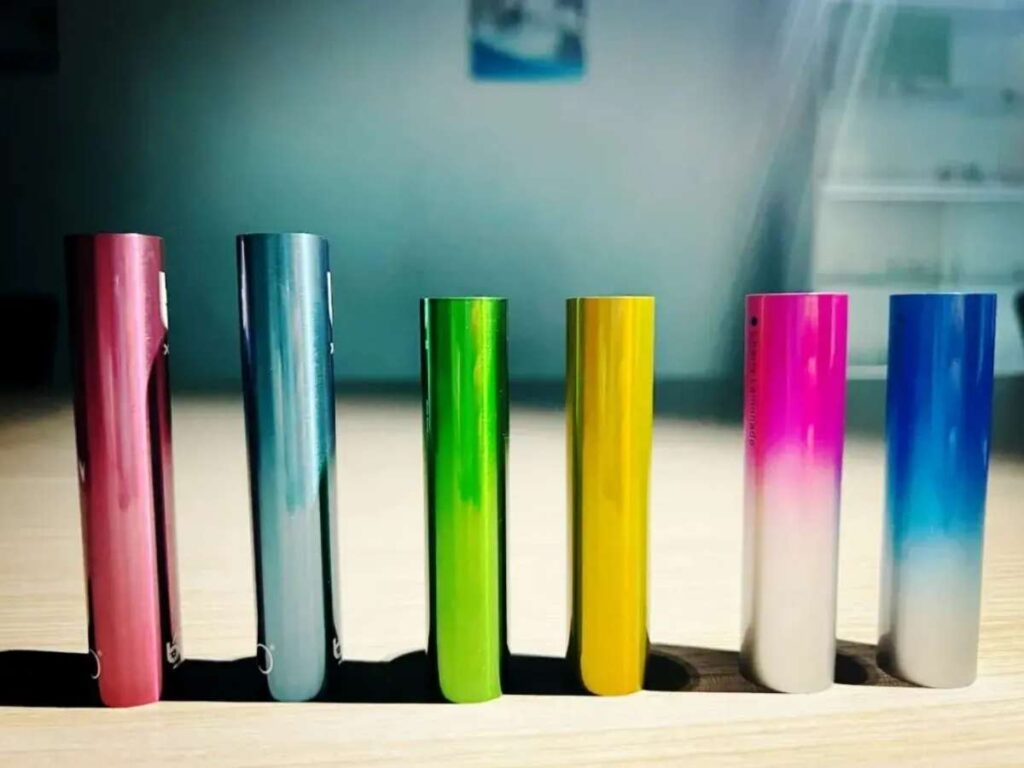
Choosing the right dye isn’t just about color. It affects how your part performs, looks, and even how it ages.
When I started using two-color anodizing, I thought any dye would do the job. But over time, I saw how small dye choices made big differences, especially when exposed to heat, sunlight, or cleaning chemicals. Some colors faded.
Some shifted tone. Some held strong. That’s when I began paying close attention to what goes into the tank.
Let’s go over what you need to know:
Organic Dyes
These are the most common in anodizing. They come in a wide range of colors and are cost-effective.
They also give bright, bold finishes. But there’s a trade-off: they can fade faster, especially in outdoor use.
Best for:
- Indoor parts
- Products not exposed to strong UV
- Projects needing specific or branded color shades
Inorganic Dyes (Metallic Salts)
These dyes are more stable than organic ones. They offer better UV resistance, which means they’re less likely to fade in the sun. However, the color range is more limited and often more muted.
Best for:
- Outdoor applications
- High-temperature environments
- Parts that need long-term color stability
Electrolytic Coloring (Two-Step Anodizing)
This isn’t a dye in the traditional sense. It’s a second treatment step where metal salts—like tin or cobalt—are deposited into the anodized layer.
It produces metallic tones like bronze, gold, or black. It’s very durable but has a narrower color range.
Best for:
- Architectural finishes
- High-durability industrial parts
- Areas where a metallic look is preferred
We at MachMaster proudly offer electrolytic two-step anodizing services, delivering precise, high-quality finishes tailored to both industrial and design-driven applications.
4. Key Materials and Equipment Used
When I first tried setting up a small anodizing batch, I thought the biggest challenge would be learning the steps. But what slowed me down was the setup. Missing tools. Cheap masking tape that didn’t hold. Dye that didn’t stay even.
That experience taught me something early, if your materials and equipment aren’t right, the results won’t be either. Here’s what you need to get this process right:
Aluminum Workpieces
Two-color anodizing only works with aluminum. The surface must be clean, smooth, and free of coatings or oils.
Some alloys take color better than others—6061 is one of the most common choices because of its consistent response.
Cleaning and Etching Solutions
Before anodizing, the metal has to be prepped. That usually includes:
- Alkaline cleaner to remove grease or dirt
- Acid etch (like nitric or phosphoric acid) to even out the surface
- Deoxidizer to strip away any oxidation or residue
This prep step is critical. If the surface isn’t clean, the dye won’t hold.
Anodizing Tank and Power Supply
This is the heart of the process. You’ll need:
- A tank large enough to submerge the part
- A sulfuric acid bath (the most common electrolyte)
- A DC power supply to control voltage and current flow
The power causes a chemical reaction that builds the oxide layer on the aluminum surface.
Dyes and Heating System
Once anodized, the part is ready to be dyed. You’ll need:
- Heated dye tanks to keep temperatures stable
- Dyes that match your color specs (see Section 3)
- Agitation to avoid streaks or uneven coverage
Each color must be done in its own tank. This matters for two-color anodizing, especially when switching between colors.
Masking Materials
Masking is what allows for the second color. This could include:
- Vinyl tape or liquid masking to block off areas
- Custom stencils or fixtures for sharp, repeatable edges
- Precision tools to apply or remove masks cleanly
Poor masking leads to color bleed or fuzzy lines. Good masking takes time, patience, and practice.
5. Steps on How the Two-Color Anodizing Process Works
The first time I tried two-color anodizing, I didn’t realize how many things could go wrong just from rushing one step. The color bled through the masking, and I had to scrap the entire batch.
That mistake cost me both time and money, but it also taught me how critical each part of the process really is.
If you’re considering this method, it helps to understand how it works from start to finish. Here are the main steps to getting a clean, accurate two-color anodized finish:
Step#1 Clean and Prepare the Aluminum Surface
This step sets the foundation. Before any coloring happens, the aluminum part must be fully cleaned and etched. That includes:
- Degreasing to remove oils or residue
- Acid etching to smooth the surface
- Rinsing to clear away all remaining particles
Any dirt, smudge, or leftover chemical can lead to poor dye absorption. Think of this like prepping a wall before you paint, it has to be spotless.
Step#2 Anodize and Apply the First Color
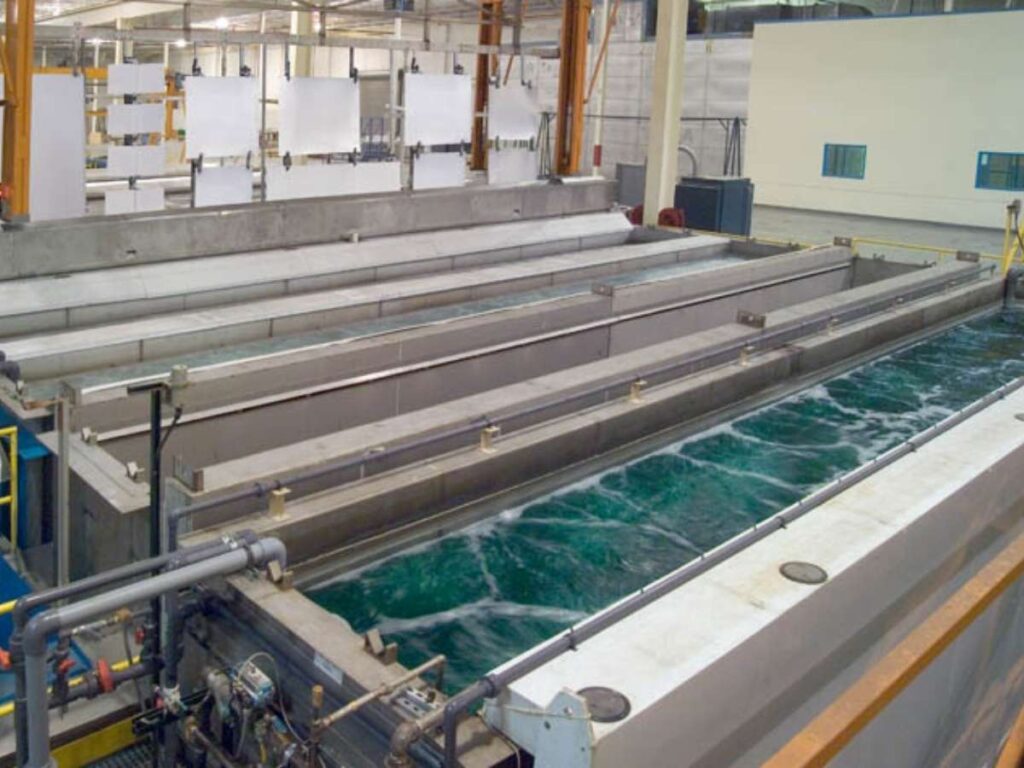
Now the part goes into the anodizing tank.
A DC current passes through a sulfuric acid bath, which creates a porous oxide layer on the surface. After that, the piece is dipped into the first dye tank.
That dye sinks into the oxide layer and sets the base color.
After dyeing, it’s not sealed yet—this keeps the pores open for the second round. Sealing too early would lock the color in and block the next step.
Step#3 Mask the First Color Area
Once the first color is set, the next step is to protect it. This is where masking comes in. You’ll cover the section that already holds the first dye using:
- Vinyl tape
- Liquid mask
- Custom-cut stencils or fixtures
Masking must be exact. If it’s loose, dye from the second step can bleed into the first area. This step takes time and attention. But it’s the key to getting clean edges between the 2 colors.
Step#4 Strip, Re-Anodize, and Dye the Second Area
With part of the surface masked off, the rest of the piece is exposed again. That exposed area is as follows:
- Stripped of its original oxide layer
- Or re-treated to open up the pores
Then it goes back into the anodizing tank for a second pass. After that, it’s dipped into a different dye bath to take on the second color.
The masked section stays untouched during this process.
Step#5 Seal the Entire Surface
Once both color areas are complete, the mask is removed. Now it’s time to seal the part. This locks the dyes into the oxide layer and adds protection.
Sealing is usually done with hot deionized water or a nickel-based sealant. This step closes the surface, improves durability, and keeps the colors stable over time.
6. Applications of Two Color Anodizing in Industry
When I started offering two-color anodizing, I thought the demand would be mostly cosmetic. But I was wrong. The first big order came from a factory that needed clear visual markings on control panels.
Not for looks, but for safety. That job opened my eyes to how useful this process really is across different sectors. Here are some of the most common ways industries are using two-color anodizing today:
Control Panels and Instrument Markings
In factory and machine settings, color separation helps reduce error. Two-color anodizing is used to:
- Highlight warning zones
- Separate input and output labels
- Mark off emergency buttons or system resets
Since the finish is built into the metal, it doesn’t wear away over time. This matters in rough or high-contact environments.
Branding and Product Identity
For companies that want their product to stand out, this process allows:
- Brand marks or logos to appear in a second color
- Sharp contrast between surfaces without extra parts
- Long-term appearance that won’t fade or peel
It’s common in consumer electronics, tools, and luxury hardware, where small details carry high value.
Aerospace and Defense
These sectors often require visual clarity without added weight or complexity. Two-color anodizing supports:
- Part identification
- Assembly indicators
- Color-coded locking or alignment zones
And because it doesn’t add bulk, it fits tight tolerance requirements.
Automotive and Motorsports
In this field, visual function matters, especially in performance parts. Uses include:
- Gear markers or shift indicators
- Contrast on pedals, knobs, or bezels
- High-wear parts that need a lasting finish
The sealed surface also resists fluid exposure and frequent handling.
Medical and Lab Equipment
Clean labeling is important, but so is chemical resistance. Two-color anodizing allows:
- Color-coded zones on instruments
- Long-term labeling that stands up to cleaning
- Better control over user interactions in sensitive areas
It avoids stickers, which can peel or trap bacteria.
7. Common Challenges and How to Overcome Them
The first few times I ran a two-color anodizing job, I underestimated how small mistakes could ruin the whole part. Masking slipped. Dye didn’t take evenly. Some pieces had to be tossed. It wasn’t just frustrating—it was costly.
If you’re thinking about using this process, it’s better to know the common problems ahead of time. That way, you can plan for them, or avoid them altogether.
Uneven Color or Bleed Between Areas
This is one of the most common issues. It happens when the mask doesn’t hold tight, or when the dye spreads under the edge.
What helps:
- Use high-quality masking tape or liquid resist
- Avoid sharp corners or rough textures near the color break
- Make sure surfaces are fully dry before switching steps
Tight masking takes time, but it’s the only way to get clean color lines.
Color Inconsistency Between Batches
Even if everything is done right, you might see slight color shifts between runs. Dye strength, temperature, and timing all affect the result.
What helps:
- Work with one supplier for all anodizing
- Keep dye tanks controlled and consistent
- Log time, temp, and soak duration for every batch
Treat this process like baking—a few seconds off can change the finish.
Limited Design Flexibility
Some shapes don’t work well for two-color anodizing. Deep recesses, small features, or overlapping edges make it hard to apply and remove masks cleanly.
What helps:
- Plan the design with this process in mind
- Break up complex parts into flat zones
- Use laser marking or engraving when color isn’t enough
Simple shapes make for better results—and fewer headaches.
Longer Lead Times
Every added step takes time. More prep, more handling, more drying, more checks. It’s not ideal for fast-turnaround jobs or short-notice changes.
What helps:
- Build in lead time from the start
- Set clear tolerances and samples early
- Work with partners experienced in two-color jobs
This isn’t a rush process—and shouldn’t be treated like one.
8. When to Choose Two Color Anodizing
I don’t recommend two-color anodizing to every client. Some don’t need the added steps. Others need results too fast. But for the right project—where clarity, branding, or durability matter—it’s a strong solution. You just have to know when it makes sense.
Let’s break it down:
Material Compatibility
Two-color anodizing only works with aluminum. If your product is made from other metals like stainless steel or brass, this process won’t apply. Stick with it only if your part is fully aluminum—or if switching materials is an option.
Design Simplicity and Masking Feasibility
This process needs clean zones for each color. If your part has:
- Flat or gently curved surfaces
- Clear divisions between sections
- Enough space for masking and unmasking
Two-color anodizing is a good candidate.
But if the part has tight grooves, small cutouts, or overlapping features, expect masking to be difficult and results to be less precise.
Purpose and Visual Requirements
Ask yourself: does your part need color contrast to function? If yes, this process is worth the effort.
It helps in products that use:
- Brand visuals or logos
- Instructional or directional zones
- Color-coded safety features
If the goal is visual clarity, two-color anodizing can help you achieve that—without extra parts or post-processing.
Conclusion
That first job I lost because I didn’t offer two-color anodizing? It taught me to stop guessing and start learning.
Now you know what it is, how it works, when to use it, and what to watch out for. You’ve got the full picture, from materials to mistakes.
If the process fits your needs, don’t wait.
Start planning your next part with clarity. Ask your supplier. Get a sample. Test it.
Are you ready to see how two-color anodizing could improve your product?
Let’s talk about your project. Contact MachMaster today.