
I kept hearing people say powder coating was the best way to finish metal. But whenever I asked what it actually was, no one gave a clear answer. Just vague stuff like, “It makes it look better” or “It helps it last longer.”
I didn’t really get it—until a part I helped design started peeling. The finish didn’t hold up, and we had to redo the whole thing. That’s when I finally asked, “Okay, what is powder coating, really?”
That mistake taught me to stop guessing and start learning. I talked to people in factories, watched how they did it, and asked a ton of questions just like you probably are now.
If you’re a business owner, designer, or just curious, I’ve got you. In this article, I’ll explain:
- What powder coating is
- How it works
- What it’s made of
- Where it’s used
No fancy words—just the basics you need.
Let’s jump in!
1. What is Powder Coating?
I used to believe all finishes were basically paint—if it looked smooth and had color, that was enough proof.
That’s when I discovered powder coating—a dry finish applied with an electrostatic spray and baked into a durable, smooth shell. No liquids, just powder that bonds strong and stays tough.
What Is the Powder Made Of?
Powder coating materials fall into two types:
- Thermosets: These cure with heat and can’t be remelted. They’re good for heat resistance.
- Thermoplastics: These melt and harden but can be reheated. They’re more flexible.
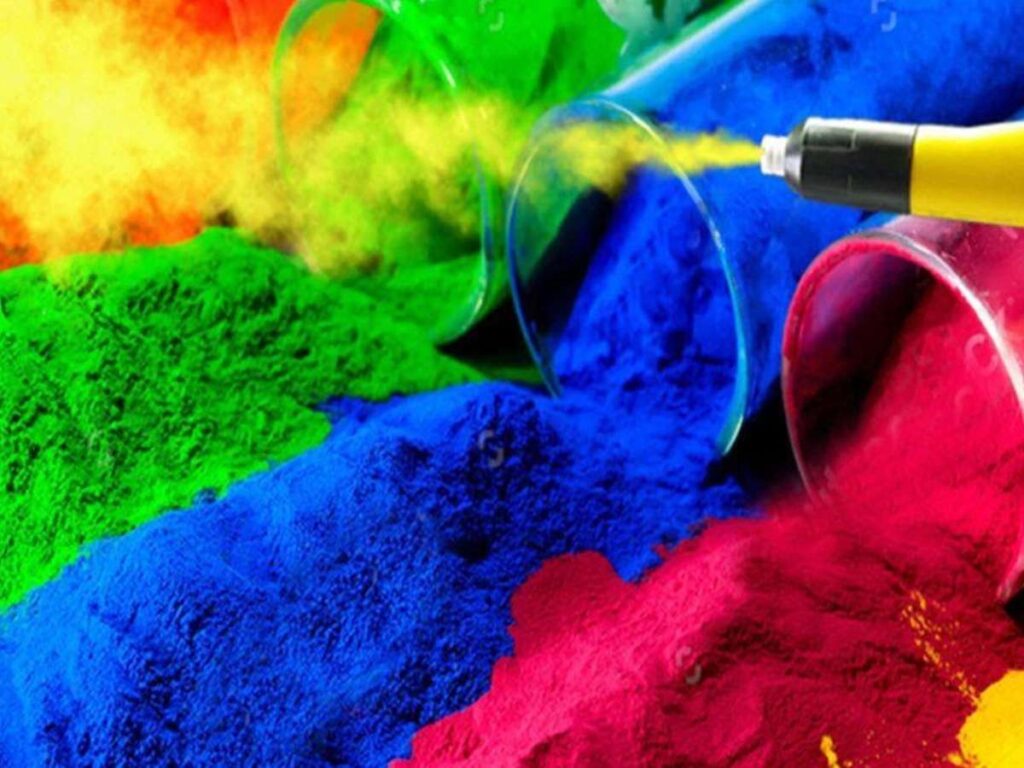
Both types include pigments (for color) and resins (for strength and texture). The mix depends on what the part needs—UV resistance, corrosion protection, or just a nice finish.
Why Use Powder Coating?
Here’s what powder coating offers:
- A strong, smooth finish
- No need for harsh chemicals
- Less waste—extra powder can be reused
- Good for parts that face heat, moisture, or wear
If you’re dealing with metal parts, outdoor equipment, or custom products, powder coating might be exactly what you need.
2. How Powder Coating Works?
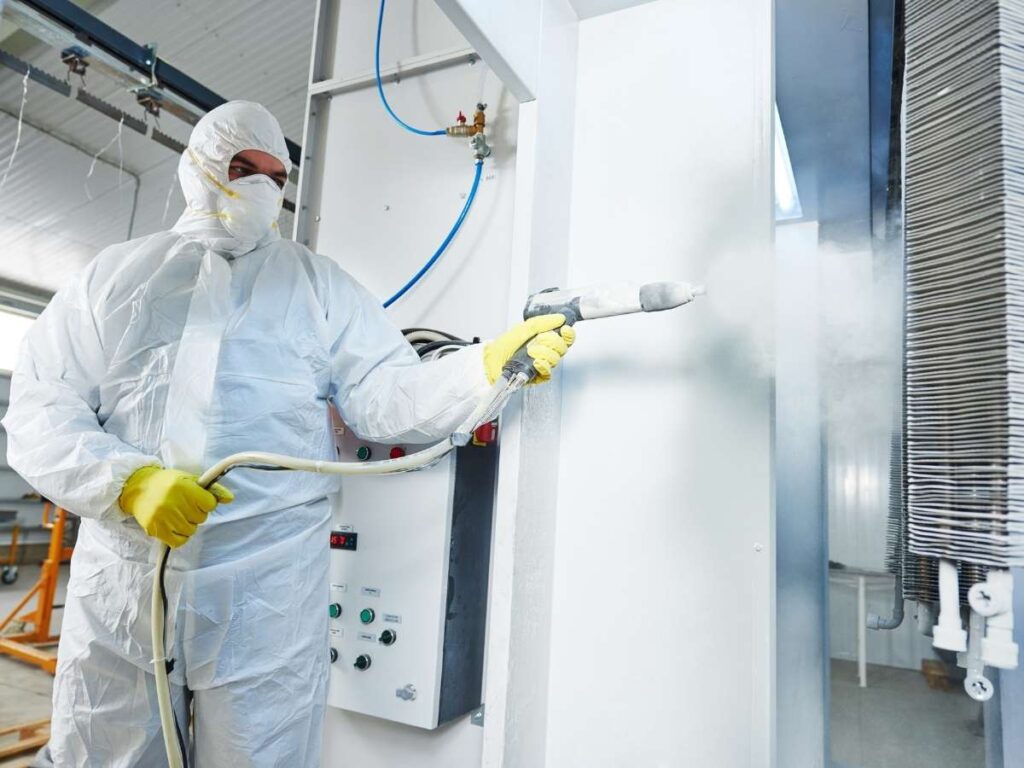
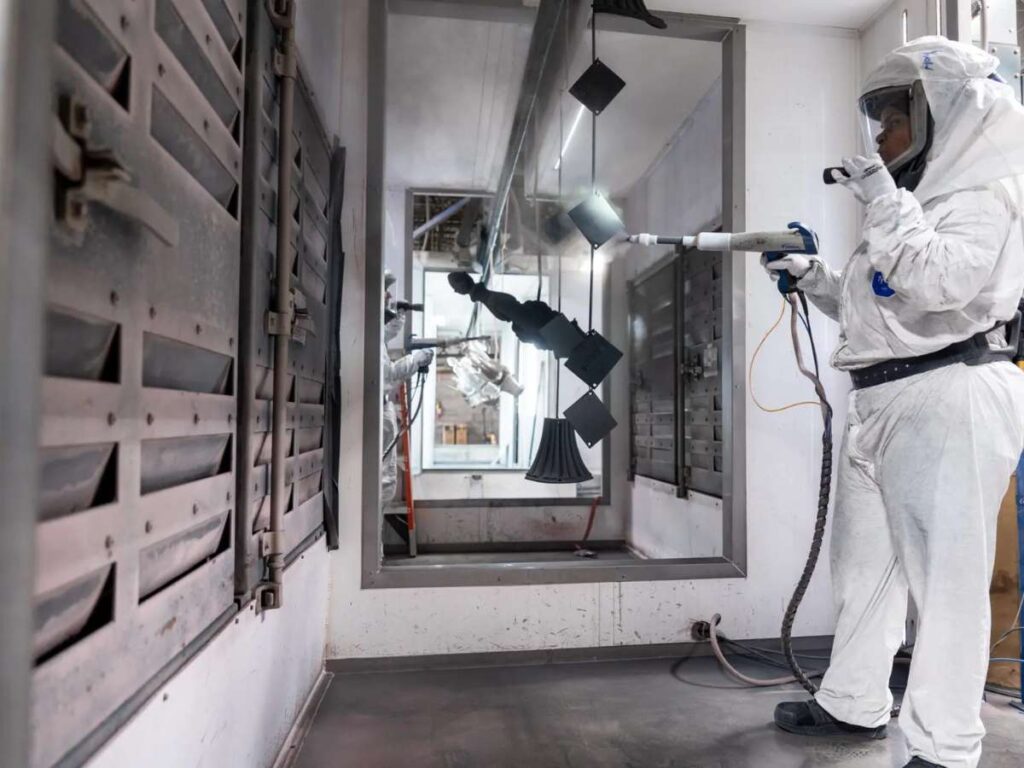
Powder coating works through static electricity and heat. Instead of wet paint, dry powder is sprayed onto metal. That powder sticks using an electrostatic charge. Then, it’s baked in a high-temperature oven. The result is a smooth, solid finish that bonds tightly to the surface.
Here’s why that matters for your business:
- You get a finish that doesn’t chip easily.
- The color stays strong, even under UV or rough handling.
- There are no solvents involved, which helps meet environmental and safety requirements.
Whether you’re producing custom parts or running large batches, the process is fast, consistent, and cost-effective over time.
If you want a service provider that handles every detail—right down to the final wrap—MachMaster is ready. They inspect every part with care, fix flaws before they leave the floor, and pack them like they’re own.
3. Advantages of Powder Coating
I first tried powder coating on steel brackets that needed serious durability—paint had failed, but powder coating didn’t. That success showed me it wasn’t just another finish.
Beyond appearance, powder coating offers long-term protection, reduces maintenance, and performs well under pressure. Here are some key reasons why it’s often the better choice.
Durable and Long-Lasting
Powder coating creates a hard outer layer that can resist:
- Scratches
- Fading from sunlight
- Chipping and peeling
- Moisture and rust
I’ve used it on outdoor furniture, equipment parts, even fencing. They still looked good after years in the rain and sun. That kind of durability gives peace of mind.
Cleaner and Safer Process
Unlike liquid paint, powder coating doesn’t use harsh solvents or release harmful VOCs (volatile organic compounds). That means it’s better for you, your workers, and the environment.
Also, most of the overspray isn’t wasted. You can reclaim and reuse it, which keeps your material use more efficient. If you’re trying to lower your environmental impact or move toward cleaner production, powder coating makes that easier.
Smooth, Even Coverage
Powder coating gives your parts an even, consistent finish—even if you’re working with curves, corners, or detailed shapes. No dripping, no brush marks, and no streaks. When the powder melts and cures in the oven, it levels out across the surface beautifully. That helps you hit visual and quality targets without extra sanding or refinishing.
Lower Long-Term Costs
Sure, powder coating might cost more upfront than traditional painting. But you’ll likely spend less over time. Fewer repairs. Fewer recoats. Less downtime. I’ve had clients who used to repaint metal signs every year—now they go 5 years or more without a touch-up. That kind of reliability saves money in the long run.
When long-term performance, clean processing, and consistent finishes matter, powder coating stands out as a smart, dependable solution.
4. Types of Powder Coating
Not all powder coatings are created equal. The type of powder you use affects how well the coating holds up—under heat, UV, moisture, or physical wear.
Here’s a simple breakdown of the most common powder coating types and when they make sense:
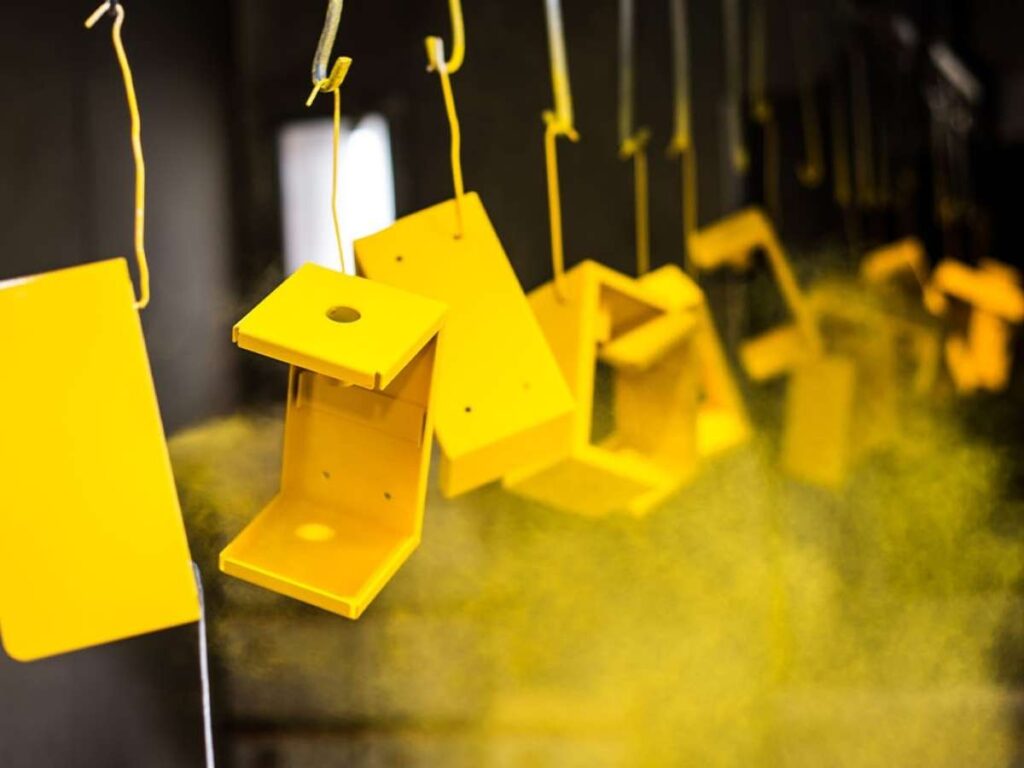
Thermoset Powder Coatings
Thermosets create a permanent chemical bond once cured. After baking, the finish becomes solid and won’t melt—even when exposed to high heat again.
Best for:
- Industrial housings
- Electrical enclosures
- Machine parts
This option is great for long-term durability in high-heat or high-wear environments. The finish stays intact and performs under pressure—ideal when failure isn’t an option.
Thermoplastic Powder Coatings
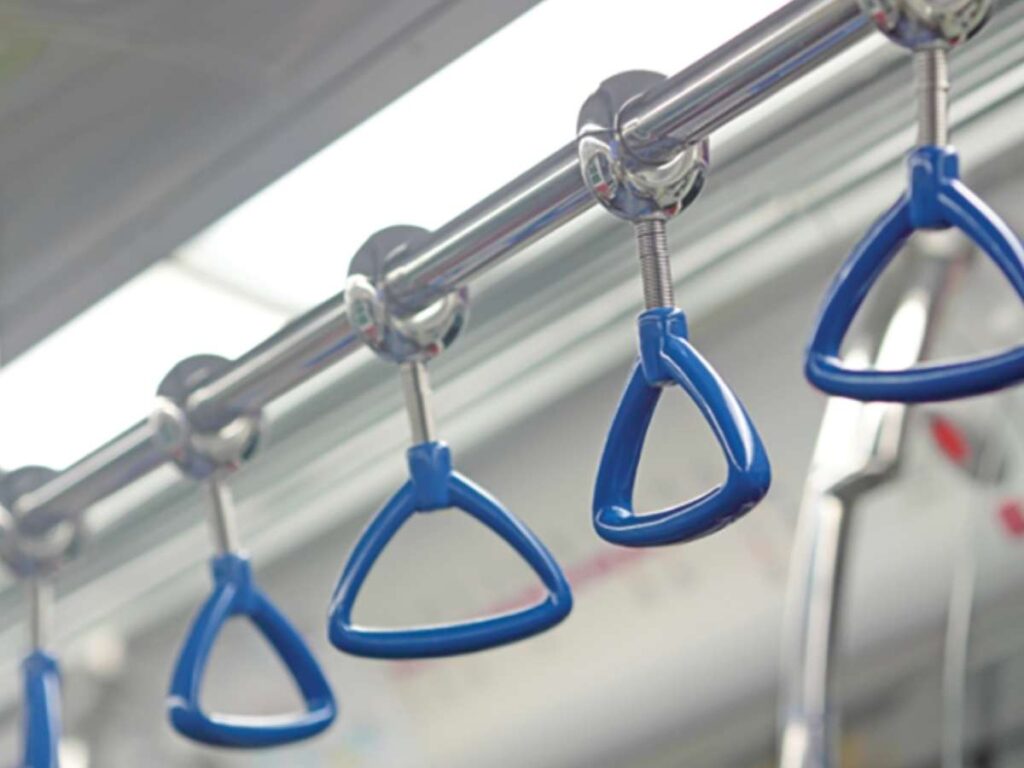
Thermoplastics don’t form chemical bonds during curing. They melt and harden based on temperature, which means they can be reheated and reshaped.
Best for:
- Tool grips
- Wire shelving
- Storage racks
Their flexibility makes them resistant to chipping and impact. You’ll often see them in utility products that get handled a lot but don’t need heat resistance.
Epoxy Powder Coatings
Epoxies offer strong resistance to chemicals, corrosion, and moisture—but they’re only suited for indoor use. UV light causes the surface to degrade over time.
Best for:
- Office furniture
- Cabinet frames
- Indoor racks and fixtures
They provide a smooth, protective finish—but use them indoors only. Sun exposure can quickly dull the appearance and weaken performance.
I once saw an epoxy-coated part left outside for a few weeks, and it looked years older by the time we picked it up again. Stick to indoor environments for best results.
Polyester Powder Coatings
Polyesters are built for outdoor exposure. They offer excellent weather resistance, hold color well, and don’t break down under sunlight or humidity.
Best for:
- Fences and gates
- Outdoor furniture
- Signage and display frames
Their strength lies in color retention and durability. They hold up through seasons of wear while keeping that clean, consistent finish—no need for constant touch-ups.
Choosing the right powder type—based on durability, location, and appearance—makes all the difference in how your coated parts perform over time.
5. Common Applications of Powder Coating
I once thought powder coating was just for machines—until I saw it on chairs, gym gear, and appliances. It’s more common than you’d think.
Here are the most common places powder coating shows up—and why it works so well:
Automotive Parts
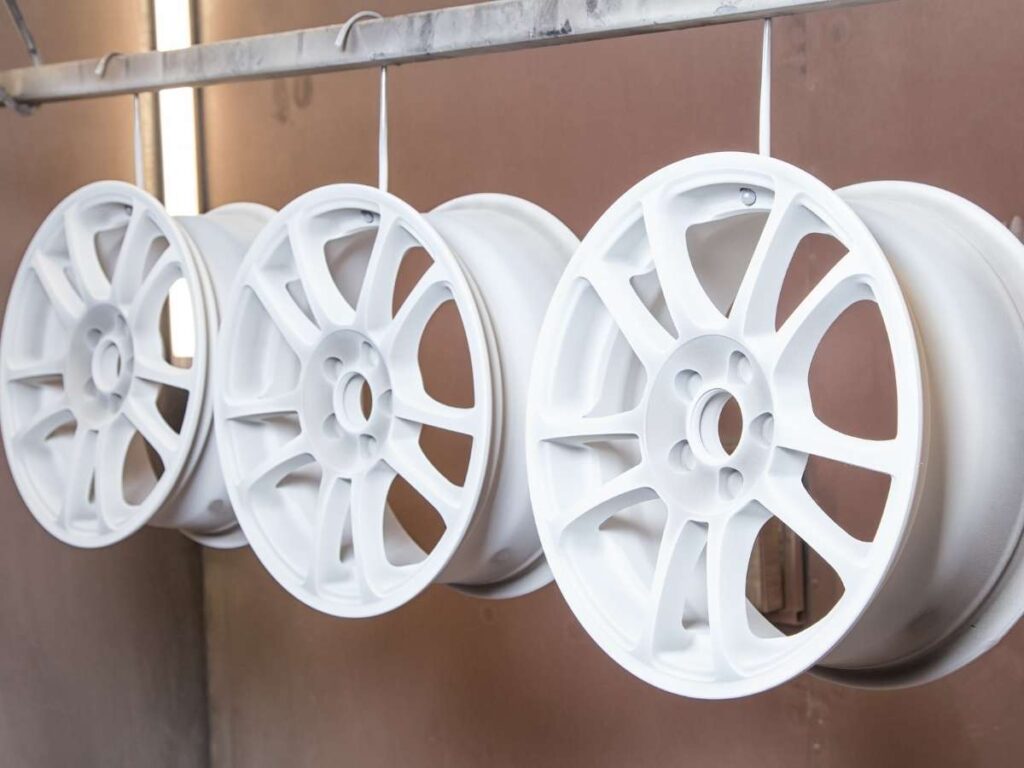
Shops serving the automotive aftermarket or OEM sectors often use powder coating to protect brackets, engine covers, and wheels.
- It holds up well under heat and abrasion.
- The finish is chip-resistant and long-lasting.
- No need for wet painting or extra touch-ups during assembly.
If you’re fabricating metal for automotive clients, offering powder coating can help you ship parts ready for install—no additional processing required.
Outdoor Furniture and Fencing
Fence builders, landscape contractors, and garden product suppliers look for finishes that survive exposure.
- Powder coating resists moisture, UV damage, and temperature swings.
- It creates a uniform, sealed surface with fewer defects.
- Great for iron gates, patio sets, railing systems, and signage posts.
This is one of the top coatings requested by distributors dealing in exterior-grade fabricated parts.
Appliances and Home Fixtures
Home and office products—like kitchen racks, drawer pulls, and lighting frames—often come powder coated from the supplier.
- Helps reduce visible wear during transport and customer use.
- Adds value with smooth, modern finishes.
- Ideal for large batches of hardware or decorative fixtures.
If you supply parts to OEMs or furniture makers, offering powder coating in-house makes your product more market-ready.
Commercial and Industrial Equipment
Factories and contractors expect tough finishes that can handle rough treatment.
- Powder coating protects metal carts, jigs, machine enclosures, and control boxes.
- It stands up to solvents, abrasions, and daily impacts.
- Adds years of life to frequently handled equipment.
Shops serving industrial clients often include powder coating to reduce warranty claims and boost product value.
From driveways to factory floors, powder coating proves its value by keeping metal parts protected, professional-looking, and built to last.
6. Powder Coating vs. Other Finishing Techniques
Choosing a finish isn’t always simple. There are a lot of options—paint, plating, anodizing, even polishing. Each method has a purpose. But they don’t all offer the same protection, look, or cost over time.
Here’s how powder coating compares to the most common finishing techniques used in manufacturing and metalwork.
| Feature / Method | Powder Coating | Liquid Paint | Plating | Anodizing | Polishing / Brushing |
| Application Method | Dry powder sprayed, then baked in an oven | Wet paint sprayed or brushed, air dries or bakes | Thin metal layer (e.g., zinc, chrome) electroplated onto surface | Electrochemical process builds oxide layer on aluminum | Mechanical finish using abrasives or brushes |
| Durability | High – resists chips, rust, and wear | Medium – chips, scratches, and fades over time | Varies – good corrosion protection, less impact resistance | Medium – good corrosion resistance, less impact strength | Low – easily scratched, little protection |
| Thickness | Thick and even – one coat covers well | Thin – often needs multiple coats | Very thin – measured in microns | Very thin – protects but doesn’t build up | Surface-level – doesn’t add thickness |
| Finish Appearance | Smooth, textured, matte, or glossy; wide color range | Wide color variety, but prone to streaks or drips | Metallic shine (chrome, nickel), limited colors | Metallic finish – clean, natural look | Raw metal look – shiny or brushed |
| Weather Resistance | Excellent – good for outdoor use | Poor to fair – fades, peels, or rusts quickly | Fair – depends on metal used | Good – but only for aluminum | Poor – needs extra protection outdoors |
| Heat Resistance | High – suitable for parts exposed to high temps | Low to medium – may bubble or discolor | Medium – depends on plating type | Medium – aluminum stable in heat | Low – finish can fade or burn |
| Environmental Impact | Low – no VOCs, less waste, recyclable overspray | High – VOCs released, requires solvents | Medium to high – often uses toxic chemicals and hazardous waste | Low – clean process but limited to aluminum | Low – mechanical only, no chemicals used |
| Cost (Initial) | Medium – equipment and curing needed | Low – easy setup and material cost | High – materials and setup more expensive | Medium – limited to aluminum, specialized setup | Low – quick and simple process |
| Ideal For | Durable finishes for metal parts, furniture, tools, machinery | Quick, cheap finishes for low-use or indoor items | Corrosion resistance, decorative metal parts | Aluminum parts where a clean, natural finish is desired | Indoor items needing aesthetic appeal, not long-term protection |
Understanding how powder coating stacks up against other finishes helps you choose the right process—before committing to cost, tooling, or production.
7. Tips to Consider When Choosing Powder Coating Services
It’s easy to assume that all powder coating services do the same thing. Spray, bake, done—right?
Over the years, I’ve learned that asking the right questions upfront makes all the difference. Here are some tips to consider when choosing powder coating services:
Tip#1 Look at Their Surface Preparation Process
Surface prep isn’t a small step—it’s the most important part of the whole coating process. If the surface isn’t cleaned, blasted, or treated properly, the powder simply won’t stick. It doesn’t matter how well the powder is sprayed or how evenly it’s cured. Poor prep will lead to poor adhesion, which means the coating will chip, flake, or peel far sooner than it should.
When you’re choosing a service, ask specific questions:
- Do they degrease parts?
- Do they rinse thoroughly?
- Do they use abrasive blasting for rust or old finishes?
- Do they dry parts properly before spraying?
Shops that take surface prep seriously usually get better long-term results.
At MachMaster, surface prep is never rushed. They treat it as the foundation of every finish. Every part goes through thorough cleaning and, when needed, abrasive blasting.
Tip#2 Know What Job Types They Handle
Some shops are built for bulk jobs. Others work best on one-offs and custom work.
Before you commit, ask:
- Have you coated parts similar to mine in shape and size?
- How do you handle small batches or detailed features?
- Can I see photos of similar work?
The right fit makes all the difference in finish quality and turnaround time.
Tip#3 Ask About the Powder Options Available
Powder isn’t one-size-fits-all. The type of powder matters just as much as how it’s applied. Some powders are built to handle UV exposure and outdoor weather. Others are designed for chemical resistance or indoor durability.
If you’re powder coating parts for outdoor use, you need polyester-based powders that can resist sunlight and moisture. For indoor environments, especially where chemicals are involved, epoxies might work better. The problem is, not all shops take time to explain this—or even offer the right type.
Ask questions like:
- What powder types do you offer?
- Which powder fits my application best?
- Do you have samples or data sheets?
You don’t want a shop that just uses the cheapest option. You want one that selects the best match for how and where your parts will be used.
Conclusion
That peeling part? It taught me what rushed decisions and vague answers can cost.
Now you’ve got what I didn’t: a clear view of what powder coating is, how it works, and where it fits.
You’re not guessing anymore. You’re informed.
So if you’re ready to coat smarter, stronger, and cleaner, MachMaster can help.
We handle precision CNC machining and support powder-coated parts that last.
Contact us today. Let’s get your next project started!
Explore More of Our Resources
If you’re searching for more choices, explore our full collection of products. We’ve picked out some great options for you:
Interested in more? Here are some additional articles with insights and tips to keep you informed:
- Powder Coating Process: Step by Step Guide
- Blasting and Powder Coating: What You Should Know
- Powder Coating vs Anodizing: Key Differences
Still haven’t found what you’re looking for? Don’t hesitate to contact us. We’re available around the clock to assist you.