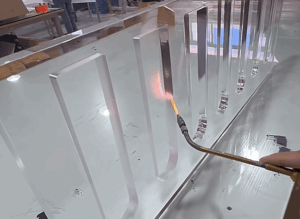

For a long time, I thought I understood injection molding well enough. I knew how the plastic flowed, how the cooling worked, how to read a cycle time chart.
But I didn’t really understand the value of what happens inside the runner system—until I had to fix a mold that kept producing waste.
That’s when I learned what hot runners in injection mold systems really do.
I’ve worked with toolmakers, designers, and procurement teams who’ve all hit the same learning curve. And that’s exactly why I’m writing this—for you.
In this article, you’ll learn what hot runners are, how they operate, what components make them work, and where they’re commonly used.
By the end, you’ll understand why this hidden part of the system matters so much.
Let’s jump in!
1. What Is a Hot Runner in Injection Molding?
I work with hot runners every day, and let me tell you—they’re one of the smartest upgrades you can make to a mold.
A hot runner system is a set of heated components that keeps plastic molten as it flows through the mold. Unlike cold runners, which allow plastic to cool and solidify in the channels (creating waste you have to trim and toss), hot runners keep the material flowing right into the part cavities.
Key Components of a Hot Runner System
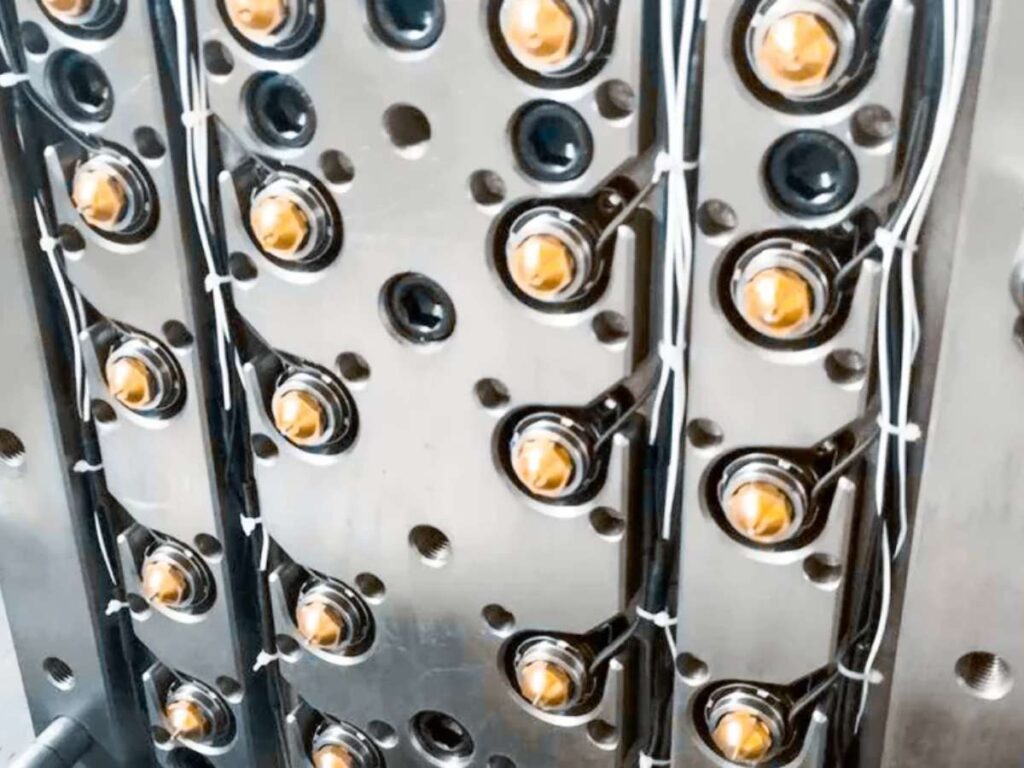
- Manifold: Distributes plastic evenly to each cavity.
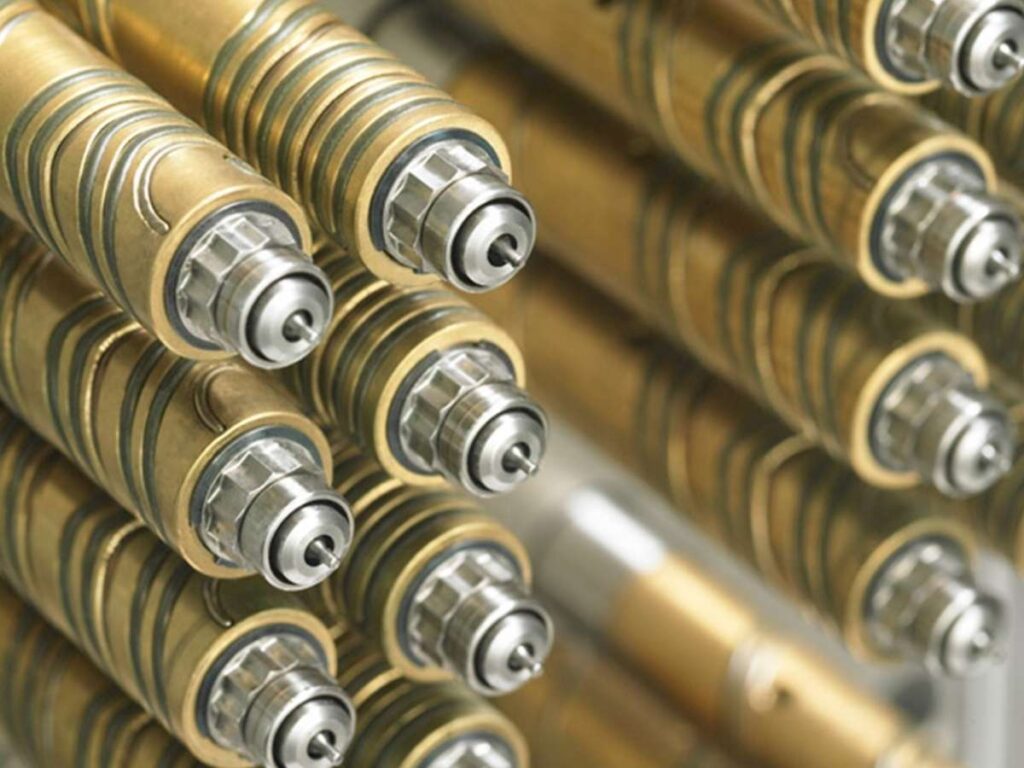
- Nozzles: Inject molten plastic directly into mold cavities.
- Heaters: Maintain temperature of the manifold and nozzles.
- Temperature controller: Regulates heat throughout the system.
If you’re building a mold and the supplier says, “This comes with a hot runner,” now you know what that means.
2. How Hot Runners Work in Injection Molding
When you use a hot runner system, molten plastic flows from the injection unit into a heated manifold. From there, it splits into multiple paths, each leading to a heated nozzle that delivers plastic directly into your mold cavities.
The plastic never cools in the channels—it stays hot the entire time. That’s why you don’t end up with runner waste after each cycle.
Here’s how it works, step by step:
- You load plastic pellets, which melt inside the injection barrel.
- That molten plastic flows into the hot manifold.
- Heaters keep it hot and move through the system.
- Nozzles push the plastic straight into the mold cavities.
Everything runs in a closed, temperature-controlled loop.
But here’s the catch: you’ll need to manage the timing and heat carefully. If the temperature isn’t stable, you could get issues like short shots or burn marks. Hot runners perform best when every cavity receives plastic at the same pressure and temperature.
3. Benefits of Hot Runners in Injection Molding
I once thought hot runners were just an added cost. But after one high-volume run, we saw faster cycles, less waste, and tighter consistency. Now, they’re a must for any molding job where speed and quality count.
Here’s why they’re worth considering if you’re running or sourcing injection molding at scale:
Less Waste
Cold runners create plastic scrap every cycle.
Hot runners eliminate that.
- No trimming off extra material
- No regrinding or discarding
- Better material yield over time
If you’re producing high volumes, the material savings alone add up fast—especially with costly engineering plastics.
Faster Cycle Times
Hot runners keep the material molten until it fills the cavity.
That means:
- No waiting for runners to cool
- Less ejection time
- More cycles per hour
If your goal is to push more units through with the same machines, hot runners give you that production edge.
Improved Part Quality
When plastic hits the mold at a steady temperature and pressure, the results speak for themselves:
- Fewer sink marks
- Better fill in complex geometries
- Less risk of short shots
We’ve seen clients cut down their rejection rate drastically just by upgrading to a hot runner mold.
Automation-Friendly
No runners to separate means:
- Cleaner part ejection
- Easier part handling by robots
- Smoother flow through automated lines
If you’re aiming for lights-out production or just want fewer moving parts in your workflow, hot runners help simplify the setup.
When your focus in your project is high output, minimal waste, and consistent quality, hot runners can turn a good molding process into a great one.
4. Types of Hot Runner Used in Injection Molding
Picking a hot runner system isn’t about trends or price—it’s about what fits your project. I’ve seen basic setups outperform high-end ones just because they were a better match.
Let’s break down the main types so you can choose the right one for your molding needs:
Open Gate System
This is the simplest kind of hot runner. There’s no valve or moving part to stop the plastic flow. As long as pressure is applied, material flows directly through the nozzle into the cavity.
How it works:
- Always open; flow is constant during injection
- No mechanical shut-off
- Best for parts where gate marks aren’t a concern
Where it’s used:
- Industrial parts
- Hidden or internal components
- High-volume, non-cosmetic jobs
Why it’s used:
- Lower tooling cost
- Fewer moving parts = less maintenance
- Reliable for basic applications
What to consider:
- Visible gate vestige
- Less control over flow timing
Valve Gate System
This system adds a valve pin that opens and closes the gate with precision. That means you control when plastic flows—and when it stops—without leaving a visible mark.
How it works:
- Valve pin opens when injection begins
- Pin closes at the end to stop flow instantly
- Flow can be delayed or sequenced if needed
Where it’s used:
- Automotive trims
- Consumer products
- Multi-cavity molds or family tools
Why it’s used:
- Excellent surface finish
- Precise control = fewer defects
- Suitable for automation
What to consider:
- Higher tooling cost
- Requires careful setup and maintenance
- More moving parts mean more complexity
Hot Tip System
A heated nozzle tip keeps plastic hot right at the gate. There’s no valve pin—just a thermally controlled tip that allows flow as needed. It’s useful for small parts and tight gating.
How it works:
- Plastic is kept at flow-ready temp at the gate
- Balanced flow across cavities
- No shut-off mechanism
Where it’s used:
- Caps, connectors, small housings
- Electronic parts
- Parts with narrow gates or precise flow needs
Why it’s used:
- Smooth flow for small parts
- Even temperature control
- Simpler than valve gates but more refined than open gates
What to consider:
- Not ideal for larger parts
- May show minor gate marks
- Needs stable heat management
Each system has pros and cons. If you’re unsure which is right for your project, talk to your mold supplier. And if expert CNC machining support is needed, contact MachMaster. They will help bring that decision into focus—with experience, clarity, and care.
5. Step-by-Step Process On How Hot Runners Work in Injection Molding
Hot runners make more sense when you see how each step connects in the molding cycle. I’ve guided many clients through it, and the moment it clicks is always rewarding.
Here’s a simple five-step breakdown to help you understand the full process clearly:
Step#1 Feed and Melt the Plastic
The process begins with plastic pellets being loaded into a hopper. From there, the pellets enter a heated barrel, where a rotating screw pushes them forward. As the material moves, heating elements melt it down into a smooth, molten flow. This stage turns solid plastic into a usable form for injection.
For you as a buyer, this step is critical—because a stable, well-melted material reduces the chances of warping, voids, or inconsistent fills in the final part.
Step#2 Distribute Through the Manifold
Next, the molten plastic flows into the manifold, a heated distribution block within the mold.
The manifold:
- Splits the flow into multiple channels
- Sends plastic to each cavity evenly
It works like a balanced plumbing system. If the flow isn’t evenly distributed, parts can suffer from short shots or inconsistent dimensions.
Step#3 Maintain Temperature and Flow
Throughout the cycle, the entire hot runner system—including the manifold and nozzles—remains heated.
This consistent temperature:
- Prevents the plastic from cooling too early
- Keeps viscosity stable for precise flow
- Reduces the risk of clogs or flow interruptions
Even a minor heating failure can cause scrap or delays. A reliable system keeps production running smoothly.
I’ve seen entire production runs go sideways just because a small heater element failed. Temperature consistency is everything.
Step#4 Inject into the Mold Cavities
Once it reaches the nozzles, the molten plastic is injected directly into the mold cavities using high pressure.
This step requires:
- Precise control over injection speed and timing
- Accurate cavity design and gate placement
- Even pressure to fill parts completely and cleanly
I always tell clients this is the moment when all your preparation pays off.
Step#5 Cool, Eject, and Repeat
After injection, the plastic inside the mold cools and hardens.
Then:
- The mold opens
- The finished part is automatically ejected
- The system resets for the next shot
Because hot runners don’t create cold runners (waste channels that need trimming), the entire shot becomes usable product.
Once you understand each step, it’s easy to see how hot runners streamline the process—delivering faster cycles, cleaner parts, and less waste with every shot.
6. Hot Runner vs Cold Runner: Key Comparison
Choosing between hot and cold runners impacts more than cost—it affects quality, waste, and automation. I’ve seen teams debate it from every angle, and each role brings something important.
Here’s a clear side-by-side comparison to help you decide what fits best:
| Feature | Hot Runner | Cold Runner |
| Material Waste | Minimal | High (runners must be removed) |
| Cycle Time | Shorter (no runner to cool) | Longer (wait for runner to cool) |
| Initial Tool Cost | Higher | Lower |
| Maintenance | More complex (heaters, controllers) | Simpler to maintain |
| Part Appearance | Better (cleaner gate marks) | Can show more visible gate marks |
| Energy Use | Higher (requires continuous heating) | Lower |
| Production Speed | Faster | Slower |
| Scrap Rate | Lower | Higher |
| Setup Complexity | Higher (more controls and zones) | Lower |
| Ideal Use Case | High-volume, automated production | Prototypes, short runs |
| Gate Control | Precise (especially valve gate systems) | Basic |
| Mold Size and Complexity | Suitable for large and multi-cavity molds | Simpler molds, fewer cavities |
| Long-Term Cost Savings | High (less waste and labor) | Lower upfront, but more scrap ongoing |
| Downtime Risk | Higher if system fails | Lower risk, simpler recovery |
| Cleanroom Suitability | Excellent (minimal contamination) | Less ideal due to open runner trimming |
By weighing factors like cost, part quality, and production speed, you can choose the runner system that truly fits your project goals.
7. Challenges and Limitations
Hot runner systems bring big benefits, but they also come with real challenges that can’t be overlooked. These issues can affect maintenance, production flow, and long-term ROI.
Here’s a closer look at the most common problems you should know upfront:
Higher Upfront Cost
A hot runner mold costs significantly more than a cold runner system. That’s because it includes:
- Precision-machined manifolds
- Embedded heating elements
- Temperature controllers and wiring
If you’re running high-volume production, these systems often pay off through reduced waste and labor. But for low-volume or prototype runs, the cost may outweigh the benefits.
More Complicated Maintenance
Hot runner tools require a different maintenance mindset.
- You’ll need regular checks on heaters, thermocouples, and controller wiring
- Diagnosing internal faults takes longer and may require partial disassembly
- A misstep during repair can lead to costly downtime—or damage the mold
Ask your supplier about their hot runner expertise. If they lack the right training or tools, it increases the risk of costly errors during troubleshooting.
Startup Issues
Every hot runner system needs a careful warm-up routine. I have one co-worker once rushed this step to save time, only to clog the entire manifold with burnt plastic. We lost a day just cleaning it out. That experience taught everyone on the floor that skipping the right heat-up profile isn’t worth the risk.
Not Suitable for All Materials
Some plastics—especially heat-sensitive resins—can degrade if exposed to prolonged heat in the manifold.
This can lead to:
- Brittleness or reduced strength
- Surface defects or discoloration
- Out-of-spec performance in end-use parts
If you’re working with materials like PVC, POM, or certain bio-based plastics, talk with your supplier about their thermal profile and dwell time settings.
Hot runner systems can deliver real efficiency—but only when their costs, complexity, and material limits are fully understood and managed from day one.
8. Tips When Using Hot Runner in Injection Molding
I’ve learned that using hot runners successfully takes more than just following specs—it takes real planning and experience.
These tips below come from real-world projects and supplier insights. They can help you avoid costly mistakes and scale production with more confidence:
Tip#1 Work With Experienced Manufacturer
Building a hot runner mold takes skill and precision. Not every mold shop has the experience to do it right. A poorly designed system can lead to uneven flow, frequent breakdowns, or even complete project delays.
Look for mold makers like MachMaster with a solid portfolio and proven experience in hot runner systems. Their hands-on knowledge and consistent track record can save time, and give better performance in the long run.
Tip#2 Ask About Temperature Zones
In a hot runner system, temperature zones control how heat is applied throughout the mold.
More zones mean:
- Finer temperature control
- Better balance across multi-cavity tools
- Fewer defects from cold spots or overheating
What you should ask:
“How many temperature zones will the tool use, and where will they be located?”
This tells you how seriously your mold maker takes thermal control.
Tip#3 Check Material Compatibility
Not all resins handle heat the same way. Some materials—like POM, PVC, or bio-resins—may degrade if held too long at elevated temperatures.
Early in the planning phase:
- Discuss material properties with your resin supplier
- Confirm compatibility with your mold maker
- Adjust cycle times and tool design if needed
Skipping this step can lead to discoloration, brittleness, or even chemical degradation during molding.
Conclusion
Fixing that wasteful mold was the moment I truly saw the power of hot runners.
Now you’ve seen it too—how they work, what they include, and why they matter for cycle time, scrap, and part quality.
This knowledge gives you an edge—whether you’re designing, sourcing, or managing production.
Ready to move forward with your next project? MachMaster offers precision CNC machining and expert mold support.
Contact us today—let’s cut the waste and build smarter together!
Check Out These Additional Resources
Need more ideas? Browse through our extended range of products and discover something new:
- Anodizing Service
- Cnc Milling Service
- Cnc Turning Service
- Injection Molding Service
- Cnc Machining Service
For more in-depth knowledge, take a look at these recommended reads. We think you’ll find them useful:
Still haven’t found what you’re looking for? Don’t hesitate to contact us. We’re available around the clock to assist you.