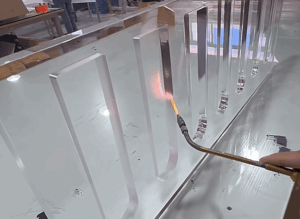

Most people don’t think cnc machining tolerances can cause big trouble. I didn’t either.
Not until I got my first prototype back. It looked okay. Then I tried to put the bolts in. The holes were off just a tiny bit. Nothing fit. I felt so embarrassed telling my client it wouldn’t work.
I’ve made these errors many times. So I’ve spent years fixing them. I’ve talked with smart machinists and watched how these tiny numbers matter on the shop floor.
You’re here because you want to avoid all that. Maybe you run a factory. Maybe you design products, buy parts, or build projects.
No matter what, you need to know what CNC machining tolerances are, how they work, and why they matter.
In this guide, we’ll keep it simple. I’ll show you the basics, give you real examples, and explain how tolerances can cost you or save you money.
By the end, you’ll have the tools to plan smarter, buy better, and stay away from the mistakes I made.
So let’s get started!
1. What is CNC Machining Tolerances?
Let’s be honest. Tolerances sound technical. But they’re at the heart of every CNC job we take on.
CNC machining tolerance means how much a part can vary from its intended measurement. It tells the machinist, “You’ve got this much room to be off, and no more.”
You’ll usually see it written like this:
- ±0.005”: Which means the size can be up to five-thousandths of an inch bigger or smaller than the drawing.
Sounds small, right? But sometimes, that’s the difference between a perfect fit… and parts getting scrapped.
So, why does it matter to you?
Because if you’re:
- Buying parts
- Quoting jobs
- Running production
Then tolerance isn’t just a number. It’s cost, lead time, and customer satisfaction.
Some parts need tight tolerances. Others don’t. Knowing the difference saves you money and stress.
Have you ever received parts that didn’t fit? It’s often a tolerance issue.
Getting clear on this now will help you avoid mistakes later.
2. Types of CNC Machining Tolerances
Early in my career, I used to lump all tolerances together. But over time, I learned that understanding the right type of tolerance can solve problems before they begin.
Let’s break down the 3 main types of tolerances you’ll likely deal with when sourcing CNC parts:
Unilateral Tolerance
This type lets the size shift in only one direction—either smaller or larger, not both.
- Example: +0.000” / -0.010”
That means the part must not be bigger, but it can be up to 0.010” smaller.
We see this when a part needs clearance—like a shaft fitting into a loose housing. Too tight? It won’t fit. A little loose? Still works.
Use this when one side of the part is more forgiving. It gives machinists some freedom, but keeps critical limits in place.
Bilateral Tolerance
This type allows the part to vary in both directions, above or below the target size.
- Example: ±0.005”
A 1.000” part can be as small as 0.995” or as big as 1.005”.
We use this often for everyday jobs where some variation is okay. Most general fab parts fall under this category. It balances quality with cost.
Manufacturers like bilateral tolerances because they don’t need to hit a single edge, they can work from the middle.
Limit Tolerance
Instead of using plus/minus, this one gives a clear minimum and maximum size.
- Example: 9.95mm – 10.05mm
You can’t go outside that range—period.
Limit tolerances are common in high-volume orders or when parts must pass inspection quickly. We see this a lot from OEMs and distributors who want consistent quality across batches.
It leaves no gray area, which is great for inspection teams and helps avoid back-and-forth on what’s acceptable.
Choosing the right tolerance type keeps your project smooth and keeps your supplier from calling with questions.
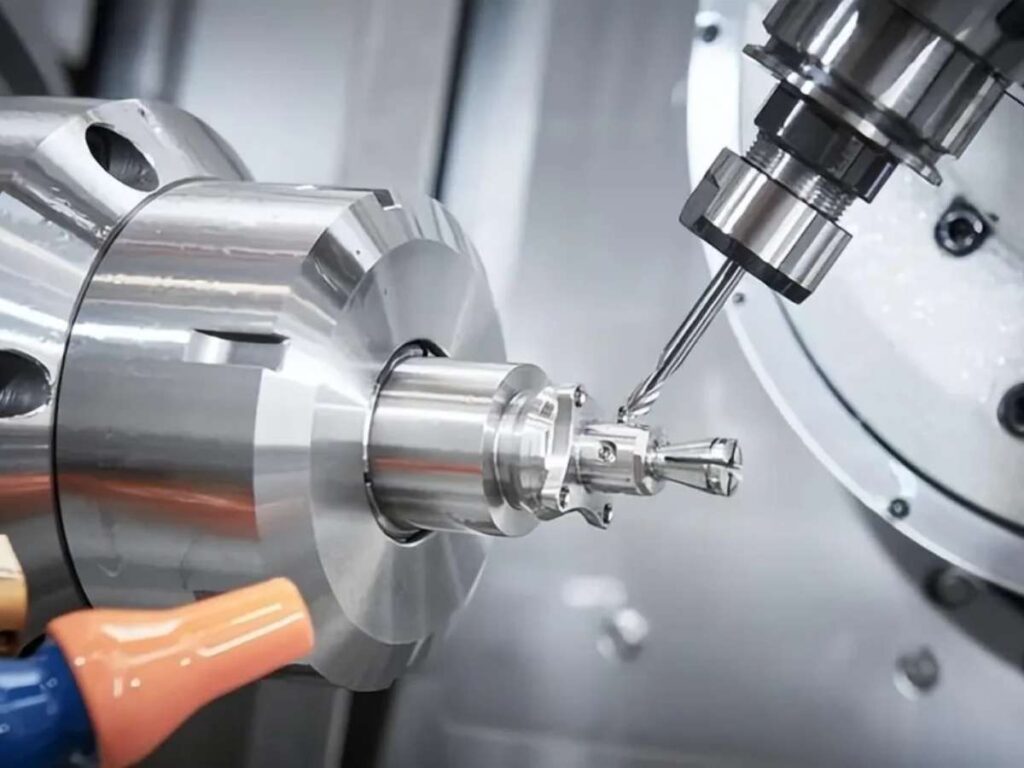
3. Standard Tolerance Classes Chart
Precision matters in CNC machining, even the slightest deviation can affect fit or function.
Use this table as a quick reference to understand how much variation is generally allowed based on ISO 2768 standard practices.
| Linear Dimension Range (mm) | Fine (F) | Medium (M) | Coarse (C) | Very Coarse (V) |
| 0.5 to 3 | ±0.05 | ±0.1 | ±0.2 | – |
| Over 3 to 6 | ±0.05 | ±0.1 | ±0.3 | ±0.5 |
| Over 6 to 30 | ±0.1 | ±0.2 | ±0.5 | ±1.0 |
| Over 30 to 120 | ±0.15 | ±0.3 | ±0.8 | ±1.5 |
| Over 120 to 400 | ±0.2 | ±0.5 | ±1.2 | ±2.5 |
| Over 400 to 1000 | – | ±0.8 | ±2.0 | ±4.0 |
| Over 1000 to 2000 | ±0.5 | ±1.2 | ±3.0 | ±6.0 |
| Over 2000 to 4000 | – | ±2.0 | ±4.0 | ±8.0 |
This table helps decide which tolerance level makes the most sense for your part.
- Fine (F) is used when high accuracy is needed—like in mating or precision-fit components.
- Medium (M) works well for general-purpose parts.
- Coarse (C) and Very Coarse (V) are typically reserved for non-critical features or large structural parts.
Understanding these ranges early in your design helps reduce back-and-forth with manufacturers—and keeps production smooth.
4. How to Calculate CNC Machining Tolerances
Let’s face it that tolerances can get confusing fast. But understanding how they’re calculated can help you make better choices when ordering or designing CNC parts.
Let’s say your drawing shows your part should be 50.00 mm wide. That’s called the nominal size, basically, the perfect size you want.
But in real life, machines can’t always cut things to the exact number. So we use something called tolerance. This tells how much bigger or smaller your part can be and still work fine.
If you write ±0.02 mm, it means the part can be 0.02 mm bigger or 0.02 mm smaller than 50.00 mm.
So here’s how you figure out the range:
- Biggest it can be: 50.00 + 0.02 = 50.02 mm
- Smallest it can be: 50.00 – 0.02 = 49.98 mm
So, if the machine makes your part anywhere between 49.98 mm and 50.02 mm, that’s okay. It passes inspection. That’s called your tolerance range.
If you don’t tell the machine shop what tolerance you want, they’ll usually pick a standard from common rules like ISO 2768 or ASME Y14.5. For a 50 mm part, that often means about ±0.1 mm, which is a wider range.
If you want to get the exact tolerance work you need, you should work with a reliable manufacturer like MachMaster. They’ll make sure your parts stay inside the right tolerance range and help you avoid costly problems later on.
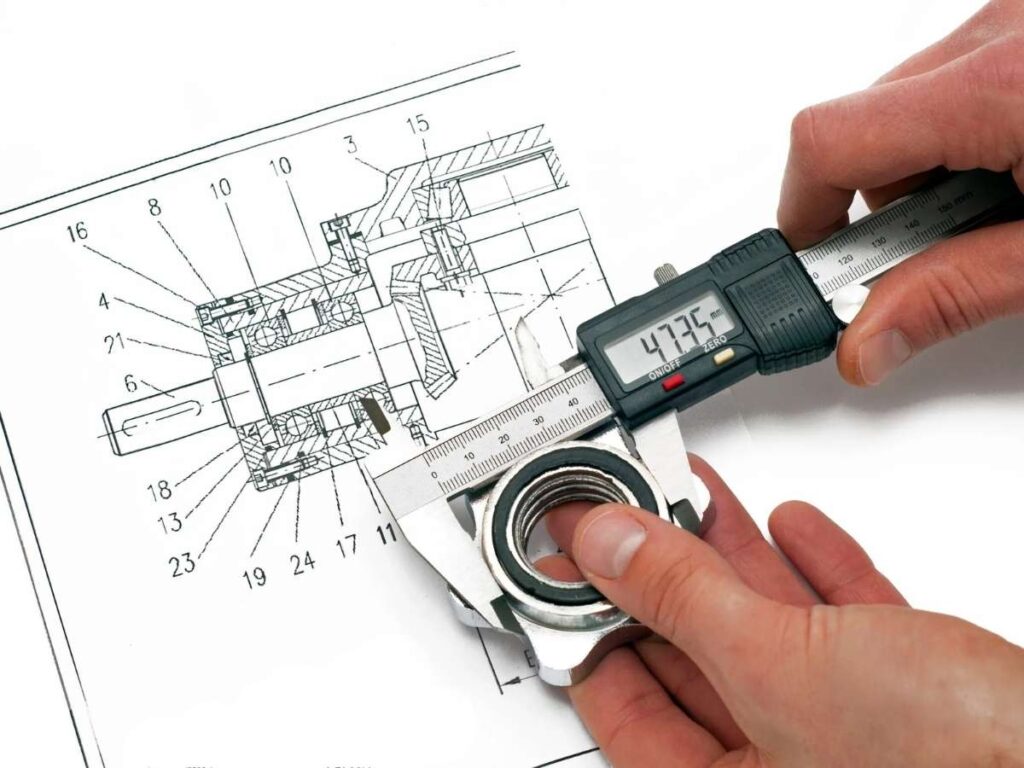
5. CNC Machining Tolerances by Industry
Not all industries require the same level of precision. Some parts need extremely tight tolerances to perform safely under pressure.
Here’s how tolerances typically vary depending on the application field:
Aerospace Industry
In aerospace, failure is not an option. Parts are expected to perform under high pressure, vibration, and thermal stress. Tolerances are kept extremely tight to maintain safety and consistency.
- Typical Range: ±0.005 mm to ±0.02 mm
- Common Features: Engine housings, turbine components, airframe joints
- Notes: Often involves geometric tolerances (GD&T), including position, concentricity, and flatness.
One aerospace project I worked on involved precision fitting of aluminum parts inside a flight navigation system. Even a deviation of 0.01 mm led to assembly delays. The solution required not just tighter tolerances, but also stricter inspection protocols.
Automotive Industry
The automotive sector strikes a balance between high-volume production and functional precision. Tolerances vary depending on whether the part is structural, cosmetic, or functional.
- Typical Range: ±0.02 mm to ±0.1 mm
- Common Features: Engine blocks, gears, brackets, mounts
- Notes: Powertrain parts demand tighter specs, while body panels allow more leeway.
For a high-volume order of steel brackets, we used ±0.1 mm. However, a separate order for camshaft components required ±0.01 mm with full CMM inspection. The gap between those jobs highlights how tolerance needs shift even within the same industry.
Medical Device Industry
Precision and consistency are critical in medical parts, especially those used for implants or surgical tools. Many components must pass strict regulatory checks.
- Typical Range: ±0.005 mm to ±0.02 mm
- Common Features: Implant housings, surgical tools, diagnostic device parts
- Notes: Often uses titanium, stainless steel, and specialized plastics. Surface finish and cleanliness are equally important.
In one case, we machined a stainless-steel housing for a medical sensor. The tolerance spec was ±0.01 mm, but due to temperature fluctuation in the shop, parts were slightly off during final QC. Tightening process controls solved the issue on the second run.
Electronics and Consumer Devices
Products in this category often involve small parts, thin walls, and tight packaging. Fit and finish directly affect product appearance and functionality.
- Typical Range: ±0.01 mm to ±0.05 mm
- Common features: Casings, mounts, connectors, heat sinks
- Notes: Materials like aluminum, copper, and plastic are common. Cosmetic tolerances may be tighter than structural ones.
A recent job involved aluminum casings for a compact sensor. Although structurally the part was simple, the visual tolerances flatness and alignment were much stricter than expected due to brand guidelines.
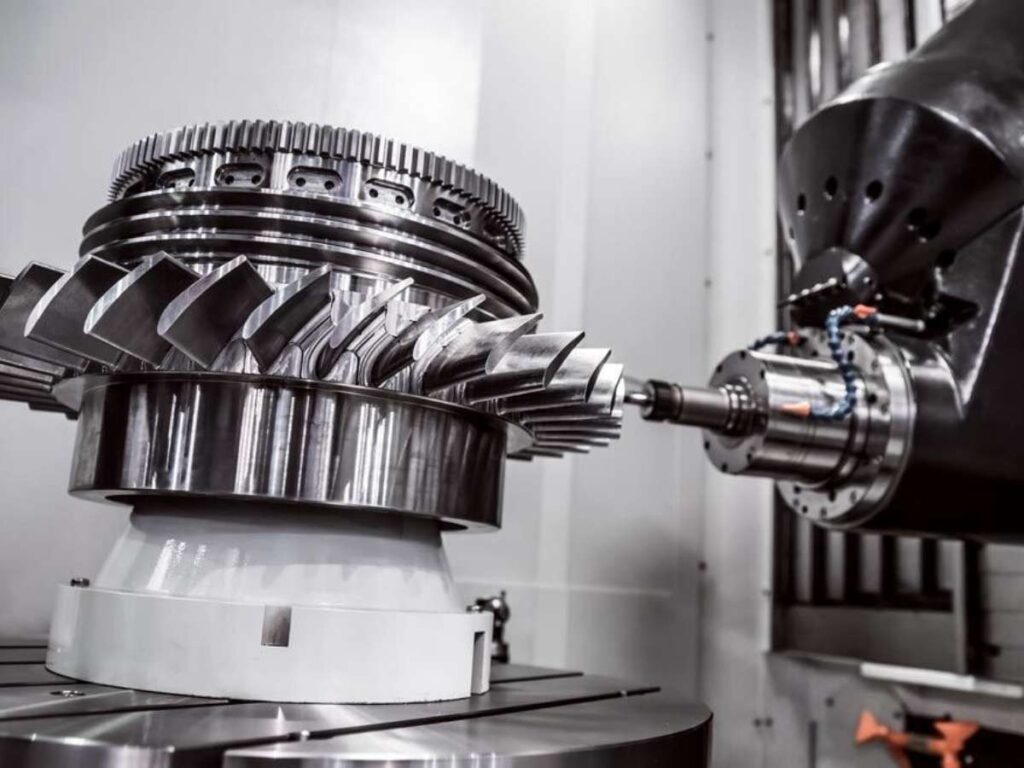
6. Challenges and Limitations of CNC Machining Tolerances
Tolerances help control part accuracy, but applying them without consideration for real-world conditions can lead to delays, cost increases, and rejected parts.
Below are some of the most common limitations I’ve encountered in CNC machining and the steps that helped avoid or solve them:
Longer Machining Time
Tighter tolerances require slower feeds, smaller passes, more setups, and sometimes different machines.
What to do: Only apply tight tolerances where it’s functionally necessary. Use general tolerances (like ±0.005″ or ±0.010″) on non-critical areas.
Ask your manufacturer: “Which surfaces actually need this level of accuracy?”
Harder Inspection Requirements
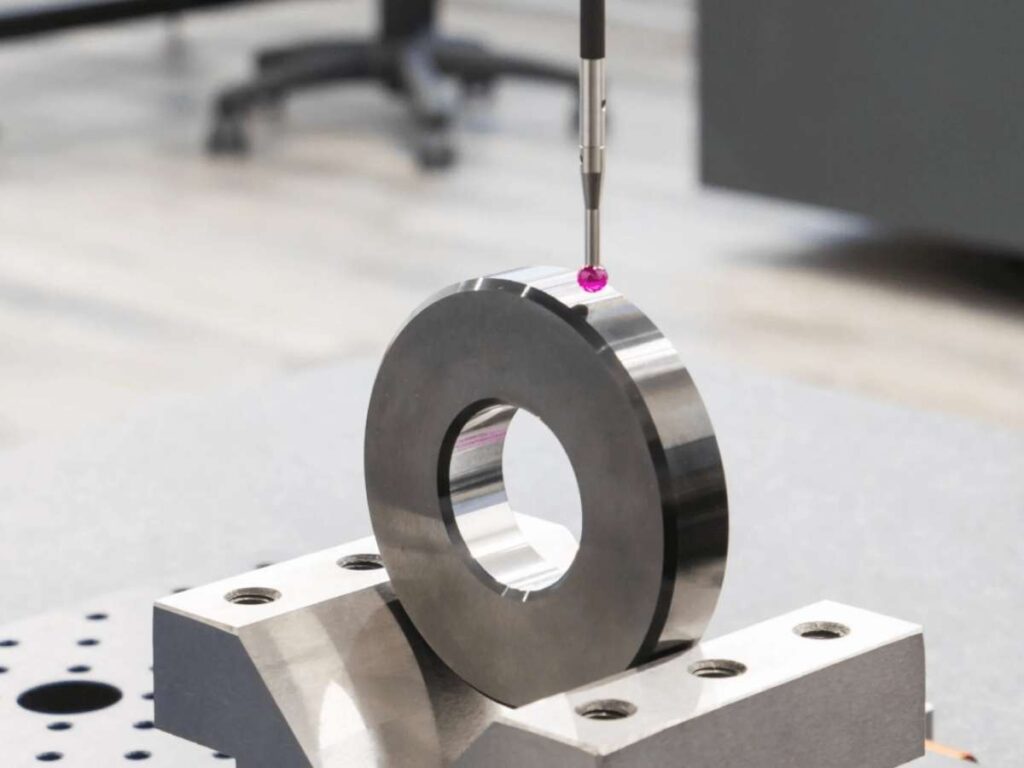
Measuring to ±0.0005″ isn’t possible with basic tools like calipers. Shops need micrometers or CMMs—adds cost and time.
What to do:
- Confirm what the shop can measure.
- If you need ultra-tight inspection, ask for a detailed inspection plan ahead of time.
Avoid: Requesting tolerances that your supplier can’t inspect properly.
Material-Related Limitations
Different materials respond to machining differently.
- Plastics expand with heat
- Aluminum may deform
- Thin parts can warp
What to do: Talk to your suppliers about material behavior during cutting. Adjust tolerance expectations based on the part’s thickness, shape, and use.
Tolerance Stack-Up in Assemblies
Each part’s tolerance adds up. The more parts involved, the more error potential.
What to do:
- Use datums to control critical locations
- Keep tolerance bands wide on less important surfaces
- Communicate with your machinist if it’s a multi-part fit
Real advice:
Don’t over-tolerance every part in an assembly. Start with the mating faces and build around them.
Tolerances don’t have to be stressful—if you plan smart and focus where it counts.
When tolerances are applied thoughtfully—with input from machinists and real-world constraints in mind—you’ll get accurate parts without overcomplicating production.
7. Tips to Achieve The Right Tolerances in CNC Machining
I’ve learned that getting tolerances right isn’t about aiming for the tightest numbers—it’s about making the right call for the part, the machine, and the process.
Here are several proven tips that improve part success in real-world machining jobs:
Use Standard Tolerances Where Possible
Many projects don’t need custom specs. General tolerance systems like ISO 2768-m or ANSI B4.1 already cover most features on brackets, mounts, plates, and non-critical parts. I usually apply ISO 2768-m as a default unless the design calls for stricter control. It speeds up quoting, simplifies drawings, and avoids unnecessary conversations with suppliers.
Focus Tight Tolerances on Key Areas Only
Not every feature needs ±0.01 mm. Tight control should be reserved for:
- Press fits
- Sealing surfaces
- Gear bores
- Bearing journals
Everything else can typically use wider limits.
Work With Reliable Machining Partner
Having the right tolerance strategy isn’t only about technical specs—it’s also about collaboration. Experienced machinists can often recommend better tolerance approaches that save time or avoid unnecessary steps.
I suggest working with MachMaster, they don’t just machine parts—they collaborate, troubleshoot, and guide teams toward better results. From prototyping to production, they help define tolerances that work in real life, not just on paper.
Review Part Geometry
Certain shapes make tight tolerances harder to hold. Deep pockets, thin walls, or long slender features can introduce tool deflection or vibration. These factors should be considered before applying close tolerances in those zones.
Conclusion
CNC tolerances aren’t just numbers. They’re decisions that shape cost, lead time, and quality.
You now understand the types, the impact, and the trade-offs.
You’re ready to avoid the mistakes others still make.
Think before you call for “tight.”
Do your parts really need it?
At MachMaster, we help teams lock in the right tolerances early.
Contact us today and let’s make your next project smoother!
Explore More Helpful Resources
There’s more to explore! Check out our additional product selections to find exactly what you’re looking for:
Still haven’t found what you’re looking for? Don’t hesitate to contact us. We’re available around the clock to assist you.