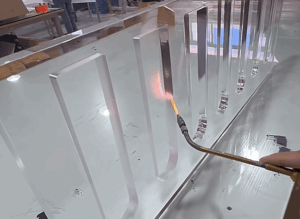

I once had a nylon part fail right in front of a client.
It looked perfect on the outside. Smooth finish. Clean lines. But after just a few uses? It warped under pressure. The client raised an eyebrow. I sank inside.
That’s when I realized: it’s not just about making a nylon part. It’s about making the right nylon part—for your application.
If you’re wondering whether CNC machining is the right method for your nylon project, I’ve been in your shoes. I’ve tested molded nylon, 3D-printed nylon, machined nylon. Some worked. Some didn’t. And I’ve paid the price to learn the difference.
In this guide, I’ll walk you through the key things that matter—material types, design considerations, tolerances, surface finish, and cost. You’ll get a clear view of whether CNC machining is a good fit for your needs.
By the end, you’ll be able to make a smart, confident call. No guessing. No regrets.
So let’s start!
1. Advantages of Using Nylon for Machined Parts
he first time I machined nylon, I wasn’t expecting much. It was just a test part. But the results surprised me. It came out smooth, strong, and easier to handle than other plastics I’d worked with.
If you’re considering CNC machining nylon, you’re probably wondering: Why choose nylon over other materials? Here’s what makes it a smart pick for many applications.
Let’s break it down:
- Lightweight but Strong: Nylon is light—much lighter than metal. But that doesn’t mean it’s weak. It holds up under pressure and can carry load without bending or snapping. If you’re building something that needs to be sturdy but not heavy, nylon checks that box.
- Naturally Lubricated (Low Friction): Nylon has a built-in slipperiness. This is called self-lubrication, which means it can move against other parts without wearing down fast. You’ll find this helpful if your part needs to slide, rotate, or roll.
- Impact and Abrasion-Resistant: Nylon doesn’t crack easily. It absorbs shock instead of breaking. I’ve dropped machined nylon parts by accident and expected chips—but they held up. That kind of toughness matters, especially in parts that get handled often.
- Electrical Insulation Properties: Nylon doesn’t conduct electricity. That’s good news if your part will be used near wires, switches, or electronics. You don’t have to worry about short circuits or sparks.
- Good Chemical Resistance: Nylon holds up well around many chemicals, oils, and solvents. It won’t melt or swell if it gets splashed during use. That makes it dependable in shops, factories, or labs.
So, is nylon the right fit for your part?
Maybe. Maybe not.
But if you need something light, tough, and smooth-moving, nylon is worth a closer look.
2. Key Properties of Nylon That Affect Machining
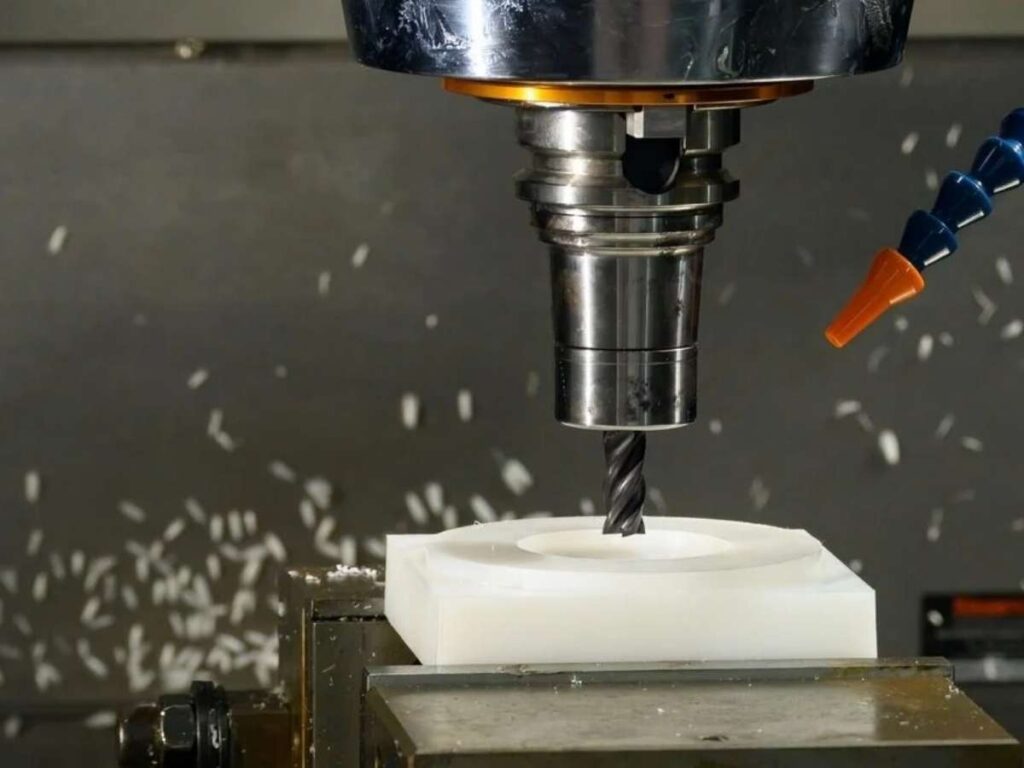
Nylon isn’t difficult to machine. But it does have a few quirks that can catch you off guard if you’re not ready.
The first time I cut nylon, I noticed something odd. The edges looked melted. The part still worked, but the finish wasn’t clean. That’s when I realized: nylon behaves differently under heat.
Let’s look at what matters most during machining.
Thermal Behavior
Nylon has a low melting point. If your tools get too hot, the surface can soften. That leads to smeared edges and poor tolerance. To handle this, try:
- Slower spindle speeds
- Sharp cutting tools
- Coolant or compressed air during machining
These steps help keep the heat down and your part clean.
Moisture Absorption
Nylon loves water. It can absorb moisture from the air, which causes it to swell. That means parts made in a dry shop might not stay the same size once they leave.
Here’s what helps:
- Keep nylon in sealed bags until you’re ready to use it
- Pre-dry your material before machining, especially for tight tolerances
If your part is going into a humid place, build in some room for expansion.
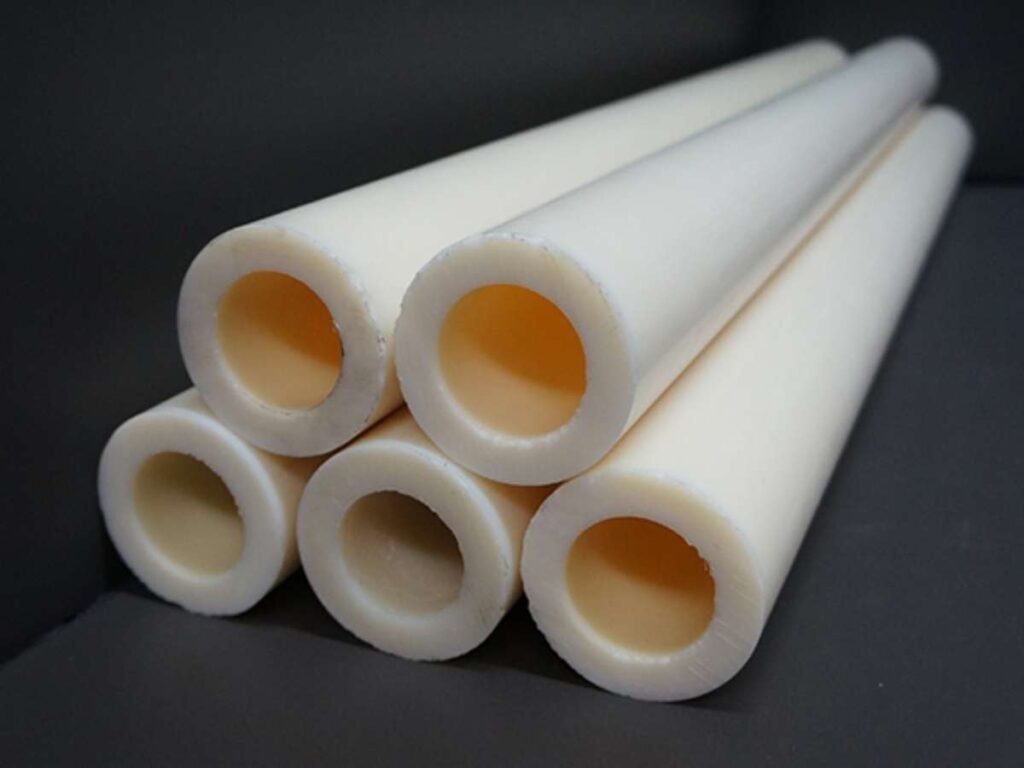
Grades of Nylon
Not all nylon is the same. Some types cut easier. Others are tougher but need more effort.
Here are the common types:
- Nylon 6: easier to machine, absorbs more moisture
- Nylon 66: stiffer, more heat-resistant
- Glass-filled nylon: reinforced with glass fibers, stronger but hard on tools
- Cast nylon: better dimensional stability
- Extruded nylon: easier to machine but can warp under heat
Each grade brings trade-offs. Think about what your part needs—strength, finish, or precision.
Want your nylon parts to work right? Start with the material. How you choose it—and how you treat it—will shape everything that follows.
3. Different Nylon Grades for CNC Machining
Not all nylon behaves the same. I learned that after ordering a batch of Nylon 66, expecting it to cut just like Nylon 6. It didn’t. The finish was rougher, the tools wore out faster, and I had to tweak my setup just to get clean edges.
So if you’re trying to figure out which nylon grade to use for CNC machining, it’s worth taking a closer look. Each one has its own strengths and a few trade-offs.
Here’s a simple breakdown:
- Nylon 6: This is the most common type used in CNC machining. It gives you a good balance: decent strength, smooth cutting, and low cost. It absorbs more moisture than other grades, so keep that in mind if your part will live in a humid space.
- Nylon 66: This one is tougher. It has higher mechanical strength and is more heat-resistant than Nylon 6. But that comes with a trade-off: it’s harder to machine. You’ll need sharper tools and a bit more patience. Still, it’s great if you’re building a part that needs to take some stress.
- Glass-Filled Nylon: This grade is reinforced with tiny glass fibers. That gives it added strength and stiffness. I’ve used it for load-bearing parts where regular nylon just didn’t cut it. It’s tougher to machine, though. The glass fibers wear down tools quickly, so plan for that.
- Cast Nylon (Nylon 6C): This version is cast instead of extruded. That makes it more stable. It holds its shape better over time. If your part needs tight tolerances and long-term reliability, cast nylon might be the way to go.
Choosing the right nylon grade can save you time, tools, and frustration. Think about your part’s job. Then match the material to the work it needs to do.
If you’re working with tough materials like this, it helps to partner with a team that knows how to handle them.
MachMaster has experience machining all nylon grades—including glass-filled and cast types—while holding tight tolerances up to ±0.01mm.
4. Common Use Cases for Nylon Parts
I remember the first nylon gear I helped make. It was part of a small conveyor system. The metal gear it replaced had worn out fast. But the nylon one? It ran smoother, made less noise, and lasted longer than expected.
That’s the thing about nylon: it works quietly behind the scenes in all kinds of places.
If you’re wondering where CNC-machined nylon makes sense, here are some everyday uses worth knowing about.
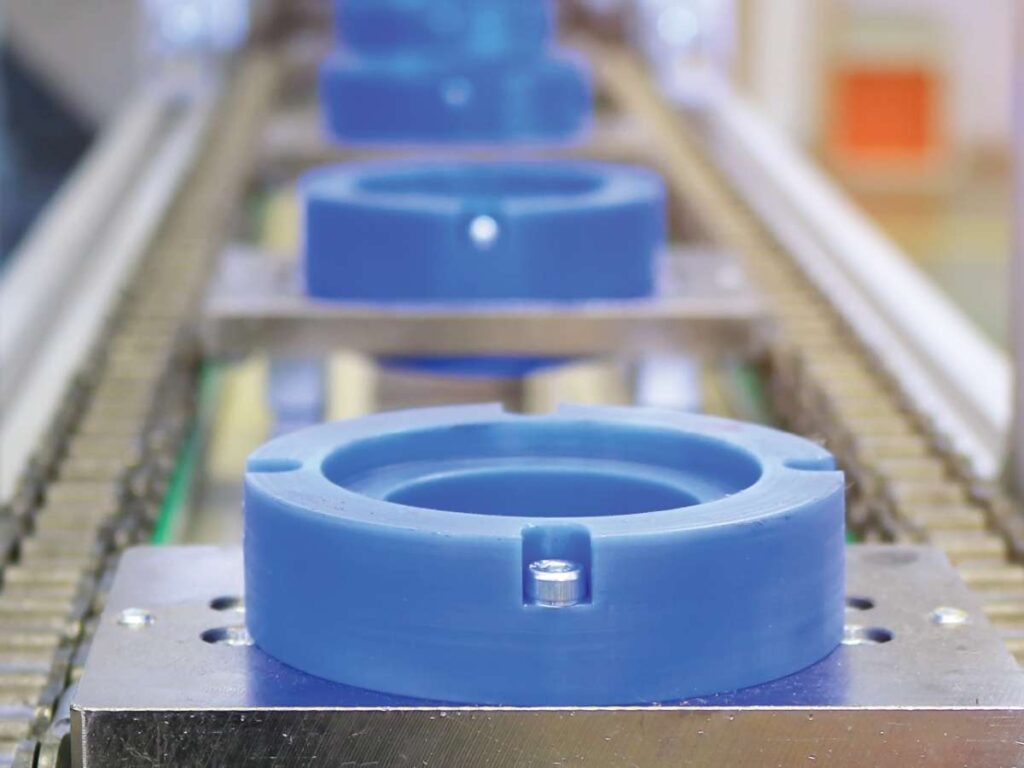
Mechanical Components
Nylon is often used for parts like bushings, gears, and rollers. These parts move. They take wear. They need to resist friction and pressure.
Nylon’s low-friction surface helps these parts run longer without wearing out fast. It also makes things quieter, which matters more than you’d think in some environments.
Consumer Product Casings
You’ll see nylon used in power tools, electronics, and home goods. It’s light but strong, and it holds its shape well.
I’ve seen companies choose nylon casings for their strength without adding bulk. If you’re designing something for regular handling, this could work for you too.
Custom Fixtures or Jigs
Nylon is handy in the shop. I’ve made jigs and fixtures from nylon for light machining tasks. It’s easy to cut and doesn’t damage metal parts.
If you need to hold or guide parts during assembly, nylon gives you a soft-but-solid option.
Insulative and Vibration-Dampening Parts
Because nylon doesn’t conduct electricity and absorbs vibration, it’s useful in electronics and machines. It helps quiet things down and adds a safety buffer.
So, where do you see nylon fitting in your work?
If your part needs to move, support, protect, or just stay strong under pressure, nylon could be the material to get it done.
5. CNC Machining Nylon vs Other Plastics
Sometimes, the toughest call is picking the right material. I’ve gone back and forth on material choices more times than I’d like to admit. If you’re facing that same decision, this table will help you compare nylon to other popular plastics.
| Material | Pros | Cons | Best For |
| Nylon | – Tough and impact-resistant – Good wear resistance – More rigid and strong | – Absorbs moisture – Can deform in humid conditions – Lower dimensional accuracy | – Gears, bushings, rollers – Custom fixtures – Structural parts |
| POM (Delrin) | – Excellent machinability – Great dimensional stability – Low friction | – Less tough under impact – Wears faster under friction | – Precision mechanical parts – Low-friction components |
| ABS | – Easy to machine – Smooth surface finish – Low cost | – Less strong – Lower wear resistance | – Casings – Prototypes – Light-use parts |
| PTFE (Teflon) | – Superior chemical resistance – Handles high heat well – Low friction | – Poor machinability – Very soft – Not rigid | – Chemical applications – Seals or insulators |
Not sure which way to go? Think about how your part will be used—and what it needs to survive. That’ll point you in the right direction.
6. Design Tips for CNC Machined Nylon Parts
Designing for nylon is a bit different than designing for metal. I found that out on a small bracket project. It looked great on the CAD model. But after machining, it curled slightly and didn’t fit the way it was supposed to. That’s when I started learning how nylon behaves.
If you’re working on a nylon part, these tips can help you avoid surprises and get better results.
Tolerancing Nylon
Nylon moves. It swells when it absorbs moisture and expands with heat. So if you’re holding it to a super tight tolerance, it might not stay that way for long.
In most cases, ±0.1 mm is enough. If your part doesn’t need a perfect fit, you can even go looser. Think about how the part will be used, and give it a little room to breathe.
Avoiding Common Design Mistakes
Nylon doesn’t like sharp corners or weak walls. It’s flexible—and that can be a good thing or a bad thing, depending on the design.
Here are a few things to keep in mind:
- Avoid walls thinner than 1.5 mm—they might warp during machining
- Add radii to inside corners to reduce stress buildup
- Use fillets instead of sharp transitions
- Keep long sections supported to prevent bending or curling
A little extra thickness and smoother shapes can go a long way.
Integrating Threads, Holes & Pockets
Threads can strip easily in nylon. If the part is under load, go with metal inserts instead.
For holes, try undersizing slightly. You can drill them to the final size after machining for better accuracy.
And for pockets:
- Use draft angles where possible
- Round out bottom corners to reduce tool wear
These changes make the part easier to machine and more likely to perform well over time.
Designing for nylon isn’t hard. But it does take a little care. With the right choices, you’ll get parts that work better and last longer.
Want a second set of eyes before you commit?
At MachMaster, we help clients fine-tune their nylon part designs so they machine cleanly, perform well, and stay within budget.
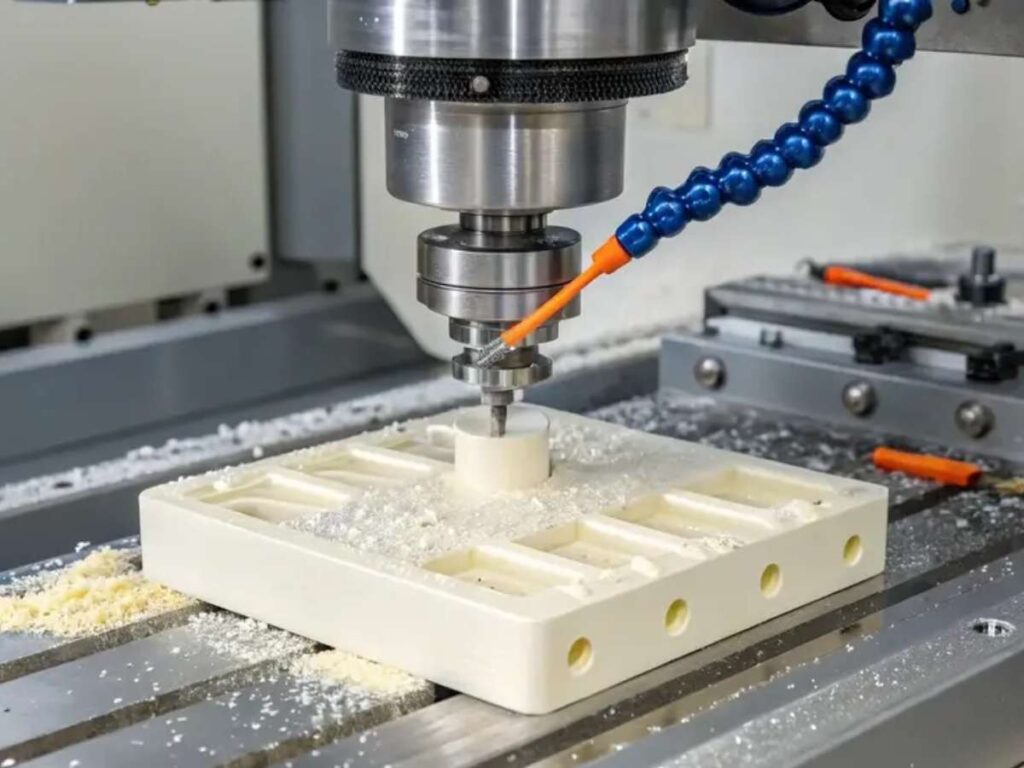
7. Factors To Consider When Choosing The Right Nylon For CNC Machining
Picking the right type of nylon can make or break your project. I learned this on a small run of parts that needed precise sizing. I used regular Nylon 6 without thinking twice. The parts looked good at first—but a week later, they had swollen just enough to cause a problem. That’s when I started paying more attention to what kind of nylon I was actually using.
So, how do you choose the right one for your project?
Let’s walk through it.
Moisture Sensitivity
Some nylons absorb more moisture than others. Nylon 6, for example, is more prone to swelling in humid conditions than Nylon 66 or cast nylon.
Ask yourself:
- Will this part be used outside?
- Will it face changes in humidity?
If so, go with a grade that stays more stable, like cast nylon or Nylon 66.
Mechanical Needs
If your part has to take a beating, consider stronger options like:
- Nylon 66 for higher strength
- Glass-filled nylon for stiffness and load-bearing parts
But keep in mind: stronger doesn’t always mean easier to machine. Glass-filled nylon can wear out tools faster.
Dimensional Stability
For tight-tolerance parts, cast nylon usually performs better than extruded. It holds its shape better over time and is less likely to warp.
Cost and Availability
Some grades are more expensive or harder to source in small quantities. Think about how many parts you need, and how often you’ll be machining them.
Sometimes the best choice is the one that fits your budget and your tolerance for risk.
Choosing the right nylon isn’t just about specs. It’s about knowing how the material will behave and what trade-offs you’re willing to make.
Conclusion
That nylon part I told you about?
I reworked the design. Switched grades. Adjusted my tolerances. And this time—it worked. No warping. No extra cost. Just a solid, reliable part.
You can get there too.
Now you know how nylon behaves, which grades to pick, how to design smarter, and what trade-offs to expect. You’ve got the tools.
So what’s your next step?
What part are you building that needs to work the first time?
If you’re ready to talk through options or start a quote, contact us today.
Let’s make something that lasts.
Check Out These Additional Resources
Need more ideas? Browse through our extended range of products and discover something new:
Still haven’t found what you’re looking for? Don’t hesitate to contact us. We’re available around the clock to assist you.