
When I first added CNC brass parts to our product line, I expected fewer problems. It ran smooth. But some parts later failed in use.
That made me rethink how and when brass should be used.
Since then, I’ve worked with designers, buyers, and factory teams to match materials with product needs. I’ve seen what works in the real world.
This review will cover:
- The real pros and cons of machining brass
- How it stacks up against other metals
- What brass means for time, budget, and performance
If you’re trying to figure out if brass fits your job, this guide will help.
Let’s begin!
1. What is CNC Machining Brass
Brass is a metal made from copper and zinc. It’s known for being smooth to cut, easy to shape, and clean in appearance.
If you’re building parts that need to fit just right—or look good right out of the machine—brass might be one of the first materials that comes to mind.
I’ve used brass for parts that needed low friction, tight threads, and zero delays. It ran smoothly, needed less tool changes, and the surface came out clean. That kind of outcome matters when time is tight and tolerances can’t slip.
Here’s what happens when you put brass and CNC together:
- Tools stay sharp longer
- Cutting goes faster
- The part holds its shape
- The finish comes out clean
When you’re managing cost, speed, and part accuracy, these things matter.
I’ve worked with aluminum, steel, even plastics. But with brass, I’ve seen jobs wrap quicker—sometimes by full shifts—without extra steps or rework.
2. Advantages of Brass in CNC Machining
Before you decide on any material, you need to know what it brings to the table.
Brass is often picked because it makes machining faster, smoother, and more consistent. But there’s more behind that choice than just tradition. In my own work, switching to brass has helped save time, lower tool costs, and reduce delays—especially when the job called for tight specs and clean finishes.
Here’s what brass does well, and why that might matter to you.
Fast and Clean Machining
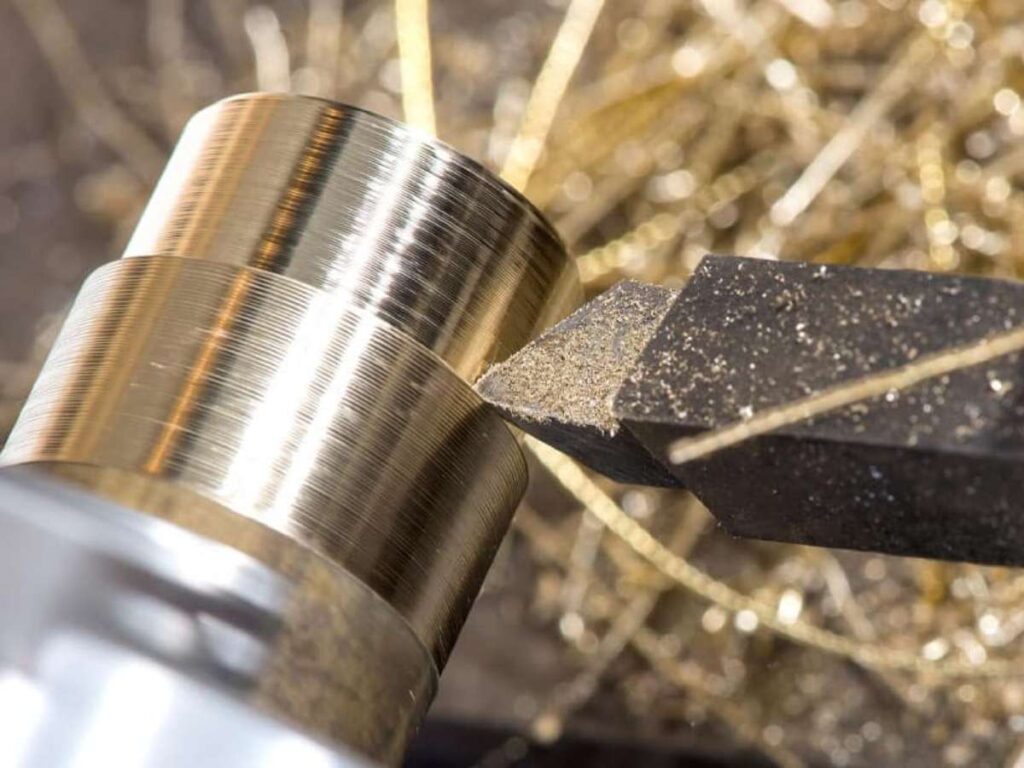
Brass cuts easily. That means less strain on your tools and less time on the machine.
You don’t get the same heat buildup you might see with harder metals. That helps protect the part’s shape and keeps the tools sharp longer.
In real jobs, this translates to faster cycles and less downtime. I’ve had runs where brass helped us finish early without pushing the machines hard.
Smooth Surface Finish
One thing brass does well: clean surface finish straight off the machine.
If your part needs to slide, seal, or screw in tightly, this helps. You might even skip sanding or polishing steps. That saves hours when you’re working with large batches.
This smoothness also matters if your product is customer-facing—like fittings, connectors, or hardware where appearance matters.
Dimensional Stability
Brass holds its form during cutting. You’re less likely to see warping, bending, or tool marks that throw off your specs.
I’ve worked on tight-tolerance parts—ones that needed exact fit with no wiggle room. Brass made that easier to hit, without going back for rework.
Less Wear on Tools
When you machine harder metals, your tools wear out faster. That means more tool changes and higher costs.
Brass is softer and doesn’t cling to cutting tools. So your bits and mills last longer. If you’re running long production lines, this can make a big difference in total cost.
3. Key Properties of Brass for CNC Machining
To make the right choice, you need to know what brass is made of, and how it behaves during machining.
Brass is an alloy. That means it’s made by combining two or more metals. In most cases, brass contains copper and zinc. Some types also include small amounts of lead, which can improve how well it machines.
The table below shows the main properties that affect performance in CNC work. These are the factors that shape your cutting speed, part quality, and tool wear.
| Property | What It Means | Why It Matters for CNC Machining |
| Composition | Mostly copper (55–65%), zinc (30–40%), and often lead (1–3%) | High copper gives strength and smooth cutting. Lead improves chip control. |
| Machinability Rating | 100% (based on free-machining brass C360) | Brass is one of the easiest metals to machine—faster cycles, cleaner cuts. |
| Tensile Strength | 300–500 MPa | Strong enough for fittings and connectors without cracking during cuts. |
| Hardness (Brinell) | 55–110 | Hard enough to hold shape, but soft enough to cut without tool stress. |
| Thermal Conductivity | High (109–130 W/m·K) | Transfers heat quickly. Reduces risk of tool overheating or part warping. |
| Density | About 8.4–8.7 g/cm³ | Heavier than aluminum. Important for parts where weight affects function. |
| Corrosion Resistance | Moderate to high | Good for plumbing, valves, or exposed parts with light moisture contact. |
| Workability (Forming/Bending) | Fair to good | Brass can be formed after machining if needed, without cracking easily. |
| Electrical Conductivity | 28% IACS (compared to pure copper at 100%) | Useful for parts in low-voltage systems or signal connectors. |
| Surface Finish Quality | Very high | Brass parts often come out smooth and ready-to-use, with little post-work. |
These values can shift slightly depending on the brass grade you choose. C360 (also called “free-machining brass”) is one of the most common types used in CNC shops because of its fast cutting and clean finish.
If your project needs tight tolerances, smooth surfaces, or fast production, these properties make brass a solid option.
4. CNC Machining Processes Suitable for Brass
Brass works well with most CNC methods. That’s one reason many shops prefer it for small, high-precision parts.
In my experience, brass cuts clean in one pass. It rarely needs second setups or deep adjustments. That helps reduce mistakes and keeps cycle times tight.
Here are the most common CNC processes used with brass, and when you might need them:
CNC Milling
Milling removes material using a rotating tool.
You can shape brass into flat surfaces, pockets, or slots. It’s also great for features like threads, tapers, or part contours.
I’ve used milling for custom valves, couplings, and front plates—jobs where size, finish, and part shape really matter.
Best for:
- Flat parts
- Threaded holes
- Surface detailing
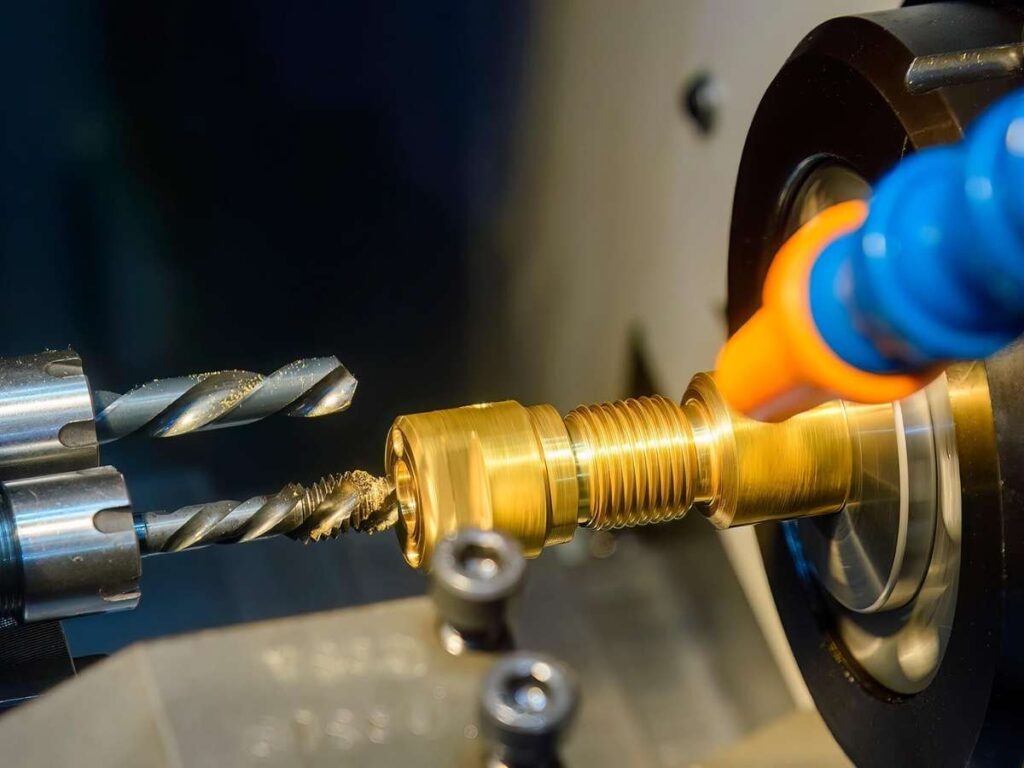
CNC Turning (Lathe Work)
Turning rotates the brass part while a fixed tool cuts it.
This is the fastest way to make round parts, like bushings or shafts. The brass handles turning very well. You get smooth surfaces and less tool drag.
I’ve seen shops push turning speeds higher with brass than with steel, without hurting finish or shape.
Best for:
- Round parts
- Threads and grooves
- Tight outside diameters
Drilling
Brass drills clean and don’t clog bits. That makes it easier to drill deep holes or small diameters with less tool wear.
Because brass is softer, you won’t need special drill coatings or extra torque. Just sharp tools and the right speed.
Best for:
- Precise holes
- Multi-hole parts
- Long hole depths
Tapping and Threading
Brass forms threads well, both with taps and thread mills.
Its soft surface means you can get good thread quality without tearing or tool marks. You can also cut finer threads without the metal deforming.
Best for:
- Fittings
- Connectors
- Pressure-tight assemblies
Deburring and Finishing
Brass needs less post-machining work than harder metals. Sharp edges break clean, and the surface usually comes out smooth.
Most parts just need a quick deburr or light polish to be ready. That’s saved us hours in production runs where finish counts.
Best for:
- Decorative or visible parts
- Close-fit joints
- Parts with tight tolerances
5. Applications of CNC Machined Brass Parts
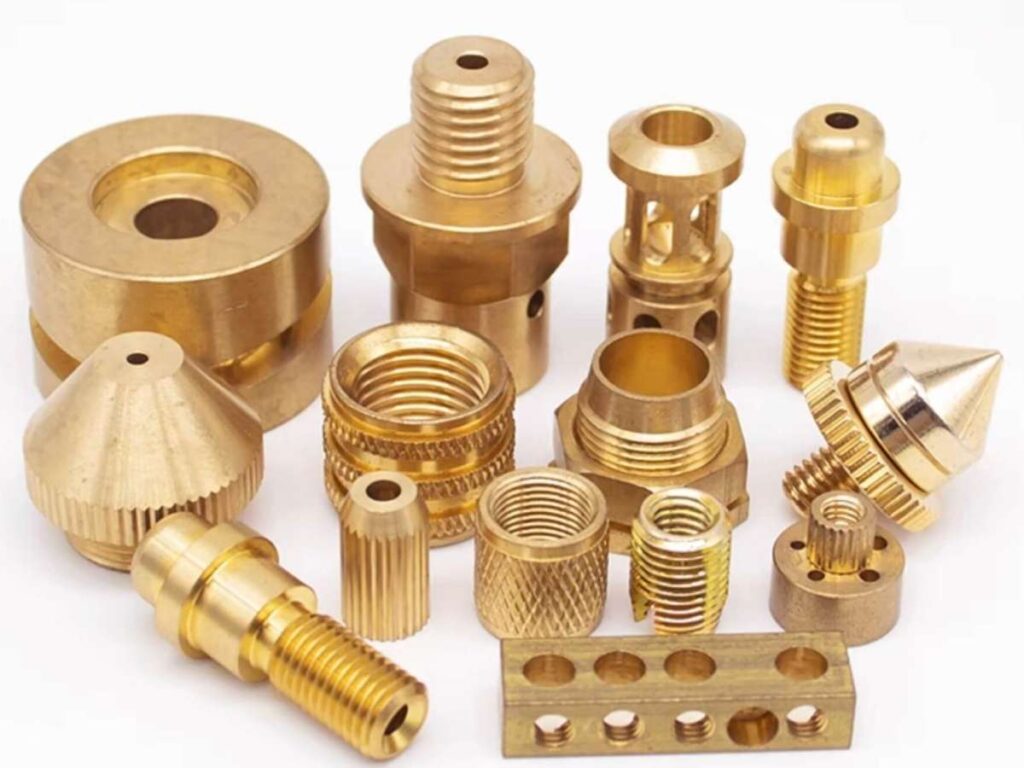
Brass is often used when parts need to be precise, smooth, and reliable. It performs well in both functional and cosmetic roles.
Over the years, I’ve worked on many jobs where brass was the right call, not because it was flashy, but because it just worked. It saved time, reduced rework, and handled the job without drama.
If your team is building parts that need to fit, move, or seal correctly, these use cases might look familiar.
Plumbing and Fluid Control
Brass is corrosion-resistant and easy to thread. That makes it a top choice for parts that carry water, gas, or oil.
Common parts:
- Valves
- Fittings
- Couplings
- Nozzles
You’ll find these in residential systems, factory lines, and commercial buildings. The smooth surface and tight fit help prevent leaks.
Electrical and Electronic Hardware
Brass conducts electricity well. It also holds threads without stripping, which is important in small fasteners and wire connectors.
Common parts:
- Terminals
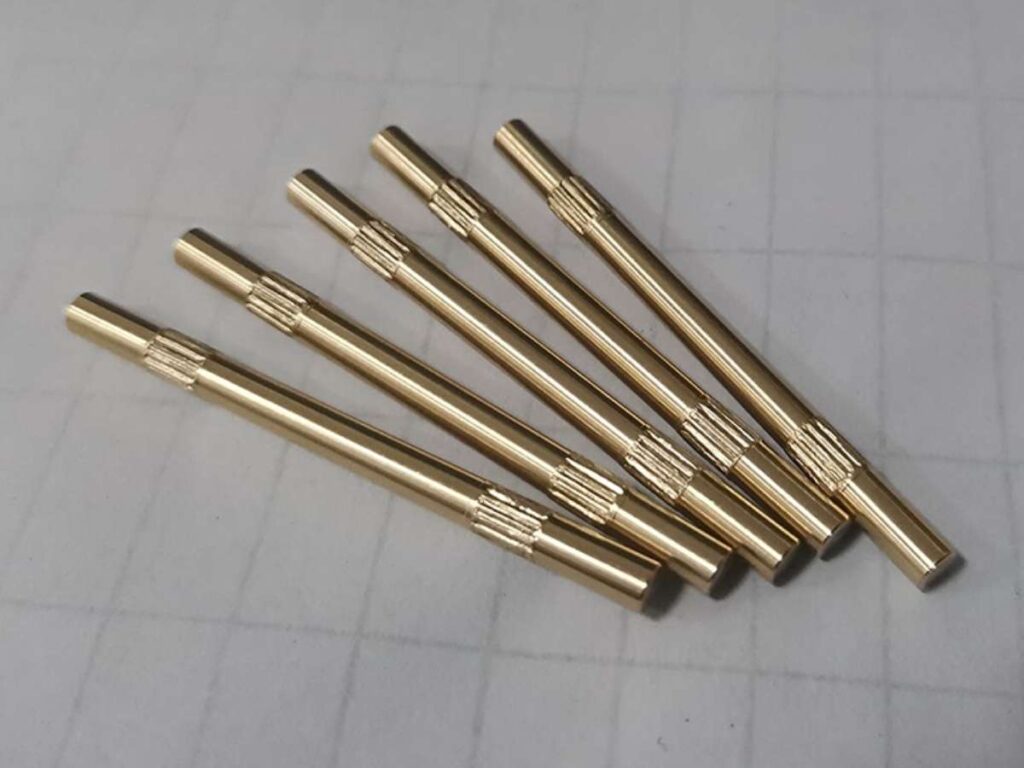
- Pins
- Sockets
- Switch contacts
I’ve seen brass used in control panels, sensor housings, and connector plates—especially when clean signals and durability were key.
Mechanical Components
Brass holds size and shape, even with frequent use. It resists wear and handles low friction well.
Common parts:
- Gears
- Bushings
- Spacers
- Shafts
These parts often show up in machinery, tools, and devices where quiet, smooth motion is needed.
6. Comparing Brass to Other Materials
Choosing the right material isn’t just about price per pound. You also have to consider machinability, durability, surface quality, and how well the part performs in its final use.
I’ve worked with brass, aluminum, and stainless steel across many jobs. Each one has strengths. But the best choice depends on what your part actually needs to do.
Here’s a side-by-side look at how brass compares to two of the most common alternatives:
| Factor | Brass | Aluminum | Stainless Steel |
| Machinability | Excellent – cuts fast, low tool wear, clean finish | Very good – light, fast to cut, moderate tool wear | Fair – slower to cut, higher tool wear, harder on machines |
| Surface Finish | Smooth finish right off the machine | Decent finish, may need polishing for cosmetic parts | Can be rough if not managed carefully |
| Strength | Moderate – good for most low- to medium-load parts | Moderate – higher strength-to-weight ratio than brass | High – best for high-load or structural parts |
| Weight | Heavy – density around 8.5 g/cm³ | Light – about one-third the weight of brass | Heavy – similar to brass in weight |
| Corrosion Resistance | Good – especially in dry or indoor settings | Fair – prone to corrosion if not coated | Excellent – strong resistance to rust and chemicals |
| Cost (Material Price) | Medium to High | Low to Medium | High – especially for tougher grades |
| Electrical Conductivity | Moderate – about 28% IACS | Low – not ideal for electrical use | Very low – not used in electrical parts |
| Thermal Conductivity | High – good for heat flow and low heat buildup | Very high – also good for heat dissipation | Low – holds heat, not great for fast thermal transfer |
| Threading and Tapping | Easy – holds threads well without cracking | Easy – but can strip if overtightened | Harder – threads can gall if not lubricated properly |
| Recyclability | High – easy to recycle and reuse | Very high – widely recycled | High – but energy-intensive to recycle |
| Common Use Cases | Fittings, valves, connectors, gears, panels | Housings, brackets, lightweight frames, prototypes | High-strength parts, medical tools, food-grade equipment |
Key Takeaways
- Choose brass if your part needs to be precise, look clean, and cut quickly.
- Choose aluminum when weight and cost are key, and strength can be moderate.
- Choose Stainless Steel when strength, heat, or rust resistance are top priorities.
7. Tips for Choosing a CNC Machining Partner for Brass
Even the best material can fail if the wrong shop machines it.
Brass has clear benefits, but not every machine shop knows how to handle it well. I’ve seen cases where tool wear, cutting speeds, or lack of experience led to parts that didn’t meet the mark, wasting time and budget.
Here are key things to look for when you’re choosing a machining partner for brass parts:
Look for Experience with Brass
Ask if they’ve worked with C360 brass or other free-machining grades. Shops with experience will know how to get clean finishes, tight fits, and avoid heat issues.
They should also be able to show you sample parts or case studies.
Check Their Tooling and Setup
Brass needs sharp tools and proper speeds to machine well. A good partner like MachMaster always has:
- Well-maintained machines
- Updated cutting tools
- CAM software that can optimize toolpaths for brass
This matters even more if your part has small features or tight tolerances.
Review Their Quality Process
Ask how they check part accuracy. Look for partners who use:
- In-process inspection
- Final dimensional checks
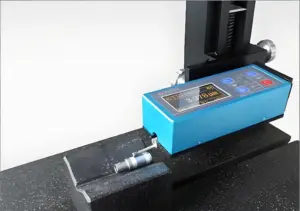
- Surface finish checks if needed
If your parts need to fit right the first time, quality checks are non-negotiable.
Ask About Batch Size Capabilities
Some shops only handle prototypes. Others may not scale well.
Make sure your partner can handle your full order volume, whether it’s low, medium, or high quantity. At MachMaster, we machine brass parts across all batch sizes, from one-offs to large production runs. Ask about lead times and how they handle reorders.
Conclusion
That first brass job taught me what worked and what didn’t. Since then, I’ve learned when brass saves time, where it fits best, and how to machine it right.
Now you know too.
This guide showed you how brass compares, why it cuts clean, and where it wins in real-world use.
If you’ve got a design on your desk or a part you need to improve, this is the time to move.
Why wait when faster cycles and better results are within reach?
Contact MachMaster today. Let’s get your job moving.