
One time, I sent a design to a CNC shop without knowing what aluminum grade to use.
They picked one for me and I didn’t ask questions.
The result? A part that looked fine but couldn’t handle the heat in my assembly.
I learned something important that day: even if you’re not the one running the machine, you still need to know the basics.
And that’s why this guide exists. To help you:
- Understand what CNC machining really involves
- Choose aluminum for the right reasons
- Pick materials that match your project
- Learn how to design for machinability
- Avoid common mistakes that waste time and money
You’ll leave with the tools to get started and the confidence to speak the same language as your machinist.
Let’s go!
1. Understanding the Basics
Ever looked at a metal part and wondered, How did they make that so precise?
That’s where CNC machining comes in.
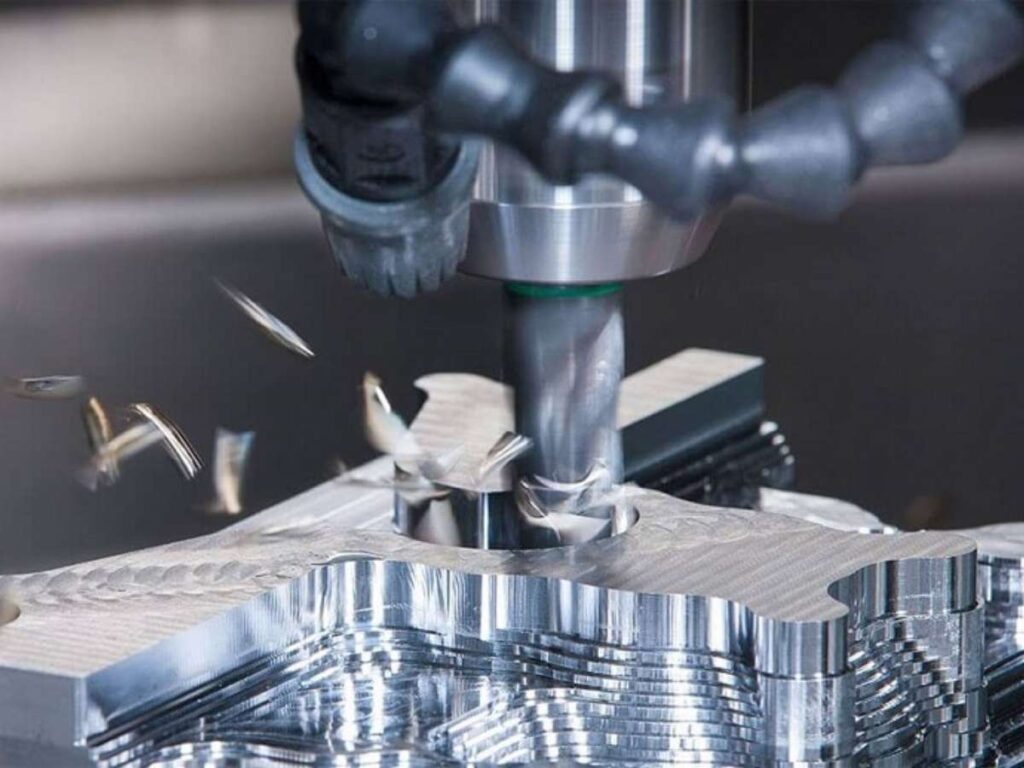
CNC stands for Computer Numerical Control. It’s a process that uses computer instructions to guide machines like mills, lathes, or routers. Instead of turning knobs by hand, the machine follows a digital file—cutting, drilling, and shaping with accuracy that’s hard to match manually.
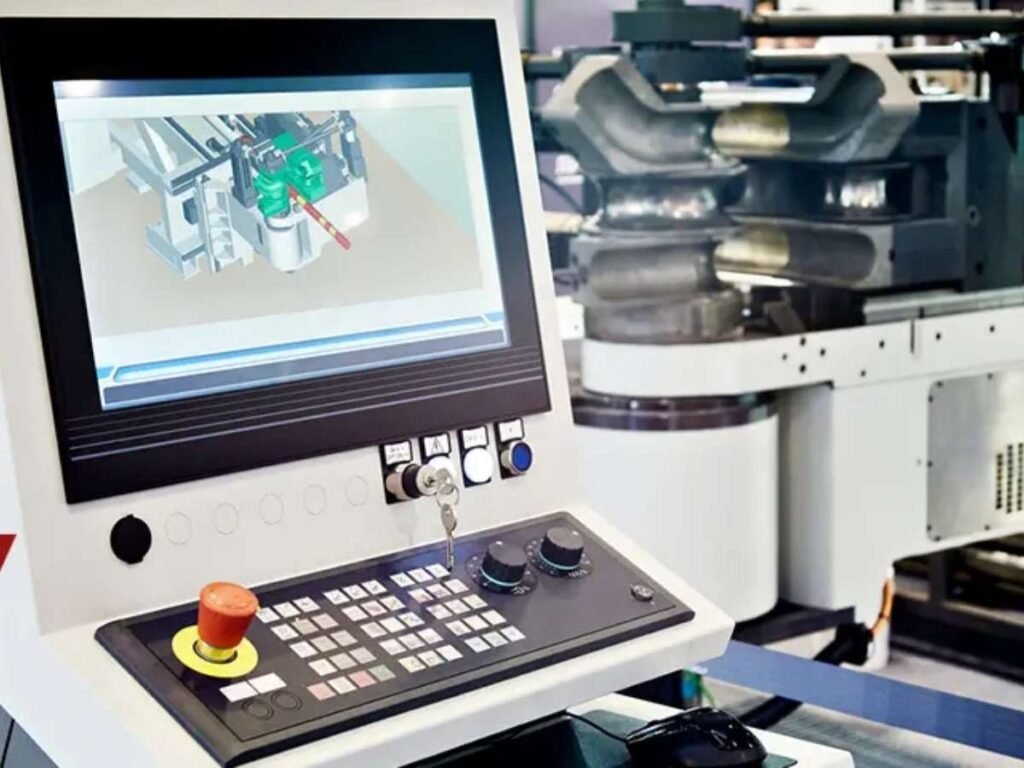
You start by creating a digital model using CAD (Computer-Aided Design) software. That design is then translated into instructions. These instructions tell the machine exactly where to move, how fast to cut, and how deep to drill.
I still remember the first time I saw a CNC mill in action. Watching a raw block of metal slowly transform into a usable part was… strangely satisfying. No guesswork. Just code, movement, and results.
Now, why is aluminum often the material of choice?
A few simple reasons:
- It’s lightweight, so it’s easy to handle and ship.
- It resists corrosion, which means it holds up well over time.
- It’s soft compared to other metals, so it machines faster.
- And it’s easy to find, which helps keep costs lower.
Aluminum shows up in a lot of places:
- Airplane frames
- Car parts
- Smartphone cases
- Medical and industrial components
Once you start looking, you’ll notice aluminum parts are everywhere.
So why do people trust it? Because it performs well, machines cleanly, and fits into many different industries.
Ready to see how aluminum machining really works? Let’s keep going.
2. Advantages of CNC Machining Aluminum
Now that you’ve got the basics, let’s look at why aluminum and CNC machining work so well together.
High Speed Machining
Aluminum is soft compared to other metals. That’s good news.
Because it cuts more easily, the machine can move faster. This saves time and reduces wear on the cutting tools. I once worked on a part using stainless steel, then switched the design to aluminum. Same machine. Same setup. But the aluminum version finished in half the time and the tools lasted longer.
Excellent Strength-to-Weight Ratio
Need strength without the extra weight? Aluminum checks that box.
It’s strong enough to handle stress but light enough for portable or moving parts. You’ll find it in drones, bike frames, and electronics. That’s no accident. The material holds up without dragging things down.
Corrosion Resistance
Moisture and metal usually don’t mix well. But aluminum is different.
It naturally forms a thin oxide layer that protects it from rust. So it holds up in outdoor environments, on boats, or in factories. No extra coatings. No added steps.
Good Surface Finish
Some materials come off the machine rough and need extra polishing.
Aluminum? Often smooth right out of the mill. That means less post-processing, which saves time and cost.
3. Common Aluminum Grades for CNC Machining
Once you’ve decided to use aluminum, the next question is: Which type should you choose?
Not all aluminum is the same. Each grade has different strengths, weaknesses, and use cases. I didn’t know this when I started out. I just picked “aluminum” in the quote request form. Big mistake. The part I got back was harder to finish than I expected and cost more than it should have.
Let’s break down a few common grades that work well with CNC machining.
| Aluminum Grade | What It’s Good For | Things to Know |
| 6061 | General-purpose use. Great for brackets, housings, or simple structural parts. | Easy to machine. Good strength. Corrosion-resistant. Often the best starting point if you’re unsure. |
| 7075 | High-stress parts: aerospace components, bike frames, or high-performance tools. | Very strong, but harder to machine. Higher cost. Wears down tools faster. |
| 2024 | Parts that face repeated stress: gears, shafts, or high-load areas. | Great fatigue resistance. Lower corrosion resistance. Better for dry or indoor use. |
| 5052 | Welded parts, enclosures, or anything that needs shaping and bending. | Not heat-treatable. Strong and weldable. Machines well enough, but not as easy as 6061. |
| MIC-6 | Precision parts like fixtures, tooling plates, or jigs. | Cast aluminum. Extremely stable and flat. Ideal when accuracy is critical. |
If you’re unsure which aluminum grade fits your part, talk to your manufacturer early. At MachMaster, we help you pick the right material based on your design, budget, and function, no guesswork involved.
Next, I’ll walk you through how to design your part for smooth machining. That step makes all the difference.
4. Design Considerations for Machining Aluminum Parts
Now that you know which aluminum grade to pick, it’s time to focus on design.
A great design doesn’t just look good, it saves time, cuts costs, and reduces mistakes. I learned this the hard way. One of my early parts had paper-thin walls. Looked cool in CAD. But on the machine? Wobbled like a tuning fork.
Let’s go over a few key things to think about before you send your file to the shop.
Wall Thickness
Thin walls are risky. They can vibrate or flex during cutting, which hurts accuracy.
Try to keep walls at least 1.0–1.5 mm thick for aluminum. Thicker if the part is large or tall. If you need thin features, ask yourself: Does this shape really need to be that light?
Tolerance and Surface Finish
Tolerances are the allowed margin of error in your part’s size.
Tighter tolerances mean higher costs. Only apply them where it really matters, like on a press-fit or sliding surface.
Same goes for surface finish. A smoother finish may look nicer, but it takes more time to achieve.
Corner Radii
Machining sharp inside corners is tough. Tools are round, so they leave curved edges.
Use larger internal radii at least 1 mm or more to reduce tool stress and breakage. It also speeds up the cut.
Hole Sizes and Threading
Stick to standard drill sizes. Don’t ask for weird diameters unless you need them.
For threads, keep the depth around 1.5 times the hole diameter. Deeper threads don’t usually hold better, but they take longer to cut.
Avoiding Warpage
Long cuts create heat. And heat makes aluminum expand.
If your part is thin and wide, it can warp during machining. Add support ribs, use balanced designs, or ask for stress-relieved material to help prevent this.
5. CNC Machining Process
So you’ve got a design in mind and the right aluminum picked out. What happens next?
Let’s walk through the steps that turn your digital file into a real part. This process may sound complex at first, but once you see it broken down, it all starts to click.
Step 1: Design in CAD
Everything begins with a CAD file.
CAD stands for Computer-Aided Design. This is where you model your part in 3D. You’ll need to include key dimensions, wall thickness, hole sizes, and any tolerances that matter.
Here’s a tip from experience: don’t overcomplicate your model. Keep it clear, simple, and practical. Focus on what really matters, fit, function, and machinability.
Step 2: CAM Programming
Once your model is ready, it moves into CAM software.
CAM stands for Computer-Aided Manufacturing. This is where the toolpaths are created. A toolpath is the route the cutting tool follows to shape your part.
You also define:
- Feed rate: how fast the tool moves
- Spindle speed: how fast it spins
- Cutting depth: how deep each pass goes
These numbers make a big difference. I’ve seen projects fail just from choosing the wrong speed. It’s a balance between speed, accuracy, and tool life.
Step 3: Machine Setup
Before cutting begins, the machine needs prep.
This includes:
- Setting up fixtures to hold the part
- Choosing the right cutting tools
- Zeroing the machine so it knows where the part begins
Good setup = good results. A shaky fixture or a dull tool can ruin the job fast.
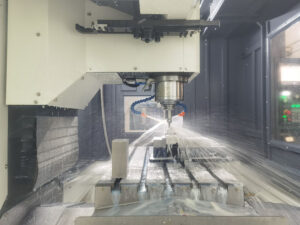
Step 4: Cutting Operation
Now comes the fun part: cutting.
Depending on your design, this step might include:
- Milling: for shaping flat surfaces or contours
- Drilling: to create holes
- Tapping: to add threads inside holes
Each operation follows the toolpaths created earlier. If all goes well, your raw aluminum block slowly transforms into a finished part.
6. Tools and Speeds for Machining Aluminum
Once the machine is set up, the next big question is: What tools should you use?
Picking the right tool makes a huge difference. I’ve seen clean, fast cuts and I’ve seen tools chatter, break, or burn. It often comes down to tool type and how fast you run it.
Recommended Cutting Tools
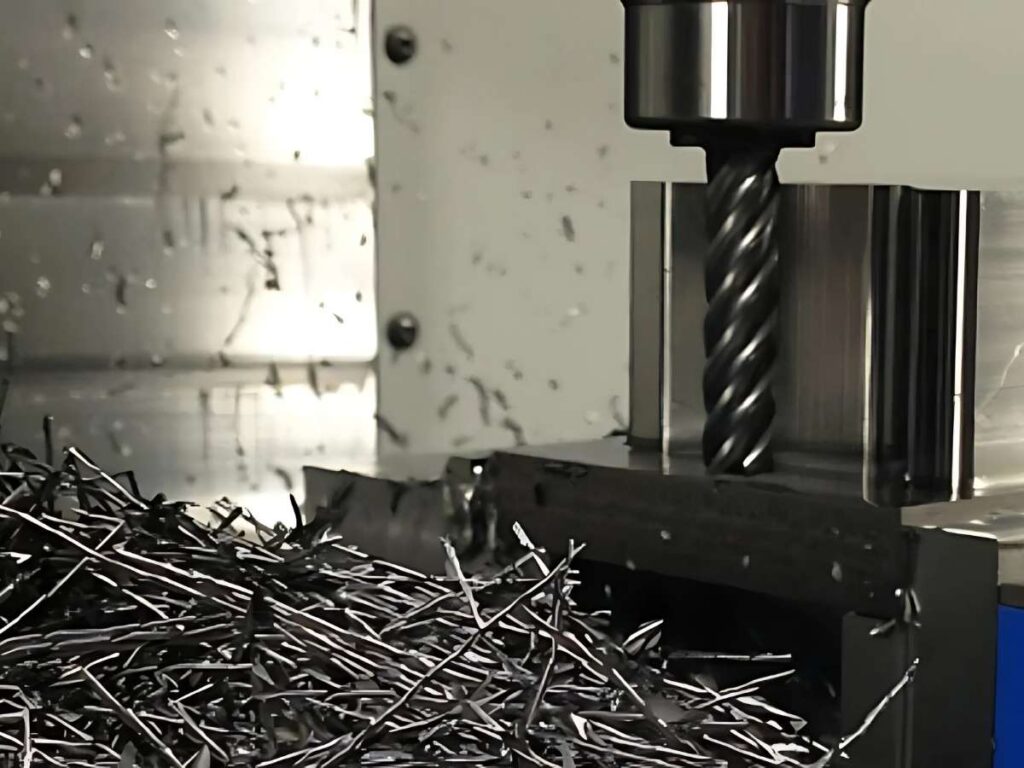
For aluminum, carbide end mills are your go-to.
They stay sharp longer and handle heat better than steel tools. Look for high-helix cutters they help clear chips quickly. That keeps the cut cool and clean.
Need a coating? TiAlN (Titanium Aluminum Nitride) works for harder materials. But for aluminum, uncoated or ZrN-coated tools are often better. They reduce buildup and keep edges sharp.
Feeds and Speeds Guidelines
Let’s talk about speed.
- RPM: That’s how fast the tool spins. Aluminum likes high RPMs.
- Feed rate: How fast the tool moves through the part.
- Chip load: How much material the tool removes per tooth, per pass.
- Coolant: A must-have. It keeps the part cool and clears chips away.
Getting this right takes trial and error. If you hear squealing or see smoke, stop. That’s a sign something’s off.
Toolpath Strategies
Now, how you cut matters too.
- Climb milling pulls the tool into the cut. It gives a cleaner finish but needs a rigid setup.
- Conventional milling pushes against the material. Safer, but not as smooth.
- Adaptive clearing is great for roughing. It uses constant tool pressure and helps avoid tool breakage.
7. Cost Factors to Watch
When you’re ordering CNC machined aluminum parts from a manufacturer, it’s easy to focus just on the quote. But what goes into that number?
Understanding the key cost drivers can help you make better design decisions and avoid spending more than you need to.
Material Costs
The type of aluminum you choose affects the base price.
Some options, like 6061, are affordable and commonly stocked. Others, like 7075 or MIC-6, are stronger or more precise but also more expensive. These materials cost more to buy and may require slower machining.
When working with your supplier, ask about material options. You might find a more cost-effective alternative that still meets your needs.
Setup and Tooling
Setup is one of the biggest costs for small orders.
The shop has to prepare your job, load tools, fixture your part, and run test cuts. If you’re just ordering a few pieces, that prep time is spread across fewer parts.
Also, some designs require custom fixtures or special tooling. These costs are usually one-time, but they can affect your upfront price.
Tolerance Requirements
Tighter tolerances mean more work.
Your manufacturer may need to slow the machine down, inspect more often, or even use specialty equipment. That raises the quote. So unless a tight tolerance is critical to your part’s function, try to keep it reasonable.
Part Volume
Pricing often depends on how many parts you need.
One prototype will cost more per piece than a batch of 100. That’s because the setup cost is the same either way. The more you order, the more that cost is spread out.
Conclusion
I get it. Starting a new project can feel overwhelming.
But here’s the thing, you don’t have to know everything. You just have to know enough to move forward.
And now? You do.
This guide gave you the essentials:
- What CNC machining aluminum is
- Why material choice matters
- How to design smart
- Where cost adds up
- And what tools your manufacturer will use
Now, you’re ready. What’s your next move?
Reach out today and take the next step.