
Last year, one of my clients ordered custom metal parts from a supplier overseas.
They looked great at first. Shiny. Clean. Everything seemed perfect.
But within just a few weeks, the parts started to rust.
That one mistake cost them thousands of dollars, and their customers started to lose trust.
I’ve been in metal fabrication. And I’ve seen this happen way too often—when people skip or misunderstand surface finishing.
That’s why I made this guide.
If you’re a business owner, product designer, or someone in charge of sourcing, I’ll walk you through chrome plating, step by step.
Let’s get started!
Step#1 Initial Surface Cleaning & Degreasing
Before anyone starts scrubbing parts or prepping plating tanks, you need to take a step back and ask the most important question: What is this part supposed to do once it leaves your facility?
This isn’t just about ticking boxes—it’s about protecting your product, your brand, and your bottom line.
Why End-Use Determines Everything
If you’re chrome plating a hydraulic rod that cycles 10,000 times a day in harsh industrial conditions, the prep, thickness, and even base layers will look very different from a decorative bracket that just needs to shine in a retail showroom.
I’ve seen parts fail early in the field—no matter how great they looked fresh out of the tank—simply because no one aligned the plating spec with the real-world environment.
That one mistake led to warranty claims, tension with a key supplier, and hours of root-cause meetings. You don’t want to be there.
Questions to Ask Before You Even Touch the Surface
- Will this part face abrasion, impact, or high friction?
- Is it exposed to chemicals, salt spray, or high humidity?
- Are tight tolerances critical for how it fits or functions?
- Is the chrome layer functional, decorative, or both?
- How will the part be handled, stored, and installed?
These questions don’t just guide the plating shop—they shape your upstream decisions on materials, machining, and supplier selection.
Talk to Your Plater
Your plater isn’t just a service provider—they’re your finish line. The more context you give them, the better they can recommend the right surface prep, bath chemistry, or masking techniques.
And if you’re managing a team or sourcing for multiple projects, take time to document the end-use requirements clearly. It’ll save you countless rounds of back-and-forth.
Step#2 Mechanical Surface Preparation
Now that the surface is clean, it’s time to get serious about what’s actually on the metal. This step isn’t about appearances, it’s about giving the chrome something solid and reliable to grip.
If there’s rust, pitting, or scale on your part, the plating won’t just underperform—it may not stick at all.
Importance
Mechanical preparation is where you smooth out imperfections, remove corrosion, and set the stage for uniform coating. This step creates a physical surface profile that helps the chromium layer adhere and stay intact during use.
It might not be glamorous, but it’s the kind of work that saves you from headaches later on.
Your Go-To Techniques
Depending on your part’s condition and end-use, you’ll be using one or a mix of the following:
- Sanding: Ideal for surface smoothing, especially for decorative jobs.
- Grinding: Best when you need to remove deeper imperfections or reshape worn parts.
- Abrasive Blasting: Removes rust, scale, and old coatings fast. Great for functional chrome plating on industrial components.
- Polishing: Used when a high-gloss finish is part of the design requirement.
Instructions
- Use fine-grit abrasives for your final pass to avoid creating deep grooves. The smoother the base, the better the chrome will look and perform.
- Always mask critical areas—threads, fits, electrical contact points—anywhere chrome shouldn’t go.
- Check for consistency. Feel the surface. Visuals help, but your fingertips will catch imperfections your eyes miss.
Step#3 Acid Etching / Pickling
So the part looks clean. It’s been ground, blasted, or polished. But there’s one more thing standing between that substrate and solid chrome adhesion: Invisible oxidation.
Even freshly prepped metals form a thin oxide layer almost immediately when exposed to air. That layer might not look like much, but it’s enough to weaken the bond between the base material and the plating. This is where acid etching, or pickling, comes in.
Importance
Etching is more than just a chemical dip. It’s your insurance policy. It strips away microscopic oxidation and activates the surface so the chrome plating doesn’t just “sit” on the metal—it actually bonds with it.
Skip this step, and even the best-looking parts are at risk of peeling, blistering, or delaminating down the line.
What You’ll Use
Depending on your base material and application, here are your primary chemical options:
- Sulfuric Acid: Commonly used for steel and stainless steel. Aggressive and fast-acting.
- Hydrochloric Acid: Great for removing scale, rust, and oxide layers. Often used in prep lines before nickel or copper layers too.
- Proprietary Pickling Solutions: These are pre-formulated blends designed for specific alloys, often with built-in inhibitors for safety or to minimize hydrogen embrittlement.
Be sure your choice aligns with both your substrate and plating goals. And always refer to your supplier’s material safety data sheets (MSDS) for handling instructions.
Instructions and Best Practices
- Immerse the part in the acid solution for 1 to 3 minutes. The exact time depends on the base metal and oxide thickness. Don’t overdo it—extended exposure can pit softer materials or lead to surface degradation.
- Agitate gently, if possible. This helps ensure even exposure and prevents air pockets or inconsistent etching.
- Rinse thoroughly. Use clean, deionized water to remove all acid residues. If acid carry-over enters the plating bath, it can cause bath contamination, pH imbalance, or uneven deposition.
- Handle with gloves or tongs. Any skin oils, fingerprints, or contaminants introduced at this stage can undo all your prep work.
Step#4 Pre-Plating Base Layer (Optional but Recommended)
If your goal is a longer-lasting, higher-performing chrome finish, this is the step that separates basic jobs from professional-grade results.
While some chrome plating processes go straight from etching to the chrome bath, adding a base layer can significantly improve adhesion, corrosion resistance, and surface appearance.
Think of this step as building a foundation before putting on the final coat.
Why This Step Makes a Difference
The base layer serves two main purposes: It acts as a bonding agent between the raw substrate and the chrome, and it enhances performance based on what the part is exposed to after plating.
I’ve worked on parts that ran just fine with a single chrome layer—until they were exposed to salt air, vibration, or constant thermal cycling. Then the failures started.
Once we introduced a nickel base layer, those issues stopped. That one change saved months of redesign and customer frustration.
Common Base Layers You Should Consider
- Copper Plating: Used mainly in decorative chrome applications. It offers excellent ductility and helps fill in micro-imperfections. This makes it easier to achieve a smooth, uniform chrome topcoat—especially on cast or rough surfaces.
- Nickel Plating: Far more than just a “middle layer.” Nickel provides structural integrity and strong corrosion protection. It’s the standard base for automotive and high-performance parts. Also essential if you’re plating over aluminum, which doesn’t bond well with chrome alone.
- Copper + Nickel Combo: In many commercial chrome jobs, the best results come from layering copper first for leveling, followed by nickel for strength, and then the chrome on top.
Instructions and Key Considerations
- Apply base layers before chrome plating. This is especially important in decorative work or when the substrate is soft or corrosion-prone.
- Use a micrometer or coating thickness gauge to verify plating depth. Most base layers range from 5 to 25 microns, depending on application and customer requirements.
- Avoid skipping this step if the final part sees moisture, abrasion, or temperature shifts. It may be optional in theory, but in practice, it’s a smart insurance policy.
Step#5 Chrome Electroplating
This is where chrome actually hits the metal. Up to this point, everything has been about preparing the part to receive the plating. Now, it’s time to deposit chromium onto the surface through a controlled electrochemical reaction.
This step isn’t just about submerging a part into a tank and flipping a switch. Precision matters, and getting the plating parameters right is what separates a clean, even chrome layer from an inconsistent, brittle one.
Process Overview
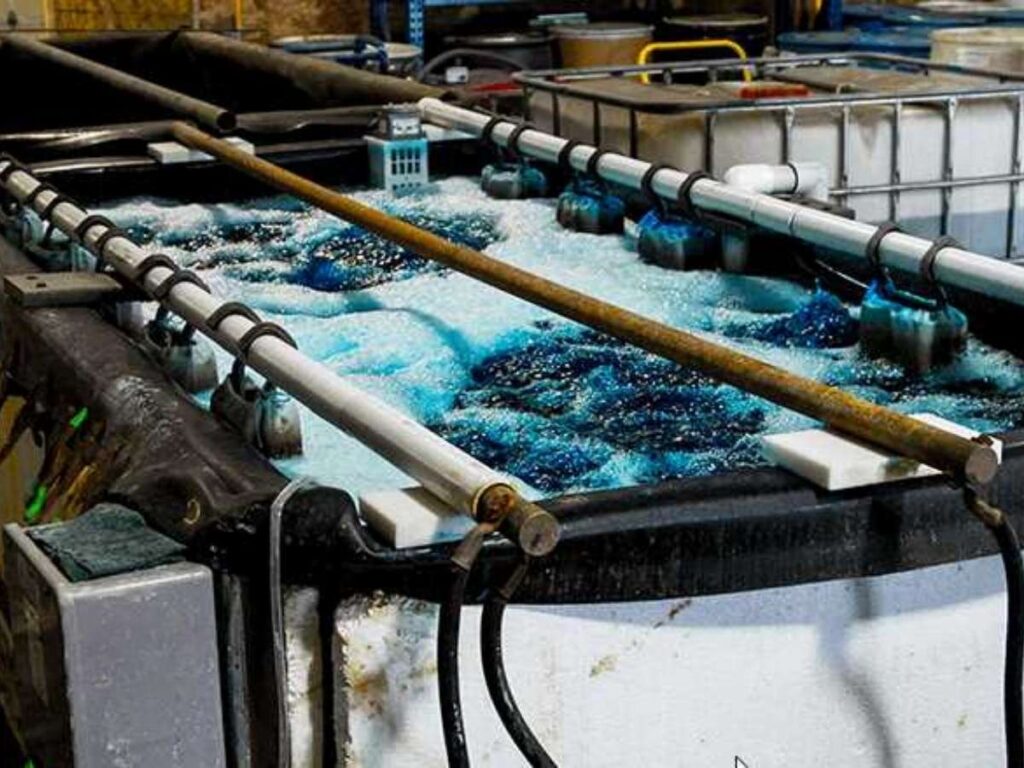
During chrome electroplating, the part acts as the cathode in an electrical circuit. When submerged in the plating bath and charged with DC voltage, chromium ions from the solution begin to deposit onto the part’s surface.
It’s a delicate balance of chemistry, temperature, and electrical control.
The Core Parameters
- Solution: A mix of chromic acid and a sulfuric acid catalyst. This is what supplies chromium ions that form the outer layer.
- Anode: Usually made of lead-tin alloy or platinized titanium. These don’t dissolve into the bath—they help direct the plating action.
- Voltage: Typically ranges from 6 to 12 volts DC, depending on the size of the part, bath chemistry, and plating thickness goals.
- Plating Time:
- 20–60 minutes is standard for decorative chrome.
- Hard chrome applications may require several hours for sufficient thickness and performance durability.
- Temperature: Maintain the bath between 45°C and 65°C. Too cool, and the plating slows. Too hot, and you risk uneven deposition or bath instability.
Key Instructions and Pro Tips
- Agitate the bath continuously, or use forced circulation. This prevents stagnant zones and ensures that fresh ions reach the part’s surface at a consistent rate.
- Monitor current density closely. Uneven current can cause burning, pitting, or shadowing, especially on complex geometries. Use shields or auxiliary anodes if needed for uniformity.
- Avoid air pockets. Trapped bubbles can block parts of the surface and result in missed areas or thin patches.
- Stay clean. Any contamination, on the part or in the tank, can cause rough spots, discoloration, or poor adhesion. Regular bath maintenance is non-negotiable.
Step#6 Rinsing and Neutralizing
Once the chrome plating is complete, the job isn’t over.
This next step is what protects all the work you’ve done so far. Any residual acid left on the surface can stain, corrode, or weaken the freshly plated layer, especially around edges, recesses, or fine details.
At this point, your part is chemically active and highly vulnerable. Rinsing and neutralizing is how you shut that reaction down, cleanly and safely.
Why This Step Matters
After plating, even a few seconds of acid residue can start to dull the surface or cause pitting.
And when that part heads into storage, assembly, or shipment, hidden acid deposits can lead to long-term failure or unexpected cosmetic issues. You need to treat this step like a controlled cooldown, not an afterthought.
Best Practices for Rinsing and Neutralizing
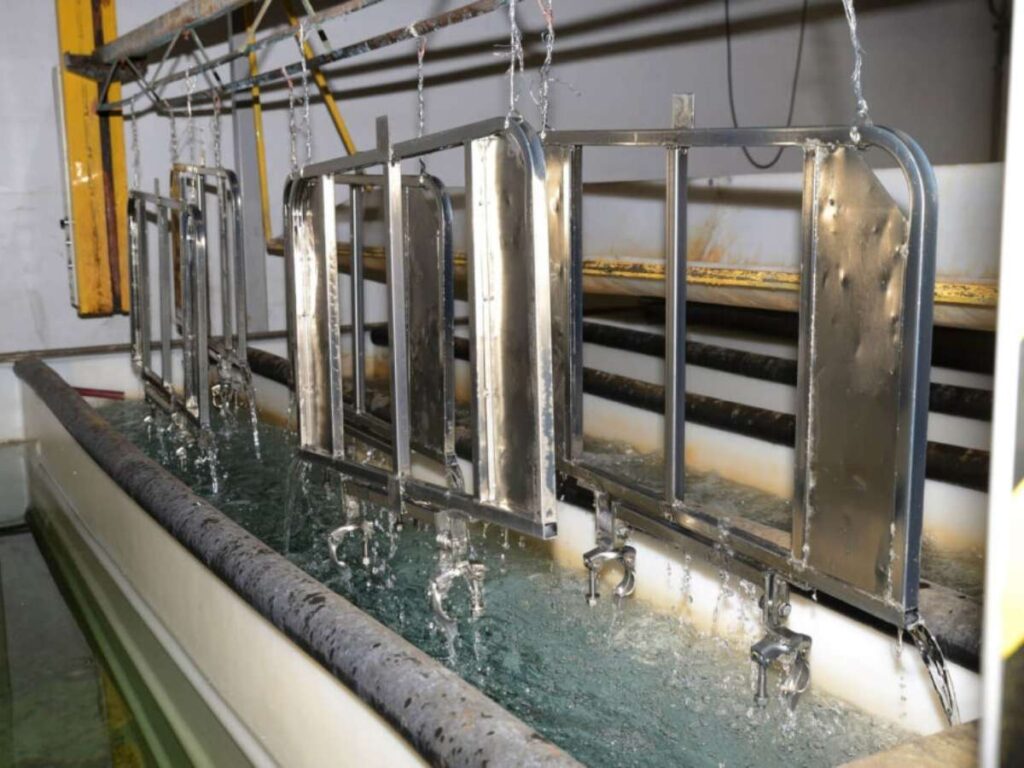
- Use multiple rinse tanks with progressive dilution. The first tank removes the bulk of the acid. Second or third tank ensures complete cleanup. This staged approach keeps each rinse effective longer and helps extend bath life.
- Add a mild alkaline neutralizer in one of the tanks if your process requires it, especially when working with sensitive base metals or complex geometries.
- Finish with a deionized water rinse. This final rinse removes any mineral or chemical residue that tap water might leave behind. It also prevents water spots and ensures a clean, dry surface ready for inspection or finishing.
- Handle parts with care. Use gloves, tongs, or plastic hooks; no bare hands. Finger oils or contamination at this stage can cause surface flaws that only show up days later.
At MachMaster, where we also perform industrial chrome plating, we never skip this phase, because it’s the difference between a flawless finish and a callback.
Step#7 Drying and Final Polishing
By now, the chrome has been deposited, rinsed, and neutralized, but the job still isn’t done.
This step is about protecting the finish and bringing out the final look, whether your priority is durability, aesthetics, or both.
Proper drying and polishing not only enhance appearance but also prevent defects like spotting, hazing, or corrosion during storage and handling.
Importance
Right after rinsing, the surface is still highly reactive.
If water droplets are left to sit, even clean deionized ones, they can cause spotting, staining, or introduce new contaminants. And if the part goes into a packing crate or onto an assembly line while still damp? That’s asking for rust, streaks, or surface dulling.
Drying and final polishing lock in the finish you’ve worked so hard to get.
Drying Techniques That Work
- Compressed Air Blow-Off: Fast and effective, especially for complex geometries. Make sure your air supply is filtered and moisture-free.
- Hot Air Drying or Oven Baking: Ideal for industrial parts or large batches. Use low, controlled heat to evaporate water without stressing the chrome layer.
- Soft Wipe or Absorbent Cloth: For smaller decorative parts. Avoid anything abrasive or fiber-shedding.
Whatever method you use, the goal is simple: dry fast, dry clean, and don’t re-contaminate the surface.
Polishing Process
If the part is decorative, or if customer spec calls for a mirror finish, this is when you bring out the final shine.
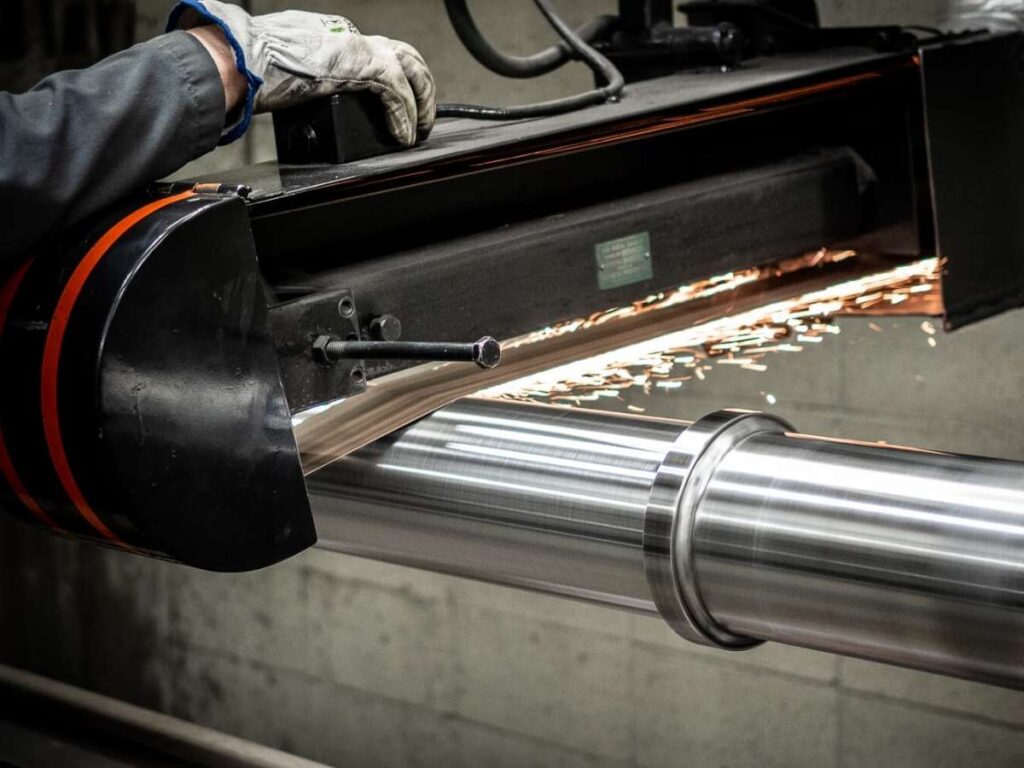
- Use a clean buffing wheel and a non-abrasive polishing compound made for chrome.
- Avoid over-polishing. It’s easy to burn the surface or round off edges if you’re too aggressive.
- Inspect under good lighting. Surface flaws, swirl marks, or haze often only show up once light hits from a certain angle.
For functional parts (like hydraulic rods or industrial rollers), polishing is typically skipped or kept to a minimum to preserve dimensional accuracy and surface roughness.
Step#8 Quality Inspection
This is where it all comes together.
The plating’s done. The part is dry, clean, and polished. But before it moves to packaging, shipping, or assembly, you need to confirm one thing:
Did the chrome plating actually meet your spec, or just look good on the surface?
Importance of Inspection
A flawless appearance doesn’t always mean the job was done right.
I’ve seen perfectly shiny parts that failed after a week in the field because they didn’t meet coating thickness or adhesion standards. Whether you’re plating in-house or working with a supplier, this is your last chance to catch issues before they become costly problems.
At MachMaster, where we also handle industrial chrome plating, this stage is built into every job—because quality is the finish line, not just the shine.
What to Check Before Approval
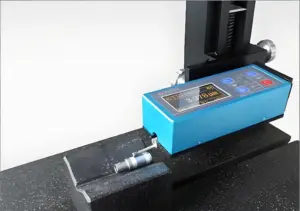
- Coating Thickness: Use a micrometer or non-destructive gauge to verify plating depth. Target thickness depends on whether you’re doing decorative chrome or hard chrome.
- Adhesion: Run a tape test or bend test where applicable. Poor adhesion is often a sign of missed prep or contamination.
- Visual Inspection: Check for pits, streaks, haze, or dull spots. Use consistent lighting and inspect from multiple angles—surface flaws love to hide.
- Surface Hardness (for hard chrome): Use Rockwell testing or other hardness checks to confirm performance specs were hit.
- Corrosion Resistance (if specified): For parts exposed to salt, chemicals, or outdoor environments, conduct a salt spray or humidity test if required by your customer or internal QA.
Don’t Just Inspect—Document
If you’re plating at scale or working with contract manufacturers, build an inspection checklist. Record thickness data, part numbers, and approval status. This creates traceability and protects you if quality questions come up later.
Conclusion
Now you know the chrome plating process—step by step, no guesswork.
From prep to polish, you’ve got the map I once wished I had before stepping into that vendor’s warehouse. That experience? It paid off. And now it’s yours.
Use this guide to spot red flags. To ask smarter questions. To protect your business.
Don’t wait for another jaw-dropping quote to push you into action.
Start your vendor search with confidence today. And if you’re still unsure, we’re here to help.
Contact us. Let’s walk the shop floor together.
Explore Related Resources
Want to see more? We’ve gathered additional product choices to give you even more variety:
Machining & Molding Services:
Finishing Processes:
Still haven’t found what you’re looking for? Don’t hesitate to contact us. We’re available around the clock to assist you.