
A few years ago, I lost a client because of one decision:
We skipped Alodine.
They needed corrosion protection on raw aluminum parts that were fast, affordable, and good enough to hold paint. I thought we were fine. They thought otherwise.
That’s how I learned that not understanding surface treatments can cost more than just money, it can damage relationships.
You don’t have to make that mistake.
This article will give you the full picture:
- What Alodine coating is
- Why it’s used
- When it’s worth it and when it’s not.
You’ll walk away with a clear answer on whether Alodine fits your product, your specs, and your budget.
Let’s start!
1. What Is Alodine Coating?
I remember the first time I heard the word Alodine.
It came up in a conversation with a supplier. I was reviewing a quote for some aluminum brackets, and he asked,
“Do you need Alodine on these?”
I froze. I didn’t want to sound uninformed, but I had no idea what he meant. And I definitely didn’t want to approve something without knowing what it actually did.
So if you’re here wondering the same thing, you’re in the right place.
Alodine is a chemical conversion coating. That means it changes the surface of a metal not by adding a layer, but by chemically reacting with it. It’s mostly used on aluminum and its alloys (a mix of aluminum and other elements).
Why use it?
Because raw aluminum corrodes. Over time, it can oxidize and weaken, especially when exposed to moisture or air. Alodine helps stop that. It adds a thin layer that protects the surface and helps paint or primer stick better.
Here’s something you might not know:
Alodine isn’t the only name for this process.
Some manufacturers call it Iridite. It’s a similar product that works the same way. The terms are often used interchangeably. Both are chromate conversion coatings, and they’re widely accepted in industries like aerospace, automotive, and electronics.
So how does it actually work?
Once the aluminum is cleaned, it’s treated with a chromate-based solution. The chemical reacts with the metal and creates a surface that is:
- Thin
- Protective
- Conductive
- Passive (meaning it doesn’t easily react with other materials)
That layer doesn’t change the part’s dimensions. So if you’re working with tight tolerances, it won’t mess things up. That’s one of the reasons engineers like it so much.
Still wondering why it matters?
If you plan to paint or powder coat your parts, Alodine gives that extra “grab” that helps coatings stick. If you’re leaving them bare, it still offers solid corrosion protection without making the part look bulky or glossy.
You might be asking:
- Should you always use Alodine on aluminum?
- Is it the right choice for your project?
We’ll get to that next. But now you know what it is and how it works.
2. Why Use Alodine Coating?
Once I skipped Alodine on a batch of parts because we were in a rush. The parts looked fine. The customer didn’t say anything at first.
But a few weeks later, they emailed. The painted surface was bubbling. Moisture had gotten underneath. I had to remake the parts. That mistake cost time and trust.
That’s when I stopped thinking of Alodine as optional.
Let’s break down why Alodine matters and where it makes a difference.
Key Benefits
Alodine isn’t just for looks. It plays a real role in protecting and prepping your parts. Here’s what it does:
- Corrosion protection: Even without any paint, Alodine helps shield aluminum from moisture and air. That slows down rust and keeps the metal strong.
- Conductivity: Unlike many finishes, Alodine keeps the part electrically conductive. That’s a big deal for electronics or grounding surfaces.
- Paint adhesion: Alodine creates a rough surface at the microscopic level. Paint and powder coat stick better and last longer.
- Non-dimensional: It doesn’t change the part’s size. That means no interference with tight fits, threads, or small gaps.
You get protection and function without having to change your design.
So where does this actually get used?
Real-World Applications
Alodine shows up in places you might not expect:
- Aerospace: Used on parts that meet MIL-DTL-5541 standards.
- Electronics: Needed when parts must carry current or provide grounding.
- Industrial hardware: Like enclosures, housings, and support brackets.
- Defense and telecom: Where durability and conductivity are key.
You’ve probably seen or used Alodine-coated parts without realizing it.
So, should you use it on your next project? That depends on your goal.
The next section will help you compare Alodine to other coatings so you can make the right call.
3. Alodine vs Other Coating Options
After using different coatings over the years, I’ve learned that it’s less about what’s “best” and more about what fits the job. Sometimes you need conductivity. Sometimes durability. Sometimes both.
Here’s how Alodine stacks up next to anodizing and paint or powder coating.
Alodine vs Anodizing
| Feature | Alodine | Anodizing |
| Layer Thickness | Very thin | Thicker |
| Conductive? | Yes | No |
| Durability | Moderate | High |
| Paint Adhesion | Good base layer | May need additional prep |
| Color Options | Limited (gold or clear) | Wide range of colors |
| Application Time | Fast | Slower process |
| Cost | Lower | Higher |
| Best For | Electronics, tight-tolerance parts, painted surfaces | Decorative or wear-heavy parts |
When should you use each?
If your parts need to conduct electricity or fit tight spaces, go with Alodine. If they need to resist wear or look polished, anodizing may be the better fit.
Alodine vs Powder Coating / Painting
| Feature | Alodine | Powder Coating / Painting |
| Finish Type | Functional coating | Decorative or protective finish |
| Paint Adhesion | Great base layer | Often used with Alodine |
| Corrosion Protection | Yes, even without topcoat | Yes, but better with primer |
| Conductive? | Yes | No |
| Appearance | Dull (clear or gold tint) | Custom colors and textures |
| Final Use | Primer or base layer | Final visual finish |
| Best For | Prep before painting, conductivity | Appearance and surface sealing |
Still wondering which route to take?
Think about your part’s final use. Is it about function or finish? You’ll get better results once you match the coating to the goal.
4. Types of Alodine Coatings
Once I understood the value of Alodine, another question came up: Which type should I choose? Not all Alodine coatings are the same. The finish, performance, and even chemical makeup can change depending on the version you use.
Let’s start with the two most common types:
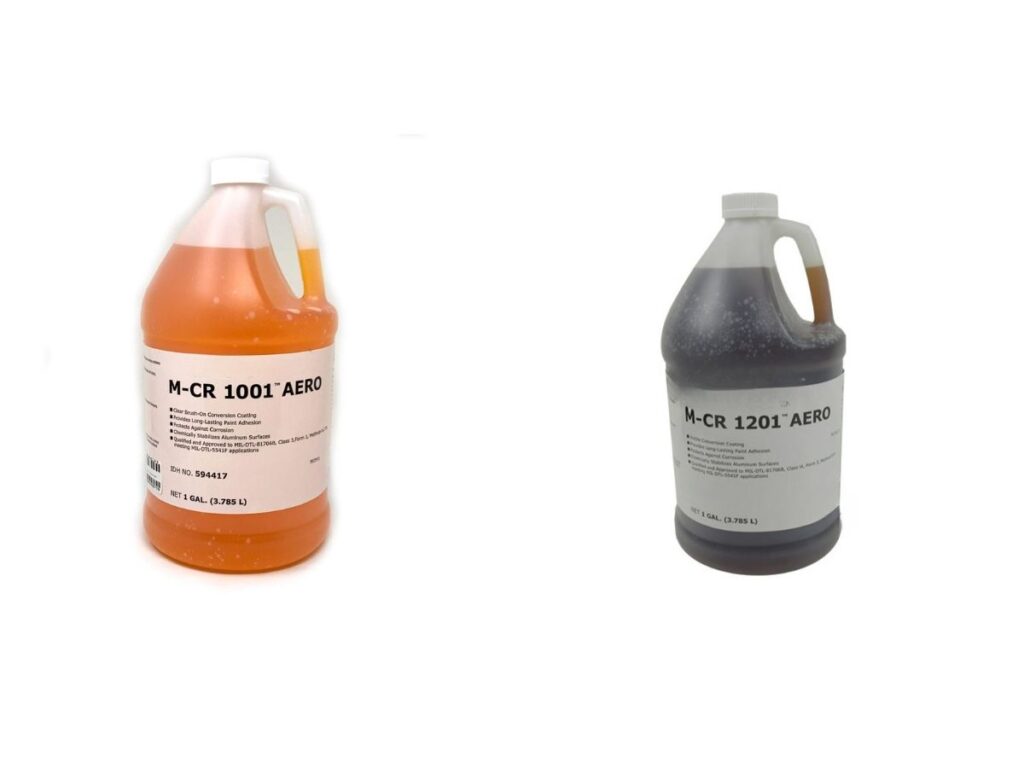
Alodine 1001 vs 1201
These are both chromate conversion coatings. They’re used often in aerospace, electronics, and industrial parts. But they each serve slightly different needs.

Alodine 1001:
- Has a clear or light finish
- Best when electrical conductivity matters
- Ideal for grounding points, contacts, or enclosures with EMI/RFI needs

Alodine 1201:
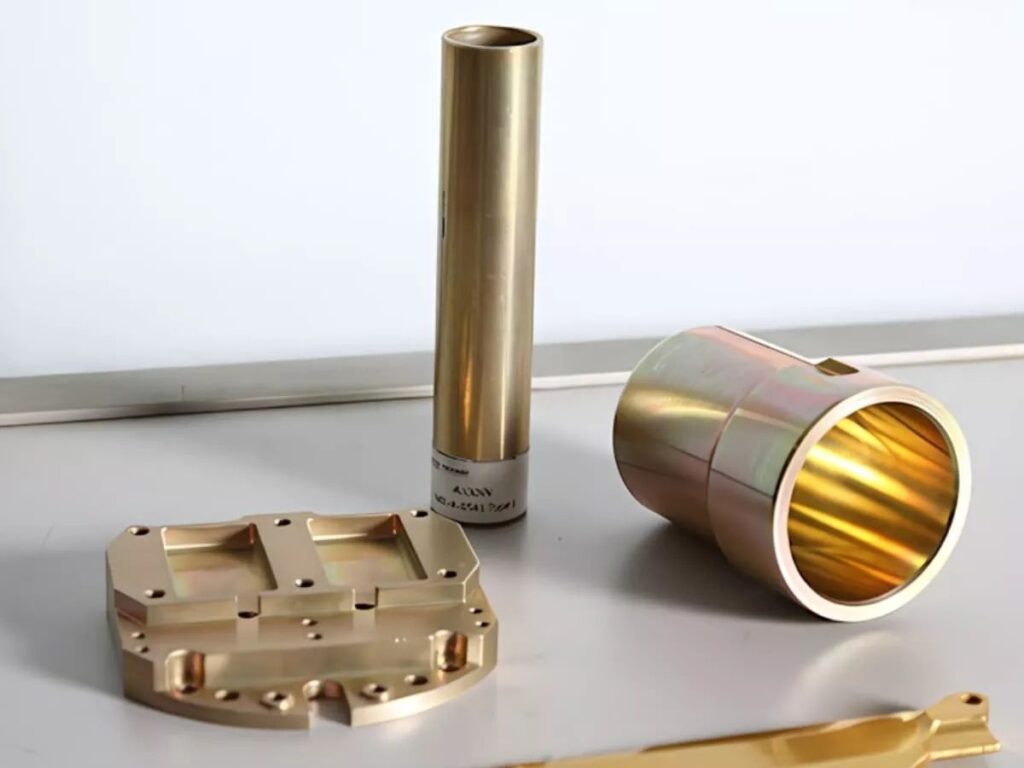
- Has a gold or amber tint
- Offers slightly better corrosion protection than 1001
- Good for parts exposed to moisture, handling, or mild chemicals
If you’ve seen a gold-toned aluminum part, it was probably coated with Alodine 1201. I often use it for brackets and housings. But when I work on electronics, I stick with 1001 for conductivity.
Now, here’s something else to think about.
RoHS-Compliant / Non-Chromate Alternatives
Traditional Alodine coatings contain hexavalent chromium. That’s a chemical regulated under RoHS (Restriction of Hazardous Substances). Some industries—like automotive, medical, or consumer electronics—require chromate-free options.
In those cases, you’ll want a non-chromate conversion coating. These newer versions still protect and help with paint adhesion, but they meet environmental standards.
If you’re sourcing internationally or working with sensitive industries, double-check your requirements. You don’t want your parts rejected for a finish you didn’t think twice about.
In the next section, I’ll show you how Alodine affects your part’s design—especially when it comes to tolerances and conductivity.
5. Who Should Consider Alodine Coating?
Not sure if Alodine fits your project? Here’s a quick breakdown to help you decide:
| Who You Are | Why Alodine Makes Sense | What to Watch For |
| Business Owners / Factory Managers | – Cost-effective corrosion resistance – Helps meet ISO or MIL-SPEC requirements – Faster turnaround than anodizing | – Good for large production runs – Stick to functional finishes, not decorative ones |
| Product Designers / Mechanical Engineers | – Paint-ready surface with no dimensional change – Preserves electrical conductivity – Ideal for precision parts or enclosures | – Use Alodine 1001 for conductivity – Ideal under powder coat or paint |
| Procurement Professionals | – Available in RoHS-compliant and MIL-DTL-5541 types – Offered by most finishers – Helps balance specs, timing, and cost | – Confirm supplier offers correct type (1001 or 1201) – Add coating spec in RFQ to avoid confusion |
| Personal Buyers / Students | – DIY-friendly for small runs – Alodine 1201 kits work for home use – No special tools required | – Use PPE: gloves, goggles, ventilation – Dispose of chemicals safely |
I’ve used Alodine in all of these situations, on the shop floor, during product development, and even for personal builds. If your project involves aluminum, this coating is worth thinking about.
6. Common Questions and Troubleshooting
Even after using Alodine for years, I still run into small issues. Sometimes the coating doesn’t look right. Sometimes a batch goes bad without warning. If you’ve had questions or results that don’t look perfect, you’re not alone.
Let’s go through a few common problems and what you can do about them.
Does Alodine Expire?
Yes, it does.
Like most chemical products, Alodine has a shelf life. Once opened, most types last between 6 to 12 months. After that, the chemical reaction may weaken or become unpredictable.
If you’re storing a bottle for occasional use, label the date you opened it. It’ll save you some guessing later.
Also, store it in a cool, dry place and keep the lid sealed tight. I once used an old bottle that had sat in the corner of the shop. The coating came out blotchy. That mistake taught me to check dates more closely.
Why Is My Alodine Coating Uneven?
This one’s more common than you’d think.
If the coating looks patchy or spotty, a few things could be going wrong:
- Surface not cleaned properly
- Solution is contaminated
- Left on too long or not long enough
Here’s a tip: clean your parts thoroughly, especially if they’ve been handled. Oils from your hands can mess up the surface.
Also, mix fresh solution when needed. And always follow the time guide on the product label.
Can I Request Alodine from My Part Manufacturer?
Yes, you can and should, ask your manufacturer to handle Alodine.
If you’re still looking for one, MachMaster offers full-service production: CNC, molding, fabrication, and certified coatings like Alodine 1001 and 1201. Everything under one roof. Delivered to your door.
7. Final Takeaway: Is Alodine Right for Your Project?
By now, you’ve seen what Alodine is, how it works, and who it’s for.
But you still might be wondering: Should I actually use it on my parts?
Let’s break it down one last time.
Use Alodine If You Need:
You’re probably working with aluminum. Maybe you’re painting it. Maybe you want it to last longer in tough environments. If that’s true, Alodine could be a smart fit.
Go with Alodine if you need:
- A thin, corrosion-resistant coating
- A surface that stays conductive
- A finish that doesn’t change your dimensions
- A part that’s ready for paint or powder coating
- Quick turnaround at a low cost, whether it’s one part or one thousand
I’ve used Alodine in all those cases. For early prototypes. For production runs. Even for test fixtures in the shop.
It works well when speed and function matter more than looks.
Consider Other Options If You Need:
But it’s not perfect for everything.
Skip Alodine and explore something else if you need:
- A decorative finish (like colored anodizing or smooth powder coat)
- Extra surface hardness or wear protection
- A coating for non-aluminum metals (Alodine is aluminum-focused)
In one project, we needed the parts to look polished and hold up to daily handling. Alodine wasn’t enough. We switched to anodizing for that job, and it made a difference.
So ask yourself: what’s the final goal?
If it’s about function, speed, and electrical performance, Alodine is probably a strong choice.
If it’s about appearance, texture, or long-term wear, you might need something else.
Either way, now you’ve got the info to make the right call—without guessing.
Conclusion
You’ve seen what Alodine does. You know how it stacks up. You’ve learned when it makes sense and when it doesn’t.
Now the decision is yours.
Whether you’re building a prototype, managing production, or designing something new, the right coating can save you time, money, and stress.
So don’t leave it as an afterthought.
Think ahead. Start early. And talk to your supplier about Alodine before parts hit the floor.
Need help getting started?
Contact us today! Let’s make sure your finish holds up.
Discover More Options
There’s so much more to discover! Check out our other products and find what fits your needs:
Still haven’t found what you’re looking for? Don’t hesitate to contact us. We’re available around the clock to assist you.