
Does the thought of CNC machining make your head spin? It used to make mine.
When I first tried to get a simple prototype made, I was clueless. I didn’t really know how CNC production worked or what questions to ask.
That mistake doubled my costs. Honestly, it was a hard lesson.
Since then, I’ve spent years walking through noisy machine shops, learning from skilled machinists, and watching raw metal turn into perfect parts.
Those hands-on experiences taught me more than any brochure or sales pitch ever could.
That’s why I wrote this for people like you, business owners trying to cut costs, designers making smart products, procurement folks managing suppliers, or even someone building a project for class.
You deserve to understand CNC without feeling lost.
In this guide, I’ll break down what CNC machining really is, how it works, the main parts that do the heavy lifting, and where it’s used across different industries.
By the end, you’ll be ready to make better choices, save money, and avoid the headaches I went through.
Let’s dive in!
1. What Is CNC Machining Production
Let’s start with the basics. CNC stands for Computer Numerical Control. It’s a fancy way to say machines that cut, drill, or shape materials using computer programs.
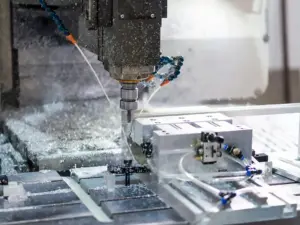
I remember the first time I watched a CNC machine at work. A metal block turned into a perfect gear right in front of me. It felt like magic.
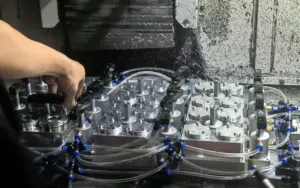
In simple words, CNC machining production is using computer-guided machines to make parts. Instead of people cutting or drilling by hand, computers tell the machines exactly what to do. This means parts come out with the same shape and size every single time.
Why should you care? Because CNC is:
- faster than manual work
- super precise
- great for making lots of the same part
If you’re a business owner, a designer, or even a student, CNC might save you time and stress. Want to know how this process really works? Let’s keep going.
2. How the CNC Production Process Works
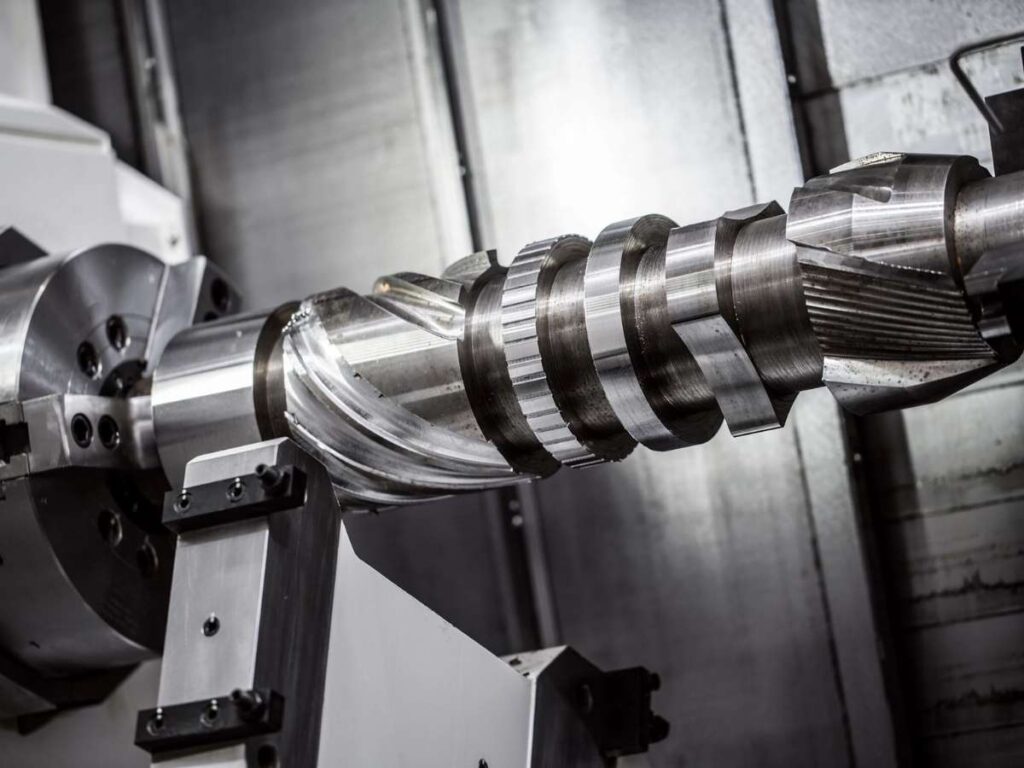
Turning a design into a real part is always a bit of magic to me. With CNC, it starts when you send over a CAD file, that’s just your detailed drawing. This goes into CAM software, which builds a list of moves called G-code. It’s like a GPS route that guides the machine on exactly where to cut.
Once set up with the right tools, the machine clamps down the material and follows those steps carefully. Tiny cuts stack up until your part looks just like the drawing. Seeing a plain block slowly become something useful still feels pretty amazing.
When cutting’s done, it’s time to check measurements. Sharp edges might get cleaned up, or a quick polish added. If anything’s off, the program gets adjusted and it’s run again to get things right.
Here’s why CNC fits what you might need:
- Handles small details and tricky shapes with ease
- Makes every part match, whether it’s one or a hundred
- Sticks to tight sizes, so everything fits together
- Speeds up work once dialed in
It’s a solid way to bring your ideas to life from a sketch on the screen to a part that’s ready to work exactly where you need it.
At MachMaster, every phase of CNC production is handled with intention, not assumption. They don’t just make parts, they build reliable outcomes, one detail at a time.
3. Types of CNC Production Machining
When I first started working with CNC machines, I assumed they all worked the same. But it didn’t take long to learn that not every job fits on the same type of machine.
Here are the most common types of CNC production machining I’ve worked with and where they fit best:
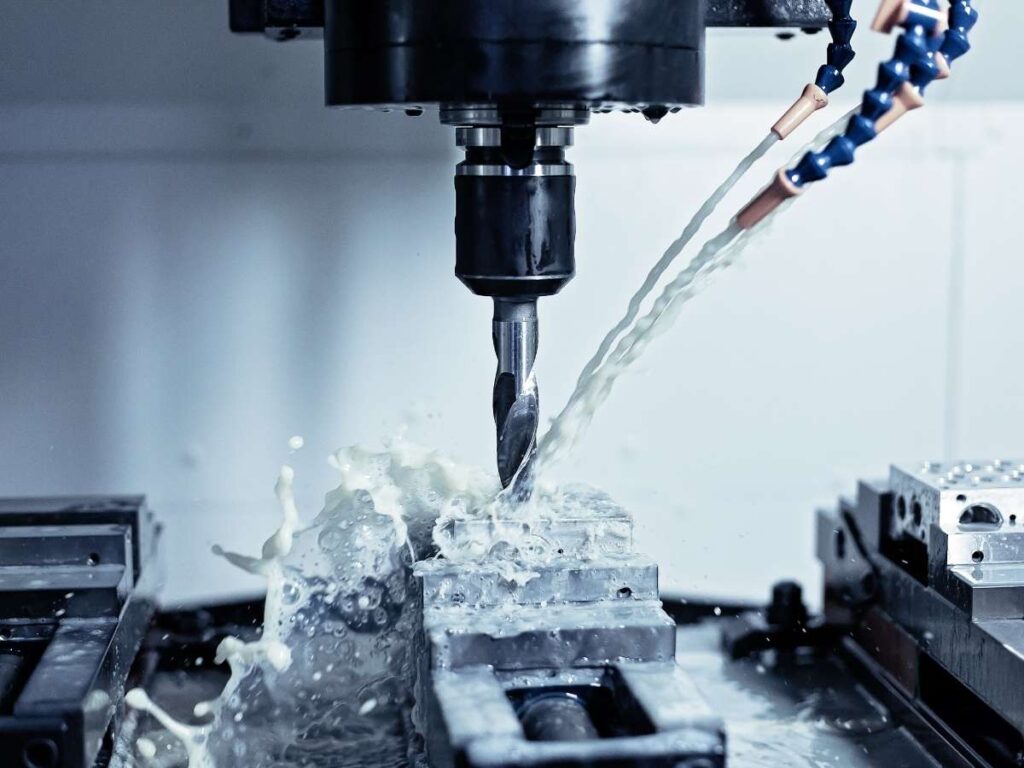
CNC Milling
CNC milling uses a spinning tool that moves over the surface of your material.
These machines are typically used to:
- Cut slots, pockets, and holes
- Shape flat or angled surfaces
- Create complex 3D parts with multiple features
Vertical mills are common in most shops. They’re flexible and handle a wide range of parts from brackets, housings, plates, and more.
Horizontal mills shine when you need better chip control or access to multiple sides of a part. I’ve leaned on these for jobs that needed heavy cuts without losing speed.
Milling works best when the part calls for precise features and a mix of contours and flat planes.
CNC Turning
CNC turning flips the script. The material spins, and the tool moves into it.
Best for:
- Cylindrical parts
- Shafts, bushings, threaded pieces
- High-volume runs with tight tolerances
Turning is fast and clean. It’s made for symmetry, and the finishes on outer diameters are hard to beat.
Many modern turning centers now include live tooling. That means you can drill, slot, or even mill features without switching machines, a serious edge on two-op parts.
CNC Swiss Turning
Swiss turning is a specific type of CNC lathe but with a key difference: the stock moves through guide bushing, keeping the work close to the cutting point.
That setup leads to:
- Lower vibration
- Better results on small, delicate parts
- Faster cycle times for complex features
Swiss turning is built for precision micro parts, think medical pins, electronic connectors, and watch components. When you’re dealing with parts the size of a fingernail, this machine makes all the difference.
CNC Routing
CNC routers are designed for soft or lightweight materials like:
- Wood
- Plastics
- Composites
- Thin aluminum sheets
They use high-speed spindles and large beds, often cutting full panels in one pass.
In production, routers are perfect for panels, signage, and housings where speed matters more than super-tight tolerances.
They’re not the go-to for steel or thick metal, but in the right jobs, routers keep things light, fast, and efficient.
4. Materials Used in CNC Machining Production
I know material choice isn’t just a box to check. It affects everything you do from cutting speed, tool wear, surface finish, and even how your parts behave after they leave the shop.
If you know how each material behaves in production, you can avoid those surprises. Here are some of the most common materials you’ll run into and what to expect from each one.
Aluminum
Aluminum is probably the most popular material in CNC shops.
It’s lightweight, machines easily, and doesn’t chew through tools. Grades like 6061 and 7075 let you run high speeds and still get clean results.
You’ll find it used in:
- Prototypes
- Automotive parts
- Aerospace components
- Housings and brackets
One of my favorite things about aluminum is the finish. A good setup produces a smooth, shiny surface with little effort. That’s a win when time is tight.
Stainless Steel
Stainless steel is strong, corrosion-resistant, and durable. But it’s not the easiest to cut.
It generates more heat and wears down tools faster. It also requires slower feed rates and plenty of coolant.
Still, it’s widely used in:
- Medical tools
- Food processing equipment
- High-strength machine parts
Grades like 304 and 316 are common, but I’ve also worked with 17-4 PH when extra strength was needed. It takes more care, but the results hold up.
Carbon Steel
Carbon steel is your go-to when strength matters more than corrosion resistance.
It’s tougher than aluminum but machines easier than stainless. You’ll notice heavier chips and more chatter if you’re pushing too hard.
Common uses include:
- Gears
- Shafts
- Tooling parts
It can leave a rougher finish untreated, but with a little plating or heat treatment, it holds up well. I’ve used it on jobs where durability was key but the budget needed to stay lean.
Brass and Copper
Brass cuts like a dream. It’s soft, machines fast, and produces almost no burrs.
It’s great for:
- Fittings
- Decorative parts
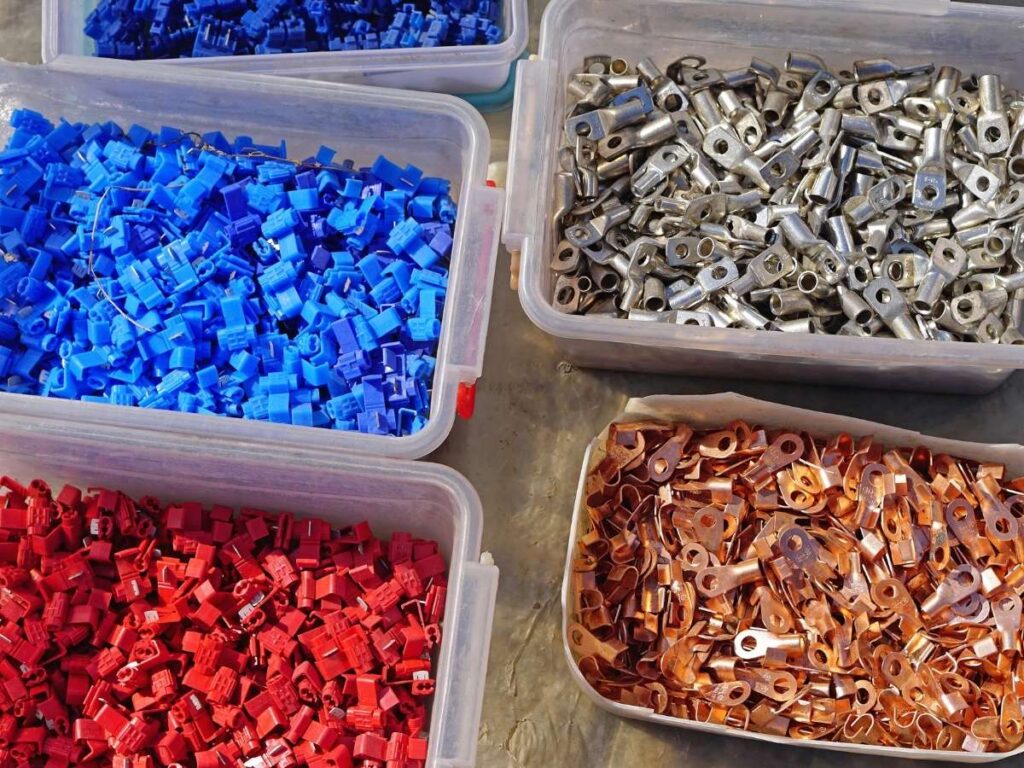
- Electrical connectors
Copper is trickier. It’s softer than brass but gums up tools if speeds aren’t adjusted right. I’ve had better luck when using sharper tools and polished flutes.
Both materials are more expensive, so mistakes can be costly.
Plastics
CNC machining isn’t just for metals. Plastics are common in both prototyping and production.
Popular types:
- ABS: Lightweight, easy to cut, used in consumer goods
- Nylon: Strong, flexible, good for wear parts
- Delrin (Acetal): Great for high-precision parts
- PTFE (Teflon): Low friction but tricky to machine
Plastics cut fast, but heat can be your enemy. I’ve melted my fair share of parts by treating them like metal. Dial your speeds down, and keep the chips clear.
5. Industries Rely on CNC Machining Production
It’s interesting how different parts from completely different industries can all be made on the same machine.
Here are some of the industries where CNC production has a daily impact:
Automotive
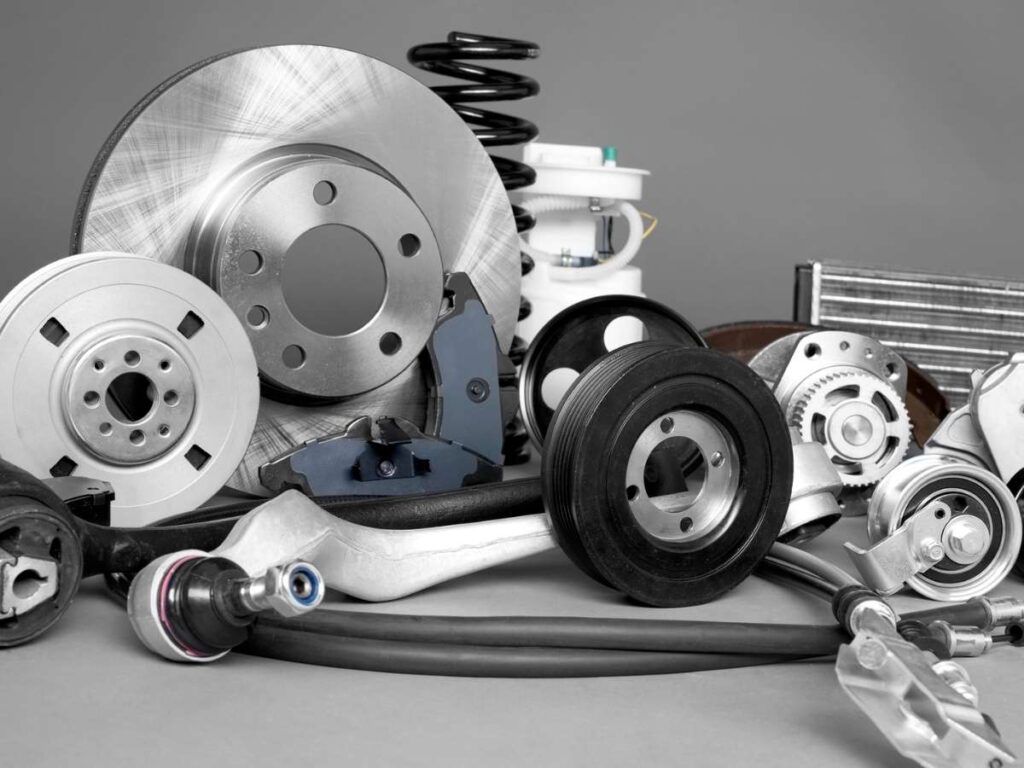
In the automotive space, CNC helps you make everything from simple brackets to tight-tolerance engine components.
I’ve worked on custom mounts for race builds and fixtures for large-scale production. Whatever you’re making, one thing stays the same, these parts must hold up to vibration, heat, and constant wear.
CNC gives you the repeatability you need and the finish your parts demand. At MachMaster, they support automotive teams by offering quick turnarounds, stable quality, and full material traceability. If your job needs durability and fast delivery, they are worth considering.
Aerospace
Aerospace parts take things to another level. Materials like titanium and Inconel are common, and tolerances are strict.
I still remember a job where the part had to weigh less than a soda can and hold position under extreme force. It took extra planning, careful setup, and full traceability.
That’s normal in aerospace. Every part has a purpose, and there’s little room for error. CNC machines allow for precision cuts and fine control, which is why they’re trusted here.
Medical and Dental
Parts in this industry are small, complex, and sensitive.
Surgical tools, implant bases, or dental fixtures often need perfect edges and smooth finishes. A tiny defect like a burr or scratch can lead to rejection.
I’ve seen machines run at lower speeds just to protect the surface finish. It slows things down but keeps parts usable. In this space, quality isn’t optional, it’s expected from the first to the last part.
Electronics and Semiconductors
This industry is full of tight spaces and fine details.
Aluminum enclosures, heat sinks, and plastic housings are commonly produced on routers and mills. Some parts are smaller than a coin but packed with features that need to line up perfectly.
It’s one of those areas where even a 0.1mm shift could cause a short or misfit. CNC machines with high accuracy are often the only way to hit those specs.
6. Limitations and Considerations in CNC Machining Production
Even though CNC machining is accurate and reliable, it’s not perfect. There are real limits to some technical, some practical that can slow down a project, drive up cost, or affect part quality. I’ve run into many of these over the years, especially on tight timelines or tricky jobs.
Here’s a breakdown of the most common limitation, what causes them, and what can help fix or work around them:
| Limitation / Challenge | What Happens | Common Cause | Solution / Tip |
| High Cost for Low Volume | Per-part price is high on small runs | Setup time and programming spread across few parts | Use standard materials and simplify design where possible |
| Complex Geometry Limitations | Some shapes can’t be cut (e.g. deep internal cavities) | Tool access and machine axis limits | Consider EDM for internal cuts or split the part into two assemblies |
| Material Waste | A lot of material ends up as chips | Subtractive process removes excess | Use near-net-shape blanks or optimize part orientation |
| Tool Wear and Breakage | Poor surface finish, dimension drift, or job interruption | Hard materials, wrong feed rate, dull tools | Monitor tool life closely; use coated tools for abrasive materials |
| Long Setup Times | Slows down production, especially in multi-op jobs | Complex fixturing or many tool changes | Modular fixtures and standardized setups help cut time |
| Tolerance Stack-Up in Assemblies | Multiple parts don’t fit properly when assembled | Slight variance adds up across parts | Define critical dimensions and inspect them during production |
| Thermal Expansion Issues | Parts shift size slightly depending on temperature | Heat buildup from cutting or shop conditions | Account for thermal expansion in tolerances and cool-down periods |
| Operator Skill Required | Mistakes during setup or handling increase reject rate | Inexperienced staff or poor training | Use clear setup sheets, checklists, and basic operator training |
| Limited by Machine Size | Large parts can’t be machined in one go | Machine travel limits or bed size | Break large designs into smaller sub-parts and assemble after |
7. Tips for Cost-Effective CNC Machining Production
I’ll be honest, keeping production efficient isn’t always about cutting faster or buying cheaper tools.
Here are a few tips that have saved real projects from going off-track:
Tip#1 Design Parts That Machines Can Actually Cut
This might sound obvious, but not all parts are designed with machining in mind.
Sharp inside corners, narrow channels, or deep pockets often need specialty tools, or worse, multiple setups. That’s when cycle times stretch and tool wear increases.
Instead, try to design with tools in mind. When you use simple radii, wider channels, and clean shapes, the part runs smoother and faster on the machine.
Tip#2 Stick with Common Materials and Stock Sizes
Swapping to a rare alloy halfway through a job? That’s a recipe for delays.
You’ll save time and budget by sticking to common grades like 6061 aluminum or 304 stainless that most shops already stock. They’re easier to source, easier to cut, and most CAM libraries already have dialed-in speeds for them.
Same idea goes for stock sizes. If your design fits standard bar or plate dimensions, you cut down prep time, reduce waste, and avoid custom orders.
Tip#3 Be Picky About Tolerances
Tight tolerances add cost sometimes more than you think.
It’s tempting to call ±0.001″ everywhere, just to be safe. But tighter specs slow down feeds, require extra inspection, and make tooling choices more critical.
Instead, match your tolerances to the part’s function. If it’s for sealing or press-fit, keep it tight. If it’s cosmetic or clearance-based, standard tolerances will do the job and save you money.
Conclusion
Production doesn’t have to be stressful.
With a solid design, the right material, and a clear process, CNC machining gets a whole lot easier.
This article gave a full view from planning to post-processing. Every section builds the foundation for better results.
And if something still feels unclear? That’s where support comes in.
At MachMaster, we take pride in helping others solve problems, not just make parts.
Contact us today and let’s build something amazing together!