
I remember watching an EDM machine for the first time. It didn’t cut. It didn’t grind. It just… sparked.
There was no contact. No noise. Just a quiet series of flashes underwater, slowly shaping metal like it was magic.
It wasn’t magic. It was Electrical Discharge Machining (EDM). And it’s one of the most precise ways to cut hard materials without ever touching them.
If you’ve ever wondered how EDM actually works, this guide walks you through it step by step.
Let’s begin!
Step#1 Create the Electrode and Workpiece Setup
Before any sparks fly, you need two things in place: the electrode and the workpiece. These are the heart of the EDM process. Without them, nothing happens.
Let’s start with some definitions.
- Electrode: This is the shaped tool that delivers the spark. Think of it like a mold, but instead of pressing into the metal, it helps carve the shape using electrical pulses.
- Workpiece: This is the actual part you’re machining. It’s the metal block or part that gets shaped during the process.
Both the electrode and the workpiece need to be electrically conductive. That means they must allow electricity to flow through them. If the material doesn’t conduct electricity, the process won’t work.
Now, let’s talk about how these are set up.
You’ll mount both the electrode and the workpiece inside the EDM machine. And they need to be held tight. Even a small shift could mess up the entire cut. Most machines use precision clamps or holders to keep everything locked in place.
In one shop I visited, the technician triple-checked the electrode’s alignment before starting. “If this is off even a little,” he said, “you won’t like what comes out.” That stuck with me. It’s a small step, but it sets the tone for everything that follows.
So before you move forward, ask yourself:
- Is the electrode shaped exactly how you want the final cut to look?
- Is the workpiece securely mounted?
Step#2 Submerge the Setup in Dielectric Fluid
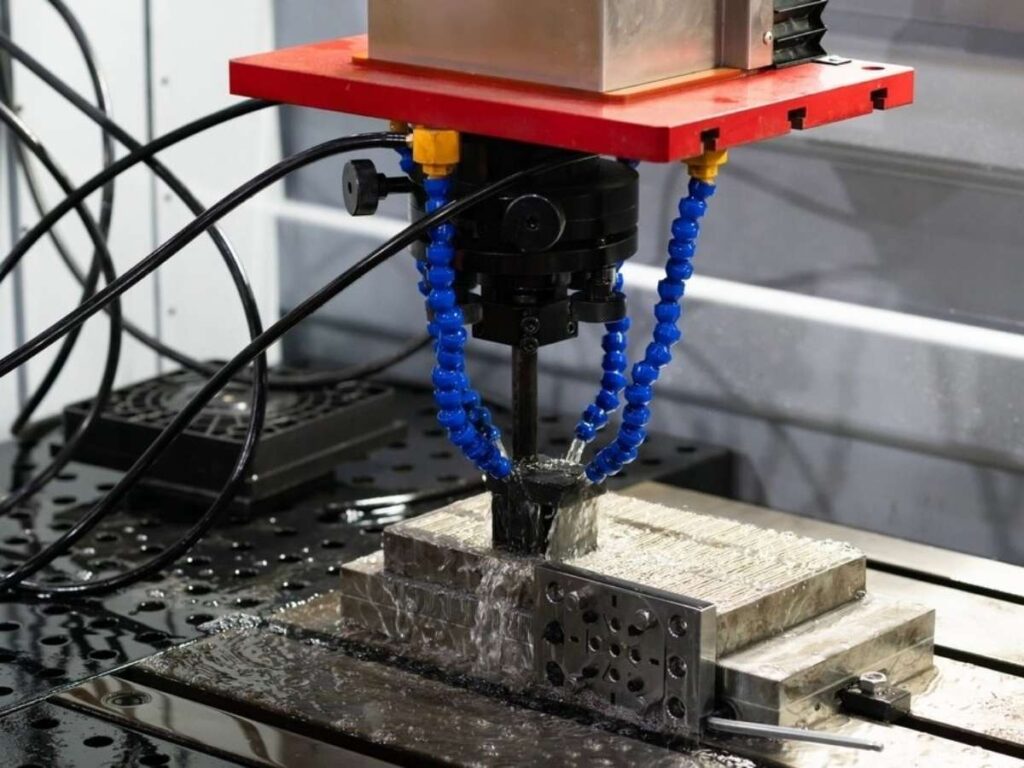
Once your electrode and workpiece are set up, the next step might feel a little strange at first: you dunk everything in liquid. But not just any liquid.
This step is all about dielectric fluid. It’s a special type of liquid that resists electricity under normal conditions. That might sound odd since EDM relies on electric sparks. But that’s what makes this fluid so useful. It helps the machine create sparks only when and where they’re needed.
When I first saw this, I thought: Wait, isn’t electricity and liquid a bad mix? But that’s the beauty of dielectric fluid. It doesn’t act like water or oil. It’s carefully made to stay stable until the voltage gets high enough to force a spark.
So why is submerging your setup in this fluid so important? Here’s what it does:
- Prevents uncontrolled sparks: Without it, sparks would jump all over the place. That could damage your part or worse, your machine.
- Keeps the temperature down: EDM produces a lot of heat. This fluid helps absorb that heat so the part doesn’t warp or crack.
- Clears out particles: As the metal erodes, debris builds up. The fluid washes it away so each spark hits clean metal.
It’s like giving your machine a safe, clean, and cool workspace.
If you’re working in a shop for the first time, don’t be surprised by the tank of clear liquid under the machine. That’s the dielectric fluid doing its quiet job in the background.
With everything submerged and ready, the real action is about to begin which is applying voltage and starting the first spark.
Step#3 Apply Voltage Between the Electrode and Workpiece
Now that everything is underwater and steady, it’s time to bring in the electricity.
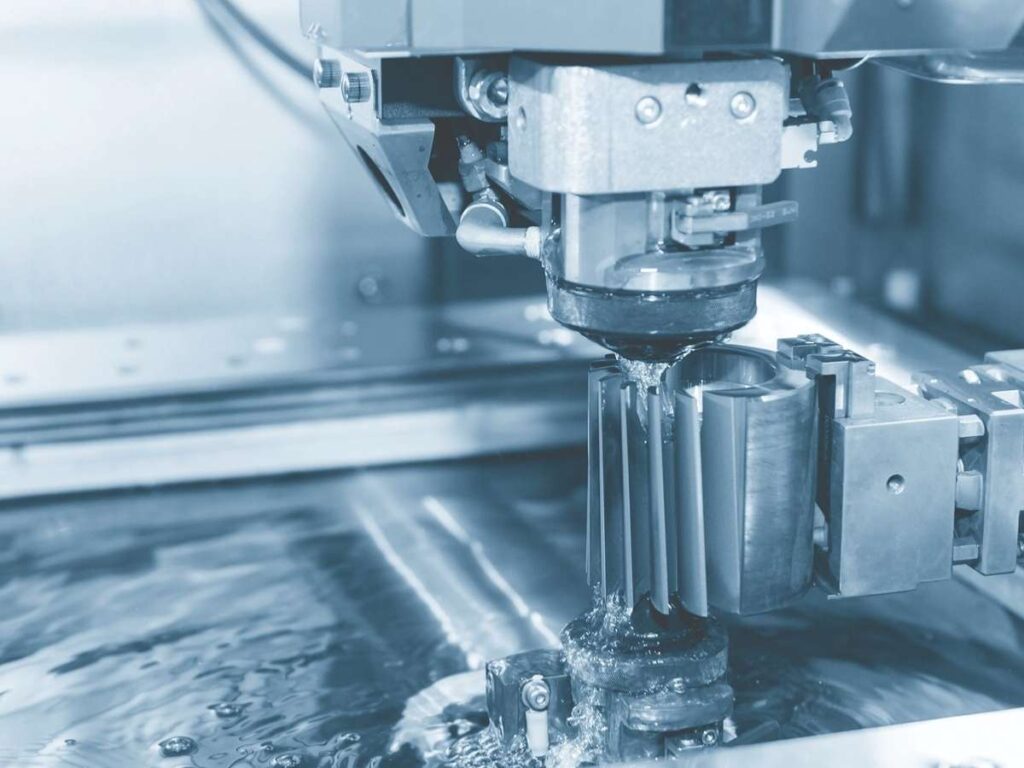
This is where the real EDM process starts. The machine sends a controlled voltage to both the electrode and the workpiece. But here’s the trick: they’re not touching. There’s a tiny gap between them. That space is filled with the dielectric fluid.
At first, nothing happens. Then the voltage builds up.
When the electrical pressure gets strong enough, a spark jumps across the gap. Just like lightning finding its way to the ground, the spark looks for the easiest path. In this case, it’s the shortest route between the electrode and the metal part.
This isn’t a wild, random spark. It’s tightly controlled. The machine knows exactly how much voltage to apply and how fast to do it.
And it doesn’t just happen once. It happens over and over again, fast.
- Thousands of sparks per second
- Each one striking the metal in a precise spot
- Each one carving away a small bit of material
I remember watching my first EDM machine do this. I leaned in, expecting loud noise or flying chips. But all I saw were soft pulses and quiet work. It was almost peaceful.
You won’t see fireworks, but what’s happening between the electrode and workpiece is intense.
Now that the spark is active, what does it actually do to the metal? Let’s move on to the next step and talk about thermal erosion. That’s where the real shaping begins.
Step#4 Initiate Spark Discharge Across the Gap
Once the voltage builds up enough, something powerful happens.
The electric pressure becomes too strong to stay still. It pushes through the tiny gap between the electrode and the workpiece. That’s when you get a spark discharge.
A spark is like a mini explosion. It’s small, but it carries a lot of heat. And in EDM, these sparks are used like tools.
Each spark jumps across the gap, hitting the metal with a quick burst of energy. But this isn’t random. The machine controls every move. The sparks happen in the right place, at the right time, over and over again.
It’s fast
It’s focused.
It’s repeated thousands of times per second.
So what do these sparks actually do? They don’t just touch the metal but change it. They remove it bit by bit.
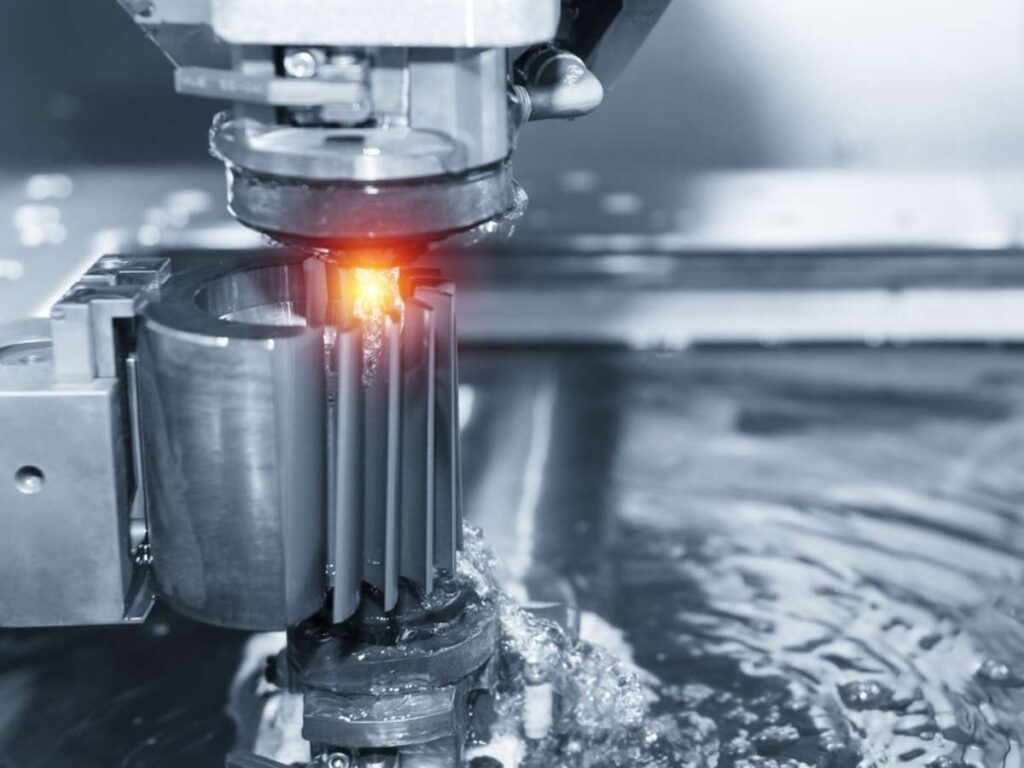
Step#5 Material is Removed by Thermal Erosion
Now that the sparks are jumping across the gap, it’s time to look at what they actually do to the metal.
Each spark creates intense heat. We’re talking about temperatures hot enough to melt or even vaporize metal in just a split second. That heat is focused right where the spark hits. Nothing else around it gets touched.
This process is called thermal erosion. It means the material gets worn away by heat instead of by a blade or drill.
Think of each spark like a tiny explosion. Not big enough to see with your eyes, but powerful enough to blast away small chunks of metal. And it’s not just one spark. It’s thousands happening every second, one after another.
Here’s a simple look at what happens in each cycle:
| Stage | What Happens |
| Spark Initiation | Voltage jumps the gap between tool and part |
| Heat Generation | Intense heat melts a small area of the metal |
| Material Removal | Molten metal is vaporized or blasted away |
| Debris Flushed | Dielectric fluid clears the area |
| Cooling | Fluid cools down the surface instantly |
This cycle repeats over and over. Slowly, the shape you want begins to form.
I remember watching this and thinking: How is this so clean? There were no chips flying. No loud grinding. Just precision, silence, and a soft fizzing sound under the fluid.
This step is where EDM really shines. No force. No pressure. Just heat doing all the work.
But the process can’t keep going without help. All that melted metal needs to go somewhere.
Step#6 Dielectric Fluid Cools and Flushes Debris
After all that spark and heat, the metal needs to cool down. This is where the dielectric fluid comes back into play, doing more than just controlling sparks.
Now, it takes on two critical jobs:
Cooling the Metal
Each spark brings intense heat.
Without cooling, the metal could:
- Warp
- Crack
- Lose its shape
The dielectric fluid absorbs the heat right away. This keeps the workpiece stable, so you get the accuracy you need.
Cleaning the Work Area
Sparks melt tiny bits of metal.
That debris doesn’t disappear:
- It floats in the gap
- It blocks future sparks
- It can mess up the finish
The fluid acts like a steady stream. It flushes away the debris, clearing space for the next spark to hit clean metal.
Why does it matter?
If the fluid stops doing its job, the whole process can fall apart.
I once saw a machine stall because the filter got clogged. Sparks started firing in random spots. The part had to be scrapped.
That moment taught me that clean fluid isn’t optional. It’s everything.
With the metal cooled and debris cleared, the EDM process can repeat again and again. Let’s look at how those tiny pulses shape the final form.
Step#7 Repeat Discharge Process in Pulses
Once the first spark hits, the EDM process doesn’t stop there. In fact, it’s just getting started.
The machine begins to fire pulses, tiny, fast bursts of electricity that repeat over and over. These pulses happen thousands of times per second. Each one removes a small amount of material.
One spark isn’t enough to shape a part. But together, these repeated discharges start to carve the metal bit by bit.
- A pulse sparks
- The heat melts metal
- The fluid clears it away
- Then the next pulse fires
This cycle keeps going until your part takes shape.
At first, you may not notice much. But give it time. Slowly, the details become visible. The sharp corners. The deep cuts. The tight spaces. All shaped by pulses you can’t even see with your eyes.
So, what keeps these pulses from going too far or not far enough? That depends on the gap between the parts. And that’s exactly what the next step handles. Let’s talk about how machines keep that spark gap just right.
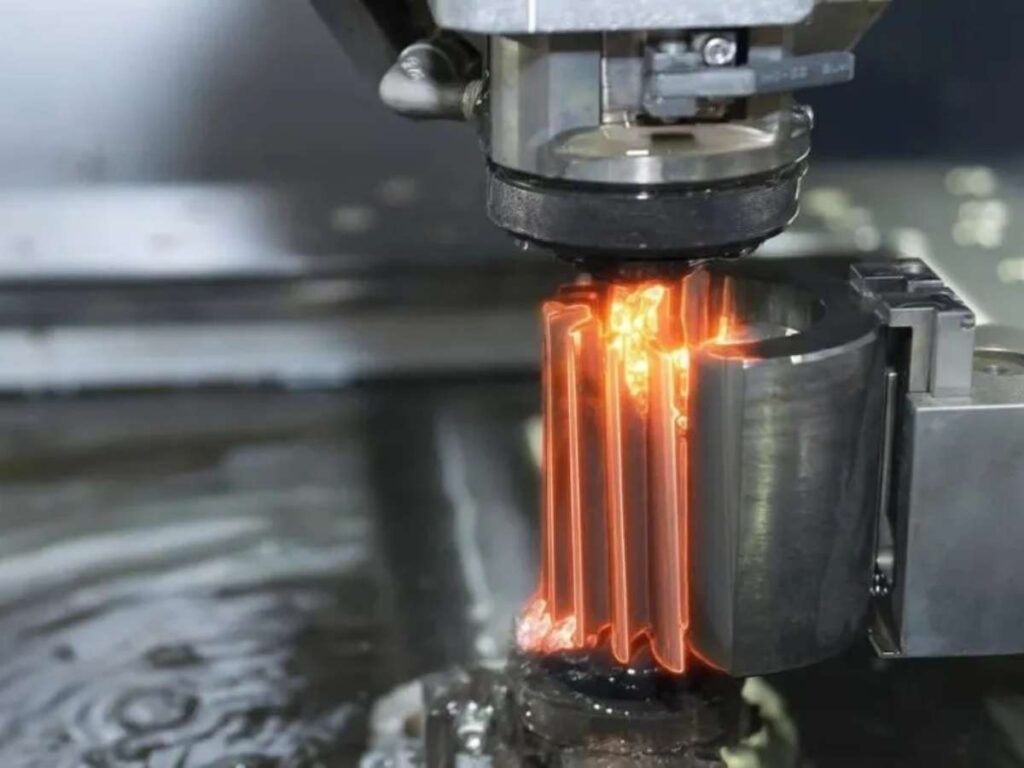
Step#8 Maintain Gap Control via CNC or Servo System
As the pulses continue, you might wonder what keeps the spark gap consistent? This gap between the electrode and the workpiece is small, almost invisible. But it’s one of the most important parts of the process.
If the gap is:
- Too small: the spark might short out or damage the part
- Too wide: the spark won’t jump, and nothing gets cut
Keeping the right distance makes everything else work.
To stay in that perfect zone, the machine uses precision control systems. These are usually:
- CNC (Computer Numerical Control)
- Servo motors that respond in real time
They constantly:
- Watch the gap
- Move the electrode closer or farther
- React instantly to changes during the cut
This isn’t a one-time adjustment. The machine makes tiny movements non-stop during the whole process.
Step#9 Continue Until Desired Shape or Cavity is Machined
Now that the gap is under control and the pulses are firing, the machine can focus on the real goal which is shaping your part.
At this stage, the EDM machine follows a pre-programmed design. This digital plan tells it:
- Where to move
- How deep to cut
- What shape to follow
The machine moves the electrode with slow, careful steps. It keeps firing pulses as it goes, slowly removing more material.
EDM isn’t limited to simple cuts. You can create:
- Deep, narrow holes
- Sharp inside corners
- Tiny, precise features
- Complex cavities that other tools can’t reach
That’s one of the reasons people use EDM for toolmaking and aerospace parts. It’s built for detail.
If your part requires high precision or tight geometries, you’ll want to work with a supplier who’s done it before. MachMaster supports projects just like this, handling deep cuts and ±0.01mm tolerances with ease, all under ISO 9001 quality standards.
Step#10 Inspect and Finish the Final Part (if needed)
Once the sparks stop and the machine powers down, your part is ready to come out of the tank. But before calling it done, there’s one last step, inspection and finishing.
Clean and Check the Part
After cutting, the part is usually coated with fine debris. It needs a quick clean to wash off leftover particles. Once it’s clean, it’s time to check the details.
Ask yourself:
- Does the shape match the design?
- Are the corners and edges sharp enough?
- Is the surface smooth?
This step might involve using calipers, micrometers, or just a sharp eye. Some shops also use digital inspection tools to check tight tolerances.
Decide If It Needs More Work
Not every part is ready right away. Some might need:
- Polishing to smooth out the surface
- Grinding for tighter tolerance
- Drilling or tapping for added holes
It depends on your final use. I’ve seen parts come out of the tank ready to go straight into assembly. Others needed an extra hour or two on a different machine.
There’s no single rule here. Just make sure the part meets your goals.
This final step might seem small, but it ties everything together. After all that work, checking the result is what makes it count.
And now, with the part finished, you’ve completed the full EDM process, start to spark to final cut.
Conclusion
So, how does EDM work?
It starts with a spark, flows through fluid, and finishes with precision.
Now you know:
- What happens at each step
- Why the gap matters
- And how each pulse shapes your part
If you’ve got a complex part that’s hard to machine, EDM might be your best tool.
So why wait?
Contact us today! We’re here to help from design to delivery.
Check Out These Additional Resources
Need more ideas? Browse through our extended range of products and discover something new:
Still haven’t found what you’re looking for? Don’t hesitate to contact us. We’re available around the clock to assist you.