

I remember sitting at my desk late one night, staring at the screen.
I had to make a decision the next morning about a part we were building.
The quote said “electro nickel plating.” But I didn’t really know what that meant.
I didn’t want to guess, and I didn’t want to look unprepared. So I searched for answers.
If you’re here for the same reason—to understand what electro nickel plating actually is—you’re not alone. I’ve been there too.
Since that night, I’ve worked on many projects that use this process. I’ve asked a lot of questions. I’ve stood in plating shops. I’ve made mistakes and learned what really matters.
In this guide, I’ll walk you through it—step by step. You’ll learn how electro nickel plating works, what it’s made of, and what to expect if you’re using it on a part or product. I’ll also point out a few things people usually miss.
So, let’s dive in!
Quick Overview
If you’re short on time—or just want the big picture—this table breaks down the electro nickel plating process into simple, bite-sized steps.
It shows you what happens, why it’s done, and how each stage fits into the bigger workflow.
Keep it close. It’s the kind of thing you’ll want to refer back to.
| Step | Stage Name | What Happens | Why It Matters |
| 1 | Surface Preparation | Parts are cleaned to remove dirt, oil, rust, or old coatings. | Any leftover grime can ruin the bond between the nickel and the base material. |
| 2 | Rinse & Neutralization | Cleaned parts are rinsed in water and sometimes dipped in acid-neutralizers. | Prevents contamination from cleaning chemicals during the next step. |
| 3 | Activation (Pre-Treatment) | Surface is etched or chemically treated to slightly roughen or activate it. | Helps the nickel layer stick better to the part’s surface. |
| 4 | Nickel Plating Setup | Parts are mounted on racks or placed in barrels and connected to a power source. | This setup controls how and where the nickel will be applied. |
| 5 | Electroplating Process | Parts are dipped into a nickel bath with electric current applied. | The nickel ions attach to the part, building a thin, even metal layer. |
| 6 | Post-Plating Rinse | Plated parts are rinsed to remove leftover chemicals or bath solution. | Keeps the finish clean and prevents unwanted residue or spotting. |
| 7 | Drying & Inspection | Parts are dried and checked for plating quality, coverage, or defects. | Final check ensures the product meets standards before shipping or assembly. |
Step#1 Surface Preparation
If you skip this step, you’re gambling with the rest of the process.
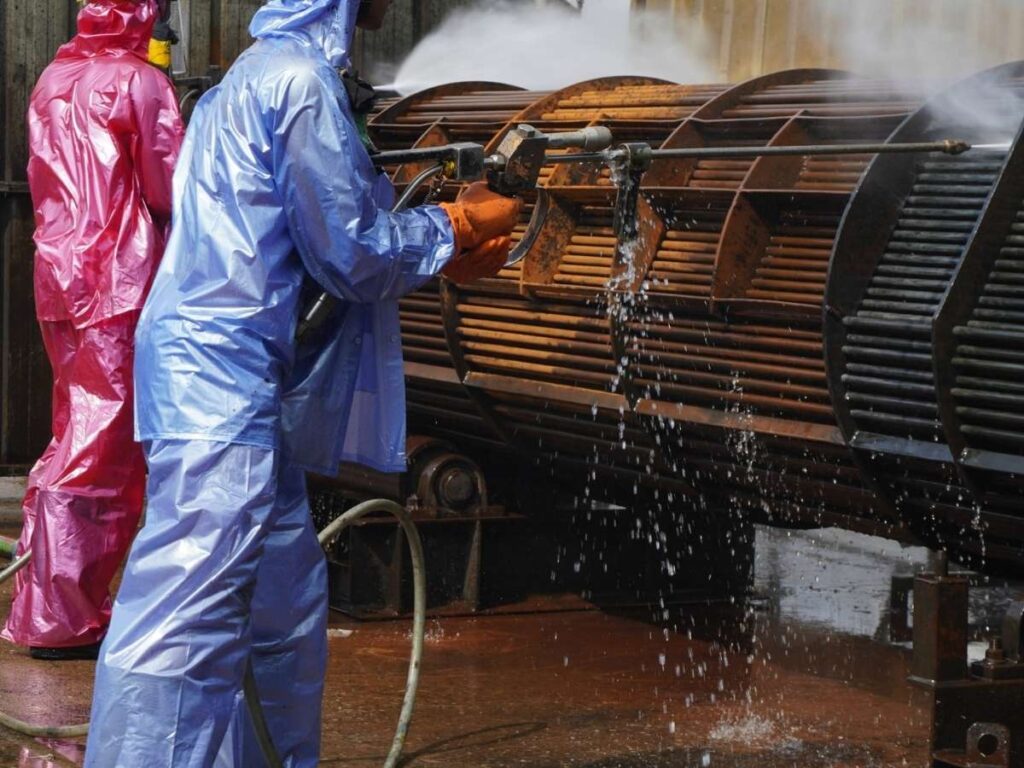
Let me be blunt—most plating failures happen right here. Before the tank. Before the chemistry. Before a single amp of electricity flows.
And I’ve learned that the hard way.
If the surface isn’t clean, the plating won’t stick. If there’s oil, dirt, or rust on your parts, nickel can’t bond properly.
What happens next?
- Peeling
- Blisters
- Rough or uneven spots
- Or even total part failure after delivery
And guess what? You’re the one who pays for it. Not the plating shop. Not the end customer. You.
Start With Degreasing
This removes any oil, grease, or fingerprints from your parts. Your options:
- Alkaline cleaners
- Ultrasonic tanks
- Solvent baths (for precision or delicate parts)
If anyone’s touched the part without gloves, it needs to be cleaned.
Use Abrasion for Tough Surfaces
Some parts need a bit more force—especially if they’ve been stored for a while. That means:
- Brushing
- Light sanding
- Blasting with fine media
This helps rough up the surface just enough so the nickel can grab on tight.
Dip in Acid to Activate the Surface
Even after cleaning, metal can still have a thin layer of oxidation. A short acid dip (called pickling) clears that off. What’s used?
- Hydrochloric acid
- Sulfuric acid
- Or safer options like citric acid, depending on the metal
The goal? Leave the surface “chemically active” and ready to bond.
I once trusted a vendor who skipped proper cleaning. The parts looked fine. They weren’t.
3 weeks later, the nickel started lifting. A $100,000 deal fell through. That was on me, and I won’t let that happen again. Neither should you.
Step#2 Rinse & Neutralization
If cleaning is the foundation, rinsing is the glue that holds it together. This step gets ignored more often than you’d think.
And every time it is, problems show up later, in the form of cloudy finishes, poor adhesion, or unexpected defects.
Importance of Rinsing
After surface prep, your parts are loaded with residue, alkaline cleaner, acid, metal particles, and grime loosened during scrubbing.
If you move straight into plating from there? You’re locking that contamination under a layer of nickel.
And once it’s sealed in? There’s no fixing it—except stripping the part and starting over. That’s time, money, and reputation down the drain.
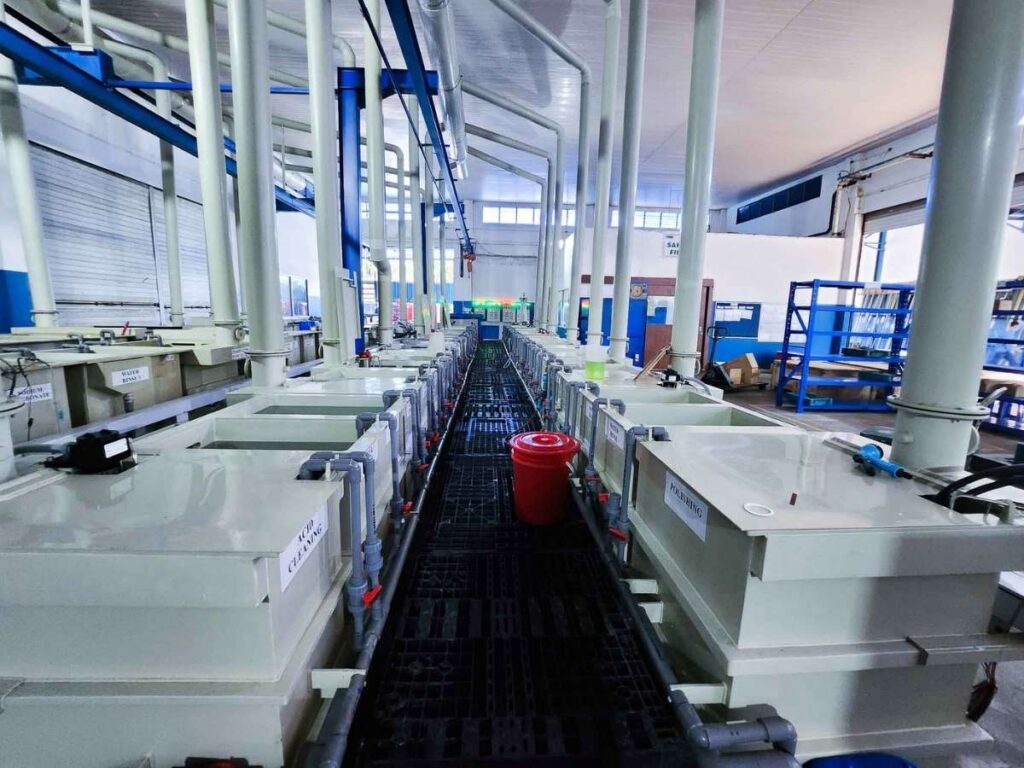
Use Clean Water—Every Time
This isn’t a splash-under-the-sink kind of rinse. It has to be intentional.
Best practices:
- Use clean, flowing water (ideally deionized for sensitive parts)
- Rinse immediately after each prep step—no delays
- Use multiple rinse tanks for high-precision work
If your rinse water is dirty or reused too often, it’s working against you.
Add a Neutralizing Step When Needed
After acid cleaning or pickling, some metals need an extra bath, a neutralizer. This helps:
- Balance the surface pH
- Remove lingering acid
- Prevent flash rust (especially on carbon steel)
Typical neutralizers include mild alkaline dips or buffered solutions, depending on your base material.
Your Rinse Checklist
- Are your rinse tanks clean and refreshed regularly?
- Do you have at least one rinse after every cleaning stage?
- Are you neutralizing properly for sensitive metals?
- Does your team treat rinsing like a step, not an afterthought?
Don’t let something as simple as water ruin the work you’ve already paid for.
Step#3 Activation (Pre-Treatment)
This is the part most people rush. But if you get this wrong, nothing sticks.
Even after cleaning and rinsing, your metal parts still have one last enemy: oxidation.
You might not see it. You might not feel it. But the surface is already starting to react with air the moment it leaves the rinse tank.
That’s why activation matters. It’s what keeps the bond strong between your base metal and the nickel you’re about to apply.
How Activation Works
This step usually involves a brief acid dip—just seconds to a few minutes.
Common activators include:
- 10% Sulfuric Acid – great for steel, fast and effective
- Hydrochloric Acid – powerful but more aggressive
- Citric Acid – safer, used for stainless and specialty alloys
Each metal type responds differently, so your choice of acid matters.
Aluminum, for example, may need a zincate dip instead of a straight acid. Stainless steel might need a dual activation process.
Importance of Activation
Looks can be deceiving. Oxides can form in minutes. Even fingerprints can create tiny chemical barriers that cause spotty or uneven plating.
I’ve seen this happen with tight-deadline aerospace parts. They looked flawless, until we tested adhesion. The nickel sheared right off. Why? No activation. Just a pretty surface with no bite.
Best Practices for Reliable Activation
- Time the acid dip carefully—too short, and it’s ineffective; too long, and you risk etching
- Use fresh solutions and replace them regularly
- Rinse immediately after activation to prevent flash corrosion
- Wearing gloves while handling—skin oils ruins everything
Ask These Questions Before Moving On
- Was the correct acid used for this specific metal?
- Are activation tanks being tested and maintained?
- Was the part handled properly between activation and plating?
If you can’t answer “yes” across the board, slow down.
Rushing past this step is a fast track to adhesion failure.
Step#4 Nickel Plating Setup
This is where everything comes together—or completely falls apart.
You’ve cleaned, rinsed, and activated the surface. Now comes the part that looks the most technical—setting up the actual plating environment.
If something’s off here, you won’t see the problem right away. It shows up later, in dull finishes, uneven coating, or plating that just doesn’t hold up.
So before you hit the switch, double-check everything. Because this setup is your foundation.
Start With the Plating Bath
This is the heart of the operation, the liquid that transfers nickel ions onto your part. It has to be balanced, stable, and clean.
Here’s what goes into a typical Watts nickel bath (the industry standard):
- Nickel Sulfate: The main source of nickel ions
- Nickel Chloride: Helps conductivity and anode efficiency
- Boric Acid: Controls pH, keeps things stable
- Wetters or Brighteners (optional): For aesthetic applications
If your application is functional (not decorative), don’t overdo the brighteners. They can make the coating brittle.
Get the Temperature Right
Your bath should run between 45°C and 65°C (that’s 113–149°F). Too cold, and you slow the process. Too hot, and you risk burning the part or damaging the chemistry.
Use a reliable heating element, and monitor it. No “eyeballing” with a finger dip. Temperature impacts plating rate, finish quality, and deposit integrity.
Check the pH Level
This isn’t optional. Nickel plating baths run best between pH 3.5 and 4.5.
If the bath gets too acidic:
- The plating gets rough and grainy
If it gets too alkaline:
- You get dull, uneven finishes
Keep a pH meter in hand. Test daily. You’re managing a live chemical system—not a static mix.
Install the Anode and Cathode Properly
Here’s where the electricity comes in.
- Your anode = nickel metal plates, submerged in the bath
- Your cathode = the part you’re plating, grounded and hung carefully
They must face each other directly, with even spacing. If your anode isn’t dissolving evenly, or the part is too close to the edge of the tank, you’ll get bad coverage.
Also: parts should be suspended with nickel-compatible hooks or racks. No rust. No bare wire. No contaminants.
Use Agitation
Agitating the bath keeps:
- Temperature even
- Chemicals mixed
- Gas bubbles off the part (yes, they mess up the finish)
Options:
- Mechanical agitation (moving paddles or pump flow)
- Air agitation (bubbling through diffuser stones)
You don’t need turbulence—just gentle movement is enough.

Step#5 Electroplating Process
This is where nickel meets metal—and where quality is made or lost.
Everything you’ve done so far leads to this moment. The surface is clean. The chemistry is balanced. The bath is stable.
Now it’s time to run the current.
But don’t let the simplicity fool you—plating isn’t “set it and forget it.” It’s an active, monitored process that demands control, consistency, and experience
How It Works
Once the part (cathode) and the nickel anode are submerged in the plating bath, a direct current (DC) is applied.
That electrical charge causes:
- Nickel ions in the solution to migrate toward the part
- These ions attach atom by atom, forming a smooth, solid layer of nickel
It sounds technical, but at its core—it’s controlled metal building.
Set the Right Voltage and Current
The amount of electricity matters—a lot.
Too little current:
- Plating takes forever
- The finish comes out soft or thin
Too much current:
- Causes burning, rough deposits, or nodules
- Wastes energy and increases stress in the nickel layer
A typical range? 2–6 volts, depending on:
- Part size
- Desired thickness
- Type of nickel bath used
If you’re using a shop like MachMaster, this is already fine-tuned. Our technicians adjust power levels based on your specific part geometry and finish goals.
Timing Controls Thickness
The longer the part stays in the bath, the thicker the nickel layer becomes. A rough guide:
- 10 minutes = 2–5 microns
- 30+ minutes = 10–25 microns (engineering-grade coatings)
But it’s not just time—it’s time + current density.
So if your parts have small holes, sharp corners, or uneven surfaces, they’ll plate at different rates. That’s why fixture design and rotation matter.
Watch for Common Issues
Even small slip-ups can ruin the finish. Look out for:
- Gas bubbles sticking to the part (they block nickel)
- Edge build-up (thicker plating near corners)
- Uneven coating due to poor part positioning
We at MachMaster use agitation and rotation tools to avoid these problems, because we know your parts have to work, not just look good.
Step#6 Post-Plating Rinse
Don’t let perfect plating get ruined in the final moments.
You’ve made it through the toughest part—nickel has been deposited, the finish looks solid, and everything’s aligned.
But here’s the catch: if you don’t rinse immediately and correctly after plating, all of that work can go to waste.
Why This Rinse Is Critical
As soon as the part comes out of the bath, it’s coated with:
- Active nickel ions
- Chemical residue from the plating solution
- Possibly heat or gas bubbles, depending on the current load
If you leave that stuff on the surface for even a few minutes? You invite staining, pitting, or even corrosion, before your part is ever packed or tested.
Use Clean, Flowing Water
This is not a one-dip-and-done situation. You need:
- A freshwater rinse tank (preferably deionized or softened water)
- Ideally, multiple rinse stages—especially for high-volume or critical components
- Agitation or spray rinse systems (to break up trapped solution in crevices)
Avoid Water Spots and Flash Corrosion
After plating, the surface is vulnerable. It hasn’t fully set. It’s still “soft” from a chemical standpoint.
That’s why this rinse also prevents:
- Spotting from drying chemicals
- Streaks caused by uneven flow
- Flash rusting (especially on parts with steel cores or mixed-metal assemblies)
Final Rinse Tips That Make a Big Difference
- Rinse immediately after the part exits the tank
- Use cool water, unless your specs require otherwise
- If needed, rotate the part or agitate it gently to release trapped solution
- Check rinse quality, if water beads or streaks, the surface may still be contaminated
Rinse Checklist
- Are rinse tanks clean and circulating properly?
- Are parts being rinsed immediately, no sitting in the open air?
- Is there visible residue, streaking, or spotting after rinsing?
- Are drying systems ready to take over right after this?
You’ve come this far. Don’t cut corners at the finish line.
Step#7 Drying & Inspection
This is your final chance to protect the finish and prove the process worked.
You’ve plated. You’ve rinsed. You’re almost there. But how your parts are dried and inspected will determine if they leave your shop ready for market, or head straight for rework.
Importance
If moisture stays on the part too long after rinsing, it leads to:
- Water spots
- Staining
- Flash rust (especially on steel substrates)
- Or worst case—corrosion under packaging
It’s heartbreaking to see a perfectly plated part ruined just because it sat wet for 20 minutes on a rack.
Best Drying Methods for Nickel-Plated Parts
Here’s what works reliably:
- Compressed air blow-off is great for detailed parts or tight geometries
- Heated drying ovens offer consistent and fast drying for high-volume runs
- Desiccant cabinets or clean drying rooms is for precision, low-tolerance parts
Inspection Checklist
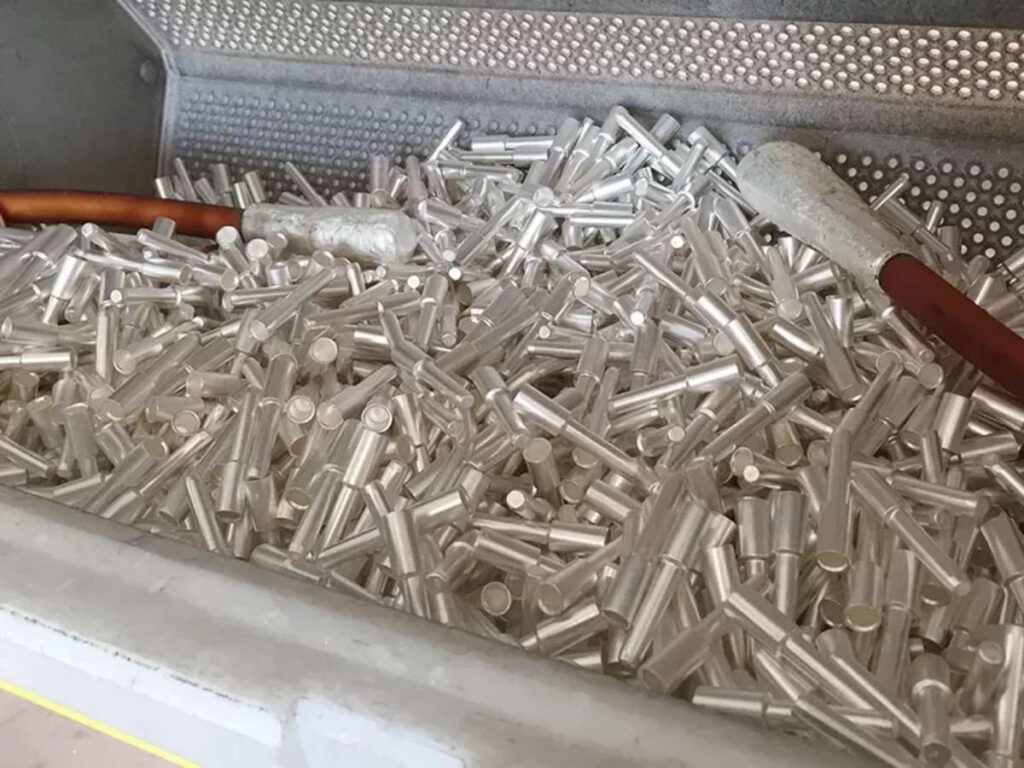
Dry parts = ready parts. And that means it’s time to inspect the plating. This is not a box to check, it’s your final layer of quality control.
Here’s what you (or your vendor) should look for:
- Finish Uniformity
- Is the coating smooth, even, and defect-free?
- Are there visible patches, nodules, or streaks?
- Thickness Check
- Were the target microns reached? (Use XRF or micrometers)
- Is the coating consistent across all critical surfaces?
- Adhesion Test
- Tape pull, bend test, or scratch test (as per your spec sheet)
- Any flaking = immediate rejection
- Dimensional Check (if critical)
- Did the plating affect final tolerances?
- Was masking applied correctly to protected zones?
Final Touches Before Release
Once parts pass inspection:
- Package them using non-reactive, dry materials (no bubble wrap on raw metal!)
- Label according to spec, finish type, and lot number
- Log inspection results and sign off on QC
Conclusion
That late night? It turned out to be a turning point.
Once I understood the electro nickel plating process, I stopped guessing—and started asking better questions. You can do the same.
Now you know what it is, how it works, and why it matters. Whether you’re building parts, choosing finishes, or just learning, you’ve got a clear starting point.
So, what’s your next move? Ready to take the guesswork out?
Start now. And if you’re still unsure, don’t wait—contact us today. Let’s figure it out together.
Explore More of Our Resources
If you’re searching for more choices, explore our full collection of products. We’ve picked out some great options for you:
Surface Finishing, Anodizing & Molding:
CNC Services:
Still haven’t found what you’re looking for? Don’t hesitate to contact us. We’re available around the clock to assist you.