
Someone once told me, “Powder coating without sandblasting is like painting over grease.”
We were chatting over coffee, and he said it with a laugh—but he was serious.
That stuck with me.
At the time, I couldn’t figure out why some powder-coated parts lasted years while others chipped, rusted, or peeled way too soon. I kept blaming the coating or maybe the metal.
Turns out, the real issue was what happened before the coating even went on.
It was prep.
If you’re asking yourself, “Do I really need sandblasting?” or “Is it just an extra cost?”—I get it. I’ve asked those same questions. And I’ve seen what happens both with and without it.
Sometimes, skipping sandblasting can ruin the whole job—even if the coating looks perfect at first.
In this article, I’ll break it down:
- What sandblasting really does
- Why it matters for powder coating
- When you need it—and when you don’t
By the end, you’ll know how to spot good prep work, avoid common coating problems, and make smarter decisions—whether you’re designing parts, managing orders, or buying for a project.
Let’s get started!
1. What Is Sandblasting?
At first glance, sandblasting looks like someone blasting dirt at metal—loud and messy. But it’s the first and most important step in surface prep. If your powder coating ever peeled or bubbled, poor prep was likely the reason.
Sandblasting uses high-pressure air to shoot abrasive particles at metal, stripping off rust, oil, old paint, and more. It’s like power sanding but faster. More importantly, it leaves behind a fine, textured surface—what coating needs to grip properly.
Two common methods:
- Grit blasting: Strong, for thick rust or scale.
- Glass bead blasting: Gentler, ideal for aluminum.
Equipment usually includes an air compressor, a blast cabinet (for small parts), or open-blast systems. Media choices include aluminum oxide, garnet, glass beads, or steel grit.
Using the right method and media avoids damage and creates a clean, bond-ready surface—making the powder coat last longer and perform better.
2. What Is Powder Coating?
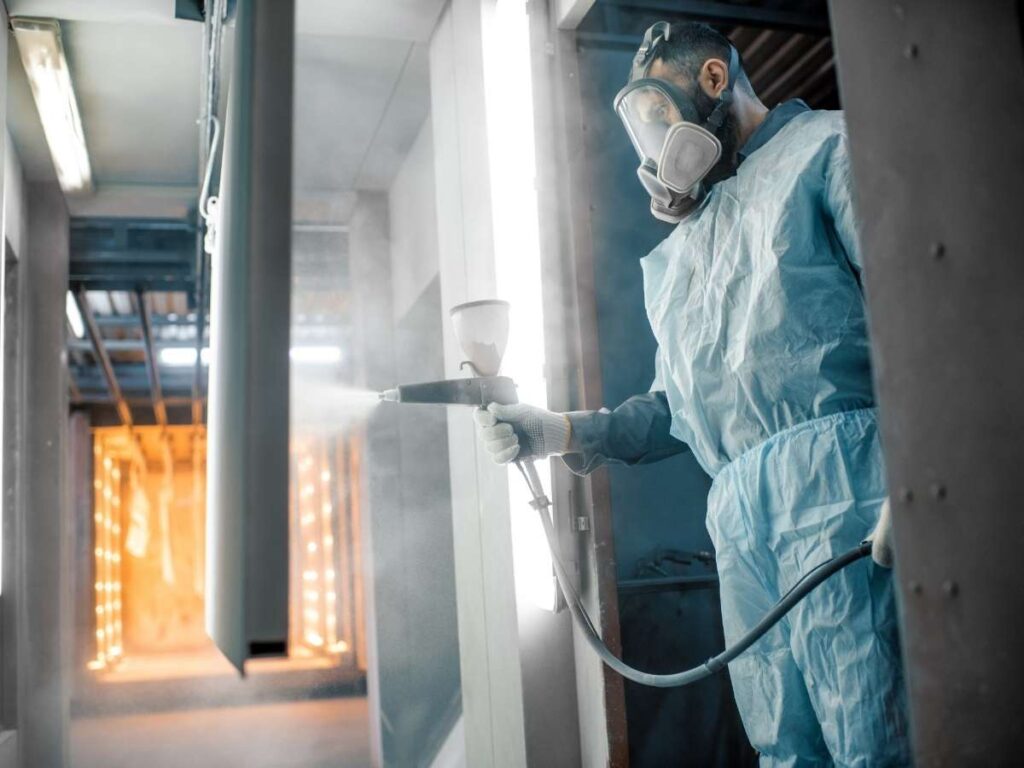
The first time I saw powder coating, I expected wet paint—but a fine powder came out instead. It stuck to metal like magic, then melted in an oven into a smooth, solid shell.
Powder coating uses dry plastic powder—either thermoplastic or thermoset. The powder gets electrostatically charged to stick to grounded metal. Then it’s baked at 180–200°C, where it melts and hardens into a tough, bonded finish.
Why use powder coating?
- No solvents: Safer, with fewer fumes.
- Stronger grip: Especially after sandblasting.
- Durability: Resists scratches, rust, and UV.
I’ve seen it last for years in factories and outdoors. But it’s not for everything. It only works on conductive materials, adds thickness, and can clog small holes if not masked.
If you want a long-lasting finish, powder coating works best when the surface is prepped right—starting with sandblasting. Done right, it locks in performance.
3. Benefits of Combining Sandblasting and Powder Coating
I used to wonder if sandblasting was just “extra”—something nice but not necessary. But once I saw how it affects coating quality over time, I stopped skipping it.
If you’re trying to save on rework, avoid returns, or just get consistent results, sandblasting before powder coating can make a real difference.
Let’s walk through what you gain when you combine both.
Better Durability
Sandblasted surfaces hold onto powder coating better. That bond leads to:
- High resistance to UV rays
- Less damage from salt exposure
- Stronger protection against chips or dents
If you’re making parts for outdoor use or shipping internationally, this matters. I’ve seen parts blasted and coated five years ago that still look fresh. Others? They failed after a single winter.
Uniform Coating Application
Powder coating sticks best to rough surfaces. Sandblasting gives that texture.
Without blasting, the powder can:
- Pool in low spots
- Miss edges
- Peel from smooth areas
But after blasting? The powder flows evenly and cures right. You get a consistent finish across every surface—even corners and weld seams.
Reduced Rework and Returns
Every rejected part costs time and money. Blasting reduces:
- Pinholes
- Bubbling
- Poor adhesion
If you’ve ever had to strip and recoat a full batch, you know how frustrating that gets. I’ve seen teams cut coating defects in half just by improving prep.
Longer Warranty Periods
Most coating suppliers only offer extended warranties if sandblasting was part of the prep. Without it, the risk of failure goes up—and they know it.
At MachMaster, we’ve seen this firsthand. When blasting is done right, we’re able to offer longer coverage and more peace of mind. That’s not just about marketing—it’s based on how the coating actually performs over time.
And for factory owners or procurement teams, that means fewer warranty claims, longer-lasting parts, and more value from every order.
4. Common Applications in Different Industries
You might be wondering: where does sandblasting and powder coating show up in real life?
The answer? Almost everywhere.
From truck parts to coffee tables, this combo plays a big role in how products look and how long they last. I’ve worked with shops coating parts for different industries, and the pattern is always the same—good prep leads to good results.
Automotive and Transportation
Think about the conditions a vehicle faces.
- Mud
- Salt
- Rocks
- Rain
Parts like chassis, frames, and brackets take the most abuse. They’re exposed to road debris, water, and rust every day.
That’s why shops blast those parts first. Sandblasting removes rust and old coatings. It gives a fresh surface so the powder coat can bond tightly. That finish helps keep corrosion away for the long haul.
If you’re working with trailers, off-road vehicles, or any moving equipment—this step is key.
Industrial Machinery & Equipment
Factories and outdoor job sites are tough on machines.
Moisture. Dust. Chemicals. It adds up fast.
Powder coating on blast-prepped parts helps fight back. It protects metal from wearing out too soon.
I’ve seen RFQs (request for quotes) that call out sandblasting in the job specs. Why? Because it means stronger adhesion and longer life. Especially for:
- Pipe systems
- Machine housings
- Structural frames
It’s not just about appearance—it’s about protection.
Consumer Goods (Furniture, Appliances, DIY Parts)
Yes, blasting and powder coating are common in home products too.
When you buy a powder-coated patio chair or a metal cabinet, it likely starts with sandblasting.
Here’s what you get from this process:
- Smooth finishes
- No flakes or chipping
- Solid color that resists wear
Even hobbyists use it on bike parts, grill frames, or garage tools. I’ve blasted and coated shelf brackets in my own shop—they still look new after years of use.
Medical and Food Equipment
In these industries, the finish must be more than clean. It needs to stay clean.
Powder coating offers a non-porous surface that resists bacteria. But it only works well if the metal underneath is prepped properly.
Sandblasting helps by:
- Removing hidden oils or weld spatter
- Creating a clean, smooth base
- Supporting hygiene and safety standards
For carts, trays, and prep stations, that prep step can make all the difference.
Whether you’re coating truck parts or kitchen gear, the goal stays the same: make it last. And it all starts with a good blast.
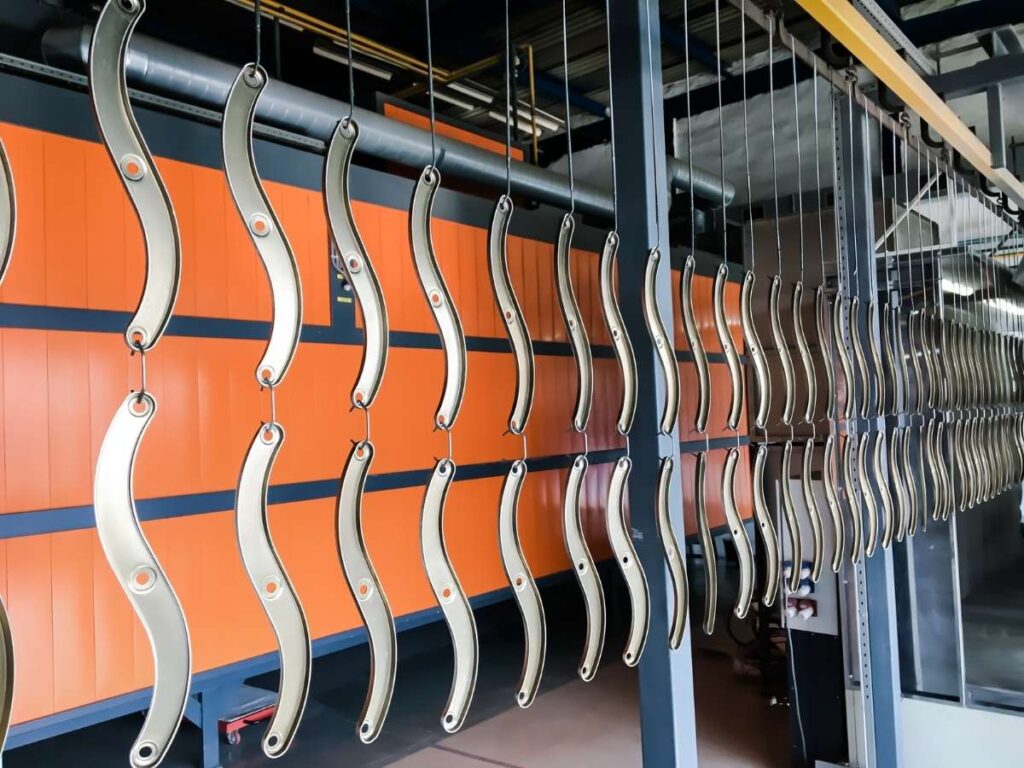
5. Sandblasting + Powder Coating vs Other Finishes
You’ve got options when it comes to finishing metal parts.
But how do you know which one fits your job best?
I’ve worked with teams who’ve tried everything—wet paint, plating, even just polishing. Sometimes it worked. Other times, the job came back with flakes, rust, or damage.
This table shows how sandblasting + powder coating stacks up against other common methods:
| Finish Type | How It Works | Strengths | Weaknesses |
| Sandblasting + Powder Coating | Powder is sprayed on a rough, blasted surface, then baked to cure | Great adhesion, rust protection, long life | Requires conductive parts and oven curing |
| Painting (Wet Coating) | Liquid paint bonds chemically with the surface | Easy to apply, lower upfront cost | Scratches easily, less durable, needs rework more often |
| Plating (Chrome/Zinc) | Thin metal layer applied by chemical or electrical process | Decorative finish, some corrosion resistance (zinc) | Thin, brittle, low impact resistance, often cosmetic only |
| Polishing Only | Surface is buffed to a shine | Smooth look, good for display | No rust protection, slippery surface, poor base for later coatings |
If you want something that holds up to real use—weather, wear, impact—sandblasting plus powder coating gives you the best balance.
You’ll get a finish that sticks, protects, and lasts.
It takes more prep. But in the long run, it saves you time, money, and frustration.
6. Lead Time Expectations and Workflow
I’ve worked with plenty of teams who needed fast turnarounds. But speed without proper prep almost always leads to problems. When you understand how the process works, you can plan better, avoid delays, and keep your project on track.
Typical Process Flow
Most powder coating jobs follow a similar workflow:
- Step 1: Receive raw part: The shop gets your part. It may be oily, rusty, or freshly machined.
- Step 2: Sandblast: This removes rust, scale, oil, or old coatings. Expect 1–2 days, depending on how many parts and how clean they are.
- Step 3: Clean and mask: After blasting, parts need to be wiped down and masked. This protects threaded holes or precise fit areas from getting coated.
- Step 4: Powder coat and cure: The powder is sprayed and baked in an oven. This takes 1–3 days, depending on part size, color, and shop capacity.
At MachMaster, our workflow integrates sandblasting and powder coating into one streamlined process. That means faster turnaround and fewer coordination issues—especially helpful when you’re moving from prototyping to full production.
For most jobs, you’re looking at a 3–6 business day lead time. Special colors or large orders may take longer.
How Sandblasting Affects Turnaround
Skipping blasting may look like a shortcut. But it often causes bigger problems.
Here’s what blasting actually prevents:
- Poor powder adhesion
- Coating defects from leftover oils or rust
- Color issues caused by surface contamination
Rushing through this step can lead to chipping, bubbling, or peeling. I’ve seen parts that looked great at pickup—but came back a month later needing full rework.
Sandblasting adds a bit of time upfront. But it helps you avoid rework, warranty claims, or failed inspections.
A well-prepped part cures cleaner, faster, and lasts longer.
Want fewer surprises in your workflow? Make blasting part of your plan from the start.
7. Factors to Consider Before Choosing These Finishes
Sandblasting and powder coating are a great combo—but they aren’t always necessary.
Before you commit, think about how the part will be used, what material it’s made from, and how much protection or precision you actually need. I’ve worked with teams that saved time and money just by slowing down and asking these questions early on.
Material Type
Different metals respond differently to blasting.
- Steel takes it well.
- Aluminum and stainless steel need softer media.
- Thin parts can bend or warp from too much pressure.
I’ve seen flat panels twist just from using the wrong grit. They looked clean—but didn’t fit anymore.
If your supplier doesn’t ask what material you’re working with, bring it up. Especially if your parts are lightweight, thin, or shaped to fit precisely.
End Use & Exposure
Where the part is going makes a big difference.
- Outdoor parts? Always blast them. It helps the powder stick better and last longer.
- Indoor parts that won’t be touched much? You might skip blasting—if the surface is already clean.
I’ve done that for shelving, light fixtures, and display brackets. They still looked good and didn’t need heavy protection.
Ask yourself:
- Will this part see weather, water, or heat?
- Is it mostly for looks, or will people be using it often?
If it’s going into a tough environment, don’t skip the prep.
Surface Finish Tolerance
Blasting roughs up the surface. That’s great for powder coating—but it can slightly change the part’s size.
- If your part has tight tolerances, blasting can throw things off.
- Threads, slots, and sliding fits may not work the same after blasting.
I’ve masked off small features many times just to keep things fitting right. It takes extra time, but it keeps parts from being scrapped later.
If your part needs to fit exactly, plan for that during quoting or early design. It’ll save you problems later.
Budget and Volume
Blasting and powder coating can be cost-effective—if you’re doing enough of it.
- For large runs, setup costs spread across all parts.
- For small batches, it might not be worth the time or money.
I’ve worked with clients who switched to light sanding or priming for brackets that never see daylight. It worked just fine—and saved them a chunk of their budget.
Ask yourself:
- Will this part be seen?
- Does it need to last a long time?
- Or is it okay to take a simpler approach?
Don’t overdo it. Save the full process for parts where performance and appearance both matter.
The points above are just guidelines—things I’ve learned on the job. Every part is different, and sometimes the best decision isn’t the obvious one.
Ask yourself:
- Does this part need to last through rough use?
- Do the fits need to stay exact?
- Will skipping blasting affect the finish?
Think it through before you start. You’ll avoid rework—and get results you can actually rely on.
Conclusion
Those aluminum brackets I coated? The ones that peeled?
We redid them—this time with sandblasting first.
That finish lasted for years. No bubbles. No chips. Just clean, solid color.
Now you know why blasting matters.
You know what it does, when to use it, and how it fits into your process.
You’ve got the tools to make better choices.
So—what’s holding you back?
Contact us today and let’s get your parts done right.
Learn More: Recommended Reads
Want to see more products? We’ve got plenty of options that might just be the perfect fit for you:
- Anodizing Service
- CNC Milling Service
- CNC Turning Service
- Injection Molding Service
- CNC Machining Service
We’ve gathered a few more articles that could help you out. Check them out for more great advice:
Still haven’t found what you’re looking for? Don’t hesitate to contact us. We’re available around the clock to assist you.