
I’ve been working with metal for over 10 years.
One day, a client called me and said, “None of these parts fit together!”
I checked their drawings and saw the problem fast—the bend order was wrong, and no one thought about how the metal would move.
They were stressed. I get it. When bends go wrong, everything else falls apart.
That’s why people come to me. I don’t just bend metal, I help clients plan ahead so the job runs smooth. I make sure the parts are right, the bends are clean, and the project stays on track.
In this article, I’ll explain what sheet metal bending really is. You’ll learn how it works, why it matters, and how to avoid the mistakes I see all the time.
If you’re building parts or managing projects, this guide will help you stay ahead.
So, let’s jump in!
1. What is Sheet Metal Bending?
Sheet metal bending is exactly what it sounds like, shaping flat pieces of metal into desired angles or curves. But when you’re working on real production lines, it’s about precision, repeatability, and knowing your materials. Whether you’re forming enclosures, chassis, brackets, or structural components, bending is one of the first critical steps in metal fabrication.
From a business point of view, understanding this process isn’t just a technical curiosity. It’s the key to sourcing quality parts, avoiding costly rework, and building products that last. If you’re working with sheet metal components in any capacity, whether you’re managing a project, reviewing specs, or outsourcing the job, this process deserves your attention.
2. Common Methods of Sheet Metal Bending
Over the years, I’ve watched a lot of projects fail because the bending method wasn’t right for the job. Sometimes the supplier didn’t even realize the issue until after hundreds of parts were already bent. Let me break down the most common methods you’ll run into, and why they matter.
Air Bending
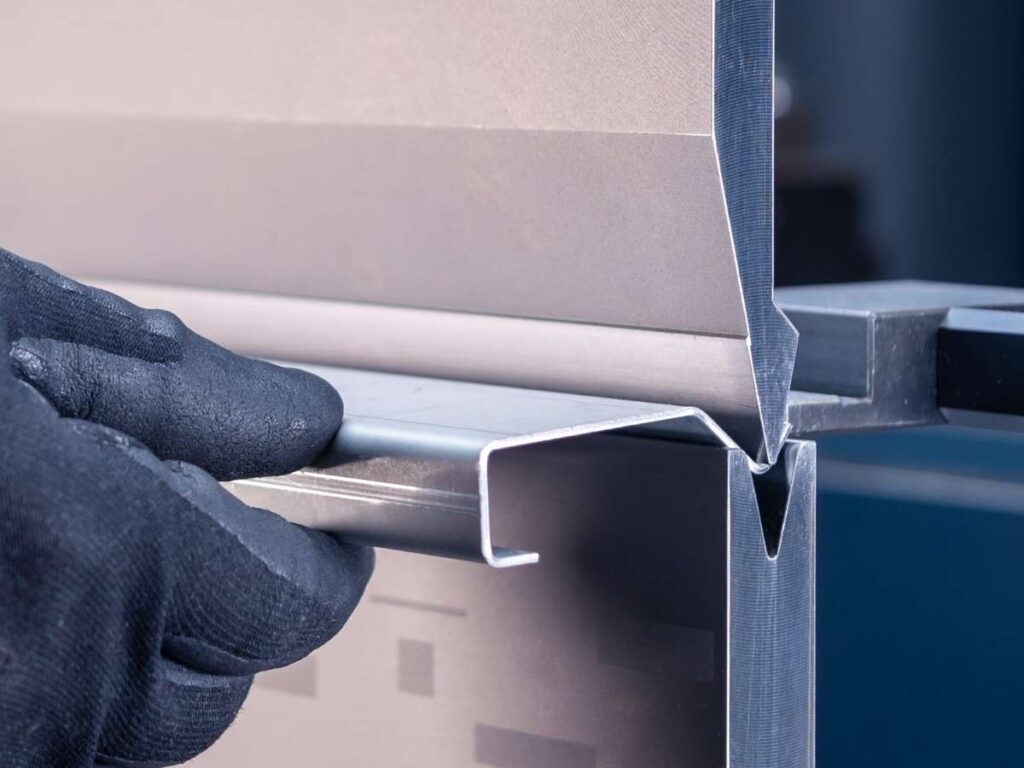
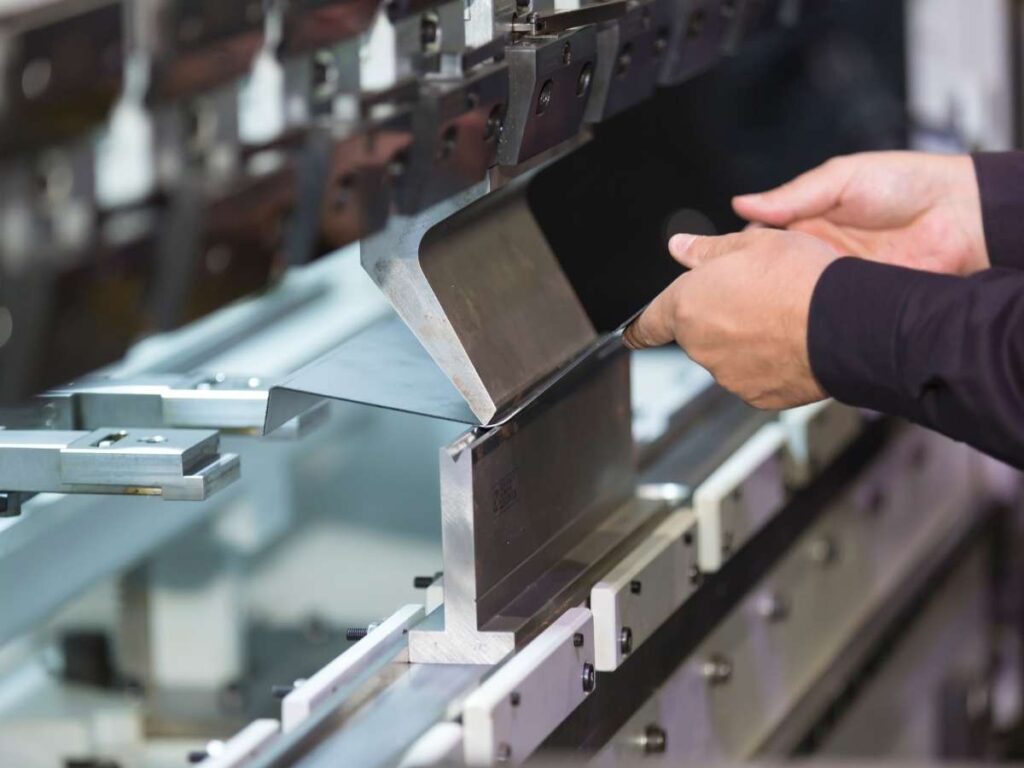
This is probably the most flexible and widely used method, and one I’ve relied on plenty of times. In air bending, the punch presses the sheet down into a V-die, but it doesn’t go all the way to the bottom. That little gap gives you more control over the final angle, and it means you can often use the same die for different angles by adjusting the stroke depth.
It’s fast and cost-effective, especially for short runs or when you’re working on tight budgets. But it does require skill: springback can throw off your angles if the operator isn’t experienced.
Bottoming
Now, if you’ve ever had a part come back with inconsistent angles, chances are air bending wasn’t the right choice. That’s where bottoming comes in. This method pushes the sheet all the way into the die, which gives you much more consistent results, at the cost of flexibility.
You need different tooling for different angles, and the force required is higher. But if accuracy is more important than speed or versatility, bottoming is a solid choice. I’ve used it for parts that need to slot into tight assemblies with no room for variation.
Coining
Coining is basically bending turned up to eleven. It uses a lot more force to stamp the exact bend angle into the sheet, so much so that it actually changes the metal at a molecular level. You almost eliminate springback, which is great when you need super-tight tolerances. But it’s hard on tools and your energy bill, so it’s not something I recommend unless your application truly demands it.
Rotary Bending
If surface finish matters to you, this one’s worth knowing about. Rotary bending uses a rotating die to apply the bend, which means the metal doesn’t slide against the tool like it does in traditional methods. That reduces scratches and marks, which is a big deal for painted or polished parts. I’ve seen this method used a lot for exterior panels or branded enclosures where aesthetics matter just as much as performance.
Roll Bending
This one’s different, it’s not for sharp bends, but for curves and cylinders. Roll bending uses three rollers to gradually shape the metal into a curve. It’s slower and harder to dial in, but when you need smooth, sweeping arcs, like for a metal column cover or custom pipe, nothing else does the job quite as well. It takes finesse and good calibration, but the results are worth it.
3. Tools and Machines Used in Sheet Metal Bending
Once you know the method, the next thing to understand is what tools actually make the bending happen. It’s easy to assume all machines are built the same, but in reality, the difference between a clean, consistent bend and a scrapped part often comes down to tooling.
- Press Brakes: Press brakes are at the heart of most metal bending operations. They use a punch and die setup to apply pressure, forcing the sheet to bend at a precise angle. These machines come in manual, hydraulic, electric, and CNC-controlled variants.
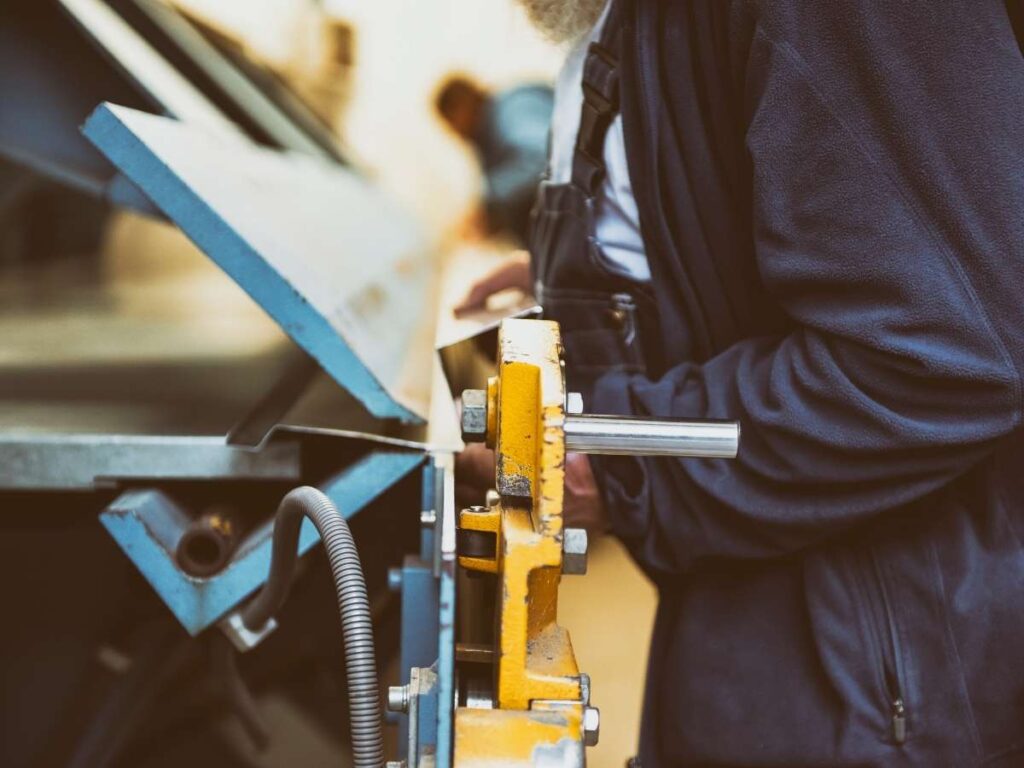
- Folding Machines: These machines work a bit differently. Instead of pushing the metal into a die, folding machines clamp the sheet along a straight edge and fold it upward using a swinging beam.
- Roll Benders: Roll benders are designed to form large, sweeping curves. They use three rollers to gradually bend the sheet as it moves back and forth. You’ll typically see these used in industrial HVAC, aerospace, or infrastructure fabrication.
- Hand Brakes and Manual Tools: Manual bending tools still have their place, especially in prototyping or small-batch production. Hand brakes are great for quick tweaks, one-offs, or in-field adjustments. They’re not built for volume, but they let you work fast and flexibly when needed.
- Custom Tooling and Dies: For companies producing the same parts in high volumes, custom tooling can really boost efficiency. A dedicated punch and die setup tailored to your part reduces setup time and ensures repeatability.
4. Factors That Influence Bending Quality
Bending seems simple, apply force, get a bend. But in practice, several variables quietly shape the outcome. When a part comes back wrong, it’s not always the machine’s fault. If you’ve ever had parts that looked good on paper but didn’t fit in assembly, this is likely where things went sideways.
Material Type
Every metal behaves a little differently under pressure. Mild steel tends to bend predictably, while stainless steel requires more force and is prone to springback. Aluminum, on the other hand, can crack if bent too sharply, especially in colder temperatures or when alloyed. Understanding how your chosen material reacts helps prevent defects. It also informs you about the bending method and tooling you should use.
Thickness and Tolerance
Sheet thickness doesn’t just affect the strength of your part, it directly impacts how much force is needed and whether the material will hold its shape. Thicker materials need stronger presses and tighter control, while thinner ones might warp if the force isn’t evenly distributed. Even small variations can lead to big problems during assembly.
Grain Direction
Metal has grain, just like wood. Bending across the grain is usually stronger, while bending along the grain can lead to cracking, especially in harder metals. It’s one of those details that can be easily overlooked in CAD drawings, but it plays a huge role in part integrity. When in doubt, ask your fabricator how they orient the grain during bending. They should be thinking about this even if you aren’t.
Springback
After you bend a sheet, it has a natural tendency to spring back slightly toward its original shape. Some materials, like stainless steel, spring back more than others. If you don’t account for this, your final angles will be off, even if everything looked good during the bend. The trick is either overbending slightly or using coining/bottoming techniques to minimize it.
Tool Condition and Setup
No matter how advanced the machine is, if the tools are worn or the alignment is off, the part won’t come out right. Dull punches, chipped dies, or misaligned stops can all create inconsistencies. That’s why I always ask vendors about their tool maintenance and inspection practices. You don’t want your project riding on a die that hasn’t been checked in months.
5. Applications of Sheet Metal Bending
It’s hard to name an industry that doesn’t use bent sheet metal in some form. From the brackets holding up your server racks to the panels inside factory control rooms, bent metal is everywhere. Once you start paying attention, you’ll realize how much of your day-to-day infrastructure depends on well-formed metal parts.
Industrial Equipment and Machinery
Custom enclosures, guards, support brackets, and machine panels are often made with precise bends. These parts aren’t just for aesthetics, they often serve safety or structural roles. Getting them wrong can mean exposure to moving parts, wiring damage, or even electrical hazards. In factory environments, the fit and function of these components can also affect maintenance time and equipment uptime.
HVAC and Building Systems
Ductwork, mounting flanges, wall brackets, and access panels are all shaped by bending. With HVAC systems, bends must be smooth enough to ensure airflow while also maintaining strength for suspension or insulation attachment. Since many of these parts are made on-site or customized to fit buildings, bending allows flexibility that other methods don’t. It also helps with lightweight, low-cost solutions.
Automotive and Transport
Cars, trucks, trailers, even trains, they all rely heavily on bent sheet metal. Whether it’s forming a frame crossmember or bending a part of the body shell, strength and form matter. Bending lets manufacturers reduce welds, which improves performance and reduces manufacturing steps. Even heat shields and floor panels come out of a press brake or roll bender before they’re installed.
Commercial Fixtures and Furniture
Retail displays, kiosk enclosures, metal chairs, and even office furniture often use bent steel or aluminum frames. The clean lines and strength that bending offers are hard to match. Plus, it allows for lighter components, which is ideal for furniture that’s moved often or used in modular setups. In some cases, aesthetics and structure are handled in the same operation.
6. Sheet Metal Bending vs Other Fabrication Techniques
When you’re deciding how to shape metal parts, bending is just one of several options on the table. To make the right call for your project, it helps to see how bending stacks up against other popular fabrication methods.
| Technique | What It Is | When to Use It | Pros | Cons |
| Bending | Deforming a metal sheet along a straight axis using force from a press brake, roller, or folding tool. | Ideal for simple forms like flanges, enclosures, and brackets, especially when fewer seams and faster production are desired. | Fast setup, no added material or joints, great for light and mid-weight structures. | Not suitable for very thick metals or highly complex 3D shapes. |
| Welding | Fusing two or more metal parts together by melting and joining the base materials. | Best for joining parts that can’t be made from a single piece, or when structural integrity across multiple elements is critical. | Extremely strong joints, flexible for custom assemblies, useful in structural work. | Adds heat which can warp parts, slower process, more post-processing needed. |
| Stamping | Using a die and press to punch or form shapes in high-speed production. | Great for very high-volume runs of simple, repeatable parts with tight tolerances. | High speed, great for automation, very low unit cost at volume. | Expensive tooling, long lead times for changes, limited flexibility. |
| Laser Cutting | Using a high-powered laser to cut flat metal sheets into precise shapes. | Use it to prepare blank parts before bending, or for intricate cutouts that can’t be punched. | High precision, minimal waste, works well with thin to medium sheets. | Only removes material — can’t form shapes, needs to be paired with bending for 3D parts. |
| Casting | Pouring molten metal into a mold to form complex shapes. | Useful for thick, heavy-duty parts or when 3D features are impossible to form from sheet. | Great for bulk, no seams, excellent for complex geometries. | Slow, costly for prototyping, often heavier than needed, limited material options. |
7. 4 Tips When Choosing Sheet Metal Bending Services
Finding the right bending service can feel like rolling the dice, but it doesn’t have to. A few key questions upfront can save you weeks of back-and-forth and prevent expensive mistakes later on. Here’s what I’ve learned to look for when evaluating potential vendors.
#1 Ask What Equipment They Use
It’s not about having the fanciest machine; it’s about whether their setup matches your needs. Do they have CNC press brakes? Can they handle your sheet size and thickness? Are they set up for high-volume production or just prototyping? A shop that knows the limits and strengths of its equipment is far more likely to deliver consistent results.
#2 Review Their Process — Not Just the Output
I like to know how a shop checks its own work. Do they measure springback? Do they use angle verification tools? Are their operators trained, or is it just trial and error? Even a one-degree error can throw off an entire assembly. The more transparent they are about quality control, the more confident you can be in the final product.
#3 Check Their Experience With Your Industry
Bending parts for HVAC is different from bending brackets for aerospace or mounting panels for telecom. Each industry has its own tolerances, finish standards, and design expectations. Ask for examples of similar work. If they’ve done what you’re asking for before, you’ll both sleep better. Industry familiarity often means fewer surprises and smoother communication.
#4 Get Clarity on Lead Times and Scalability
Today you might need 50 parts. Next month it could be 5,000. Can they ramp up if needed? How do they handle reorders or change requests? A shop that can scale with you is a partner worth keeping, not just a vendor you use once. Planning for future needs upfront makes your growth smoother and reduces supplier risk.
Conclusion
We started this with a bent panel and a curious question. Now, you’ve got real answers.
From bending basics to tools, techniques, and applications, it’s all here. Sheet metal bending can make or break your build. Don’t let it break yours.
You’re not just a buyer. You’re the one driving decisions forward.
So, what’s stopping you?
Contact MachMaster today, your one-stop partner for precision sheet metal, CNC machining, and more.
Explore More Helpful Resources
Curious for more? These additional articles offer even more insights and advice:
- Sheet Metal Fabrication: What You Need to Know
- 10 Different Types of Sheet Metal Bending
- Your Guide to Accurate Sheet Metal Cutting and Bending
- Sheet Metal Bending Process: Key Steps to Know
Still haven’t found what you’re looking for? Don’t hesitate to contact us. We’re available around the clock to assist you.