
Are your CNC prototype costs higher than expected? Complex designs, tight tolerances, extra setups, and finishing can raise the price fast.
The best way to cut cost is to focus only on what the prototype needs to test. Remove features or specifications that do not affect fit, function, assembly, or performance.
With more than 15 years of machining and product development experience, I have seen where prototype budgets are often wasted. At MachMaster, we regularly help clients spot costly design choices before machining begins.
This guide shows you how to reduce cost through smarter design, material selection, tolerances, machining, finishing, quantity planning, and DFM. Use these tips before requesting your next CNC prototype quote.
1. Understand What Drives CNC Prototype Cost
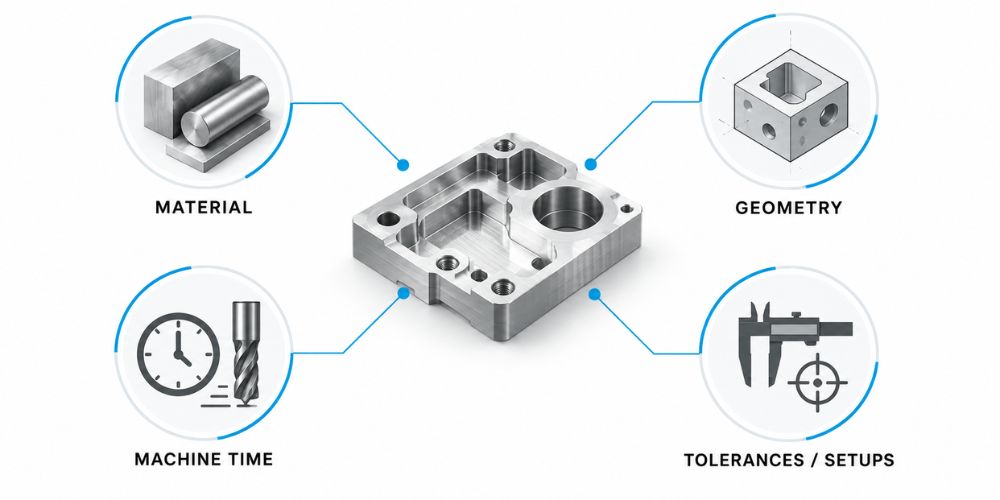
Before cutting cost, you need to know what creates it. CNC prototype pricing is mainly affected by raw material, geometry, machine time, setups, tolerance requirements, inspection, finishing, and quantity.
Here is why this matters. Two parts made from the same aluminum can have very different prices if one requires deep pockets, thin walls, hard-to-reach features, and several setups.
Published CNC machining design guidelines give us some useful reference points. For example, Protolabs flags walls at 0.020 in. (0.51 mm) or below as thin-wall geometry and notes that these features can be more prone to breakage, flex, or warping during machining.
| Published CNC Design Example | Reference Value | Why It Can Affect Cost |
| General machining tolerance example | ±0.005 in. or ±0.13 mm | Going tighter may require more process control and inspection |
| Thin-wall warning | 0.020 in. or 0.51 mm and below | Thin features may flex, warp, or break during machining |
| Milling depth example | Up to 2 in. or 50.8 mm from either side | Deep features can require longer tools and more machining |
| Internal corner example | 12 mm cutter leaves about a 6 mm radius | A smaller corner radius requires a smaller cutter or another machining step |
The 12 mm cutter example comes from Autodesk’s machining guidance. A 12 mm flat end mill naturally leaves a 6 mm radius in an internal corner, which shows why sharp internal geometry can require extra work.
A useful question: What does this prototype need to prove?
If a feature does not support that test, ask whether you need to machine it yet.
2. Simplify the Part Design
Part complexity has a direct effect on machine time. A simpler part usually needs fewer tools, fewer setups, and less cutter movement.
That does not mean making your product basic. It means separating necessary product features from details that can wait until a later prototype.
- Remove Unnecessary Features: Decorative grooves, complex contours, logos, and small details can add machining time without helping an early engineering test. Remove features that do not affect fit, function, assembly, or the purpose of the sample.
- Avoid Deep Pockets: Deep cavities may require longer tools and several machining passes. Deep, narrow pockets can also increase vibration risk and make it harder to maintain the desired surface quality.
- Use Practical Internal Radii: CNC cutters are round, so milled internal corners naturally have a radius. Protolabs notes that square internal corners may require very small tools or another process such as EDM, while internal fillets are much more CNC-friendly.
- Keep Tool Access Simple: A cutter needs physical access to the feature you want to machine. Hard-to-reach surfaces can mean another setup, a different cutter, or multi-axis machining.
At MachMaster, we review CAD files before production and provide DFM feedback on features that may add unnecessary machining work. If you want another set of engineering eyes on your design, you can upload your CAD files for a manufacturing review before committing to machining.
3. Choose Cost-Effective Materials
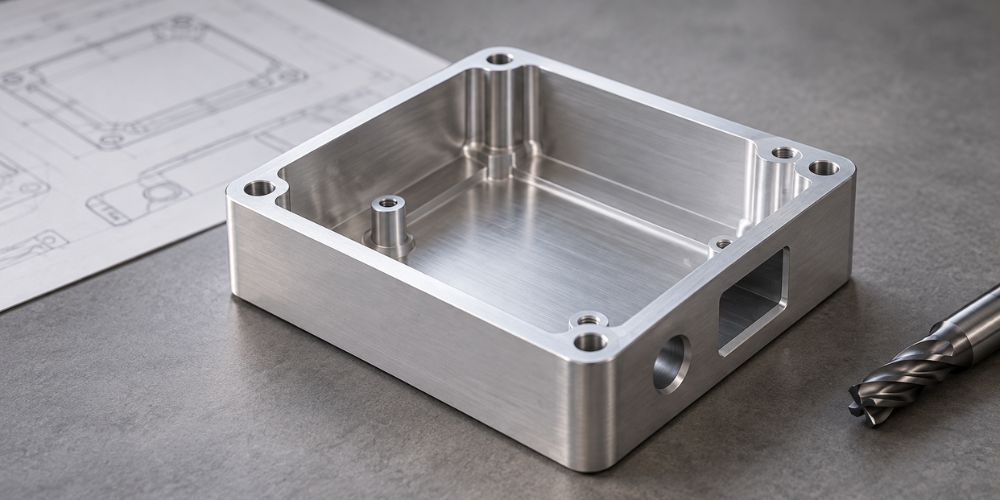
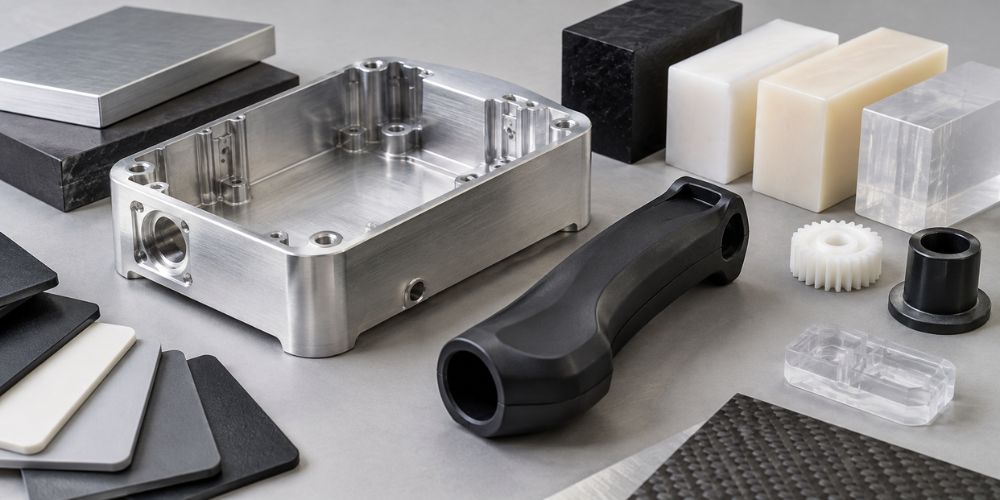
Material choice affects more than the price of the raw block. It can also affect cutting speed, tool wear, stability during machining, and the finishing processes available afterward.
So, do you really need the final production material for prototype number one? Often, the answer depends on what you are testing.
- Match Material to the Test: If you are testing strength, heat resistance, or final product performance, the specified production material may matter. If you only need to check dimensions and assembly, a more economical machinable material may do the job.
- Use Common CNC Materials: Aluminum and common engineering plastics are widely available CNC options. Protolabs, for example, lists materials including aluminum, ABS, acetal, nylon, PEEK, polycarbonate, POM, stainless steel, brass, copper, and titanium in its CNC milling material range.
- Save Final Materials for Later Stages: An early prototype is often there to expose geometry or assembly problems. Once those issues are settled, you can move to the final production material for performance testing.
- Compare Material Alternatives: If two materials can meet the same test requirement, ask for both to be quoted. That gives you a real cost comparison instead of choosing by habit.
I have seen teams spend too much on material because they chose it before defining the test. Start with the question, What property am I actually measuring?
That usually makes the material decision much clearer.
4. Avoid Overly Tight Tolerances
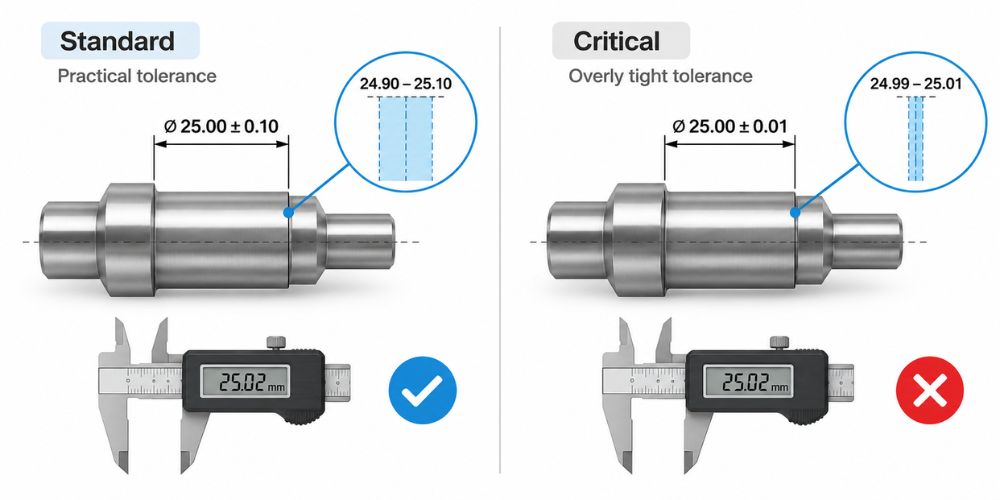
Tighter is not automatically better. A tolerance should come from the functional needs of the part.
Xometry’s CNC tolerance guidance explains that tighter tolerances can increase cost through additional fixturing, slower machining, greater scrap risk, and more specialized inspection. It also notes that sufficiently tight requirements can change the machining process used for a feature.
Here are some published tolerance benchmarks for context:
| Tolerance Example | Published Value | Practical Use |
| Standard metal CNC example | ±0.005 in. (±0.127 mm) | General dimensions without a tighter callout |
| Standard plastic CNC example | ±0.010 in. (±0.254 mm) | General plastic dimensions |
| Tighter tolerance example | ±0.002 in. (±0.0508 mm) | Features requiring closer dimensional control |
| Very tight dimensions | Application-specific | May require slower machining, added inspection, grinding, lapping, or another process |
These figures are published service benchmarks rather than universal CNC standards. Your material, geometry, machine, inspection method, and part function still determine what is practical.
Apply tighter requirements to bearing positions, sealing surfaces, sliding fits, mating features, or other dimensions that directly affect function. A cosmetic outside surface may not need the same dimensional control.
At MachMaster, we can machine critical features to ±0.01 mm where the application calls for that level of precision. We also support standard tolerance approaches for dimensions that do not need such tight control, so you can put the machining effort where it actually matters. (Review our CNC milling capabilities)
Ask yourself: Does this dimension really need to be ±0.01 mm?
If the answer is no, relaxing it may make the part easier and less expensive to produce.
5. Reduce CNC Machining Time
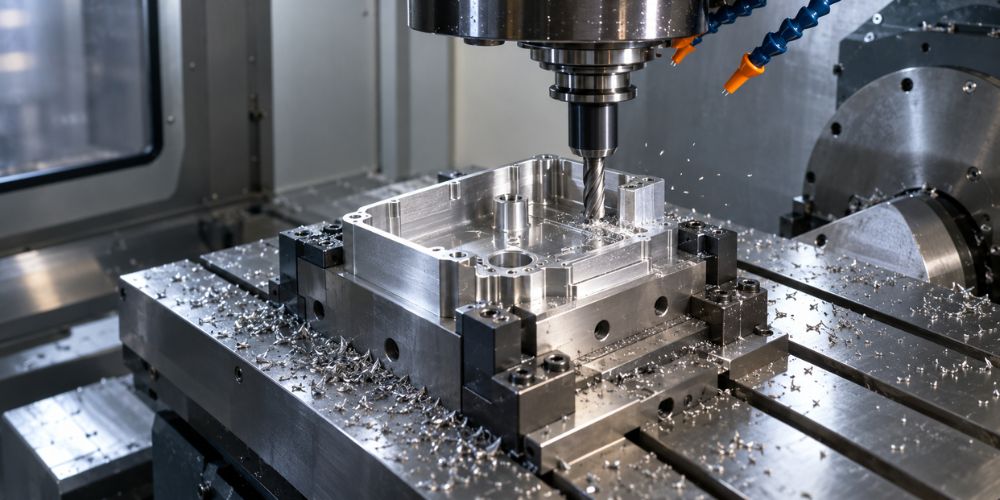
Machine time is one of the main contributors to prototype pricing. Every additional orientation, cutter change, difficult feature, or large volume of removed material adds work.
The goal is simple. Help the machinist reach more of the part with fewer operations.
- Reduce Machine Setups: Each new orientation can require repositioning, fixturing, and alignment. If several features can be reached from the same setup, production becomes more efficient.
- Limit Tool Changes: Different hole sizes, tiny radii, and specialized details may require separate tools. Reusing standard feature sizes can reduce the number of cutters needed.
- Avoid Extremely Thin Walls: Thin sections can deflect or vibrate while material is being removed. As noted earlier, one published DFM guideline flags wall thicknesses at 0.020 in. (0.51 mm) or below as a machining concern.
- Reduce Unnecessary Material Removal: A large solid block with a deep cavity means the machine has to spend time cutting away material you never wanted in the final part. Review the starting stock and internal geometry before machining begins.
What if the geometry really is complex?
Then changing the machining strategy may be better than simplifying a functional feature. Our CNC milling capability includes 3-axis, 4-axis, and 5-axis machining, which gives you different options for accessing multi-sided and complex parts.
6. Control Surface Finishing Costs
Consumer products often need to look and feel good, but your first engineering prototype may not need the final cosmetic finish. That is an easy place to spend money too early.
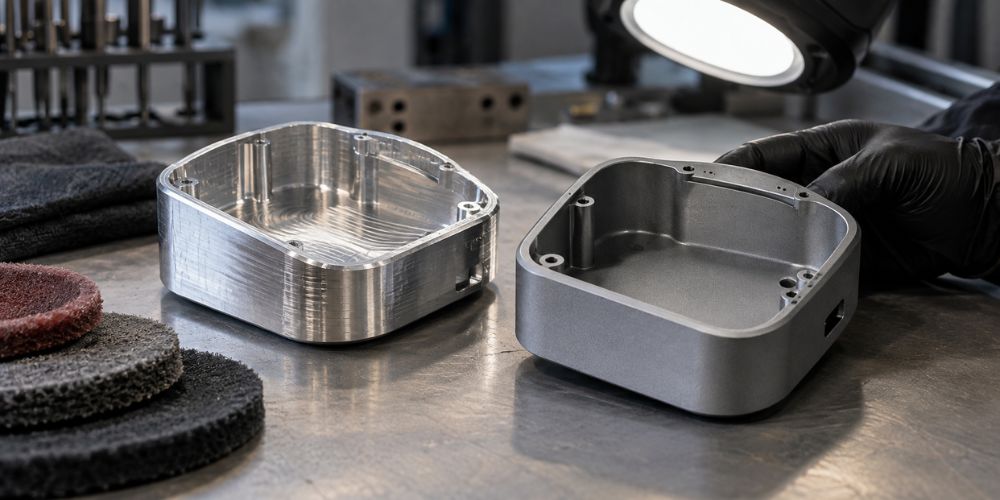
For fit and function testing, an as-machined finish may be enough. Published CNC service guidance notes that machined plastic parts can be left with visible tool marks, while metal parts can receive additional treatments such as bead blasting, anodizing, chromate plating, or powder coating.
On the other hand, a sales sample or appearance prototype may need polishing, blasting, anodizing, plating, or painting because surface quality is part of what you are testing.
The practical approach: match the finish to the prototype stage.
Do not pay for premium cosmetics on revision one if revision two may have a different housing shape.
7. Order the Right Prototype Quantity
Higher quantity can spread programming and setup work across more parts, but that does not mean you should order a large batch immediately. A design change can quickly turn unused prototypes into wasted budget.
Plan your testing first. Then work backward to the number of samples you actually need.
- Plan Your Tests First: Count the units required for dimensional inspection, assembly checks, functional tests, presentations, and destructive testing. Give every prototype a job before ordering it.
- Compare Quantity Pricing: Ask for price points at quantities such as 1, 5, 10, and 20 units. This lets you see how setup and programming costs affect the per-part price as volume changes.
- Avoid Large Batches Too Early: Consumer product designs often change after the first physical test. Keep early orders practical until the main geometry and functional decisions have been confirmed.
Is 20 pieces cheaper per part than five? It may be.
But if you redesign the product after testing piece number two, the lower unit price does not help much.
8. Use DFM Review Before Machining
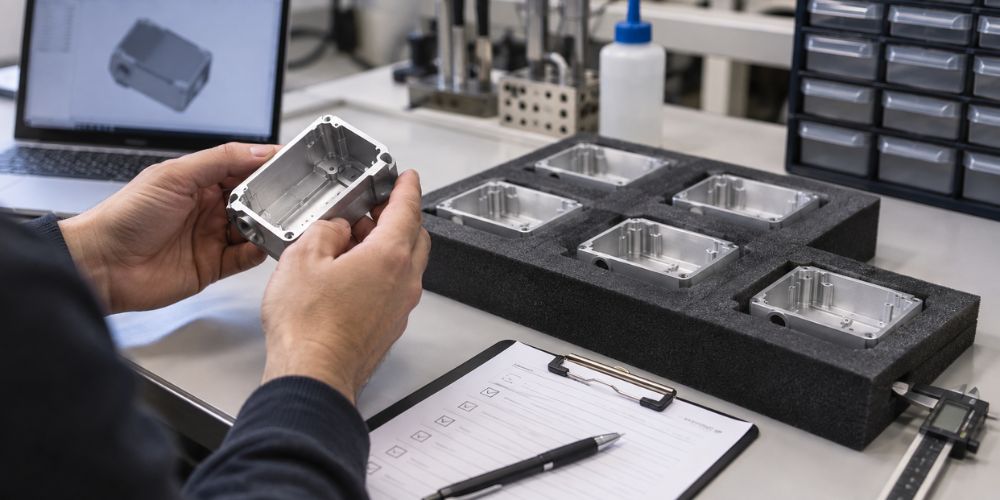
DFM gives you a chance to fix expensive design choices while they are still lines and surfaces in a CAD file. Once material is cut, changing your mind costs much more.
A useful review looks at geometry, tool access, wall thickness, internal corners, tolerances, material, finishing, and the manufacturing route after prototyping. Both Protolabs and Xometry publish DFM guidance aimed at improving manufacturability and reducing machining time or cost.
Find Expensive Features Early
Deep cavities, narrow slots, tiny internal corners, thin walls, and inaccessible surfaces should be reviewed before production. These details may call for smaller tools, more setups, slower feeds, or another machining process.
Can the feature be larger, shallower, thicker, or easier to reach? If yes, a small CAD change may remove hours of unnecessary machining across a production run.
I often see this issue with early consumer housings. Designers naturally focus on the final shape, while a machinist sees every cutter movement needed to create it.
Review Tolerances and Materials
DFM should also ask whether the chosen material and tolerance actually support the purpose of the prototype. If a dimension does not control fit or function, it may not need a tight tolerance.
Material works the same way. If an economical material can answer the engineering question today, the final production grade can wait for a later validation sample.
This is especially important with plastics. Xometry notes that materials such as nylon, HDPE, and PEEK may behave differently from steel or aluminum when trying to hold tight tolerances because softer materials can flex during cutting.
Plan for the Next Production Stage
Your prototype should help you make the next manufacturing decision. A consumer product may move from one-off CNC parts into small-batch machining, injection molding, sheet metal fabrication, or another production method.
At MachMaster, we support CNC machining, plastic injection molding, sheet metal fabrication, and surface finishing, so we can review how an early prototype may connect with the later manufacturing route. Our CNC operation also supports 3-axis, 4-axis, and 5-axis milling for prototype and production work.
If your drawings are ready, submit your 2D drawings or 3D CAD files for DFM feedback. The project form accepts formats including STEP, SLDPRT, IGES, DWG, PDF, and ZIP.
Conclusion
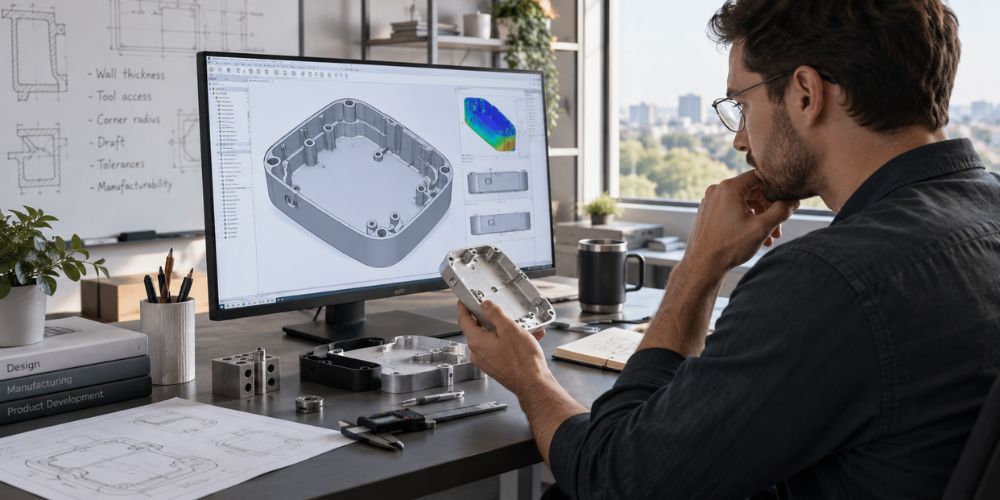
Reducing CNC prototype cost starts with better decisions before machining begins. Keep the design practical, use suitable materials and tolerances, and spend only on features that support your testing goals.
A good DFM review can also help you catch expensive details before they reach production. This can save both time and money while giving you a prototype that still meets your functional needs.
If you already have a 2D drawing or 3D model, MachMaster can help review your design and suggest practical manufacturing options. Submit your CNC prototype files to MachMaster to get started with a DFM review and project quote.
Dive Deeper Into Our Resources
Looking for more product options? Take a look at our carefully chosen selections to find what suits your needs best:
If you’re looking for more insights, we’ve put together a list of helpful articles that you might enjoy:
- 10 Leading Metal CNC Machining Manufacturers for Custom Industrial Components
- ABS vs ASA for CNC Machined Parts: Machinability, Durability and Cost
Still haven’t found what you’re looking for? Don’t hesitate to contact us. We’re available around the clock to assist you.