
When I first opened my CNC shop, I thought 2-3 gauges were enough. I was wrong.
It didn’t take long to find out.
One of my early jobs failed inspection because I missed a slightly out-of-round hole. That tiny mistake cost me more than money. It shook my confidence. I remember thinking, “How did I miss something so basic?”
I’m sharing this with you because I run batches under tight deadlines, and dealt with customers who expected perfect parts every time.
If you’re here, you’re probably trying to figure out what gauges really matter. Maybe you’re a business owner trying to keep quality up. Or a designer who wants parts to come out right.
This article will lay it all out in simple terms. I’ll walk you through the must-have gauges for any CNC shop, explain what each one does, and share a few stories from my own shop floor to keep it real.
By the end, you’ll leave with a clear, solid understanding of the gauges that protect your parts and your reputation.
Let’s start!
Quick Guide
Let’s start with a high-level view. This table gives you a quick feel for what each gauge does and why it matters.
| Gauge Type | What It Measures | Why It’s Important |
| Height Gauge | Vertical height from a reference surface | Ensures accurate part height, pocket depth, and step measurements |
| Bore Gauge | Internal hole diameters | Confirms fit for press-fit, slip-fit, or clearance-critical bores |
| Thread Plug Gauge | Internal thread size and pitch | Go/No-Go check for thread accuracy and tolerance inside tapped holes |
| Feeler Gauge | Gap or clearance between surfaces | Identifies spacing issues during setup, alignment, or inspection |
| Dial Indicator | Small displacements or runout | Detects part misalignment, machine movement, and setup errors |
| Thread Ring Gauge | External thread size and pitch | Verifies bolts or shafts meet thread tolerances before assembly |
| Gauge Blocks (Slip Gauges) | Known, precise length references | Calibrate other tools or set machine offsets with certified accuracy |
| Surface Roughness Gauge | Surface texture (Ra, Rz values) | Confirms surface finish quality for functional or cosmetic standards |
| Angle Gauge (Bevel Protractor) | Angles and chamfer measurements | Ensures angular accuracy for features like bevels, tapers, or slots |
Let’s start with a high-level view. This table gives you a quick feel for what each gauge does and why it matters.
1. Height Gauges
A height gauge is a precision tool that measures vertical distances from a flat base, usually a granite plate. It’s how machinists check part heights, step depths, and the exact position of holes or slots.
Unlike handheld tools that can tilt or slip, a height gauge stays stable. That means more reliable results.
I didn’t fully appreciate its value until a batch of parts came back due to slight height mismatches, that’s when a digital height gauge became a core part of my workflow.
Advantages of Having This
- Fewer Rejected Parts. Height gauges catch small errors early, so your orders are more likely to pass inspection the first time.
- Better Fit and Function. You can trust that step heights, slots, and pockets match your design specs. That means assemblies go together smoothly, without surprise tweaks.
- More Predictable Costs. When fewer parts fail checks, you avoid extra charges for rework or rushed remakes.
- Shorter Project Delays. Accurate gauges help keep deliveries on track, so your products launch on time.
- Stronger Quality Records. Shops that use height gauges often keep detailed measurement logs, which makes audits and customer reviews much easier.
Types of Height Gauges
- Vernier Height Gauges: Affordable and reliable, though they require practice for accurate manual reading.
- Dial Height Gauges: Offers visual feedback for quicker reads, ideal if you’re doing the same checks repeatedly.
- Digital Height Gauges: Fast, accurate, and often come with inch/metric conversion, zero setting, and even data output.
- Height Gauges with Indicators: Combine a test or dial indicator with a base, allowing you to inspect steps, small deviations, and runout effectively.
Seeing any of these gauges on a shop’s inspection bench is a good sign. It means they’re set up to double-check critical heights, keep your parts true to your drawings, and protect you from bad fits or expensive do-overs.
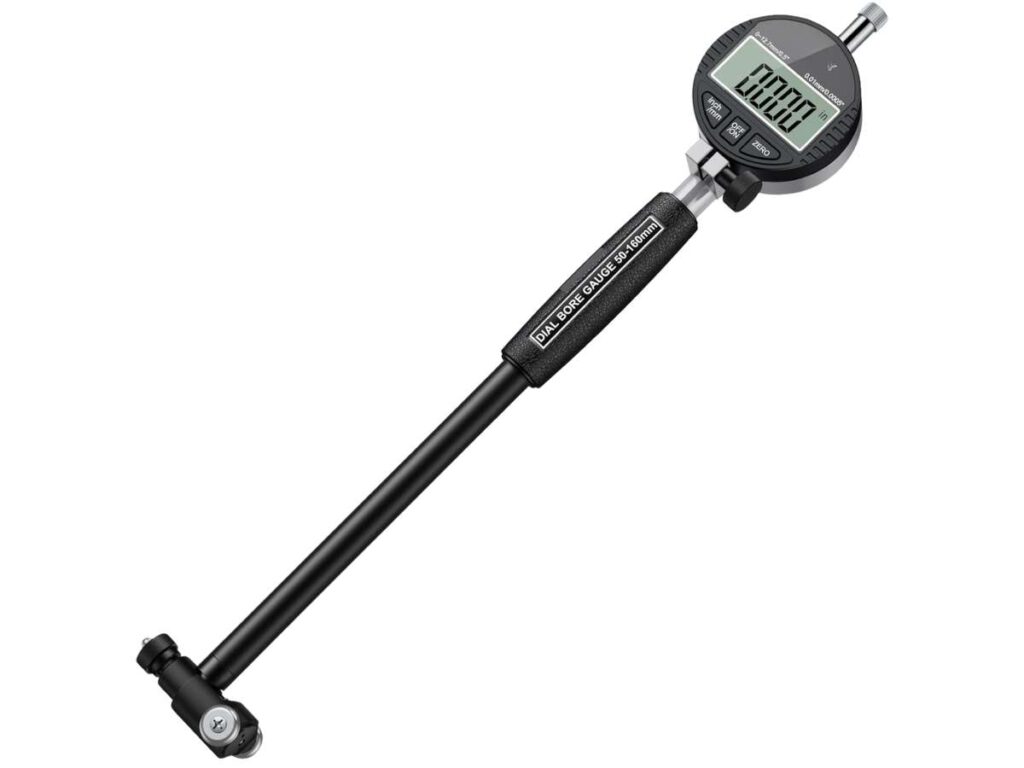
2. Bore Gauges
A bore gauge is what checks the inside diameter of holes, cylinders, or tubes. It’s critical when tolerances are tight and the fit simply can’t be wrong. This is the tool a shop uses when calipers just don’t cut it.
I learned this lesson early. One of my first jobs needed aluminum housings. I checked every bore with calipers they seemed fine. A week later, the customer called. Their shafts wouldn’t fit. Those bores were just hair too small, but it was enough to cause big problems. That’s when I started using a dial bore gauge on every bore that mattered.
Advantages of Having This
- Accurate Internal Measurements. You get precise diameter checks, making sure press, slip, or interference fits work exactly as planned.
- Out-of-Round Detection. Bore gauges spot taper, ovality, or bell-mouthing problems calipers and micrometers often miss.
- Access to Tight Spaces. These tools reach into blind bores or deep pockets where other gauges can’t go.
- Reliable Quality Checks. They speed up in-process and final inspections, cutting down on the risk of expensive rework.
- Consistent Fit Across Batches. Bore gauges keep variation low on repeat jobs, so every part fits right without surprises.
Types of Bore Gauges
- Telescoping Bore Gauges: Basic and budget-friendly. They expand in the bore, then get measured with a micrometer.
- Dial Bore Gauges: Give clear, repeatable readings with a dial, great for tighter tolerances.
- Digital Bore Gauges: Offer fast, electronic readouts and often plug into data systems for easy reports.
- Small Hole Gauges: Perfect for tiny bores that other tools can’t reach. Usually paired with a micrometer for final checks.
When your supplier uses these, it’s a good sign. It means your holes get measured right so your parts fit, costs stay down, and your builds run smoothly.
At MachMaster, they make sure they never run out of these gauges. These are a staple in their daily production, helping catch issues early and keep every hole within specs every time.
3. Thread Plug Gauges
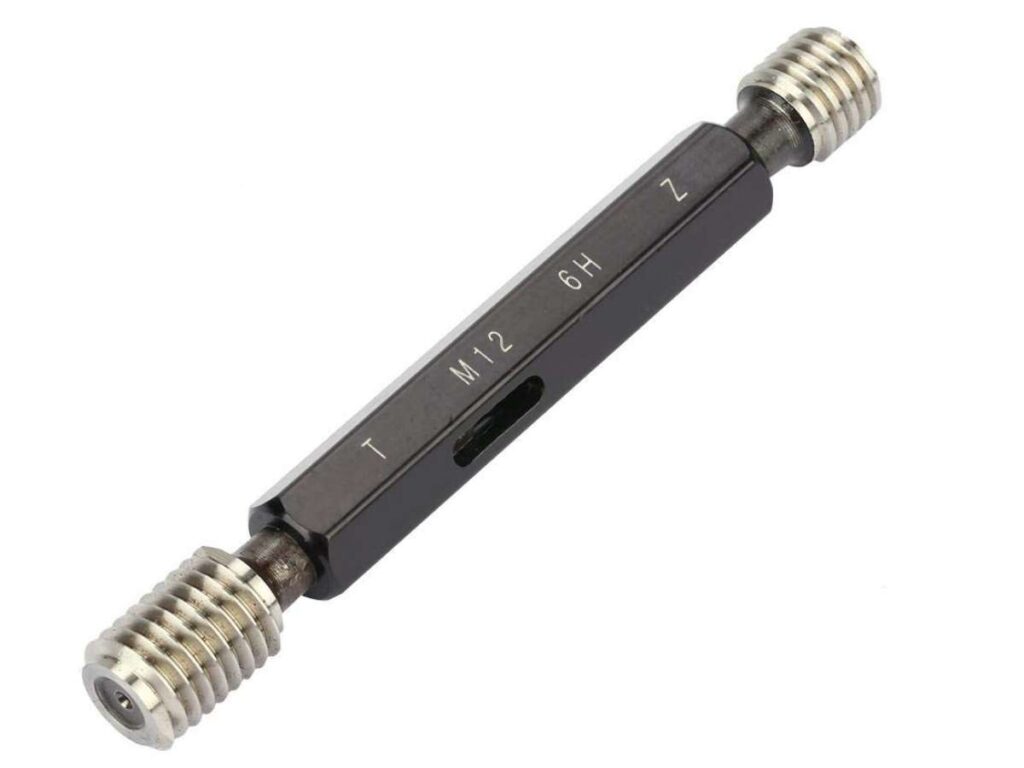
A thread plug gauge is a handheld tool that checks if an internal threaded hole has the right pitch and size. It’s a fast, reliable way to confirm a thread is in tolerance, no guesswork needed.
If I’d used a proper thread plug gauge from the start, it would’ve caught those bad threads right away. That mistake taught me not to rely on bolts alone for checking threads, they don’t tell the whole story.
Advantages of Having This
- Clear Go/No-Go Checks. Threads are tested with a simple pass/fail method. The “Go” side should fit easily, the “No-Go” side should not.
- No Guessing on Pitch or Size. These gauges remove doubt when checking fine or blind holes, where a thread must be perfect to avoid failures later.
- Faster Inspections. They speed up checks on big runs without needing special setups or thread micrometers.
- Catches Hidden Errors. Finds undersized threads, dull taps, or tiny burrs before they turn into bigger problems down the line.
- Avoids Assembly Headaches. Stops binding, stripping, or early wear when it’s time to install or torque fasteners in the field.
Types of Thread Plug Gauges
- Go/No-Go Thread Plug Gauges: The most common type. One end checks if a thread passes, the other ensures it stops where it should.
- Adjustable Thread Plug Gauges: Good for custom or odd thread profiles that fixed gauges can’t handle.
- Taperlock Thread Plug Gauges: Use a reusable handle with swap-out gauge ends. Saves time on big volume work.
- Metric and Unified (UNC/UNF) Gauges: Available for all standard thread types, so you’re covered whether the design calls for metric or imperial.
Thread plug gauges may look simple, but they catch problems early saving you from rework, complaints, or costly delays. If your parts involve tapped holes, this is one tool you want your shop to use to get it right the first time.
4. Feeler Gauges
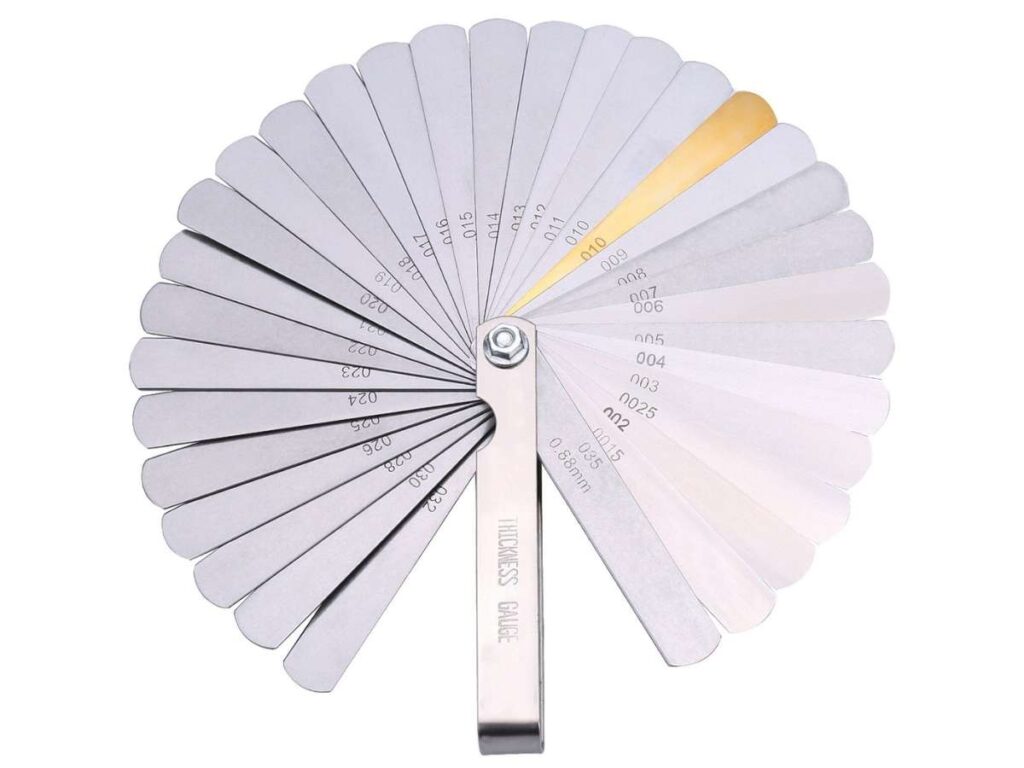
A feeler gauge is a set of thin, flat metal blades, each marked with precise thickness. It’s used to measure the gap or clearance between two surfaces, often in machine setups, alignments, or when checking if a part stays within tight tolerances.
In precision machining, even a tiny space of 0.01 mm matters. When setups feel off, a feeler gauge often answers the question no other tool can. It shows if two surfaces are touching, too far apart, or perfectly spaced.
Advantages of Having This
- Fewer Hidden Problems. Shops that use feeler gauges catch small spacing issues early, so your parts avoid surface flaws and chatter.
- Better Overall Fit. Exact gaps mean assemblies go together the way they should without last-minute fixes or forced adjustments.
- Lower Costs Down the Road. Early checks keep machines aligned and tools cutting clean. That means fewer reworks or surprise repairs that drive up your costs.
- Shorter Lead Times. Proper setups from the start mean parts move through production faster and your project stays on schedule.
- Stronger Quality Proof. Shops that rely on feeler gauges often keep detailed setup notes. That helps during audits or customer reviews, protecting your brand and reputation.
Types of Feeler Gauges
- Straight Feeler Gauges: Flat blades in a folding set. Good for most checks and easy to carry.
- Angled or Offset Feeler Gauges: Blades with bends that reach under machine ways or inside tight spots.
- Wire-Type Feeler Gauges: Small round wires for checking curved or cylindrical gaps where flat blades can’t go.
- Metric and Inch Sets: Available in both units so your shop matches specs no matter where your drawings come from.
It’s often not the big errors that cause trouble, it’s the small ones that slip by. If the shop you choose uses feeler gauges, it means they’re set up to spot those problems early and keep your parts right where they need to be.
5. Dial Indicators (Test Indicators)
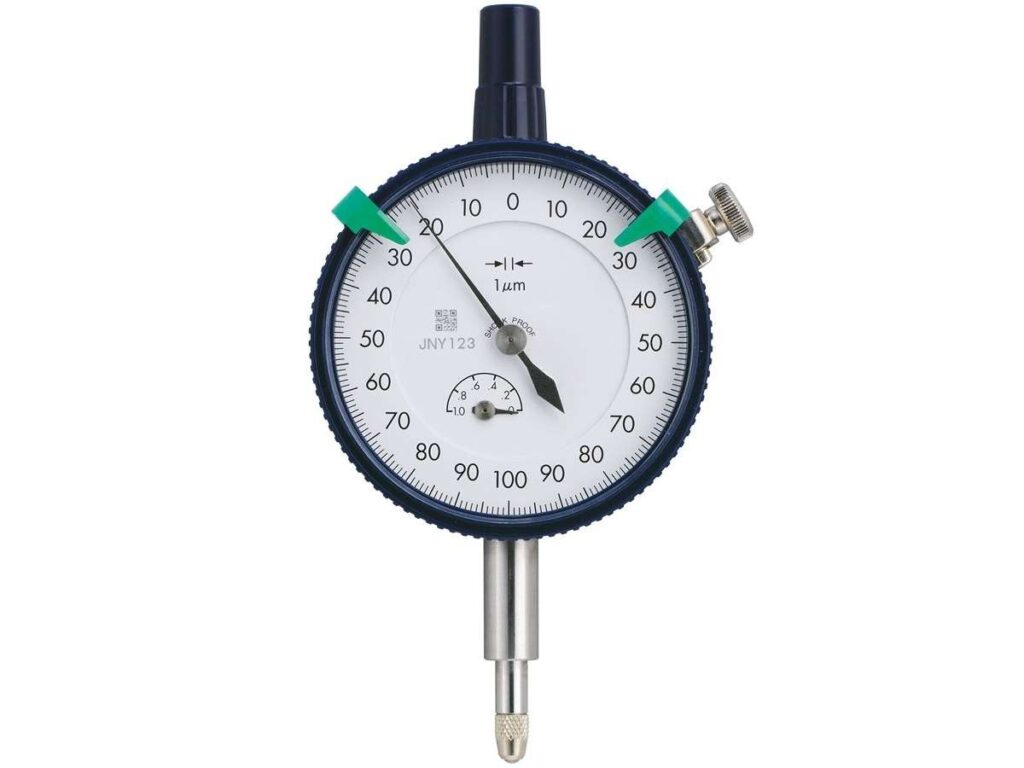
I’ve leaned on dial indicators more times than I can count. They’ve saved me from sending out parts with hidden wobbles or surfaces just slightly off. Even a tiny misalignment like 0.01 mm may mess up the finish, wear out a tool too fast, or make your part fail inspection.
Advantages of Having This
- Better Alignment and Runout Checks. They measure how much a surface or spindle wobbles. That keeps shafts, faces, and rotary parts in line so you get smoother finishes and longer tool life.
- Confirms Nothing Shifted. Shows if a part or fixture moved during setup or machining, so your cuts stay where they’re supposed to.
- Faster, More Accurate Setups. Helps square vises, align rotary tables, and set up tooling blocks with tight precision. That means fewer surprises later.
- Repeatable Parts, Every Time. Lets the shop check that parts return to the same spot on jigs for high-volume or tight-tolerance runs.
- Spots Early Machine Wear. Reveals backlash or uneven travel before it turns into bigger problems that could delay your project.
Types of Dial Indicators
Different jobs call for different styles. These are the most common you’ll find in a well-equipped shop:
- Standard Dial Indicators: Measure straight up and down. Great for checking flatness, part heights, or runout on shafts and faces.
- Test Indicators (Lever Type): Use a small pivoting lever to read side-to-side changes. Handy in tight spaces or angled setups.
- Digital Dial Indicators: Give clear electronic readouts that are easy to see even in low light and often track tiny shifts for logging.
- Long-Range Indicators: Built for measuring across bigger distances, like machine beds, large surface plates, or heavy castings.
Watching that needle move might seem like a small thing. But it often catches a bad part or a problem before it grows. When a shop uses dial indicators, it means they care about holding tight tolerances and keeping your parts true to spec.
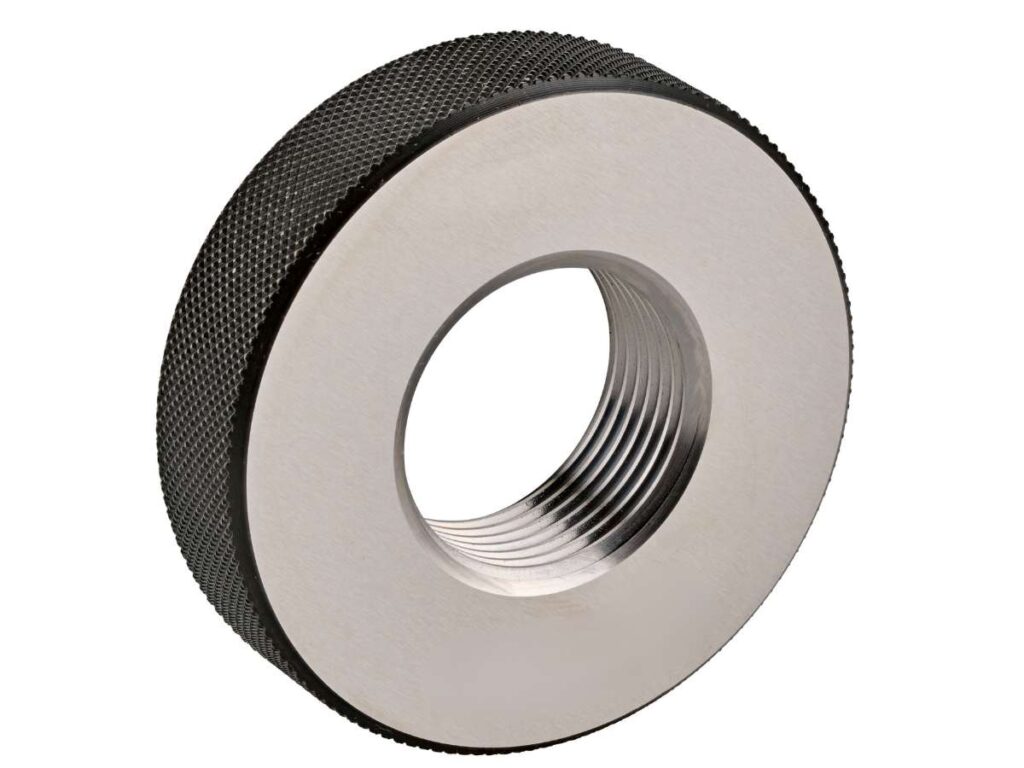
6. Thread Ring Gauge
In my early days, I used to test threads by simply screwing the part into a mating nut. It felt okay. But more than once, those parts jammed or stripped when it came time for final assembly. That’s when thread ring gauges became a permanent part of the shop. They give a clear yes or no and there’s no arguing with a gauge.
It’s a tool that doesn’t lie. Either the thread fits, or it doesn’t.
A thread ring gauge checks the external threads on parts like bolts, shafts, or studs. It works like a thread plug gauge, just in reverse. Instead of checking inside a hole, it makes sure the outside threads meet pitch and size standards.
Advantages of Having This
- Quick Pass/Fail Checks. Confirms thread quality with a Go/No-Go method. If the Go ring fits and the No-Go doesn’t, your parts pass with no doubt.
- Stops Hidden Fit Problems. Catches pitch errors, oversized threads, or tool wear, the issues that only show up later when a bolt jams or a nut strips.
- Speeds Up Inspections. Saves time on high-volume jobs, so your orders move faster without needing pitch micrometers on every single part.
- More Reliable Assembly. Helps make sure parts will thread together smoothly during final builds, cutting down on field complaints or costly rework.
- Keeps an Eye on Tool Life. Flags when thread quality starts drifting, often the first sign that a tap or insert is wearing out.
Types of Thread Ring Gauges
- Go/No-Go Ring Gauges: The most common. One ring checks the minimum size, the other ensures the max limit, simple and fast.
- Adjustable Thread Ring Gauges: Have slots and set screws to fine-tune the size. Handy for calibration or odd thread profiles.
- Taperlock Thread Ring Gauges: Use replaceable inserts with a reusable handle. Great for shops that run lots of threads and need quick swaps.
- Metric and Unified Types: Available for both metric (M-series) and inch (UNC/UNF) specs, so they line up with your exact drawings.
A thread ring gauge doesn’t just check threads it protects everything that comes next. Whether it’s a bolt for heavy machinery or a custom shaft in a precise assembly, knowing those threads are right before parts leave the shop is the kind of peace of mind that pays off every time.
At MachMaster, this gauge has always been part of their production process. They rely on it every day to make sure threads meet spec before parts move to the next stage.
7. Gauge Blocks (Slip Gauges)
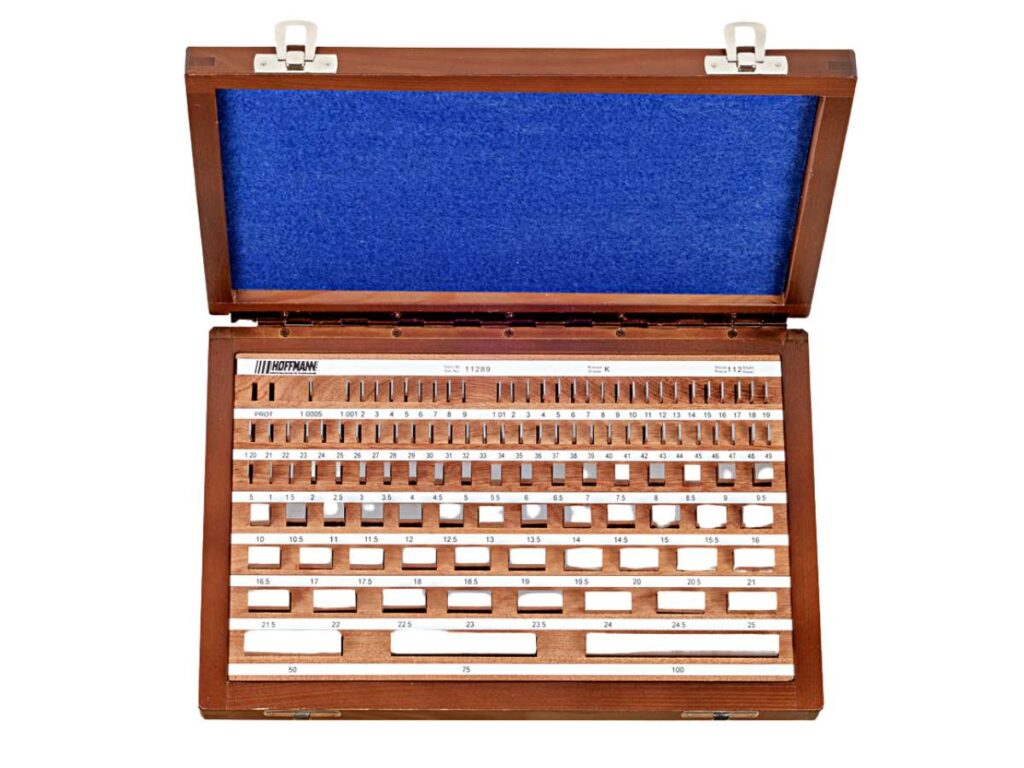
Gauge blocks, also called slip gauges, are hardened, precision-ground blocks used as a reference standard for measurement. They’re made to extremely tight tolerances and can be stacked together (or “wrung”) to create exact lengths.
The first time I held a set, I honestly didn’t think much of them. Just little steel rectangles. But over time, I learned what they really stand for, trust in every dimension. In calibration, setups, and machine checks, these blocks don’t just give numbers. They set the standard.
Advantages of Having This
- Trusted Reference for All Measurements. Used to check and calibrate tools like micrometers, calipers, and dial indicators, so your parts get measured right every time.
- Exact Lengths, Built on Demand. Blocks stack together to create nearly any measurement, matching your critical specs without guesswork.
- Better Machine Setups. They help set zero points or verify CNC axis positions, so parts start in the right spot and stay on spec.
- Stable Over the Long Haul. Made from steel, ceramic, or carbide, materials that fight wear, heat, and distortion. Your shop’s measurements stay consistent over years, not just days.
- Trusted in Tight-Tolerance Work. Often found in shops serving aerospace, mold, or medical jobs where even the smallest error costs big.
Types of Gauge Blocks
- Steel Gauge Blocks: The most common. Affordable, hard, and tough enough for general shop work.
- Ceramic Gauge Blocks: Resist rust and thermal growth, making them great for humid shops or long-term checks.
- Carbide Gauge Blocks: Extremely resistant to wear, perfect for inspection rooms or shops that calibrate tools every day.
- Grade Classifications: Available in different grades (like Grade 2, 1, 0, or calibration grade). The tighter the grade, the closer the accuracy.
Gauge blocks aren’t flashy. But they’re the foundation of accuracy. If a shop starts having doubts about measurements, these are the tools that bring everything back to spec, protecting your parts, your schedule, and your reputation.
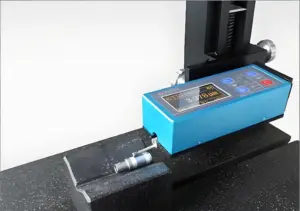
8. Surface Roughness Gauge
There was a time I finished a batch of aluminum parts that looked perfect. Clean lines, no flaws you could see. But the customer rejected them. The surface was too rough for their needs. That was a hard lesson, one that showed me surface finish isn’t always something your eye can catch.
That’s when I started using a roughness gauge. Now, I trust numbers not just appearances.
Advantages of Having This
- Exact Surface Finish Checks. Gives a real reading, like Ra (average roughness), so your parts match the specs on your prints, not just what looks okay by eye.
- Finds Problems Early. Spots tool marks, chatter, or wear patterns that could affect how parts perform, even if they’re invisible.
- Better Quality Records. Creates repeatable, documented data for final inspections or customer audits. A big deal for high-spec or aerospace jobs.
- Smarter Tooling Decisions. Shows when a cutter’s wearing out or cutting too rough, helping shops adjust before problems spread across more parts.
- More Consistent Batches. Tracks finish over time, so high-volume orders meet the same texture or friction needs every run.
Types of Surface Roughness Gauges
- Portable Roughness Testers: Handheld and easy to move around, great for quick floor checks.
- Stylus-Based Testers: Use a fine point that drags across the surface for better accuracy and repeatability.
- Digital Surface Testers: Show clear digital readings like Ra, Rz, and often store data for reports or trends.
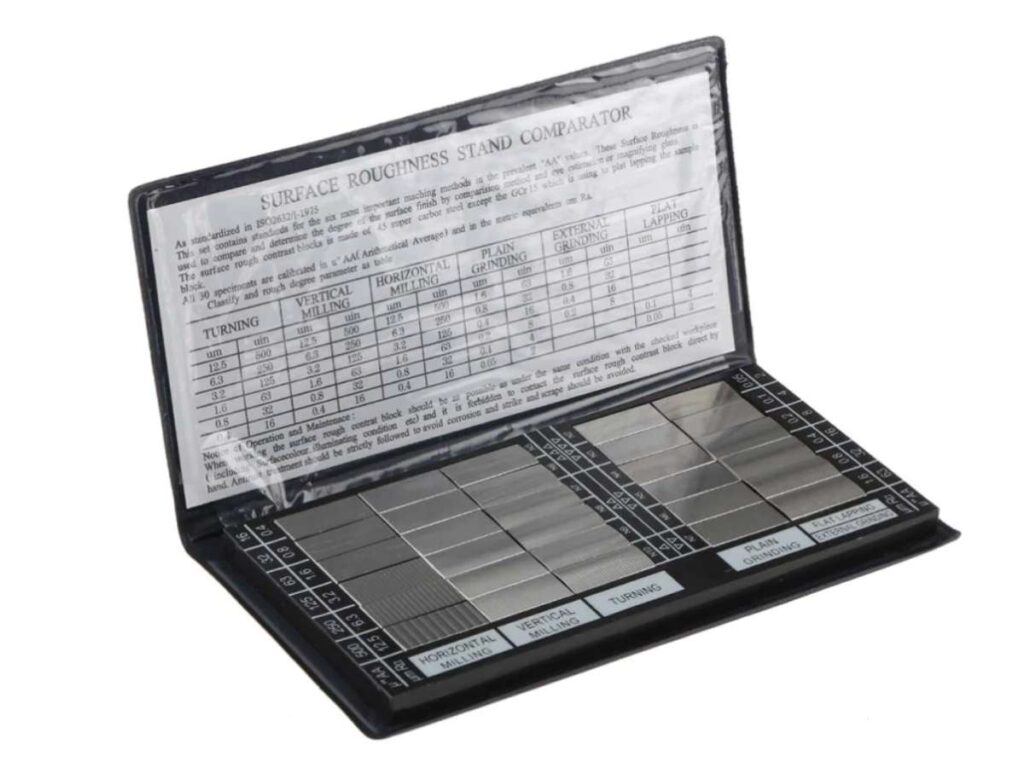
- Comparative Plates (Finish Standards): Not really a gauge, but used to feel or see texture by touch. Helpful for quick shop checks.
A good surface finish isn’t just about looks, it affects how parts wear, seal, and move. When a shop uses a roughness gauge, it means they’re serious about making sure your parts perform the way they’re supposed to, right from the start.
9. Angle Gauges (Bevel Protractors)
Not long ago, I had a job that called for a 45° chamfer. I eyeballed it with a standard square and sent the parts out. Later, I found out the angle was off by nearly 1°. That small mistake cost me time, money, and trust. Since then, angle gauges became part of my routine for any angled cut, no shortcuts.
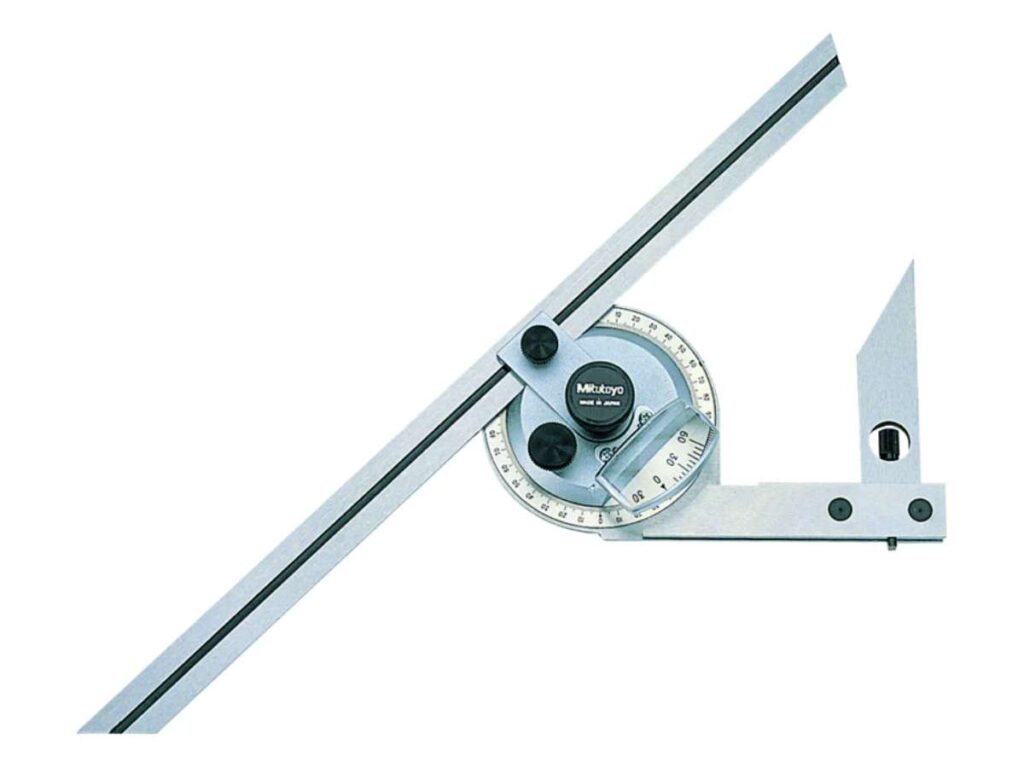
An angle gauge, often called a bevel protractor, is a tool that checks or marks specific angles on machined parts. Whether it’s a chamfer, groove, or angled cut, this tool makes sure the part hits the right degree, not just close enough.
Advantages of Having This
- Confirms Exact Angles. Checks that chamfers, tapers, or angled slots match the drawing, so there’s no “close enough” guesswork.
- Handles Complex Shapes. Important for multi-axis parts with angled faces or tricky features that need tight control.
- Speeds Up Layouts and Setups. Helps mark angles on raw stock or fixtures right away, saving time and cutting down rechecks.
- Prevents Costly Mistakes. Catches wrong angles early so parts aren’t scrapped later on.
- Builds Consistent Quality. Supports solid inspection habits, especially on jobs with tight angular tolerances or GD&T callouts.
Types of Angle Gauges (Bevel Protractors)
Pick your gauge based on how precise the job is and how tight the space on the part:
- Standard Bevel Protractors: Simple mechanical tools with a rotating blade and scale, good for everyday shop checks.
- Vernier Bevel Protractors: Give finer readings, great for quality control or precise layouts.
- Digital Angle Gauges: Provide quick digital readouts, helpful for machine setups or low-light checks.
- Angle Gauge Blocks: Like slip gauges but fixed at set angles, used for tool calibration or inspecting very precise parts.
Some mistakes stand out right away. Others, like being a degree or two , hide until a part fails down the line. A solid angle gauge removes the guessing and brings back confidence in every angled cut. In my shop, it’s one of those tools that proves its worth over and over.
Conclusion
Now you know why these gauges matter.
They’re more than tools, they’re proof your parts get checked right every time.
I once lost a client over a tiny hole out of spec.
I promised never again.
Don’t gamble with your designs. Work with a shop that proves precision, so choose Machmaster.
Contact us today and let’s plan together!