
Have you ever had a CNC sensor housing that looked right on the drawing but failed during assembly or sealing? Small design choices can create bigger problems later.
Start with the operating environment, critical tolerances, sealing method, and surface finish. Getting these right early can reduce rework, delays, and unnecessary costs.
As the Founder & Chief Designer of MachMaster, I have more than 15 years of experience working with precision-machined parts. That hands-on experience has shown me where sensor housing designs often go wrong.
In this guide, you will learn how to choose materials, sealing methods, tolerances, finishes, and the right supplier. The goal is to help you make faster and more confident design and sourcing decisions.
1. Common Materials for Sensor Housings
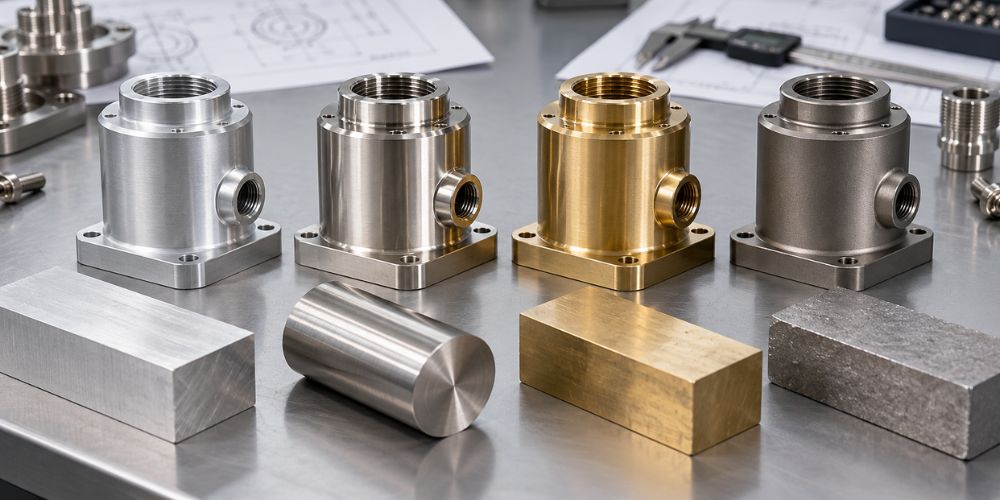
The material affects weight, strength, corrosion resistance, machining cost, thermal behavior, and the final finish. Start with the conditions around the sensor rather than selecting a material because it sounds more premium.
Here is a quick comparison.
| Material | Main Benefits | Common Uses | Cost Level |
| Aluminum 6061 | Lightweight, machinable, good thermal performance | Electronics, automation, general sensors | Low to Medium |
| Aluminum 7075 | Higher strength than common aluminum grades | High-load, weight-sensitive parts | Medium |
| Stainless Steel 304 | Strong, corrosion resistant | Industrial and outdoor sensors | Medium |
| Stainless Steel 316L | Better resistance in marine and chemical environments | Medical, marine, process equipment | Medium to High |
| Brass | Easy to machine, good electrical properties | Connectors, pressure sensors, instruments | Medium |
| Titanium | High strength-to-weight ratio, corrosion resistant | Aerospace and medical applications | High |
| Engineering Plastics | Lightweight, electrically insulating | Electronics and low-load housings | Low to High |
For many commercial projects, aluminum and stainless steel are practical starting points. More specialized materials make sense when temperature, chemical exposure, weight, corrosion, or electrical requirements give you a clear reason to use them.
Do you need stainless steel because it is stronger? Maybe. But if your sensor sits inside clean indoor equipment and weights, aluminum may give you the performance you need with easier machining.
2. How to Choose the Right Housing Material
A material that works well in one sensor may be unnecessary in another. I usually recommend looking at the application first and the material specification second.
Here is why this matters: material choice affects more than raw stock prices. It can change machining time, tooling, finishing requirements, inspection, and even shipping weight.
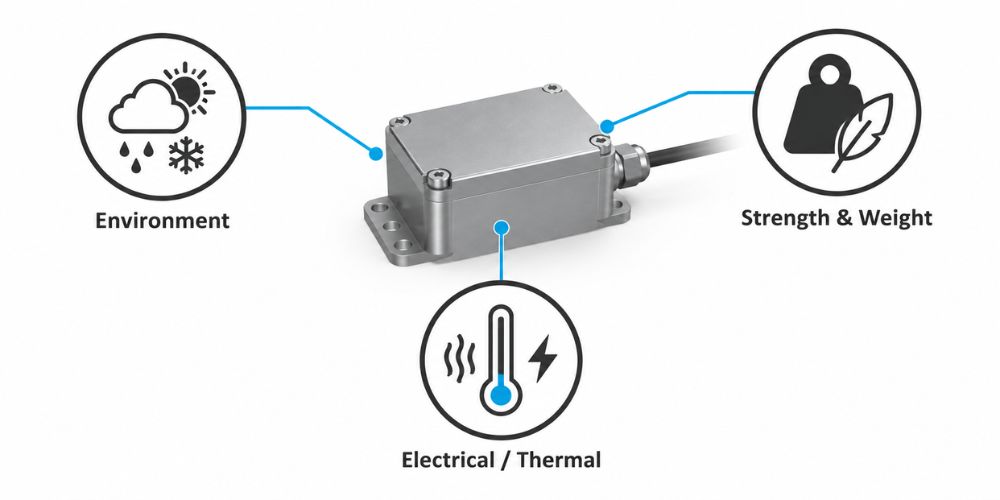
- Operating Environment: Think about water, humidity, salt, chemicals, dirt, and temperature. Stainless steel may suit aggressive environments, while aluminum can work well for many indoor and general industrial applications.
- Strength And Weight: Look at vibration, impact, mounting loads, and total product weight. Aluminum helps reduce weight, while stainless steel can provide greater mechanical strength where extra mass is acceptable.
- Electrical And Thermal Needs: A metal enclosure can help transfer heat and provide electromagnetic shielding. Engineering plastics may make more sense where electrical insulation is a priority.
- Production Cost: Material price is only one part of your total cost. Machining time, tooling wear, finishing, inspection, and scrap risk should also be considered before you select a grade.
3. Sensor Housing Sealing Options
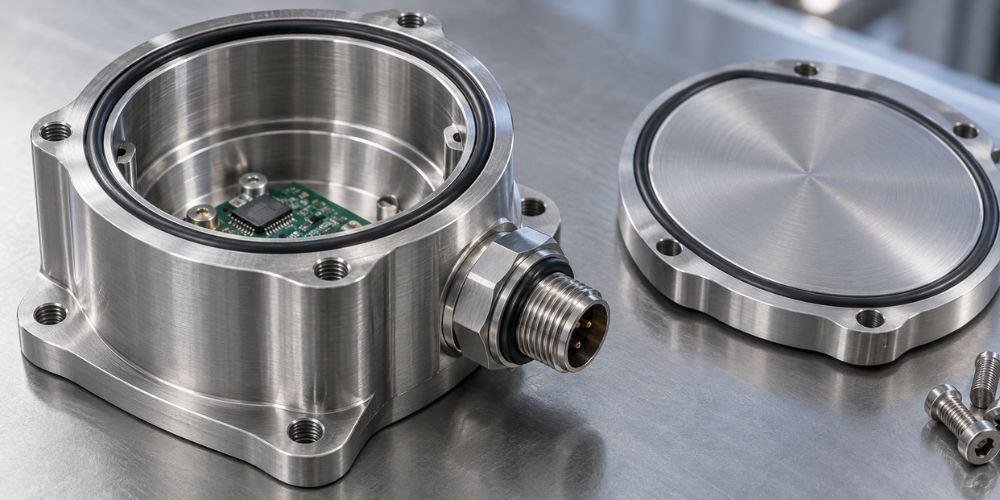
If electronics sit inside the housing, sealing needs to be part of the design from the beginning. Water, dust, oil, cleaning fluids, and other contaminants can turn a small sealing mistake into a field failure.
For electrical enclosures, the IEC 60529 IP rating system provides a common way to describe protection against solids and liquids. For example, the first digit 6 means dust-tight, while liquid protection levels 7 and 8 relate to temporary and continuous immersion conditions respectively.
- O-Ring Seals: O-rings work well around covers, cylindrical joints, ports, and removable sections. Groove width, depth, surface finish, and compression need to work together rather than being specified independently.
- Gaskets and Flat Seals: Gaskets are useful between flat covers, plates, and flanges. Your design needs enough contact area and reasonably consistent compression around the sealing surface.
- Thread and Connector Sealing: Threaded ports and cable connections may require sealing threads, washers, sealants, or dedicated connector seals. Check the connector specification before finalizing the hole, thread, and surrounding geometry.
How much should an O-ring compress? There is no single number for every application.
As one practical reference, the Parker O-Ring Handbook face-seal design chart lists squeeze ranges around 19% to 32% for several common O-ring cross-sections and service cases in that chart. It also specifies different groove and surface requirements depending on the seal size and application, which is why copying an arbitrary groove from another part can be risky.
Precision-machined housings often combine sealing faces, threads, O-ring grooves, bores, and ports in one component. Changing one dimension can affect several of those features at once.
4. CNC Machining Tolerances for Sensor Housings
Tolerance decisions affect machining time, inspection, and cost. The goal is to tighten dimensions where fit, sealing, alignment, or sensor positioning depends on them, rather than placing the same tight tolerance across the entire drawing.
At MachMaster, our CNC machining capability reaches ±0.01 mm on suitable parts and features. The more useful approach, though, is to mark the dimensions that are actually critical to function.
| Feature | What To Control | Why It Matters |
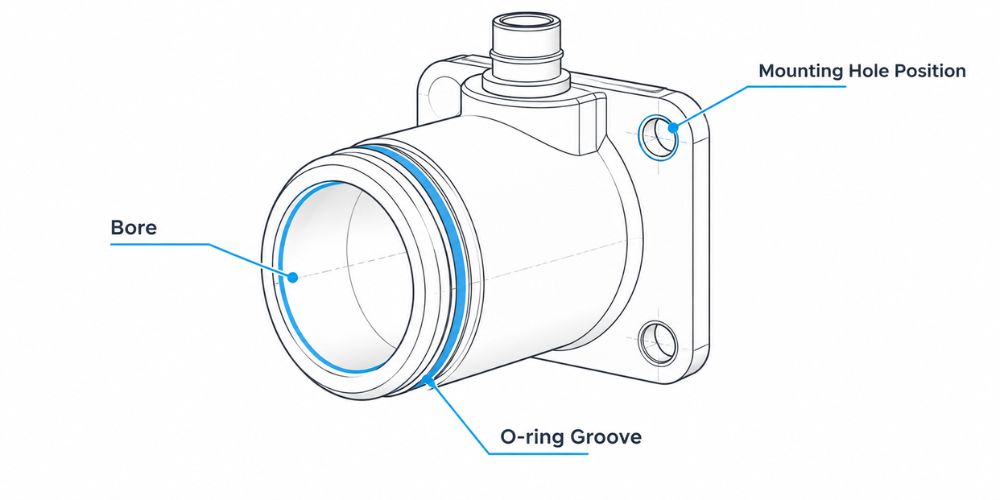
| Sensor bore | Diameter, roundness | Sensor or probe fit |
| O-ring groove | Width, depth, finish | Seal compression |
| Mating face | Flatness, finish | Gasket or cover sealing |
| Press fit | Bore/shaft relationship | Assembly retention |
| Mounting holes | Position | Sensor alignment |
| Threaded ports | Thread form and position | Connector fit |
| Concentric features | Concentricity/runout | Alignment and rotation |
For geometric controls such as form, orientation, location, and runout, ISO 1101:2017 provides the international framework for geometrical tolerancing.
That does not mean every feature needs a GD&T callout. Use tighter controls where the function justifies the added machining and inspection work.
5. Surface Finishes for CNC Sensor Housings
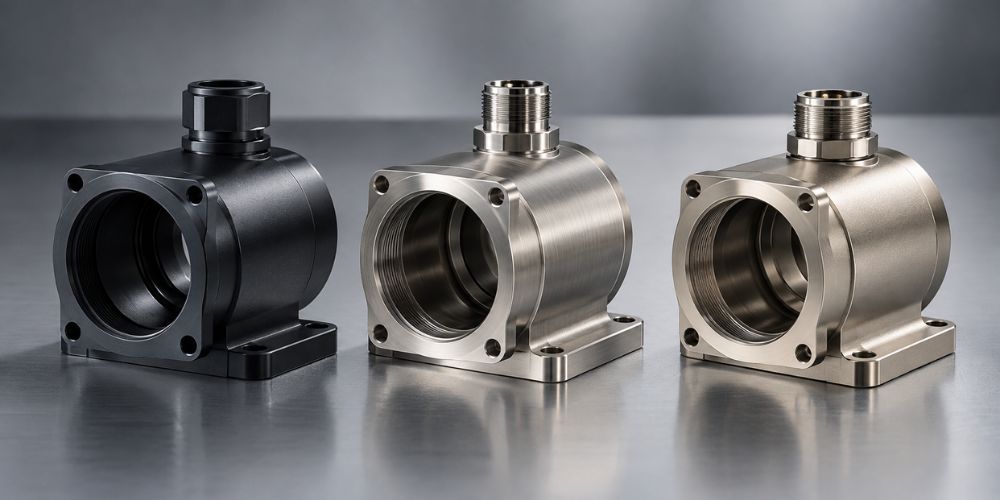
Surface finishing is not just about appearance. It can affect corrosion resistance, wear, cleaning, electrical behavior, and the dimensions of mating surfaces.
The finish also needs to match the base material. A treatment that works well on aluminum may make no sense for stainless steel.
- Anodizing For Aluminum: Type II anodizing is commonly used for appearance and corrosion protection, while hard anodizing is selected where greater wear resistance is needed. ASTM B580-25 covers anodic oxide coatings on aluminum and aluminum alloys with properties such as abrasion resistance, electrical characteristics, appearance, and corrosion protection matter.
- Passivation For Stainless Steel: Passivation is commonly used after machining stainless steel to address surface contamination and support corrosion performance. ASTM A967/A967M-25 covers several chemical passivation methods and tests used to confirm treatment effectiveness.
- Plating And Mechanical Finishes: Nickel plating, electroless nickel, bead blasting, brushing, and polishing can be used for functional or appearance requirements. For electroless nickel-phosphorus coatings, ASTM B733-22 addresses properties including coating type, thickness, adhesion, porosity, and post-treatment.
One detail people miss: coatings can affect mating dimensions.
So if you have a press fit, precision bore, thread, or sealing surface, tell the machine shop which dimensions apply before finishing and which apply after finishing. That small note can prevent an expensive fit problem.
6. Important Design Considerations
A good sensor housing needs to be machinable, inspectable, finishable, and easy to assemble. Looking at all four areas during design can save you from making changes after the first prototype arrives.
At MachMaster, we use DFM review to look for these issues before production starts. Our aim is to identify features that add machining difficulty without adding useful performance.
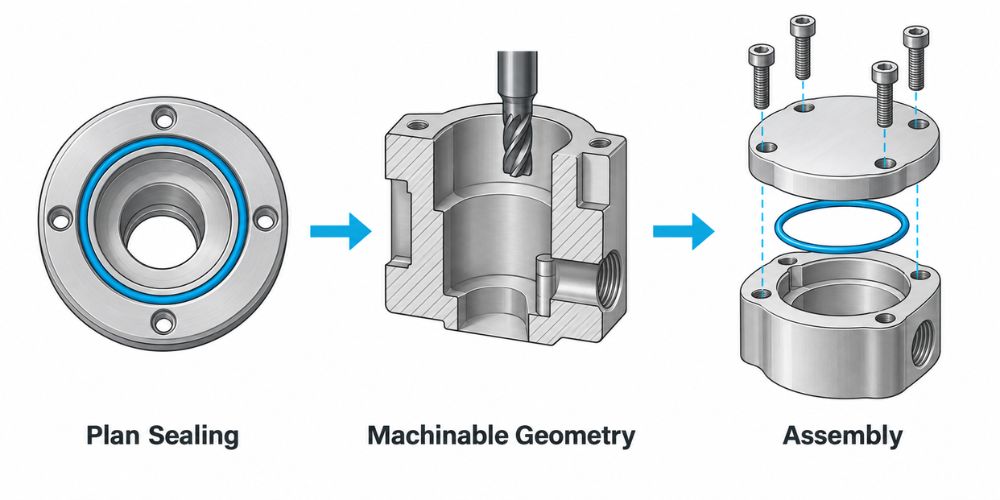
Plan Sealing Features Early
Do not leave your sealing system until the final CAD revision. O-ring grooves, cover interfaces, connector openings, and sealing faces affect surrounding dimensions and available wall thickness.
I often see an O-ring groove added after most of the enclosure has already been designed. At that point, there may be too little material around the groove or poor tool access.
Plan the seal while you still have room to adjust the surrounding geometry. It makes machining and inspection much easier.
Keep Internal Features Machinable
Deep cavities, very thin walls, sharp internal corners, and difficult-to-reach features can increase machining time and tooling requirements. Practical corner radii and reasonable tool access can make a large difference.
I often ask one simple question during design review: does this feature help the sensor function, assemble, or mount correctly?
If the answer is no, consider simplifying it. A simpler feature can reduce setups, tool changes, cycle time, and inspection work.
Consider Assembly From the Start
Think about how the sensor, PCB, cable, connector, gasket, fasteners, and housing come together. Mounting holes and internal bosses should leave enough clearance for both components and assembly tools.
Then consider finishing. A coating added after machining may change a fit that worked perfectly on the unfinished prototype.
Planning a new housing? You can review our CNC sensor housing machining capabilities for material, sealing-feature, finishing, and inspection options before finalizing your CAD file.
7. How to Choose a CNC Sensor Housing Supplier
The lowest quote is not always the lowest-cost option once rework, delays, inspection failures, and design changes are included. Look at what the supplier can actually manufacture and verify.
You are buying a finished component, not just machine time.
Check Machining And Inspection Capability
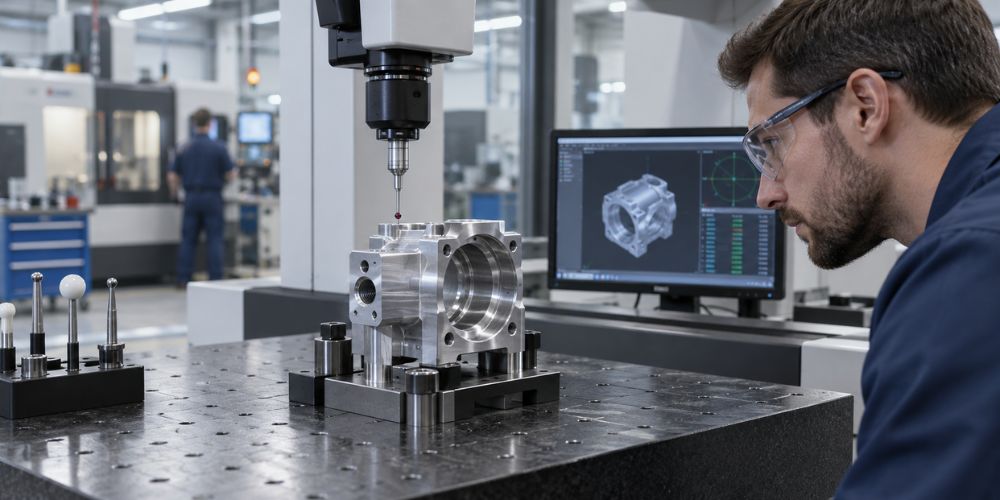
Your supplier should be able to machine the required material, bores, threads, sealing surfaces, mounting features, and other critical dimensions. Ask how those features will be measured, especially if fit or sealing depends on them.
MachMaster follows an ISO 9001:2015 quality management system and uses VMMs, gauges, micrometers, and other dimensional inspection equipment. Our production CNC service also supports parts down to ±0.01 mm tolerance where geometry and process allow it.
It is worth understanding what ISO 9001 means. The official ISO 9001:2015 standard concerns a company’s quality management system, so certification is useful evidence of a structured quality process, but it does not by itself prove that a particular sensor housing meets your drawing.
You still need part-specific inspection requirements.
Look For DFM And Production Support
A capable supplier should do more than send back a price. The engineering team should be able to flag difficult features, unnecessarily tight tolerances, material concerns, finishing issues, and areas that may increase cost.
This becomes more important when you move from one prototype to hundreds or thousands of housings.
A feature that adds a few minutes to one prototype may not look important. Repeat those minutes across a large production run, however, and the design decision starts affecting both cost and delivery.
Make Your RFQ Specific
Send a 3D CAD model and 2D drawing whenever possible. Include:
- Material grade
- Order quantity
- Critical tolerances
- Threads and fits
- Surface finish
- Sealing requirements
- Inspection requirements
- Expected future volume
I regularly see quotation delays caused by missing tolerance or finishing information. A complete RFQ lets the supplier review what you actually need instead of pricing around assumptions.
For prototype and production work, MachMaster supports CNC milling, turning, drilling, engraving, EDM, precision grinding, DFM review, and volume manufacturing. If you already have CAD files, you can use our CNC machining service page to submit the design for a manufacturing and quotation review.
Conclusion
A reliable sensor housing starts with clear choices. Match the material to the environment, plan sealing early, and use tight tolerances only where the function requires them.
The right supplier should make those decisions easier. At MachMaster, we support CNC machining from rapid prototypes to volume production, with DFM support and machining tolerances down to ±0.01 mm for suitable parts.
Have a sensor housing ready for review? Upload your CAD file and request a CNC machining quote from MachMaster so our team can review your material, tolerances, sealing, and finish requirements before production.
Explore More Helpful Resources
There’s more to explore! Check out our additional product selections to find exactly what you’re looking for:
Interested in more? Here are some additional articles with insights and tips to keep you informed:
- 10 Leading Metal CNC Machining Manufacturers for Custom Industrial Components
- ABS vs ASA for CNC Machined Parts: Machinability, Durability and Cost
Still haven’t found what you’re looking for? Don’t hesitate to contact us. We’re available around the clock to assist you.