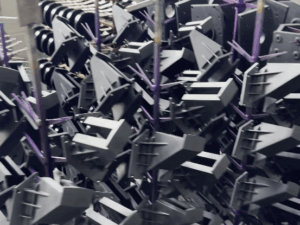
“Can die-cast aluminum undergo anodizing?” – This was one of the questions I frequently received in the mechanical processing and die-casting industries. Customers would ask me about anodizing the die-cast parts made of ADC12 and A380 materials, hoping to obtain a beautiful and durable part. However, they ended up disappointed.
So, can die-cast aluminum undergo anodizing? Is the answer “yes” or “no”? In this article today, we will thoroughly explain this matter in one go.
The conclusion is: Yes, but with certain conditions.
Cast aluminum can be anodized, but the result is far from as ideal as that of 6061 or other wrought aluminum alloys. Moreover, it requires extremely strict process control.
If you are looking for an even, shiny, and colorful oxide film like that on a mobile phone case, cast aluminum is likely to disappoint you. However, if you are willing to accept certain limitations (such as the color can only be black and the surface may be slightly grayish), and follow the specially designed process strictly, then it is entirely possible to obtain an anodized oxide film with practical value on cast aluminum.
Why is cast aluminum so “difficult to handle”?
To understand this issue, one must first know the principle of anodizing: The aluminum acts as the anode in the electrolyte solution, and a chemical reaction occurs on the surface, resulting in the growth of a porous oxide film. This film is transparent, hard, and can be used for coloring and protection.
The difficulty in anodizing cast aluminum lies in its high silicon content.
Taking the most common cast aluminum ADC12 material as an example, the silicon content is as high as 9.6% to 12%. Silicon hardly participates in the reaction during anodization. When the aluminum is oxidized to form a film, silicon will remain in the form of particles or flakes, forming a gray-black, loose “dust coating”.
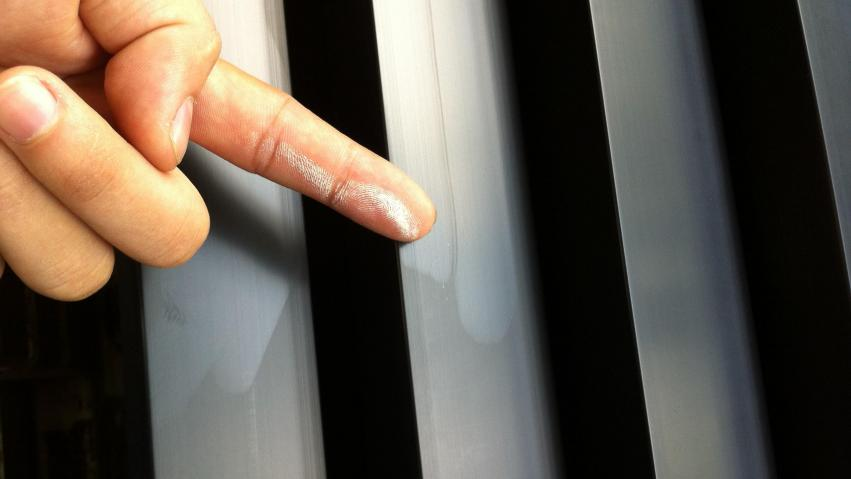
This layer of dust accumulation can lead to:
- The coating becomes gray and dark: It is impossible to obtain a pure silver-white base, and the color after dyeing becomes cloudy.
- Poor adhesion: The scale adheres between the coating layer and the substrate, and the oxide film is prone to peeling off.
- Difficult dyeing: Especially for light colors and bright colors, it is almost impossible to evenly adsorb. This is why the anodizing of die-cast aluminum is almost always black – black has the strongest covering power and can cover the black color caused by silicon reaction.
In addition, the unavoidable tiny pores and sand holes inside the die-cast parts will retain the pretreatment solution during the oxidation process, “release acid” and cause defects. The remaining release agent is also likely to cause local lack of coating.
Which types of cast aluminum can be subjected to anodizing?
Not all cast aluminum is the same. Based on the level of silicon content, the oxidizability ranges from good to poor as follows:
| Grade | Silicon content (w%) | Difficulty of anodizing | Typical effect |
| A356 | 4.5-5.5 | Medium | It can be made uniformly black, with a better effect. |
| A380 | 7.5-9.5 | Harder | Black is possible, but it tends to turn gray. |
| ADC12 | 9.6-12 | Difficult | Black requires meticulous craftsmanship and often has blemishes. |
| AlSi10Mg | 9-11 | Difficult | Similar to ADC12, it is more troublesome for 3D printing. |
The conclusion is clear: If you must use cast aluminum for anodizing, A356 should be your first choice. Its silicon content is relatively low, and its success rate and product quality are significantly better than those of ADC12. Although ADC12 can be “rescued”, it requires higher processing costs and a higher rate of defective products.
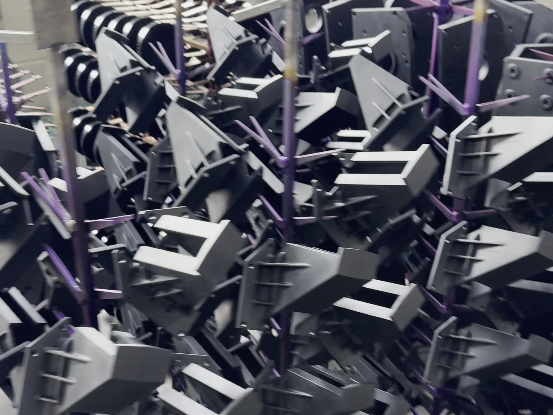
Machmaster recommends that customers use the A356 material for die-cast parts with black anodized finish. If you also have die-cast aluminum that needs anodizing, please contact Machmaster to inquire about the feasibility.
To achieve good results, these four rules must be followed.
For the die-cast aluminum, the conventional sulfuric acid anodizing process is not applicable. The following is a verified customized process, and each step cannot be omitted.
Strict pre-treatment – the success or failure hinges on this single step
The conventional alkaline cleaning (using sodium hydroxide) will corrode the surface of aluminum into numerous pits, thereby exposing and enlarging the pores. The correct approach is as follows:
- Deoiling: Alkaline deoiling agent + ultrasonic wave, 50-55℃, 8-10 minutes.
- Low-concentration alkaline cleaning: NaOH 20-30g/L, 40-45℃, only for 2-3 minutes. Strictly control the weight loss to be no more than 0.8g/dm².
- Neutralization: 10% nitric acid, room temperature, 3 minutes.
- Removing silica fume: This step is the most crucial. Use a silica remover containing ammonium fluoride (30-40g/L), soak at room temperature for 5-8 minutes to remove the residual silica particles on the surface. Do not use pure hydrofluoric acid, as it is highly toxic and dangerous.
Anodizing – low temperature, low current density
- Electrolyte: Sulfuric acid 180-200g/L (a small amount of oxalic acid can be added to improve uniformity).
- Temperature: 18-22℃, precise temperature control is necessary. When the temperature is too high, the film layer becomes loose and powdery.
- Current density: 1.0-1.5 A/dm², slightly lower than that of conventional aluminum alloys (1.5-2.0).
- Time: 15-20 minutes, the film thickness is approximately 8-15 μm.
Black dyeing – Only black is recommended
- Organic black dye: Concentration 10-15g/L, temperature 40-60℃, pH value 5.0-5.2, dyeing time 20-40 minutes.
- Not recommended: Any color series. There is a high probability of uneven color and color bleeding. It cannot meet the usage requirements.
Sealing the hole – determining the lifespan
- Medium-temperature nickel salt sealing: 55 – 60℃, 15 – 20 minutes. This can achieve a neutral salt spray test lifespan of over 48 hours.
- No nickel sealing: Organic acid system, meeting RoHS environmental protection requirements.
Three alternative surface treatment processes – when anodizing does not meet the requirements
If your castings have high requirements for corrosion resistance, wear resistance and appearance, but the anodizing process has not yielded satisfactory results after many attempts, don’t keep insisting. The following three processes are more mature options:
| Alternative Process | Advantages | Disadvantages | Applicable Scenarios |
| Powder coating | Color is freely selectable, with strong covering power, good uniformity and low cost. | The coating is relatively thick (60 to 120 μm) and non-conductive. | The vast majority of exterior components and decorative parts |
| Chemical nickel-plating | Uniformly dense, high in hardness (~500HV), good corrosion resistance, and capable of covering sand holes | The cost is higher than that of spraying, and the appearance is only silver white. | Precision parts, workpieces with complex channels inside |
| (MAO) Micro-arc oxidation | Super-hard (>1000HV), highly corrosion-resistant, and capable of being fabricated into a black ceramic layer in a single step. | High equipment investment, low efficiency, and rough surface. | Military industry, aerospace, high-end wear-resistant parts |
Several common misunderstandings, clarified at once
Misconception 1: As long as the oxidation time is long enough, the film layer will be thick and hard.
Wrong. Silicon in die-cast aluminum can hinder the growth of the film layer. If the oxidation time is too long, it will instead cause the film layer to powderize and flake off. The upper limit of thickness is usually no more than 20μm.
Misconception 2: Hydrofluoric acid is effective in removing silicon and can be prepared by oneself.
Absolutely not. Hydrofluoric acid is a highly toxic and strongly corrosive hazardous material. In industry, it has been replaced by complex salts containing ammonium hydrogen fluoride. Individuals or small factories are strictly prohibited from using it.
Misconception 3: ADC12 can be used for hard anodizing.
It can be done, but the effect is rather mediocre. Hard anodizing requires a lower temperature (-5 to 5℃) and a higher current density, which amplifies the defects of silicon and pores. The hardness and uniformity of the resulting film layer are far inferior to those of 6061. It is not recommended unless there is an extremely high demand for wear resistance.
Summary: A table helps you make decisions.
| Your Requirements | Recommended Solution |
| It must be ADC12, and it should be black, durable and corrosion-resistant. | Using the special process described in this article, anodizing was carried out, accepting a certain rate of defective products. |
| You can use A356, specifying black color and good appearance. | A356 combined with the specially developed anodizing process (Machmaster) has a higher success rate. |
| Any color is acceptable. The appearance should be uniform and beautiful. | Abandon anodizing and switch to powder coating. |
| High hardness, high corrosion resistance, no color restrictions. | Chemical nickel plating or micro-arc oxidation. |
| Conductive and basic rust prevention | Chemical oxidation (passivation) |
Returning to the original question: Can cast aluminum be anodized?
Yes. But the prerequisite is: you are willing to design a specific process for it, accept that it can only be made in black, and have a lower expectation for the surface quality.
If you agree to all these conditions, then congratulations – you can obtain a layer of practical anodic oxidation film on the cast aluminum. Otherwise, powder coating or chemical nickel plating would be a more sensible choice.
I hope this article can help you avoid unnecessary detours. If you have specific parts and grades, please feel free to discuss with Machmaster.