
$5,000. Gone.
All because I picked the wrong plastic.
It looked strong, clear, and clean. I thought polycarbonate was the answer. But the part needed nylon. It was a small choice, but it ruined the whole run.
The mold was perfect. The design was solid.
But the material? It just didn’t hold up.
That mistake still stings. Not just because of money. But it could’ve been avoided if I had known what to look for.
Maybe that’s why you’re here.
You’re working on something that matters. A product, a prototype, or a part that needs to do its job, without surprises. You want to choose the right material the first time.
I get that. I’ve spent years designing parts, working with suppliers, and helping teams avoid mistakes like mine. And over time, I’ve learned this: there’s no “perfect” plastic—only the right one for your needs.
In this article, I’ll share 8 of the most used plastic injection molding materials. You’ll learn what they’re good at, what they cost, and how they fit different products.
So by the end, you’ll feel more confident and ready to choose a material that works. Without wasting your time or your budget.
Let’s get into it!
Quick Comparison Chart
Choosing the right material for injection molding can feel overwhelming.
I’ve seen teams freeze up—not because they don’t care, but because there are too many options and not enough clear answers.
If that sounds familiar, you’re not alone.
To help, I put together a simple table. It shows how the top materials compare in strength, processing needs, and more.
Use it as a quick reference before making your next material decision.
| Material | Strength | Flexibility | Impact Resistance | Surface Finish | Transparency | Moldability | Cost | Moisture Resistance | Chemical Resistance |
| ABS | Medium-High | Low | High | Excellent (smooth, paintable) | Opaque | Excellent | Moderate | Medium | Low |
| PP | Medium | High | Medium | Fair (limited finish) | Translucent | Excellent | Low | High | Excellent |
| PE (HDPE/LDPE) | Medium | Medium-High | High | Fair (waxy texture) | Translucent/Opaque | Good | Low | Excellent | Excellent |
| PS (GPPS/HIPS) | Low-Medium | Low (GPPS), Medium (HIPS) | Low (GPPS), Medium (HIPS) | Good (printable) | GPPS: Clear, HIPS: Opaque | Excellent | Very Low | Low | Low |
| PC | Very High | Medium | Very High | Excellent (needs coating for scratch resistance) | Crystal-clear | Good | High | Low | Moderate |
| Nylon (PA6/PA66) | High | Medium | High | Good | Opaque | Moderate | High | Low (absorbs water) | High |
| POM (Acetal) | High | Low | High | Excellent (smooth, low-friction) | Opaque | Moderate | High | Medium | High |
| PET | Medium-High | Low-Medium | Medium | Excellent (clear, printable) | Clear | Moderate (sensitive to crystallization) | Moderate | High | High |
This comparison gives you a clearer lens to evaluate materials not just by their strengths, but also how they align with your design and manufacturing constraints.
1. Acrylonitrile Butadiene Styrene (ABS)
The first time I used ABS for a product line, I was skeptical.
I needed something affordable that wouldn’t feel “cheap” in a customer’s hand. Something tough, but still easy on tooling.
We were prototyping a housing unit for a consumer electronics brand. Tolerances were tight. Time was tighter.
ABS didn’t just meet expectations.
It delivered consistency, ease of processing, and a clean, professional surface finish, with zero warping after ejection. It became our go-to material for dozens of parts after that.
If you’ve ever dealt with cracking parts, brittle plastics, or materials that refuse to mold cleanly, ABS is your antidote.
Benefits
ABS offers a rare balance of strength, processability, and aesthetics:
- High impact resistance, absorbs shock without cracking
- Smooth surface finish that made it easy to paint, plate, or texture
- Short cycle times, which are fast and repeatable in production
- Good dimensional stability that holds tolerances well
- Affordable, especially at mid-to-high production volumes
It’s a dependable, mold-friendly material you can count on in most factory settings.
Limitations
ABS works well—but it’s not invincible. Watch out for these issues:
- Poor UV resistance, degrades with long-term sun exposure
- Low chemical resistance, especially to acids, oils, and alcohols
- Not ideal for outdoor use unless stabilized
- May warp or shrink without controlled cooling
If your product lives outside or near corrosives, ABS may fall short.
Best Use Cases
ABS is a favorite in industries where looks, cost, and toughness all matter.
- Consumer electronics housings
- Tool and appliance casings
- Automotive interior trim
- Toys and branded plastic products
- Low- to mid-structural components that don’t need chemical resistance
If you need a material that’s easy to mold, easy to finish, and hard to break, ABS is a smart and safe place to start.
2. Polypropylene (PP)
I once worked with a manufacturer who refused to use anything but polypropylene for their packaging parts. I didn’t get it at first.
Then I watched their assembly line run.
Hinges flexed. Lids snapped shut. Nothing cracked—even after weeks of cycling. The material held up under heat, moisture, and stress. It was clear: PP wasn’t just cheap—it was reliable. And in their world, reliability was non-negotiable.
If you’ve ever needed a plastic that can bend without breaking—or survive harsh environments without complaint—polypropylene deserves your full attention.
Benefits
This material is a workhorse. It’s the kind of plastic that quietly does its job in millions of molded parts without causing drama.
- Excellent chemical resistance
- High fatigue strength (perfect for living hinges)
- Naturally moisture-resistant
- Lightweight and cost-effective
- Strong supplier availability worldwide
PP is used in everything from automotive interiors to medical containers, hinged lids, bins, and caps.
Limitations
Like every material, PP has a few blind spots. You’ll want to plan around these:
- Poor UV resistance which is not great for prolonged outdoor use
- Low surface energy that makes it hard to paint or glue
- Can become brittle in cold temperatures
- Limited finish options that are not ideal for premium visual products
Best Use Cases
Here’s where PP really shines:
- Snap-fit lids and caps
- Hinged components that need to flex repeatedly
- Chemical containers and food packaging
- Lightweight parts for high-volume production
- Moisture-prone or clean-room environments
If your job involves balancing cost, performance, and scale—PP should be one of your top candidates.
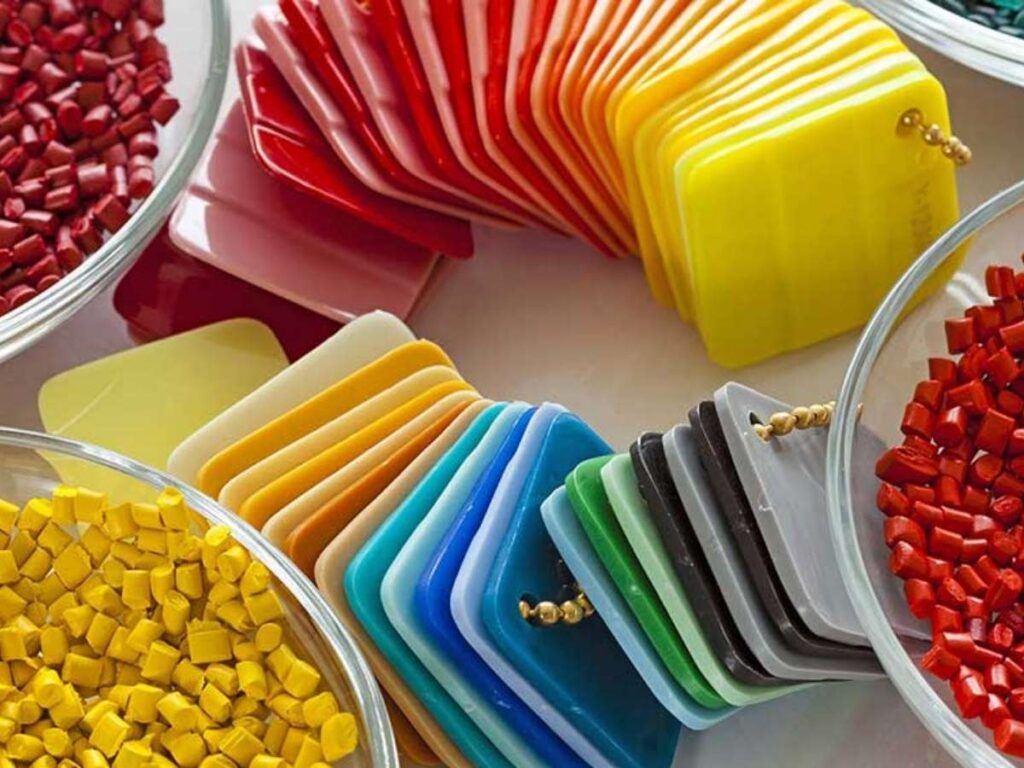
3. Polyethylene (PE – HDPE & LDPE)
We had a client once who specialized in bulk storage bins for industrial chemicals. Their parts needed to be large, durable, and completely leak-proof.
They were using polyethylene—specifically HDPE. And honestly, they didn’t just “use it.” They depended on it.
That material took a beating and kept going, no stress cracks, no deformation, no callbacks.
If you’re building anything that needs to resist moisture, chemicals, or just plain abuse, PE is a material you should seriously consider.
Benefits
Polyethylene is one of the most widely used plastics on the planet—and for good reason.
- Highly durable and impact-resistant
- Excellent chemical resistance (even with acids and solvents)
- Moisture-proof and weather-resistant
- Available in flexible (LDPE) and rigid (HDPE) grades
- Great for large parts due to low shrinkage and warping
HDPE is your go-to for tough, rigid parts like tanks, crates, and pipes. LDPE works better when you need flexibility, like in squeeze bottles or soft enclosures.
Limitations
While PE is rugged, it does have a few important downsides:
- Low heat resistance — not ideal for high-temperature applications
- Poor adhesion — doesn’t take paint, glue, or coatings easily
- Limited rigidity compared to materials like ABS or PC
- Can deform under heavy loads if not supported
Best Use Cases
Use polyethylene when you need something that won’t rust, crack, or corrode—even in tough environments.
- Large-volume containers and tanks
- Outdoor products or weatherproof parts
- Medical packaging and chemical-resistant items
- Soft enclosures or flexible lids (LDPE)
- Heavy-duty bins, crates, or drums (HDPE)
If you’re looking for a reliable partner to mold rugged, chemical-resistant parts with precision—Machmaster can help. They specialize in plastic injection molding and have the tools, experience, and capacity to turn HDPE or LDPE into durable, high-performance components built to last.
4. Polystyrene (PS – General Purpose & High Impact)
I’ll never forget one of our earliest packaging clients who needed 100,000 units molded—fast. The parts didn’t need to be indestructible, just clean-looking, easy to form, and dirt cheap.
We landed on High Impact Polystyrene (HIPS). The client was surprised by how well it molded—and how little it cost.
Even better? It handled surface printing like a dream.
If you’re producing parts for display, packaging, or short-term use, PS can hit the target without hitting your margins.
Benefits
Polystyrene is often underestimated—but in the right hands, it’s a powerhouse for low-cost, high-volume production.
- Inexpensive and widely available
- Very easy to mold and process
- Comes in rigid (GPPS) and impact-resistant (HIPS) variants
- Excellent surface finish, ideal for labeling or printing
- Good dimensional stability for simple shapes
GPPS (General Purpose PS) is clear and rigid—great for visibility. HIPS (High Impact PS) is tougher and slightly flexible—perfect for packaging trays and enclosures.
Limitations
If you’re planning on heavy-duty use, PS won’t hold up long-term.
- Brittle under stress, especially in cold conditions (GPPS)
- Poor UV and weather resistance — not suitable for outdoor use
- Low chemical resistance
- Limited structural strength — avoid high-load applications
It’s best for disposable or lightweight products, not mechanical parts.
Best Use Cases
PS really shines when speed, appearance, and cost are your main drivers.
- Clamshell and retail packaging (HIPS)
- Disposable trays, cups, and labware (GPPS)
- Lightweight housings or interior display parts
- Point-of-sale units or branded product holders
- Low-load enclosures that need fast turnaround
If your operation depends on tight budgets and tight timelines, PS is often the most efficient option available.
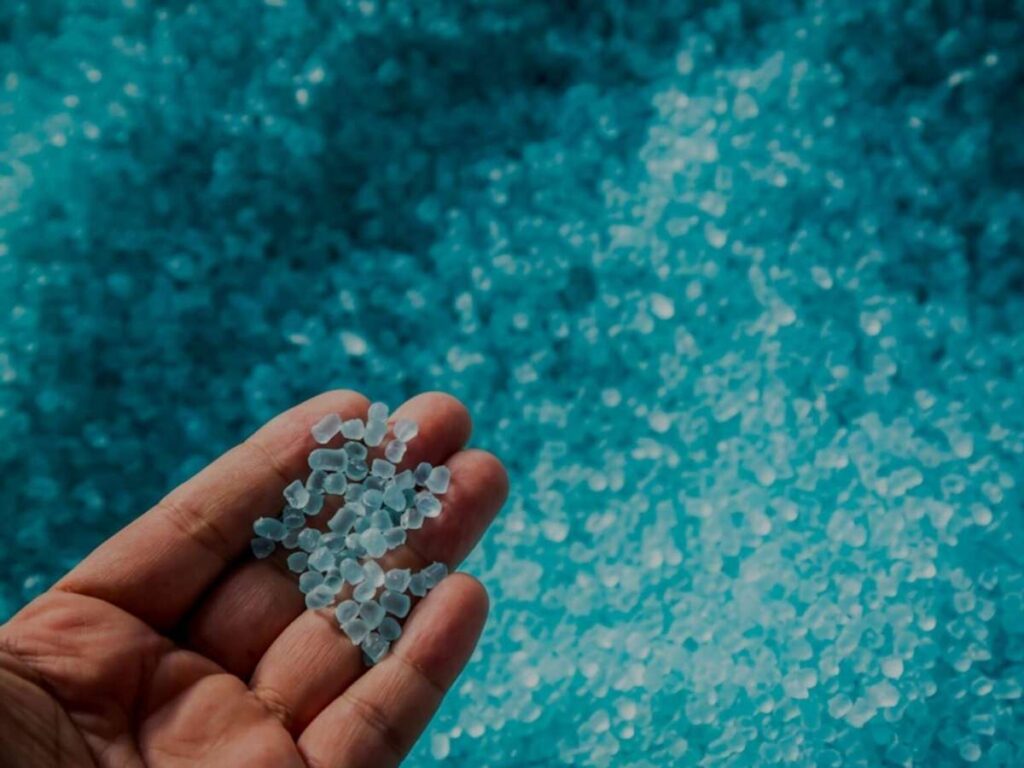
5. Polycarbonate (PC)
I once consulted on a product line where aesthetics and strength were non-negotiable. The part had to be crystal-clear, virtually unbreakable, and able to take heat.
We tried acrylic. It cracked under pressure. Tried ABS. Too cloudy. Switched to polycarbonate, and it just worked.
That client never looked back. And if you’re building something that needs to survive drops, heat, or even rough customers, you might not either.
Benefits
Polycarbonate is one of the toughest transparent materials available. It’s used in everything from aerospace to safety gear—and it’s easy to see why.
- Extremely high impact resistance
- Optical clarity — perfect for clear or tinted parts
- Heat-resistant (better than most commodity plastics)
- Good dimensional stability and strength
- UL-rated, flame-retardant grades available
If your product needs to look sleek and perform under pressure, PC delivers both.
Limitations
PC doesn’t come without a few challenges, especially in production and post-processing.
- Expensive compared to ABS or PP
- Sensitive to scratches unless coated
- Prone to stress cracking if not molded carefully
- Requires drying before molding — absorbs moisture easily
Bottom line: It’s strong, but it needs to be handled with care.
Best Use Cases
PC is the go-to when performance and appearance need to live in the same part.
- Safety lenses, visors, and guards
- Electronics housings and optical components
- Automotive lighting covers and dashboards
- Medical device casings
- Premium product enclosures with clear features
If you’re manufacturing mission-critical parts, or anything premium and customer-facing, a PC will likely be worth the extra cost and handling effort.
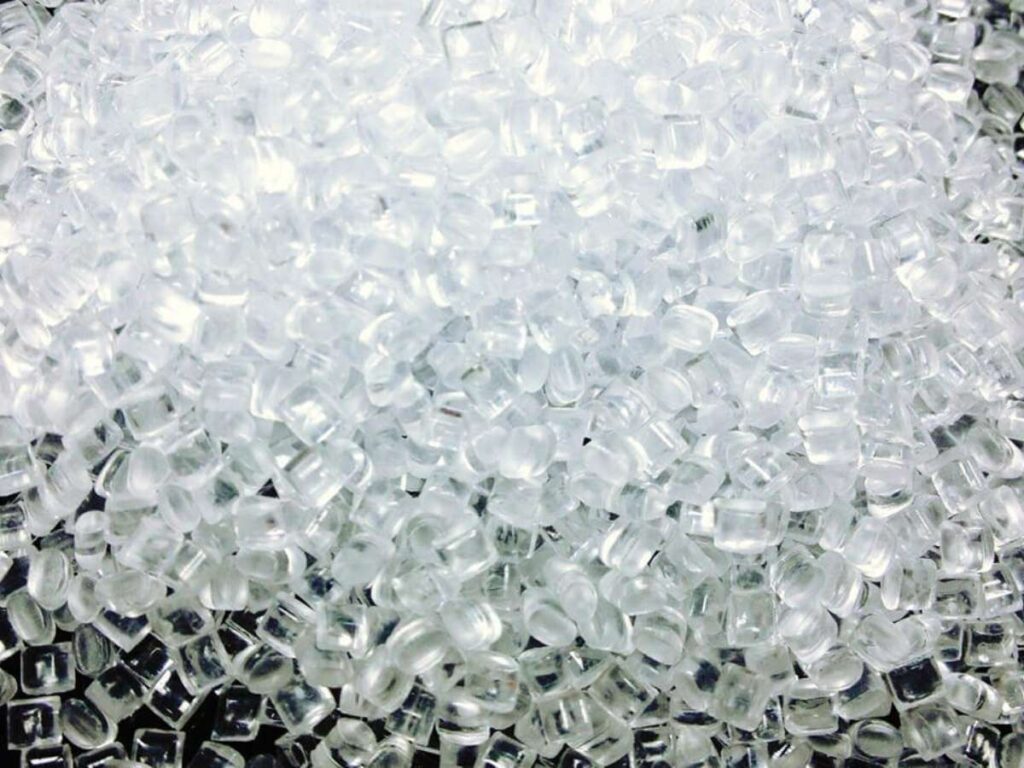
6. Nylon (Polyamide – PA6, PA66)
We once supplied a client who manufactured mechanical components for power tools. They needed parts that could take repeated stress, resist wear, and stay precise even under load.
The metal was too heavy. ABS wore out too fast.
Then we tried nylon.
The results? Smooth function, strong wear resistance, and zero returns after 50,000 units. Nylon didn’t just perform—it kept performing.
If your product has moving parts, gear-like functions, or friction points, nylon could be the unsung hero of your entire design.
Benefits
Nylon is built for mechanical, high-wear applications where most other plastics start to fall apart.
- High tensile strength and stiffness
- Excellent wear and abrasion resistance
- Good chemical and oil resistance
- Self-lubricating in some grades
- Can replace metal in some lightweight applications
PA6 is more flexible and absorbs more moisture. PA66 is stiffer and better for high-load, dry environments.
Limitations
While nylon is tough, it’s not always ideal depending on your use case.
- Moisture absorption can affect dimensional stability (especially PA6)
- Requires pre-drying before molding
- More expensive than commodity plastics
- Can degrade under high UV or acidic conditions if unprotected
If precision over time is mission-critical, you’ll need to account for its moisture behavior.
Best Use Cases
Nylon is the material of choice when motion, friction, or load is part of the job.
- Gears, bushings, and bearing surfaces
- Tool housings and load-bearing brackets
- Industrial parts that replace metal components
- Engine components and under-hood parts
- Mechanical slides and wear pads
If you’re designing a part that needs to move smoothly, hold up under stress, or replace metal without sacrificing strength—Machmaster is ready to help.
Their plastic injection molding team has the experience to work with high-performance materials like nylon and deliver parts that stay precise, batch after batch.
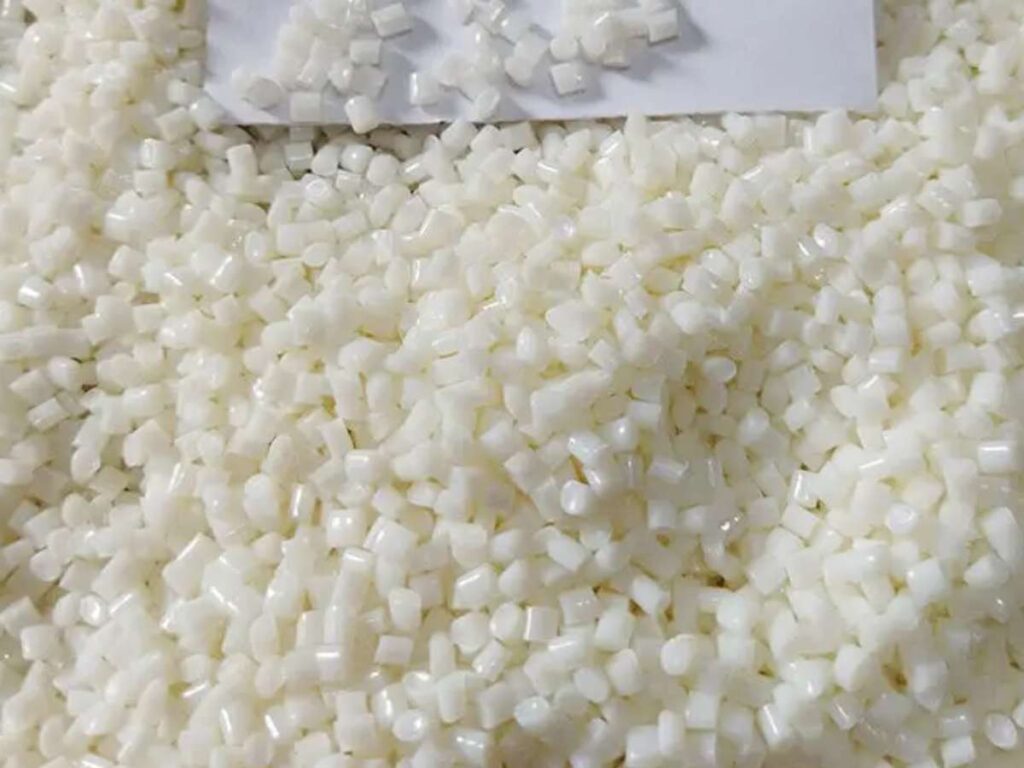
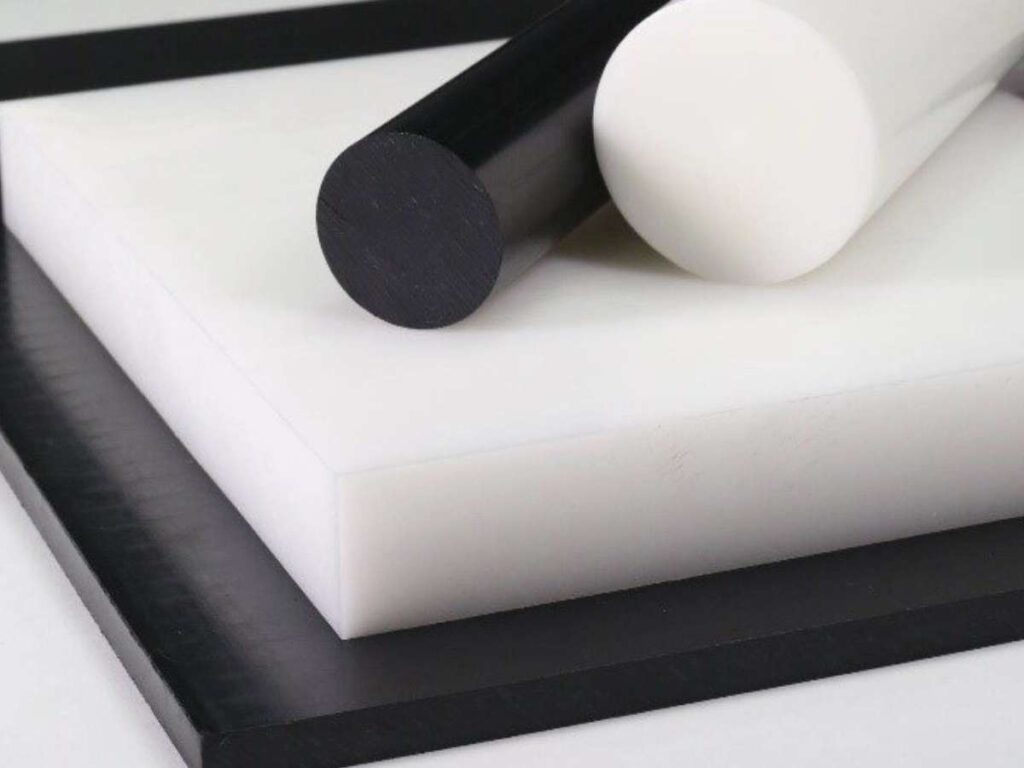
7. Polyoxymethylene (POM / Acetal / Delrin)
I once worked with a team designing locking mechanisms for medical equipment. Tolerances were tight. The moving parts had to click perfectly, with zero friction drag and no room for warping.
We ran ABS. Too soft. Nylon? Too much moisture creep.
Then came POM.
That part locked in like a dream—smooth, precise, no stick, no squeak. Delrin changed the game for that project. And if you’ve ever needed surgical-grade fit and finish, you already know what I mean.
Benefits
POM (also known as Acetal or the branded Delrin) is the go-to for parts that require precision and wear resistance, especially if they move or connect.
- Outstanding dimensional stability
- Low friction surface — ideal for sliding/mating parts
- Excellent wear and abrasion resistance
- Strong chemical and fuel resistance
- Self-lubricating in many grades
It’s often called “engineer’s plastic” for a reason—it holds tolerances like a champ.
Limitations
POM is strong, but there are a few things to watch out for:
- More expensive than standard engineering plastics
- Poor UV resistance without stabilizers
- Can be tricky to bond or paint
- Not ideal for medical implants or high-temperature environments
It’s designed for mechanical function, not visual appeal or long-term outdoor use.
Best Use Cases
Use POM when you need tight fits, repeatable motion, and long-term durability in mechanical systems.
- Gears, cams, and conveyor components
- Snap-fit parts and buckles
- Precision locks, clips, or slides
- Fuel system components (auto and industrial)
- Electrical insulators or actuator parts
If you’re building anything with repetitive motion or a click-fit connection, POM will give you consistency and confidence.
8. Polyethylene Terephthalate (PET)
We had a client in food and beverage who needed a clear, strong, and safe plastic for container production—something that could handle high-speed molding, resist moisture, and pass FDA regulations.
We landed on PET.
They were skeptical at first. PET was better known for soda bottles than for molded parts. But once they saw the clarity, toughness, and compliance, it became their go-to material for everything from caps and closures to sealed food trays.
If your business deals with packaging, visibility, or consumer safety, PET might be the most overlooked win on your material list.
Benefits
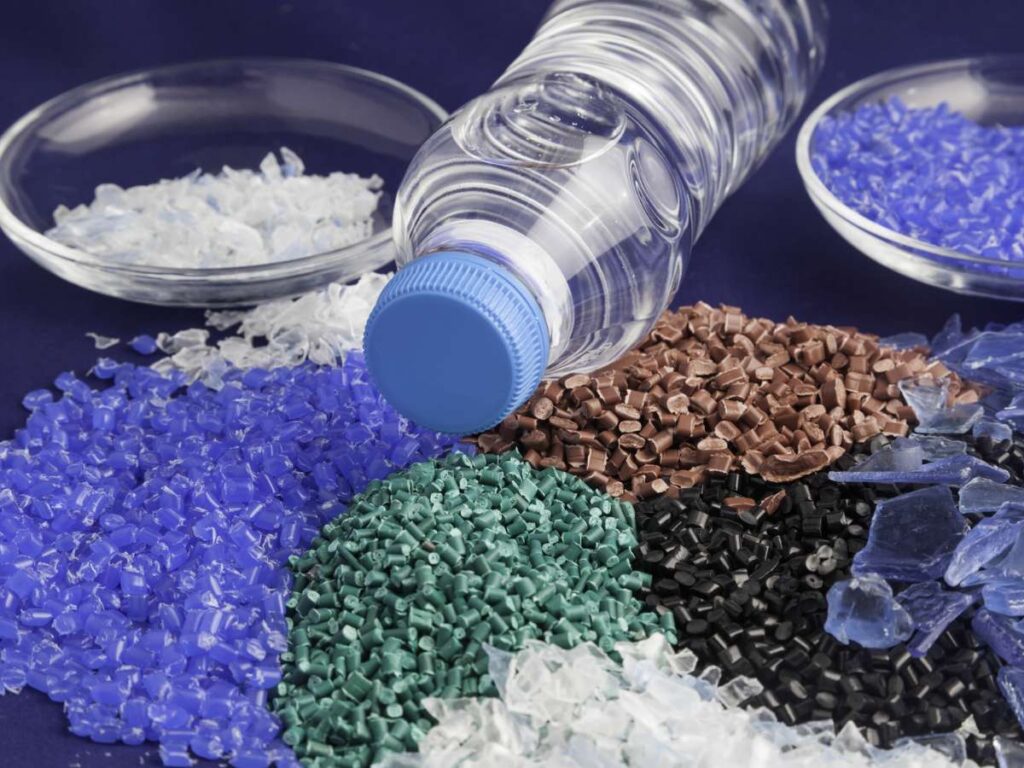
PET is best known for its role in plastic bottles, but it has a lot more to offer when injection molded.
- High strength-to-weight ratio
- Crystal-clear transparency
- Great moisture and gas barrier
- Naturally FDA-compliant in many grades
- Fully recyclable, with increasing sustainability demand
PET molds well, holds its shape, and offers clean, professional surface finishes—a huge plus for anything consumer-facing.
Limitations
PET does its job well, but it’s not made for every environment.
- Not ideal for high-heat applications
- Can become brittle in freezing temps
- Crystallization control is required for complex part geometry
- Low impact resistance compared to PC or ABS
It’s also harder to mold than PP or PE, but the right tooling makes all the difference.
Best Use Cases
PET is best when your product needs to look good, stay sealed, and meet food or medical safety standards.
- Food and beverage containers
- Blister packs and tamper-proof packaging
- Transparent caps, closures, and dispensers
- Personal care product enclosures
- Lightweight, recyclable consumer products
If you’re targeting clarity, safety, and sustainability, PET is a strategic material choice that satisfies both regulators and customers.
Conclusion
I learned the hard way. You don’t have to.
Now you’ve seen what works. You’ve learned where each material shines and where it might fail. That knowledge can save you time, money, and stress.
You’re ready to choose with confidence.
Don’t wait for a mistake to teach you. Start now. Review your project. Match the right material to the right job.
And if you’re still unsure? Ask. I’ve been in your shoes.
Let’s avoid wasted runs and broken parts—together.
Which of these materials caught your attention?
Let’s talk. Contact us today. We’re ready to help you move forward.
Explore Related Resources
Want to see more? We’ve gathered additional product choices to give you even more variety:
Still haven’t found what you’re looking for? Don’t hesitate to contact us. We’re available around the clock to assist you.