
CNC machining is a manufacturing process used to make custom parts from metal and plastic. It uses computer-controlled machines to cut material into the shape and dimensions required by a design.
For product designers, engineers, and purchasing teams, CNC machining offers a practical way to produce functional prototypes, custom components, and repeat production parts without investing in an injection mold or other dedicated production tooling.
But choosing CNC machining is only the first step. Material, part geometry, tolerances, surface finish, order quantity, and supplier capability all affect the final cost and result.
This guide explains what CNC machining can do, when it makes sense for your project, and what to prepare before requesting a quote.
What Is CNC Machining?
CNC stands for Computer Numerical Control. In CNC machining, a computer-controlled machine follows programmed instructions to remove material from a workpiece and produce a finished part.
Unlike 3D printing, which builds a part layer by layer, CNC machining is a subtractive manufacturing process. It starts with a solid piece of material, such as an aluminum block, steel bar, or plastic sheet, and removes material through cutting operations.
The process typically involves:
- CAD design: A 2D drawing or 3D model defines the part’s geometry and dimensions.
- CAM programming: Manufacturing software creates toolpaths based on the design and machining requirements.
- Machine setup: The material, cutting tools, and fixtures are prepared.
- Machining: The machine follows the programmed toolpaths to cut the part.
- Inspection and finishing: The finished part is checked against the drawing and receives any required surface treatment.
The result is a physical component made to the requirements of your design. The actual achievable dimensions and tolerances depend on the material, geometry, machining process, setup, and inspection requirements.

What Types of CNC Machining Are Used to Make Custom Parts?
Different CNC processes are suited to different part shapes. The right choice depends on the features that need to be machined, not simply the name of the machine.
CNC Milling
CNC milling uses rotating cutting tools to remove material from a stationary or securely positioned workpiece. It is suitable for parts with flat surfaces, pockets, slots, holes, contours, and more complex 3D features.
Common machined parts include:
- Equipment housings and enclosures
- Mounting brackets and plates
- Mechanical frames and supports
- Heat sinks and electronic components
- Custom fixtures and structural parts
For parts with features on several sides or complex angles, multi-axis machining may reduce the number of setups required.
Learn more about our CNC machining services.
CNC Turning
CNC turning is commonly used for round or cylindrical components. The workpiece rotates while a cutting tool removes material to create the required diameter, profile, grooves, and other features.
Typical turned parts include:
- Shafts and pins
- Bushings and spacers
- Sleeves and threaded components
- Connectors and fittings
- Other rotational components
If a part combines cylindrical features with milled flats, slots, or holes, the manufacturing plan may involve both turning and milling.
5-Axis CNC Machining
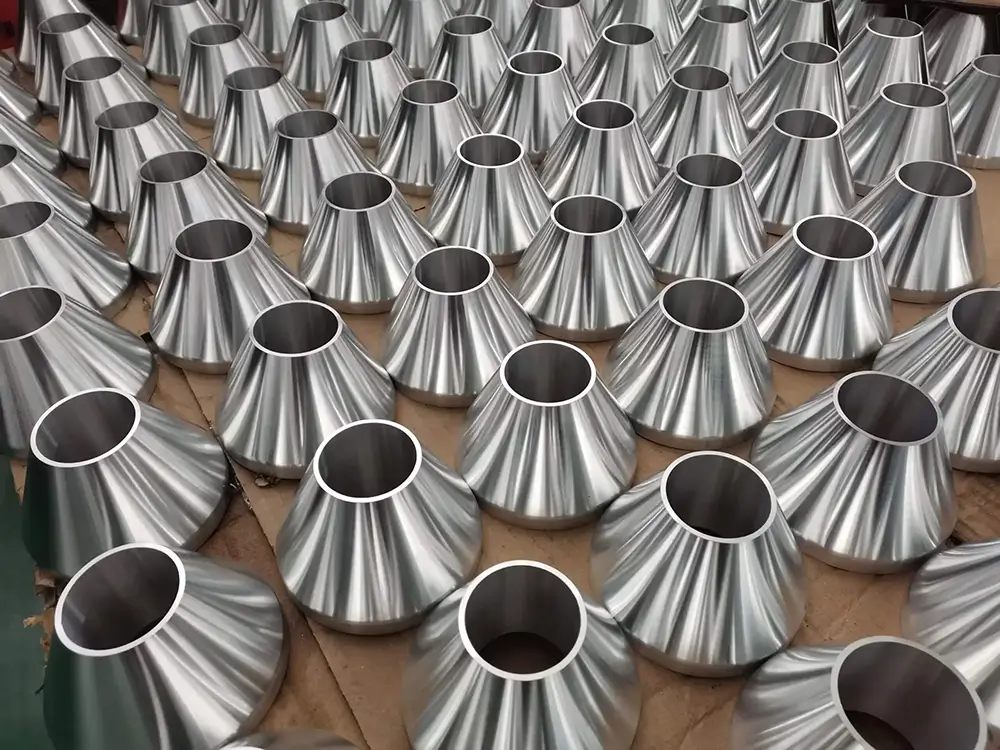
5-axis CNC machining adds two rotational axes to the three linear axes used in conventional 3-axis milling. This allows the cutting tool or workpiece to approach multiple surfaces and angles during machining.
It can be useful for components with:
- Features on several sides
- Angled holes or surfaces
- Complex contours
- Geometry that is difficult to reach with standard setups
Using 5-axis machining does not automatically make every part cheaper or more accurate. The benefit depends on the part design, setup requirements, and machining strategy.
Machmaster has in-house 5-axis CNC machining capability for suitable custom components. See our 5-axis CNC machining page.
What Materials Can Be CNC Machined?
CNC machining supports a wide range of metals and engineering plastics. The best material depends on the part’s strength, weight, corrosion resistance, conductivity, operating environment, and budget.
| Material | Common reasons to choose it | Typical part applications |
|---|---|---|
| Aluminum | Lightweight, machinable, and available in several grades | Housings, brackets, plates, heat sinks |
| Stainless steel | Strength and corrosion resistance | Shafts, fittings, equipment components |
| Brass | Good machinability and electrical properties | Connectors, fittings, precision components |
| Copper | High electrical and thermal conductivity | Electrical parts, heat-transfer components |
| Titanium | High strength-to-weight ratio and corrosion resistance | Specialized mechanical components |
| Engineering plastics | Low weight, electrical insulation, or specific functional properties | Bushings, housings, insulating parts |
Material grade matters. For example, different aluminum alloys can have different strength, machinability, and finishing characteristics. If your drawing specifies a grade, include it in your RFQ rather than requesting aluminum in general.
If you are still comparing materials, our CNC machining materials section can help you review available options.
What Parts Are Suitable for CNC Machining?
CNC machining is a good option when a part needs to be made directly from an engineering material and must follow a defined drawing or 3D model.
It is commonly used for:
- Mechanical components: Brackets, shafts, supports, housings, and machine parts.
- Electronic components: Enclosures, heat sinks, connector parts, and mounting plates.
- Automation and robotics parts: Sensor mounts, gripper components, fixtures, and custom brackets.
- Product development parts: Functional prototypes and components used to test fit, assembly, and performance.
- OEM components: Custom parts produced for equipment manufacturers and repeat production programs.
The key question is whether the part’s geometry, material, tolerance, and expected quantity suit machining. A supplier should review these factors before confirming the process.
View some examples of CNC machining at Machmaster.
Is CNC Machining the Right Process for Your Project?
CNC machining is not the best choice for every part. Comparing it with other manufacturing methods early can help avoid unnecessary tooling costs or production limitations.
| Manufacturing process | Often suitable for | Main consideration |
|---|---|---|
| CNC machining | Custom metal and plastic parts, prototypes, and repeat production | No dedicated mold is required, but machining time and material removal affect cost |
| 3D printing | Early prototypes and parts with complex internal geometry | Material properties, surface finish, and production requirements need evaluation |
| Plastic injection molding | Repeated production of plastic parts, especially at higher quantities | Mold development requires upfront investment |
| Sheet metal fabrication | Parts made from sheet material, such as covers, panels, and enclosures | The design must suit cutting, bending, and joining operations |
For plastic components, CNC machining can be useful during product development or when quantities do not justify mold investment. When a design is stable and production quantities increase, injection molding may become worth evaluating.
The best option depends on the part, material, quantity, tooling investment, and expected product life. It is often useful to compare the total project cost rather than looking at the unit price alone.
What Affects CNC Machining Cost?
CNC machining cost is based on more than the size of a part. Several design and production decisions can change the time, material, and work required.
Material
Material price and machinability both affect cost. A material that is more difficult to cut may require different tools, machining speeds, and production planning.
Part Geometry
Deep pockets, thin walls, narrow slots, small internal corners, and complex surfaces can make machining more difficult. Some features require special tools or additional setups.
Tolerances
Tighter tolerances may require more careful machining, additional inspection, and greater process control. Apply tight tolerances only to dimensions that affect fit, function, or assembly.
Surface Finish
As-machined parts, anodized parts, polished parts, and coated parts require different processes. Specify the required finish and appearance so the supplier can include it in the quotation.
Order Quantity
A CNC project involves programming, setup, machining, inspection, and sometimes finishing. For repeat orders, setup and programming work can be spread across more parts. However, the most economical quantity depends on the part and production plan.
Inspection and Packaging
Special inspection requirements, documentation, individual packaging, labeling, and assembly can all affect the final quotation. Include these requirements before the supplier prices the job.
For a closer look at the cost factors, read our guide to CNC machining cost.
What Should You Prepare Before Requesting a CNC Machining Quote?
A clear RFQ helps a manufacturer evaluate your part and provide a more useful quotation. Before contacting a supplier, prepare as much of the following information as possible.
| Information | What to provide | Why it matters |
|---|---|---|
| 3D CAD file | STEP or another agreed neutral CAD format | Shows the part geometry |
| 2D engineering drawing | PDF or drawing file with dimensions | Defines tolerances, threads, and critical features |
| Material | Exact material grade, if known | Helps determine material availability and machining requirements |
| Quantity | Prototype quantity and expected production volume | Helps plan setup and production |
| Tolerances | General tolerances and critical dimensions | Clarifies inspection and machining requirements |
| Surface finish | Anodizing, bead blasting, polishing, or other specified finish | Identifies secondary processing needs |
| Application | How the part will be used and assembled | Helps the supplier understand functional requirements |
| Delivery requirements | Target date, destination, and packaging needs | Helps evaluate the production and shipping plan |
If you do not have every detail finalized, send the available drawings and explain what is still undecided. A manufacturing engineer can review the design and identify questions that need to be resolved before production.
How to Evaluate a CNC Machining Supplier
A supplier should be evaluated on more than the machines listed on its website. The important question is whether its manufacturing process can meet your part requirements consistently.
Here are several points to check.
1. Manufacturing Equipment and Process Range
Check whether the supplier has the machining processes your parts need. Milling, turning, and multi-axis machining are not interchangeable for every geometry.
If your project includes several part types, a supplier with a suitable range of equipment may also help coordinate different machining operations.
2. Material and Finishing Support
Confirm that the supplier can source the specified material and meet the required surface finish. If finishing is important to the part’s function or appearance, discuss it before production rather than treating it as an afterthought.
3. Quality Management and Inspection
Ask how the supplier checks incoming material, controls production, and inspects finished parts.
You should also confirm whether the supplier can measure the critical dimensions on your drawing and provide the inspection records your project requires.
An ISO 9001 certificate is useful evidence of a quality management system, but it does not replace checking whether the supplier’s actual inspection methods suit your parts.
4. Production Capacity
If you expect repeat orders or increasing demand, ask about the supplier’s available equipment, production planning, and ability to support ongoing orders.
A supplier suitable for a prototype may not automatically be the right choice for a long-term production program.
5. Engineering Communication
Clear communication matters when drawings have unclear dimensions, material alternatives need review, or a design change affects manufacturing.
Look for a supplier that can explain manufacturing concerns in plain language and raise questions before production begins.
CNC Machining at Machmaster
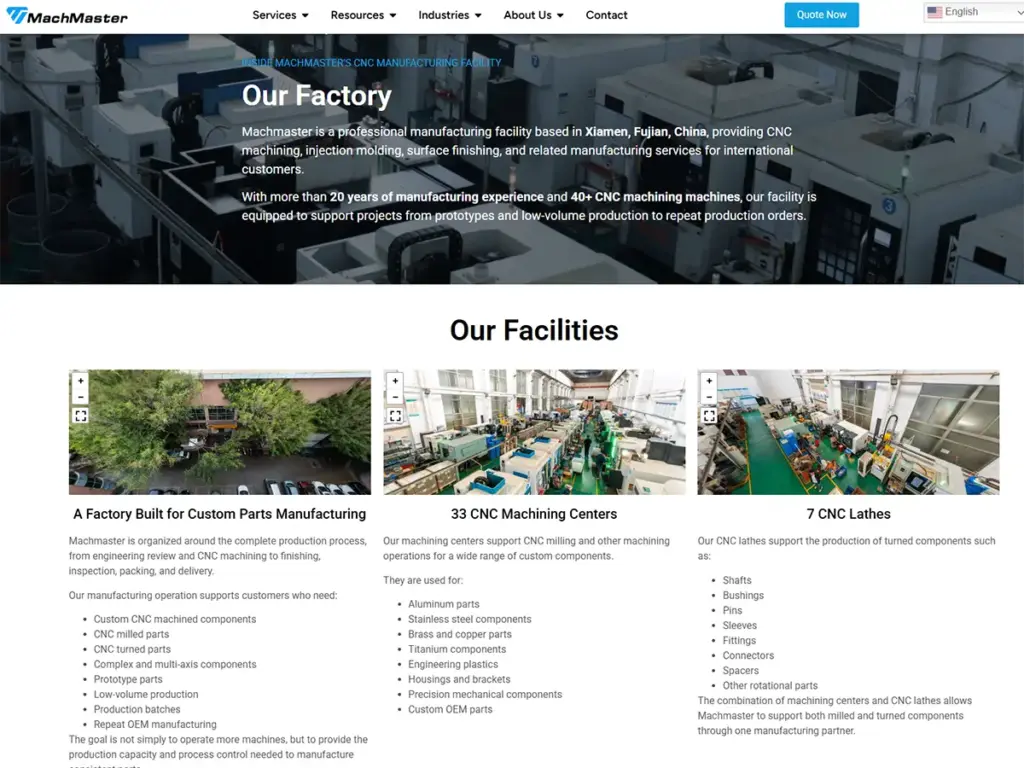
Machmaster is a CNC manufacturing company based in Xiamen, China, with 20 years of manufacturing experience.
We support custom metal and plastic part projects, from prototype development to repeat production. Our manufacturing capabilities include:
- 40+ CNC machines, including CNC machining equipment and CNC lathes
- In-house 5-axis CNC machining for suitable complex components
- CNC milling and turning for different part geometries
- A range of machining materials, including aluminum, stainless steel, brass, copper, titanium, and engineering plastics
- An in-house anodizing workshop for aluminum surface treatment
- ISO 9001-certified quality management
For projects that require plastic components, Machmaster also has an in-house plastic injection molding workshop. This gives customers another manufacturing option when a project moves from machined prototypes to molded plastic parts.
We can also support assembly and finished-goods packaging, helping customers coordinate more of the manufacturing process through one supplier.
Our factory and sales teams work with customers to review drawings, clarify requirements, and discuss suitable manufacturing options. If you are unsure whether CNC machining is the right process for your part, send us your design for review.
Explore our CNC machining services to learn more about our manufacturing capabilities.
Frequently Asked Questions About CNC Machining
Is CNC machining only used for metal parts?
No. CNC machines can process many metals and engineering plastics. The suitable material depends on the part’s function, design, and operating conditions.
Is CNC machining suitable for mass production?
Yes. CNC machining can support repeat and larger-volume production when the part design, machining process, and production capacity are suitable. The best production method should be evaluated based on quantity, part complexity, material, and total cost.
What files do I need for a CNC machining quote?
A 3D CAD model and a 2D engineering drawing are the most useful starting points. Include material, quantity, tolerances, surface finish, and any special inspection or packaging requirements.
Does CNC machining require a mold?
No. CNC machining removes material from a solid workpiece, so it does not require an injection mold. This makes it useful for custom parts, prototypes, and projects where mold investment is not appropriate.
What is the difference between CNC milling and CNC turning?
CNC milling uses rotating cutting tools to machine features on a workpiece. CNC turning rotates the workpiece while a cutting tool shapes it. Milling is commonly used for prismatic parts, while turning is commonly used for cylindrical components.
Can CNC machined aluminum parts be anodized?
Yes. Aluminum CNC machined parts can be anodized to improve corrosion resistance and provide a specified surface appearance. The alloy, part geometry, surface condition, and anodizing requirements should be considered before production.
How do I know which CNC machining process my part needs?
Start with the part’s geometry, material, critical dimensions, and functional requirements. A manufacturer can review the CAD model and drawing to determine whether milling, turning, 5-axis machining, or a combination of processes is suitable.
Have a CNC Part to Make?
Whether you need custom machined components for a prototype, equipment, or repeat production, Machmaster can review your drawings and discuss the manufacturing options.
Send us your CAD files, material requirements, quantity, and target specifications. Our engineering and sales teams will review your project, and a professional sales representative will respond within 24 hours.