
I once promised a client a delivery date I couldn’t keep.
Why? Because I didn’t fully understand how long injection molding really takes.
And I hate thinking about that moment.
If you’re managing a product launch, leading sourcing, or just trying to stay ahead of schedule, timing matters. Every day counts. And if no one gives you straight answers, it’s easy to make decisions that cost you time and trust.
That’s why I wrote this.
Over the years, I’ve been in your shoes. I’ve learned from mistakes and worked closely with engineers, mold makers, and suppliers to get a full picture of what actually happens behind the scenes.
This article breaks it all down how long each stage of injection molding takes, where delays come from, and how you can better plan your next move.
You’ll walk away with a simple way to understand the total production timeline—so you can make smarter calls without second-guessing.
So let’s start!
1. How Long Does Injection Molding Really Take?
This is the question almost everyone asks first.
You’re planning your launch. You’ve got deadlines. And you just want a clear answer.
Here’s the short version: injection molding can take anywhere from 3 to 12 weeks from start to finish.
That includes everything design, tooling, and part production.
If you’re in a rush or trying to map things out, here’s a quick look at the average timeline:
- Mold design and fabrication: 2–8 weeks
- Part production (once mold is ready): seconds to minutes per part
- Total project duration: 3–12 weeks
Sounds like a big range, right?
That’s because the time it takes depends on a few key things:
- How complex your part is
- What material you’re using
- What your supplier can handle
I remember one project that looked simple at first. Just a basic bracket. But the wall thickness wasn’t consistent, so the mold took longer to adjust. Add two rounds of sampling, and we were closer to 10 weeks before production even started.
On the flip side, I’ve seen clean, well-prepared designs hit the floor in under a month.
So, how long will your injection molding project take?
That depends on how early you get clear answers, how smooth the design is, and how experienced your supplier is.
2. Breaking Down the Injection Molding Timeline
So what actually happens during those 3 to 12 weeks? Let’s walk through it.
Every injection molding project moves through the same basic stages. But depending on your part, material, and team, the timeline can shift.
Here’s how it usually breaks down.
Step 1: Mold Design and Engineering
This is where your idea turns into a manufacturable part.
You’ll start with CAD modeling: a digital version of your part that shows every detail.
Then comes a DFM review. That stands for Design for Manufacturability. It’s where engineers check your design and suggest changes to make it easier to mold.
Some teams also run mold flow analysis. This step simulates how plastic will fill the mold. It’s optional, but it can prevent big issues later.
Expect this phase to take 1 to 3 weeks.
Want to speed it up?
Talk to your design team early. Share your goals. Ask questions. When everyone’s clear up front, there’s less back-and-forth later.
Step 2: Mold Tooling and Fabrication
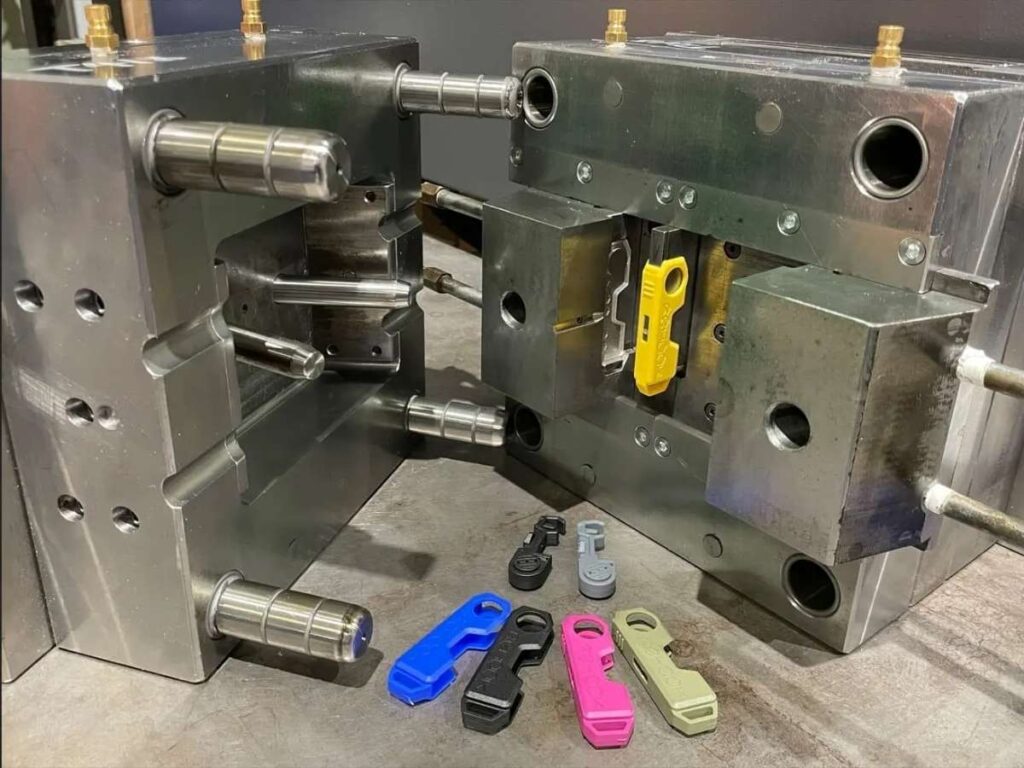
Once the design is locked, the mold is made.
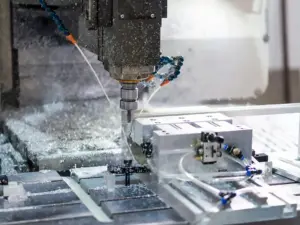
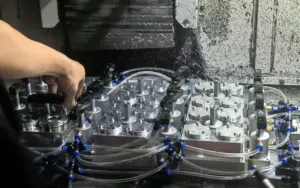
This step uses machines like CNC mills and EDM (Electrical Discharge Machining) to carve out your mold from aluminum or steel.
Aluminum molds:
- Faster to make: 1–4 weeks
- Lower cost
- Good for low-volume runs
Steel molds:
- Take longer: 4–8+ weeks
- Last much longer
- Better for high-volume production
After machining, the mold gets polished and tested. Poor polish can affect surface finish, so this part matters more than people think.
Choosing a supplier with in-house mold fabrication can save serious time.
MachMaster handles mold design, CNC machining, and EDM tooling under one roof—cutting down on delays and helping you hit tight deadlines with confidence.
Step 3: First Article and T1 Sampling
This is the test run.
It’s called T1 sampling, or sometimes First Article Inspection.
You’ll get sample parts to check for accuracy. Look for warping, gaps, or dimension problems.
This stage usually takes 3 to 7 days—but can drag on if revisions are needed.
I’ve seen projects delayed weeks because the part didn’t eject cleanly or warped too much on cooling.
Don’t be surprised if it takes a few tries to get things right.
Step 4: Mass Production
This is where real speed kicks in.
Once your mold is approved, each part can be made in 30 seconds to 2 minutes.
Cycle time depends on:
- Part size
- Material
- Mold design (single-cavity vs multi-cavity)
For small batches, production might wrap up in a few days.
For large orders, it can take several weeks.
I’ve had runs of 1,000 parts finish in under three days. But an order of 100,000 took closer to a month.
Still wondering where you can save time?
Understanding each stage and what causes slowdowns can help you plan better from the start.
3. Factors Affecting Injection Molding Time
Not every project follows the same path. Some move fast. Others drag on.
So what makes the difference?
Here are 4 key factors that affect how long your injection molding project will take—based on what I’ve seen firsthand.
Part Design Complexity
Simple parts get made faster.
If your part has thin walls, undercuts, or tight tolerances, expect longer tooling and testing times. These features often require special mold designs or extra machining steps.
Want to avoid delays?
Keep your geometry simple when possible.
Here are a few DFM (Design for Manufacturability) tips I’ve learned the hard way:
- Keep wall thickness consistent
- Avoid sharp corners
- Skip tiny features unless truly needed
- Limit the number of side actions or moving parts in the mold
The simpler your part, the faster everything else moves.
Material Choice
Some plastics are easy. Others slow things down.
Thermoplastics like ABS or polypropylene flow smoothly and cool quickly. These are great for short cycles.
But if you’re using glass-filled nylon or high-temp resins, expect longer mold times. These materials wear down tools faster and often need extra cooling time.
In one project, switching from standard polycarbonate to a flame-retardant grade added three days to the sampling phase. The resin just behaved differently.
So ask your supplier how your material choice will impact timing.
Number of Cavities in the Mold
A multi-cavity mold makes more parts per cycle. That speeds up production.
But there’s a tradeoff. These molds take longer to build. They cost more too.
Single-cavity molds are quicker to make and cheaper. But they produce parts one at a time.
Ask yourself: is faster output or shorter lead time more important right now?
If you need high volume, multi-cavity might save time in the long run.
Supplier’s Equipment and Capacity
Your supplier’s setup makes a big difference.
- Do they build molds in-house or send them out?
- Are they local or overseas?
- And how busy are they right now?
I once worked with a shop that had great machines—but they were booked out for six weeks. Another time, a small domestic supplier turned around a project in 10 days because they had idle capacity.
Before you commit, ask:
- Where is the mold built?
- Is the tooling done in-house or outsourced?
- What’s your current lead time?
Knowing this up front can save you a lot of waiting.
Every part, project, and partner is different. But when you understand what affects timing, you’re in a better spot to plan ahead.
Want to avoid delays caused by outsourced tooling or long queues?
MachMaster builds molds in-house, supports tight tolerances up to ±0.01mm, and moves fast—even on small batch or high-volume jobs.
4. Injection Molding vs Other Methods in Speed
You might be wondering: is injection molding the fastest option?
It depends on what you’re making—and how many parts you need.
I used to think 3D printing was always faster. It felt quick and easy. Just upload a file and go. But when I had to make 500 parts for a short-run job, injection molding pulled ahead fast. Once the mold was ready, the parts came off the machine one after another, no babysitting required.
Here’s a quick comparison to help you weigh the speed of different production methods:
| Process | Setup Time | Part Speed | Best For |
| Injection Molding | 2–8 weeks (tooling) | 30 sec to 2 min/part | High volume, repeatable parts |
| 3D Printing | 0–1 day | 30 min to 6+ hours/part | Prototypes, low volume |
| CNC Machining | 1–3 days (programming & fixturing) | 5–60 min/part | Metal parts, custom features |
| Urethane Casting | 1–2 weeks (master mold) | 10–20 min/part | Short runs, soft parts |
As you can see, injection molding has a long setup time. The tooling takes work.
But once you get past that, production is fast and steady. That’s where the real time savings come in—especially with big orders.
Other methods like 3D printing or CNC are great for smaller batches or highly custom parts. But for speed at scale, molding usually wins.
So ask yourself: do you need parts today or do you need thousands of time?
The answer will help you choose the right process.
5. Common Delays in Injection Molding Projects
Even with the best planning, delays happen.
Some are minor. Others throw off your whole schedule.
Here are four of the most common reasons I’ve seen injection molding projects fall behind—and what you can watch for.
Design Changes Mid-Process
This one’s a biggie.
Changing your design after tooling has started can set you back days or even weeks. I once worked with a client who added a tiny snap-fit feature two days into tooling. It didn’t look like much. But the change meant re-machining part of the mold. That pushed the timeline by almost two weeks.
If you can, lock your design before tooling begins. If changes are needed, make sure you understand how they’ll affect the schedule.
Material Shortages or Substitutions
Sometimes, the plastic you spec isn’t available.
Maybe it’s a supply chain issue. Maybe it’s an uncommon resin. Either way, delays happen fast.
I remember needing flame-rated nylon for electrical housing. The lead time jumped to six weeks due to backorders. We had to switch materials mid-project and that meant retesting the part all over again.
Talk to your supplier early about what’s in stock and what’s not. It can save you a headache later.
Miscommunication or Missing Files
This one’s sneaky. A missing CAD file. A wrong revision number. A delayed reply.
It all adds up.
I’ve seen entire mold builds delayed because a customer forgot to send a STEP file. Or sent the 2D drawing but not the 3D model.
Double check your files. Confirm the version. Make sure your supplier has everything they need to move forward.
Vendor Overload
Sometimes the shop just has too much on their plate.
During peak seasons, even the best vendors get backed up.
I once waited three extra weeks for tooling just because the supplier was swamped with automotive orders. They were honest about it—but I wish I had asked earlier.
Want to avoid surprises?
Ask your vendor how busy they are and where your project fits in the queue.
Understanding these common delays doesn’t fix everything. But it gives you a better shot at staying on track.
6. Pro Tips to Save Time in Injection Molding
If you’re managing your first big production run, switching suppliers, or trying to hit a tight deadline, you’re probably looking for ways to save time.
I’ve been in that spot more than once. The pressure builds. Timelines slip. And sometimes it feels like there’s no room to recover.
But there are ways to move faster—without cutting corners.
Here’s what’s helped me and my team stay on track.
Tip 1: Lock Your Design Before Tooling Starts
“Almost final” files can slow you down more than you think.
Every change after tooling begins means delays. I’ve lost two weeks just fixing small design tweaks that came in too late.
Ask for DFM (Design for Manufacturability) feedback early. Catch the issues before the mold is cut.
Tip 2: Use Rapid Tooling for Short Runs
Need parts fast?
Try aluminum molds or even 3D-printed tools for batches under 5,000 parts.
They’re quicker to make and cheaper to test with. It’s a good way to validate fit, function, and finish before committing to full-scale steel tooling.
Tip 3: Choose the Right Supplier for Your Volume
Big order? Go with a factory that has multiple machines and in-house tooling.
Smaller project? A leaner supplier might move faster and offer more attention.
Match your supplier to your needs. Bigger isn’t always better.
Tip 4: Ask for a Detailed Timeline Breakdown
Don’t settle for a vague quote.
Ask for clear timing on:
- Mold design
- Tooling
- Sampling
- Production
Ask questions like:
- “What’s the soonest I can get samples?”
- “What’s the latest I can approve without causing delays?”
Tip 5: Approve Mold Drawings Quickly but Carefully
Your review matters.
Check for:
- Draft angles
- Undercuts
- Parting lines
Don’t let these approvals sit. But don’t rush through them either. I always loop in a second set of eyes when I’m unsure.
Tip 6: Keep Communication Tight
Have one main contact on your side. And ask for one of theirs.
Set up weekly updates. Even short check-ins help catch issues before they grow.
Request photos or short videos of mold progress. It’s a small thing that builds trust.
Tip 7: Build Time Buffers Into Your Schedule
Always give yourself a cushion.
I add 1–2 weeks to whatever lead time is quoted. Sometimes more if I’m dealing with new partners or international shipping.
Delays happen. Buffers give you breathing room.
Tip 8: Start Small, Scale Fast
Run a small batch first.
Use it to test:
- Quality checks
- Packaging
- Supplier communication
Once it’s smooth, you’ll feel way more confident scaling up.
Every day counts in production. These steps won’t fix everything—but they can keep your project from falling behind before it even starts.
Conclusion
You wanted to know how long injection molding takes.
Now you’ve seen it all:
- Design
- Tooling
- Testing
- Production
- Delays
- And ways to save time
Remember that moment I shared—the one where I promised a deadline I couldn’t meet?
I’ve never made that mistake again.
Because once you understand the full timeline, you can lead better and plan smarter.
You’re ready now. You’ve got the tools.
So what’s your next move?
Will you wait or get your project in motion today?
Contact us and let’s talk about your timeline.
Dive Deeper Into Our Resources
If you’re looking for more insights, we’ve put together a list of helpful articles that you might enjoy:
Still haven’t found what you’re looking for? Don’t hesitate to contact us. We’re available around the clock to assist you.