
When sourcing custom CNC machined parts, should you work with a manufacturer in China or choose a local CNC machine shop?
Both options have advantages. Local suppliers can offer easier communication, shorter domestic shipping times, and convenient face-to-face discussions. Chinese CNC manufacturers can offer competitive manufacturing costs, flexible production capacity, and access to a broad manufacturing supply chain.
However, the right choice depends on more than the quoted price. Part complexity, material requirements, production quantity, quality expectations, delivery schedules, and supplier capabilities all affect the final decision.
In this guide, we compare China CNC machining suppliers with local manufacturers to help you evaluate the costs, quality, lead times, and practical considerations before choosing a supplier.
China CNC Machining vs. Local Suppliers: Key Differences
Before comparing individual factors, here is an overview of what buyers should consider when choosing between a Chinese CNC manufacturer and a local machine shop.
| Comparison | Local CNC Supplier | China CNC Manufacturer |
|---|---|---|
| Manufacturing cost | Depends on local labor and operating costs | Often competitive for custom manufacturing |
| Communication | Easier face-to-face discussions | Mainly remote communication |
| Delivery | Shorter domestic transportation | Includes international shipping and customs |
| Production capacity | Depends on the individual factory | Varies by factory and manufacturing network |
| Surface finishing | May require separate suppliers | May be coordinated with machining |
| Production quantity | Suitable for both small and large orders | Suitable for prototypes, batches, and larger orders |
| Engineering support | Direct local collaboration | CAD review and remote engineering support |
| Supplier visits | Usually easier to arrange | Requires international travel or remote verification |
| Best suited for | Urgent jobs and projects requiring close local coordination | Planned custom manufacturing and cost-conscious production |
These are general differences, not fixed rules. A well-equipped local factory may have greater capacity than a small overseas supplier, while an experienced Chinese manufacturer may offer better engineering support than some local machine shops.
The important point is to compare the actual capabilities and services of each supplier.
1. CNC Machining Cost: China vs. Local Manufacturing
Manufacturing cost is one of the main reasons companies consider sourcing CNC machined parts from China.
Chinese manufacturers can often offer competitive pricing because of local manufacturing infrastructure, material supply chains, and production resources.
However, a lower unit price does not automatically mean a lower total purchasing cost.
What Affects CNC Machining Costs?
Several factors influence the price of a custom CNC machined part:
- Material: Material grade, availability, size, and purchasing quantity affect the initial cost.
- Part geometry: Complex shapes, deep pockets, thin walls, and multiple machining operations can increase production time.
- Tolerances: Tight dimensional requirements may require additional machining, inspection, and process control.
- Setup and tooling: Fixtures, workholding, and programming contribute to the initial production cost.
- Surface finishing: Anodizing, bead blasting, powder coating, plating, and other finishing processes add to the overall cost.
- Order quantity: Setup costs can be distributed across more parts when production quantities increase.
For a more detailed breakdown, see our guide to CNC machining costs and the factors that affect pricing.
Compare Total Purchasing Costs, Not Just Unit Prices
When comparing quotations from China and local suppliers, consider the complete cost of receiving finished parts.
| Cost Item | What to Check |
|---|---|
| Machining | Are the material, machining operations, and specifications the same? |
| Tooling | Are setup and fixture costs included? |
| Surface finishing | Is the required finish included in the quotation? |
| Packaging | Does the supplier provide suitable export or protective packaging? |
| Transportation | What are the air freight, sea freight, or courier costs? |
| Import costs | Are customs duties, taxes, and handling fees applicable? |
| Quality | What inspection requirements and corrective actions are included? |
For example, a local supplier may quote a higher machining price but offer lower transportation costs. A Chinese supplier may have a lower manufacturing price, but international freight and import charges must be included.
The best option is the one that provides the right quality and delivery schedule at a competitive total cost.
2. Manufacturing Quality and CNC Capabilities
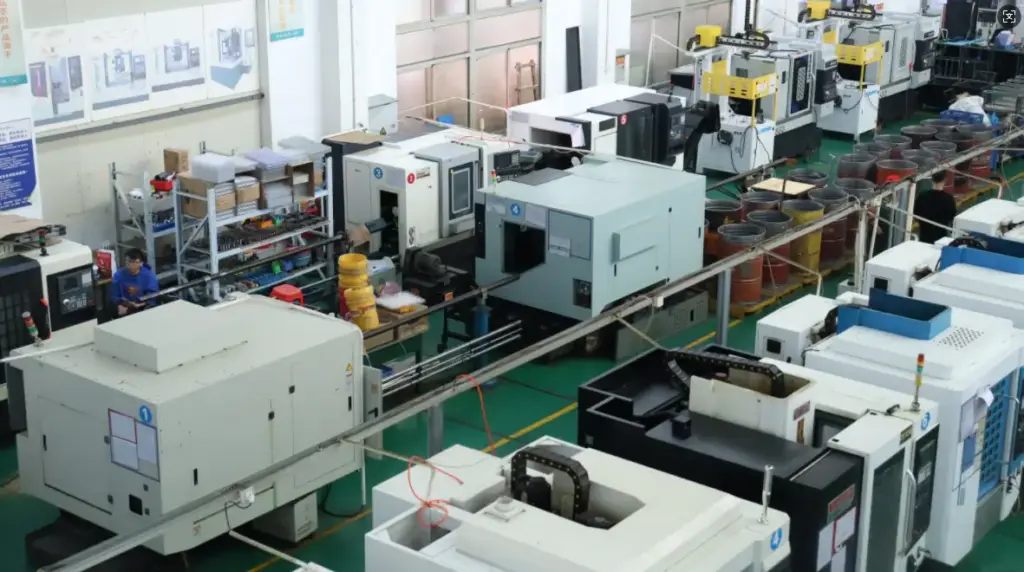
One common concern when sourcing CNC machined parts from China is whether overseas manufacturers can meet the same quality requirements as local suppliers.
The answer depends on the individual factory, its manufacturing experience, equipment, inspection methods, and quality management procedures.
The country where a part is manufactured does not determine its quality.
What Determines CNC Machining Quality?
When evaluating a supplier, pay attention to the following areas:
Manufacturing equipment and experience
Check whether the supplier has the machining capabilities required for your part geometry, materials, and production quantity. Experience with similar components can also help reduce manufacturing problems.
Material control
Confirm the material grade, specifications, and traceability requirements. If material certification is necessary for your project, clarify this before production.
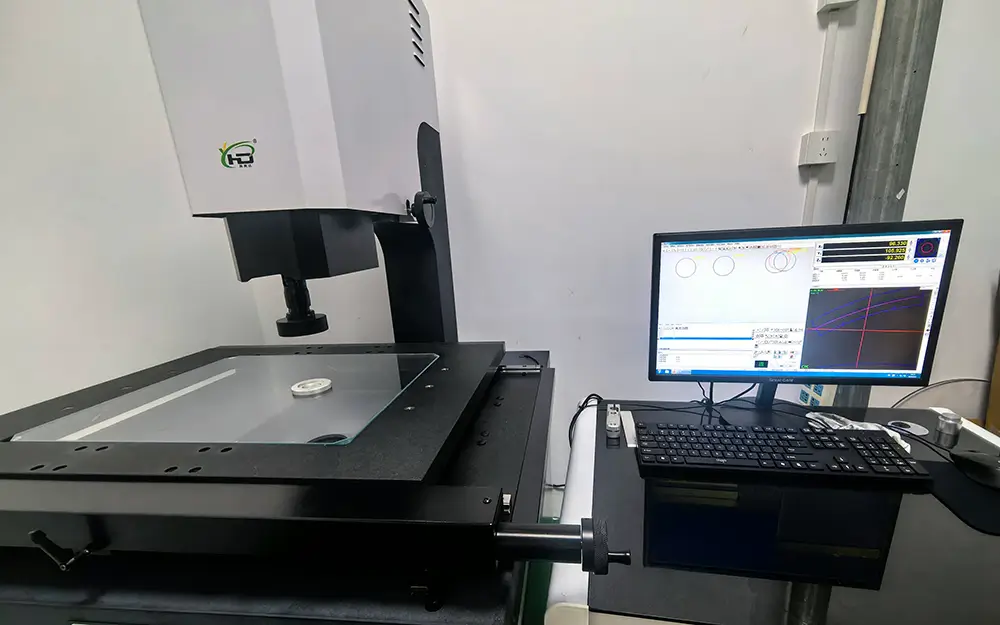
Dimensional inspection
Ask how critical dimensions are measured and whether the supplier can provide inspection reports when required.
Quality management
Understand how the factory checks incoming materials, controls production processes, and inspects finished parts.
Surface finishing
If your parts require anodizing, plating, painting, or other finishes, confirm that the supplier can meet the required appearance and functional specifications.
How to Evaluate a CNC Supplier’s Quality
Before placing an order, consider these practical steps:
- Request samples of similar machined components.
- Clearly identify critical dimensions and tolerances on your drawings.
- Confirm material specifications and inspection requirements.
- Ask about the supplier’s quality management system.
- Review sample inspection reports when available.
- Agree on appearance standards and acceptable surface conditions.
- Confirm how quality issues will be handled.
A supplier should be able to explain how it will manufacture and inspect your parts, rather than simply promising that everything will meet your requirements.
3. Lead Time and International Shipping
Local suppliers generally have an advantage in domestic transportation. However, the actual manufacturing lead time depends on production scheduling, part complexity, material availability, and finishing requirements.
A local factory with a full production schedule may not necessarily deliver faster than an overseas manufacturer with available capacity.
Comparing Production and Delivery Time
| Factor | Local Supplier | China Supplier |
|---|---|---|
| Production scheduling | Depends on factory workload | Depends on factory workload |
| Material availability | Depends on local supply | Depends on material availability |
| Machining time | Depends on part design | Depends on part design |
| Surface finishing | May involve separate suppliers | May be coordinated through manufacturing partners or internal facilities |
| Transportation | Usually shorter domestic delivery | Requires international transportation |
| Customs clearance | Generally not required for domestic delivery | May require import documentation and customs clearance |
When evaluating a quotation, ask for the expected production lead time and shipping estimate separately.
This helps you understand how much time is needed for manufacturing and how much is required to transport the finished parts.
When Is a Local Supplier Faster?
A local CNC supplier may be the better choice when:
- You need replacement parts urgently.
- Your production line is waiting for components.
- Your design requires frequent physical adjustments.
- You need direct access to the manufacturing facility.
- International shipping would delay your project.
When Can China CNC Machining Meet Your Schedule?
Sourcing from China can work well when:
- Your drawings and specifications are reasonably stable.
- Production can be planned in advance.
- Your project requires multiple machining or finishing operations.
- You need repeat orders or planned production batches.
- International transportation can fit your delivery schedule.
The key is to evaluate the complete project timeline rather than comparing machining lead times alone.
4. Communication and Engineering Support
The challenge is not simply the language difference. Technical misunderstandings can happen whenever drawings, tolerances, materials, or finishing requirements are unclear.
For example, a supplier may interpret a dimensional tolerance differently, overlook a cosmetic requirement, or misunderstand which surfaces need anodizing or polishing.
These problems can affect both product quality and delivery time.
How to Reduce Communication Problems
A clear manufacturing inquiry should include:
1. Provide CAD files and technical drawings
Send 3D models together with 2D drawings whenever possible. The 3D file helps the supplier understand the geometry, while the 2D drawing defines dimensions and technical requirements.
2. Identify critical dimensions
Clearly mark important tolerances, hole positions, flatness requirements, and other functional dimensions.
3. Specify materials and surface finishes
Include the exact material grade and any required surface treatment. If appearance is important, provide reference photos or samples.
4. Confirm quantities and delivery requirements
State the prototype quantity, production quantity, packaging expectations, and target delivery schedule.
5. Review DFM feedback
Ask the supplier to identify potential manufacturing problems before production begins.
6. Keep important changes documented
Confirm drawing revisions, technical decisions, and production changes in writing.
A capable overseas supplier should be able to review your drawings, identify potential manufacturing challenges, and communicate clearly throughout the project.
5. Production Capacity and Manufacturing Flexibility
You should also evaluate whether the supplier can support your project as production requirements change.
For example, a project may start with a few prototypes, move into a small production batch, and eventually require repeat orders in larger quantities.
Changing suppliers at each stage can create additional work involving drawings, quality standards, production processes, and supplier approval.
What Should You Check?
Before choosing a manufacturer, consider:
- Can the factory produce prototypes and production batches?
- Does it have the equipment required for your part design?
- Can it maintain consistent quality across repeat orders?
- Can production capacity increase when demand grows?
- Can it coordinate machining and required surface finishing?
- Does it have experience with similar materials and components?
For projects involving several manufacturing processes, working with a supplier that can coordinate multiple production requirements may simplify purchasing and project management.
However, always confirm which processes are performed in-house and which are supported by external manufacturing partners when that distinction matters to your project.
6. When Should You Choose a Local CNC Supplier?
Although China offers competitive manufacturing options, sourcing locally can be the better decision for certain projects.
A local CNC machining supplier may be more suitable when:
Urgent delivery is essential
If parts are needed immediately for equipment repairs, production maintenance, or urgent testing, local manufacturing can reduce transportation time.
Frequent design changes are expected
Projects involving ongoing design adjustments may benefit from direct communication and easier access to the manufacturing facility.
Face-to-face collaboration is important
Some projects require physical discussions, sample reviews, or direct coordination between engineering teams.
Domestic sourcing is required
Certain industries and projects have local sourcing requirements, data restrictions, or specific regulatory obligations.
International shipping is not practical
For very small or low-value orders, international freight and import handling may reduce the cost advantage of overseas manufacturing.
Choosing a local supplier is not necessarily more expensive or less efficient. It simply depends on the requirements of your project.
7. When Does CNC Machining in China Make More Sense?
For many companies, working with a Chinese CNC manufacturer can be a practical option for custom manufacturing projects.
It is worth considering when:
You want to control manufacturing costs
If your project involves custom metal or plastic components, comparing Chinese manufacturing quotations may help you find a more competitive production solution.
You need flexible production quantities
An experienced manufacturer may support prototype development, small batches, and larger production orders.
Your parts require multiple manufacturing processes
Some projects involve CNC milling, turning, drilling, and additional surface finishing. Working with a manufacturer that can coordinate these processes may simplify production management.
You have a stable design and clear specifications
When drawings, materials, tolerances, and finishing requirements are clearly defined, remote engineering coordination becomes easier.
You expect repeat orders
For ongoing production, it is important to work with a manufacturer that can maintain consistent processes and support future orders.
The main advantage is not simply finding a lower-priced supplier. It is finding a manufacturer whose production capabilities, quality standards, and project management approach match your requirements.
8. How to Choose a Reliable CNC Machining Supplier in China
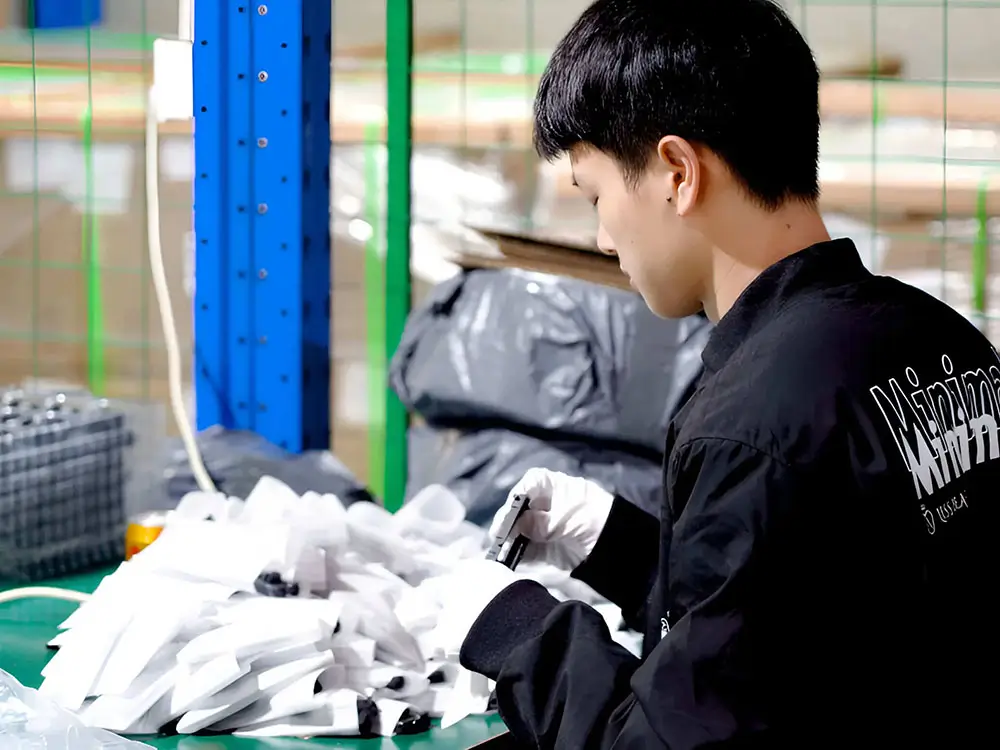
China has a wide range of CNC machining companies. Some are specialized machining factories, while others provide broader manufacturing services through their own facilities and supplier networks.
Their capabilities, production arrangements, and levels of engineering support can vary considerably.
Before placing an order, check the following:
1. Verify Actual Manufacturing Capabilities
Find out what the factory can manufacture using its own equipment and whether it has experience with similar components.
Do not rely only on a list of advertised services.
2. Review Similar Manufacturing Projects
Ask for examples of parts with comparable geometry, materials, tolerances, and surface finishes.
This gives you a better understanding of the supplier’s practical experience.
3. Understand Quality Control
Check the supplier’s quality management system, inspection procedures, and ability to provide relevant documentation.
4. Confirm Production Capacity
Ask whether the factory can support your current order quantity and potential repeat orders.
5. Evaluate Communication
Pay attention to how the supplier responds to technical questions, reviews drawings, and explains manufacturing limitations.
6. Compare Complete Quotations
Make sure all suppliers quote based on the same materials, drawings, quantities, tolerances, surface finishes, and delivery requirements.
For a more detailed comparison of manufacturing companies, see our guide: 9 CNC Machining Companies in China: Services, Capabilities & How to Choose.
China CNC Machining vs. Local Suppliers: Which Should You Choose?
There is no single answer for every project. The right sourcing option depends on your priorities.
| Your Project Requirements | Option to Consider |
|---|---|
| Urgent replacement parts | Local supplier |
| Frequent physical design adjustments | Local supplier |
| Domestic sourcing requirements | Local supplier |
| Competitive custom manufacturing costs | Compare China suppliers |
| Planned prototype and production batches | Compare China and local suppliers |
| Multiple machining and finishing requirements | Supplier with coordinated manufacturing capabilities |
| Long-term repeat production | Manufacturer with suitable production capacity |
| Complex precision components | Evaluate actual technical capabilities |
| Lowest total purchasing cost | Compare complete landed costs |
Rather than choosing based on location alone, compare suppliers according to what your project actually needs.
A reliable manufacturing partner should be able to explain how it will produce your parts, control quality, manage delivery, and support future orders.
Frequently Asked Questions
Is CNC machining cheaper in China than in the USA or Europe?
Chinese CNC manufacturers often offer competitive manufacturing prices because of local production resources and supply chains. However, the final cost depends on part complexity, material, quantity, finishing, shipping, and import charges. Buyers should compare the total landed cost rather than machining prices alone.
Is CNC machining quality in China reliable?
Quality varies between manufacturers. Many Chinese CNC factories have the equipment, experience, and quality management systems needed for demanding custom manufacturing projects. Buyers should evaluate actual production capabilities, inspection procedures, material control, and relevant certifications.
How long does CNC machining take in China?
Production time depends on part complexity, material availability, quantity, finishing requirements, and factory workload. International transportation must also be included when planning delivery. Request separate estimates for manufacturing and shipping.
Is it safe to send CAD files to a CNC machining supplier in China?
Before sharing technical files, check the supplier’s business background, confidentiality practices, and data protection procedures. For sensitive projects, consider using a non-disclosure agreement (NDA) and sharing only the information needed for quotation and manufacturing.
Can Chinese CNC manufacturers handle both prototypes and production orders?
Yes, many manufacturers support projects from prototype development to production batches. However, capabilities differ between factories. Confirm that the supplier can handle your required quantities and maintain consistent quality across repeat orders.
What information do I need to get a CNC machining quotation from China?
You should normally provide 3D CAD files, 2D technical drawings, material specifications, required quantities, tolerances, surface finishing requirements, and your target delivery schedule. Clear information helps the supplier review manufacturability and prepare a more accurate quotation.
Looking for a CNC Machining Manufacturer in China?
Machmaster provides custom CNC machining from its factory in Xiamen, China, supporting projects from prototype development to production batches.
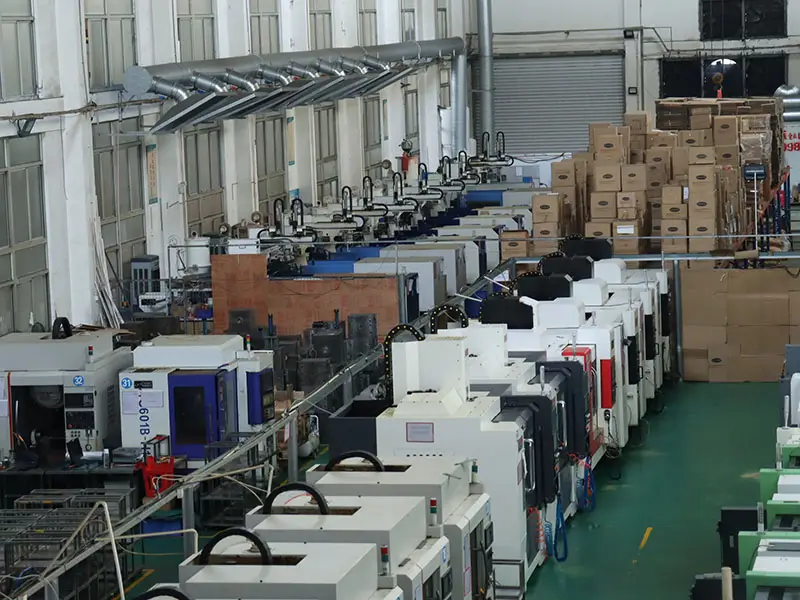
Our manufacturing capabilities include CNC milling, CNC turning, 3-axis, 4-axis and 5-axis machining, with 40+ CNC machining machines and in-house anodizing.
We work with common engineering materials, including aluminum, stainless steel, brass, and engineering plastics. ISO 9001 quality management supports our manufacturing and inspection processes.
If you are comparing CNC machining suppliers in China, send us your CAD files, technical drawings, material requirements, and order quantities.
Our engineering and sales teams can review your project and help you understand the available manufacturing options.
Communicate with Machmaster
Have a CAD design ready? Upload your STEP files for a free DFM review and instant quote within 24 hours.