

You’re Looking for a Shop to Machine a Multi‑Face Part—Right?
You’ve probably been there:
You design a part—maybe an aerospace bracket, a medical device housing, or a robotic joint. It needs machining on multiple faces. Holes on the side, a pocket on the bottom, and a feature at a 45° angle.
You get quotes from several CNC shops.
One says they’ll do it on a 3‑axis machine with three setups.
Another says they’ll use 4‑axis, single setup.
A third recommends 5‑axis because “it’s the most accurate.”
Prices are all over the place. Lead times too.
Which one should you choose?
This article won’t explain what CNC machining is—I assume you already know that.
Instead, it helps you decide: for your part, should you go with 3‑axis, 4‑axis, or 5‑axis?
A Simple Decision Framework
You don’t need complex calculations. Just answer three questions:
| Question | 3‑Axis | 4‑Axis | 5‑Axis |
|---|---|---|---|
| How many faces need machining? | 1–2 faces | 3–4 faces | 5+ faces, or complex freeform surfaces |
| Are there positional tolerances between features on different faces? | No or loose | Yes, typically <0.05mm | Yes, very tight, or compound angles |
| Annual quantity? | <100 pcs | 100–5,000 pcs | >5,000 pcs, or extremely high‑value parts |
Quick rule of thumb:
- If your answers lean toward the left column → 3‑axis is enough. Don’t overspend.
- If you hit two or more in the middle column → 4‑axis is your sweet spot.
- If you hit the right column → 5‑axis is worth considering.
Real Cost Comparison (Based on Our Shop Data)
We recently ran a test on the same part: an aerospace sensor housing, 150×100×80mm, machining required on six faces, with four cross‑holes requiring ±0.02mm positional tolerance.
| Process | Setups | Programming Time | Cycle Time per Part | Cost per Part | Total Cost (100 pcs) |
|---|---|---|---|---|---|
| 3‑axis (3 setups) | 3 | 4 hr | 52 min | $87 | $8,700 |
| 4‑axis (1 setup) | 1 | 6 hr | 38 min | $62 | $6,200 |
| 5‑axis (1 setup) | 1 | 10 hr | 32 min | $79 | $7,900 |
Key takeaways:
- 4‑axis saved 28% compared to 3‑axis, mainly from reduced setup labor and fewer errors.
- 5‑axis was faster per part, but higher machine-hour rate and programming cost made it more expensive overall for this quantity.
- For 100 pieces, 4‑axis was the most economical choice.
Bottom line: 4‑axis isn’t simply “better” than 3‑axis—it’s the most cost‑effective solution for a wide range of parts.
When Is 3‑Axis Enough?
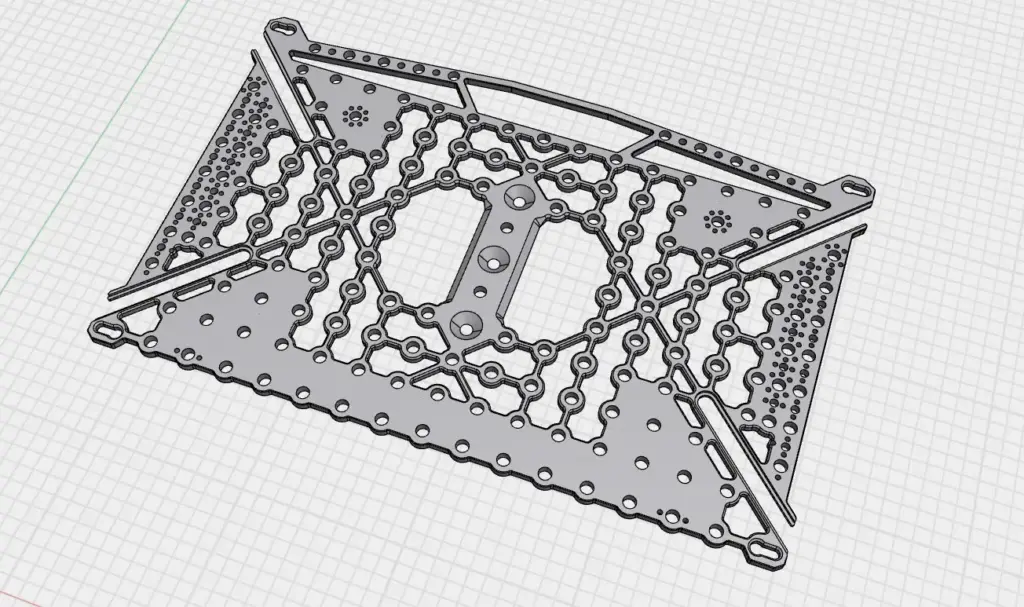
Don’t choose 4‑axis or 5‑axis just because they sound more advanced. Stick with 3‑axis if your part matches these characteristics:
- All features are on one or two parallel faces
- There are no tight positional tolerances between different faces
- Annual quantity is under 100 pieces (setup cost is acceptable)
Example: A simple aluminum mounting plate with holes and a pocket on the top face.
3‑axis cost: $25/part.
4‑axis cost would be higher because you pay for a more expensive machine without using its rotary capability.
When Does 4‑Axis Make the Most Sense?
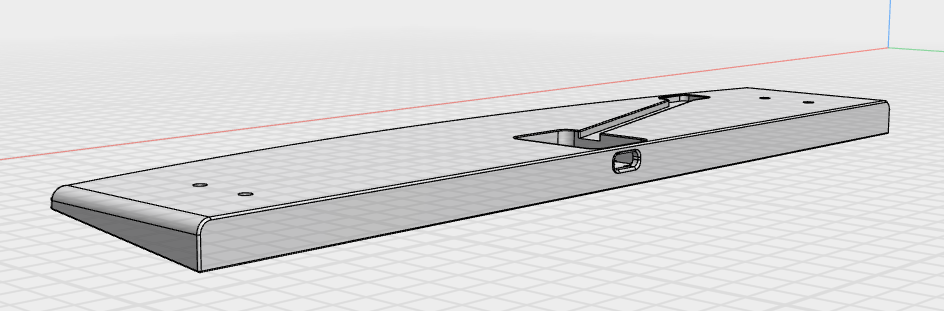
This is where most engineering projects land. Consider 4‑axis if your part meets any two of these criteria:
- Machining required on 3 or 4 faces
- Positional tolerances between features on different faces (e.g., a side hole must align with a top pocket)
- Annual quantity between 100 and 5,000 pieces
- The part has cylindrical or contoured surfaces that benefit from continuous rotary motion
- You want shorter lead times and less supplier coordination
Example: A medical instrument housing that needs machining on the top, bottom, and two sides. The top holes and side holes have concentricity requirements.
With 3‑axis, three setups—each introduces alignment risk.
With 4‑axis, one setup, all features referenced to the same datum. Concentricity is easy to hold.
When Do You Really Need 5‑Axis?
5‑axis is powerful, but it comes with higher cost. Only go this route if:
- The part requires machining on five or more faces in a single setup
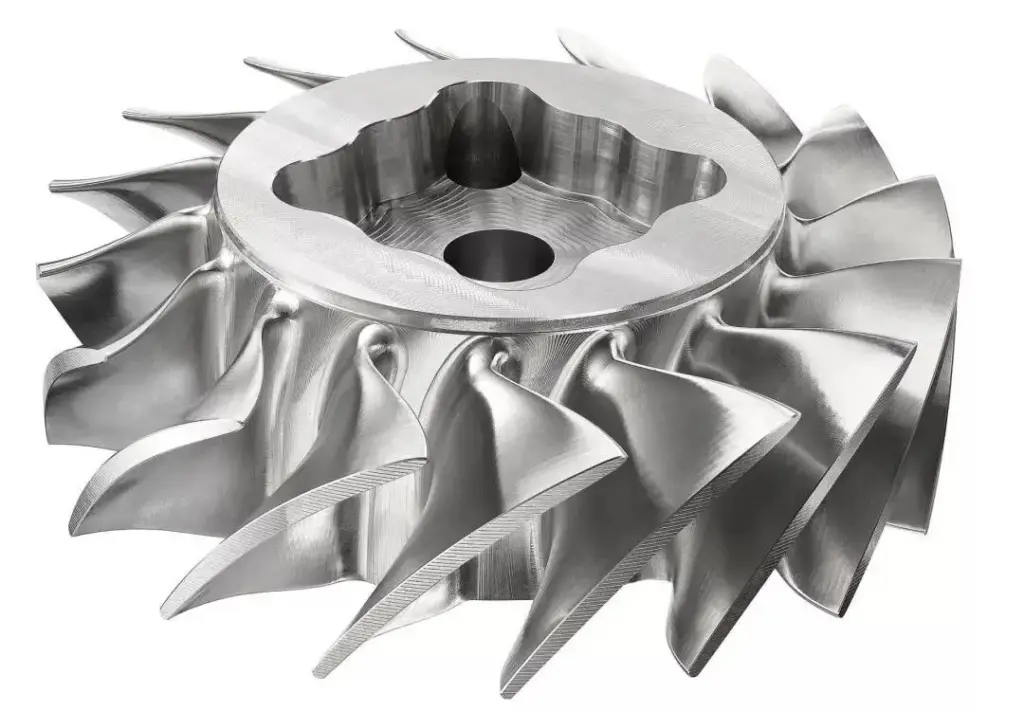
- It has complex freeform surfaces (turbine blades, impellers)
- There are deep cavities that require the tool to tilt to reach
- The part is extremely high value (aerospace critical components), and you’re willing to pay a premium for absolute certainty
If your part doesn’t fall into these categories, 4‑axis will likely give you the best balance of capability and cost.
A Quick Checklist to Help You Decide
Use this checklist when talking to suppliers—or when reviewing your own design.
| Question | Yes | No |
|---|---|---|
| Does the part require machining on 3 or more faces? | → Consider 4‑axis/5‑axis | → 3‑axis may be enough |
| Are there positional tolerances between features on different faces? | → 4‑axis/5‑axis are advantageous | → 3‑axis may work |
| Is annual quantity above 100 pieces? | → 4‑axis/5‑axis become more economical | → 3‑axis cost is acceptable |
| Does the part have cylindrical or contoured surfaces? | → 4‑axis/5‑axis are beneficial | → 3‑axis may suffice |
| Does the part have 5+ faces or complex freeform surfaces? | → Consider 5‑axis | → 4‑axis is likely enough |
If you answered “Yes” to at least two of the first four questions, you should at least get a 4‑axis quote.
Case Study – How One Customer Switched from 3‑Axis to 4‑Axis and Saved 32%
Customer: drone manufacturer
Part: Gimbal mount, 120×80×60mm
Features: Top mounting holes, side cable channel, bottom motor mount—all with positional relationships between faces
Original approach (3‑axis):
- Three setups, each requiring re‑alignment
- Yield rate: only 82% (setup errors caused misaligned holes)
- Cost per part: $78
Our recommendation (4‑axis):
- One setup, rotary indexing
- Yield rate: 98%
- Cost per part: $53 (32% savings)
Customer feedback:
“I wish I had known about 4‑axis earlier. I lost money on my last 500‑piece order because I didn’t realize a single‑setup solution was possible.”
What’s the Best Strategy for Your Part?
If you’re currently sourcing a part—or designing one—and you’re unsure whether 3‑axis, 4‑axis, or 5‑axis is the right fit, we can help.
Just do this: upload your CAD file (STEP or IGES). Our engineers will:
- Analyze the features and tolerances
- Provide a side‑by‑side comparison of 3‑axis, 4‑axis, and 5‑axis options with costs and lead times
- Offer DFM suggestions if we see opportunities to improve manufacturability
No cost, no obligation. You’ll walk away knowing exactly what process your part needs—and what a fair price looks like.