
CNC Machined Aluminum Phone Holder Housing – 6061 Aluminum
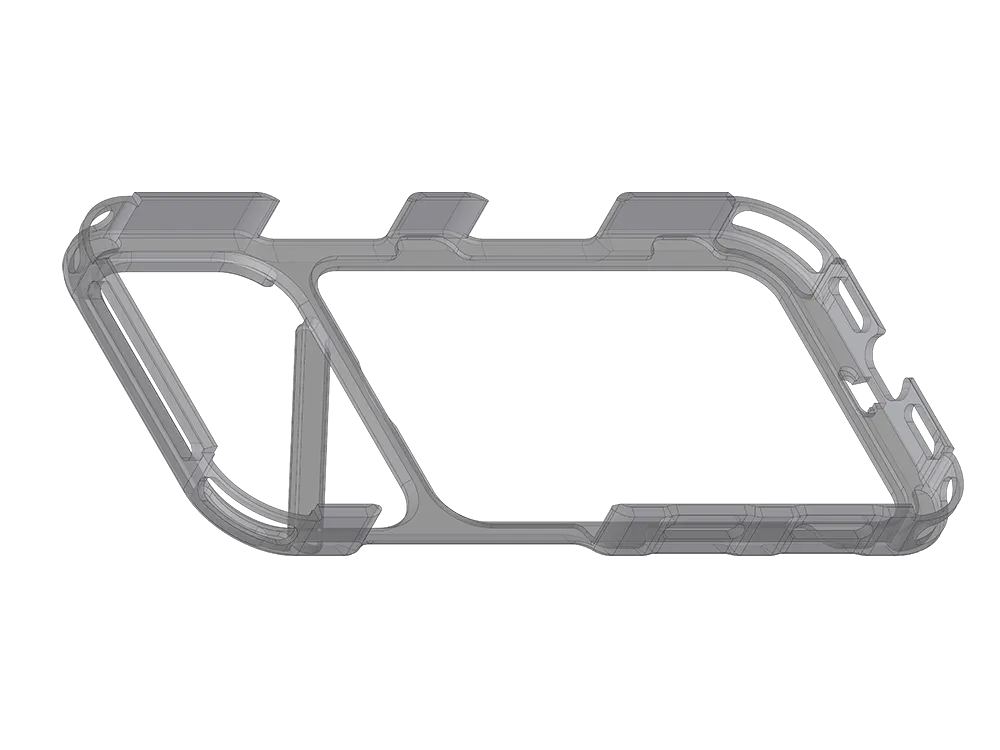
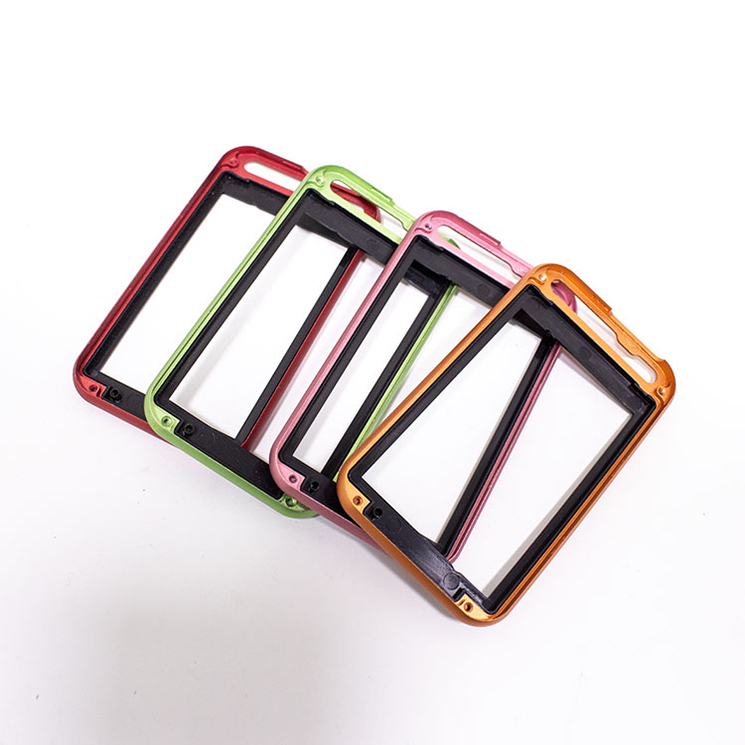
This phone holder housing was manufactured from 6061 aluminum alloy in a production run of 500 pieces. The part features an open-frame structure with a large central opening, rounded corners, shaped edges, and several smaller structural features.
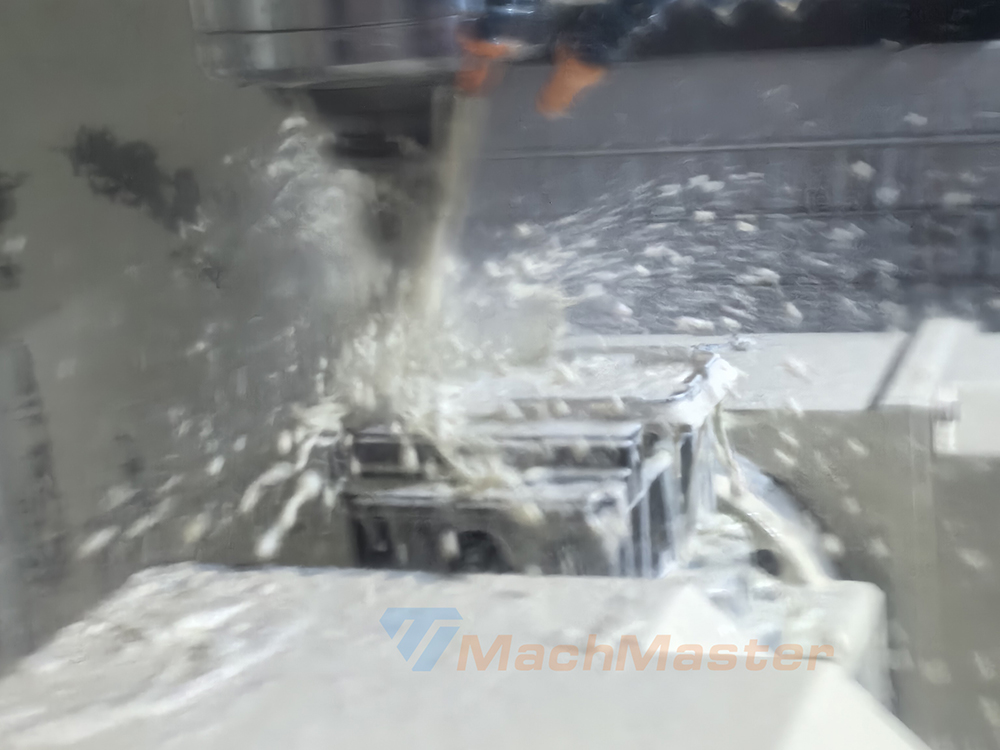
The manufacturing process included CNC machining, sandblasting, and black anodizing. The main manufacturing considerations involved maintaining frame stability during machining, producing clean internal contours, and achieving a consistent surface appearance across the batch.
Part Structure and Machining Requirements
The housing uses an open-frame structure rather than a solid block design. Its geometry includes a large internal opening, narrow connecting sections, rounded transitions, and raised areas around certain openings.
These features affect how the part is held, machined, and finished. Narrow frame sections need support during machining to reduce vibration and dimensional variation. Internal openings and corners require suitable tool access, while visible outer edges need careful deburring and edge preparation.
For this type of aluminum housing, the machining strategy needs to balance material removal, part stability, and surface quality.
CNC Machining Challenges and Solutions
1. Preventing Deformation of the Open-Frame Structure
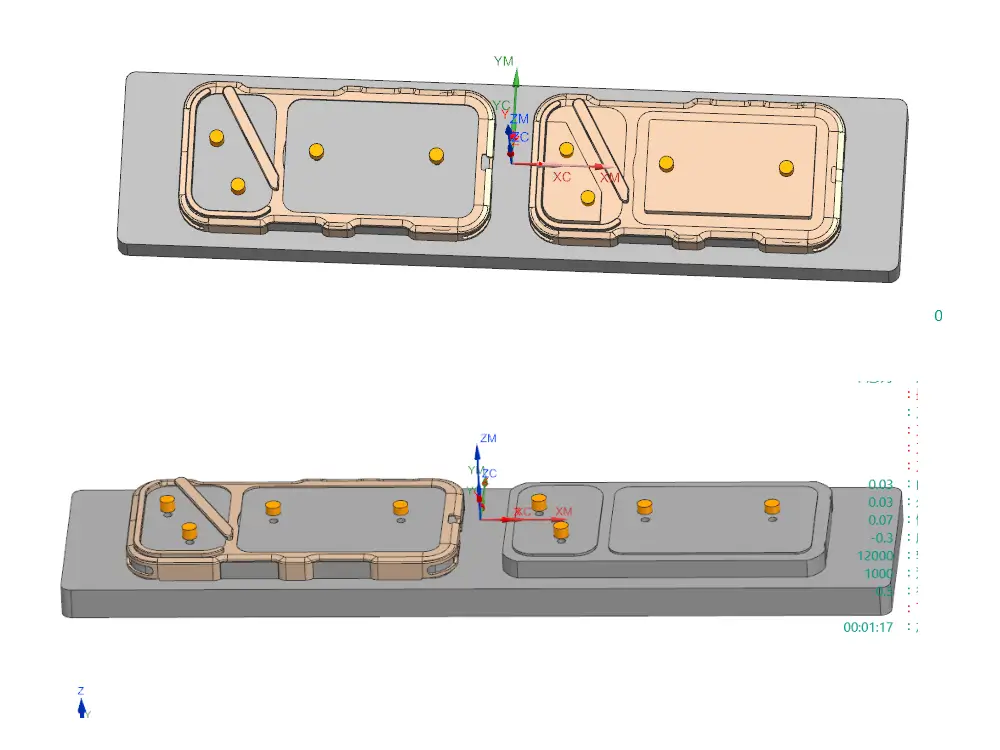
One of the main considerations when machining an open-frame aluminum part is its reduced structural stiffness. Unlike a solid component, the large central opening leaves narrower sections connecting the outer frame. During cutting, these sections may vibrate or deflect under machining forces. Excessive clamping pressure can also distort the part, particularly when machining thin walls or narrow connecting areas.
A suitable manufacturing approach includes:
- Supporting the part close to the areas being machined.
- Using controlled clamping pressure to avoid distorting the frame.
- Removing material in a balanced sequence rather than concentrating cutting forces on one narrow section.
- Using appropriate cutting parameters and tool conditions to reduce vibration.
For reference, thin aluminum features around 1–2 mm are generally more sensitive to cutting forces and clamping deformation than thicker sections. This is a general engineering reference, not a confirmed dimension for this project. Actual wall thickness and machining allowance should be determined from the customer’s CAD model and drawing.
2. Machining Internal Openings and Rounded Corners
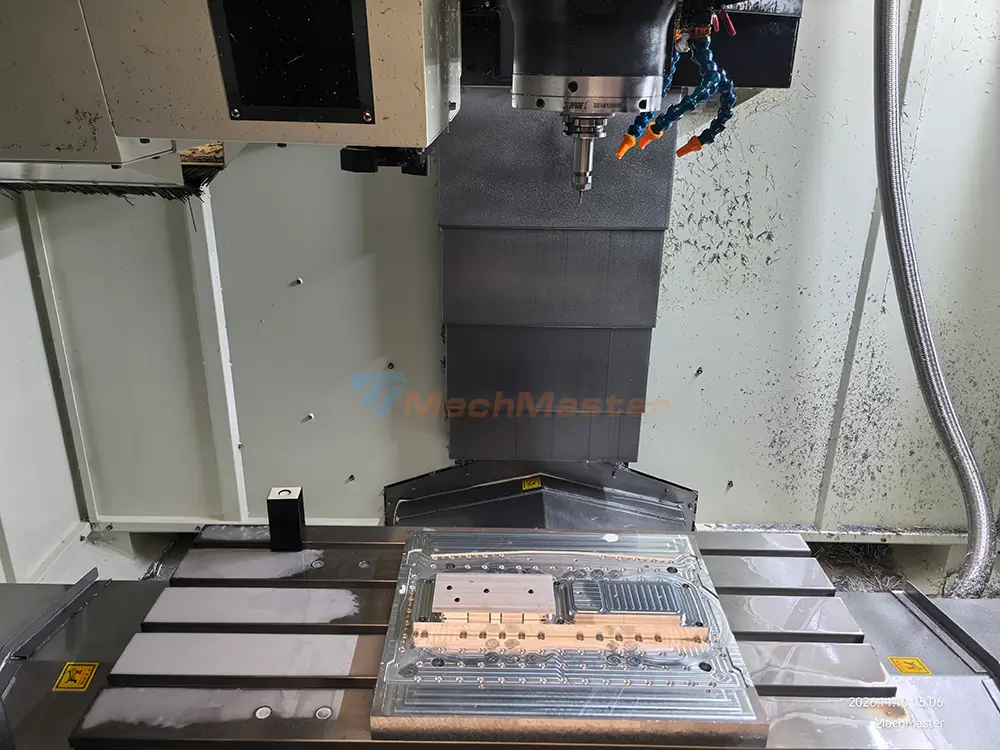
The large central opening and smaller shaped openings require careful contour machining. The tool radius determines the smallest achievable internal corner radius. If a drawing specifies a corner that is too sharp for the selected tool, the finished geometry may not match the design.
Narrow sections and recessed areas can also restrict tool movement, while longer tools may increase vibration and reduce machining stability. The manufacturing plan should consider tool diameter, tool access, tool overhang, and the geometry shown in the CAD model.
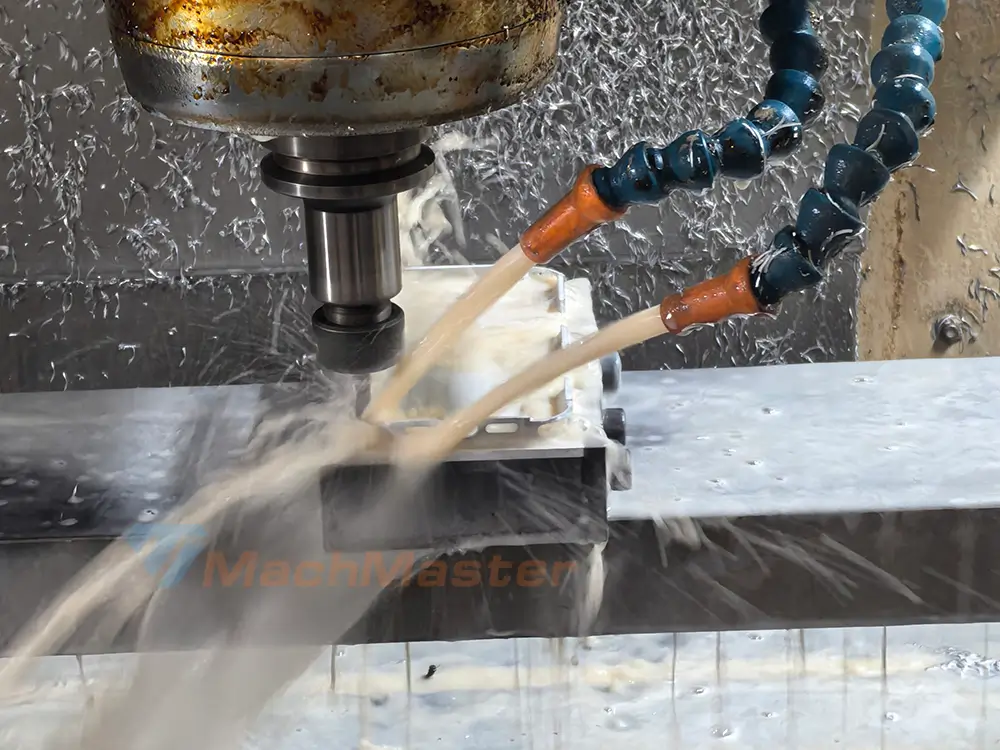
3. Burr Removal and Edge Consistency
Burrs can form around openings, cutouts, and intersecting machined surfaces. On a housing with many visible edges, untreated burrs can affect handling and assembly. Uneven edge treatment may also become more noticeable after anodizing.
Deburring and edge preparation are important before surface finishing. The aim is to remove sharp edges and machining burrs without changing the designed frame profile or making the edges visibly uneven.
Sandblasting Before Anodizing
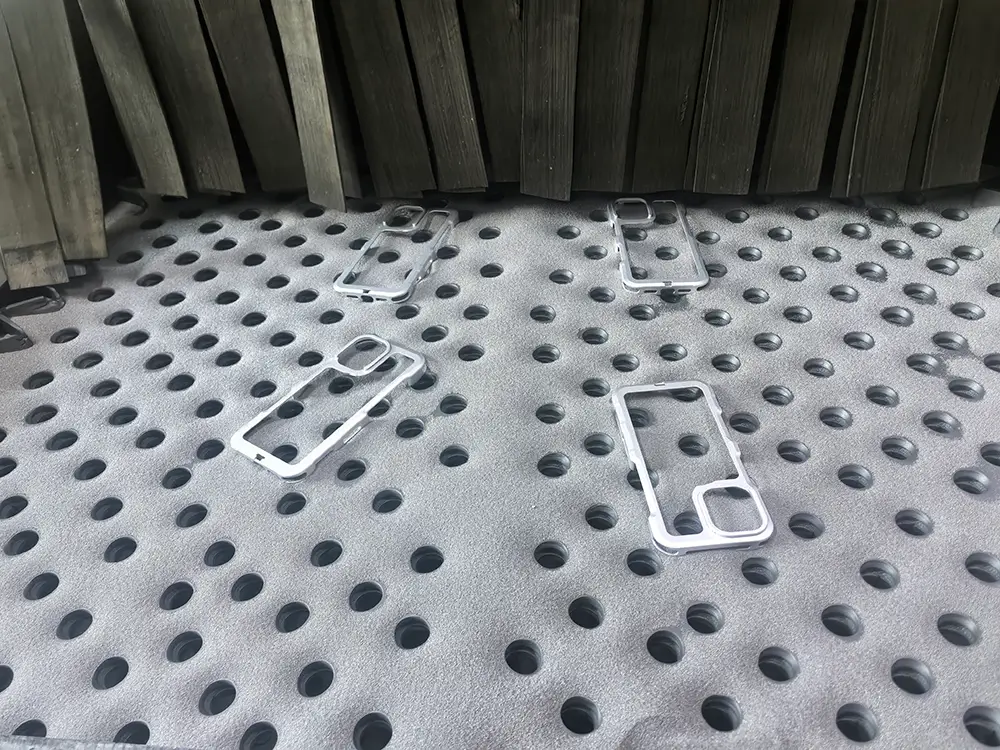
After CNC machining, the housings undergo sandblasting before anodizing. Sandblasting creates a more uniform matte texture and helps reduce the visual contrast between different machined surfaces.
For open-frame components, the different faces, inner openings, corners, and narrow sections need to be considered. Uneven exposure can produce differences in surface texture, especially between easily accessible outer faces and recessed areas.
Consistent blasting conditions and handling across the batch are important when processing 500 pieces. The objective is to achieve a similar surface texture before the parts move to anodizing.
Black Anodizing of 6061 Aluminum
Black anodizing was specified as the final surface finish for this housing. Anodizing forms an oxide layer on the aluminum surface. It provides corrosion resistance and a durable finish while giving the component its specified black appearance. For this project, black anodizing followed the sandblasting process.
Several factors can affect the final appearance of black anodized aluminum:
Material consistency:
Differences in alloy composition and material batches can influence the anodizing response.
Surface preparation:
Uneven blasting or remaining machining marks may become visible after anodizing.
Part positioning:
Contact points used to hold parts during anodizing may leave small rack marks.
Process consistency:
Differences in pretreatment, anodizing, and dyeing conditions can cause color variation between parts.
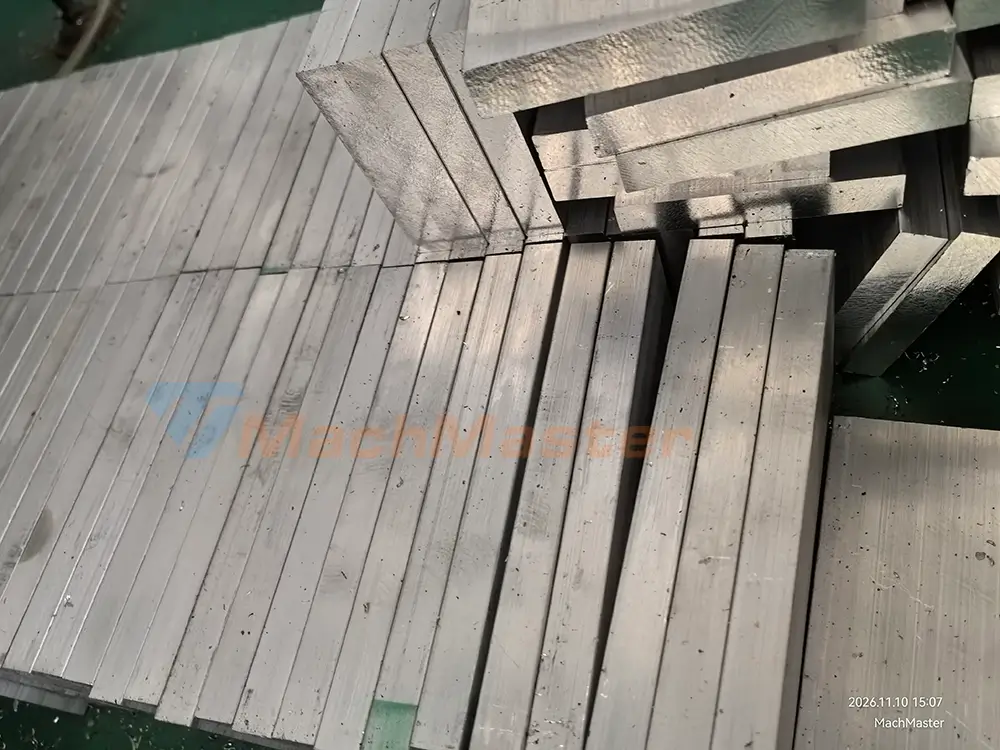
These considerations are particularly relevant for a 500-piece order. Maintaining consistent pretreatment and anodizing conditions helps reduce visible differences across the finished batch. Machmaster completed the black anodizing process in its own anodizing workshop.
Batch Production: 500 Pieces
Producing one acceptable part is different from producing 500 parts with a consistent appearance. For this order, the manufacturing workflow connected CNC machining, deburring and surface preparation, sandblasting, and black anodizing.
- Keeping the frame geometry consistent from part to part.
- Maintaining repeatable clamping and machining conditions.
- Applying consistent edge preparation before finishing.
- Controlling sandblasted surface texture across the batch.
- Checking the anodized appearance for noticeable color or surface differences.
Machining variation and finishing variation can both affect the appearance of the final product.
Typical Quality Checks for This Type of Part
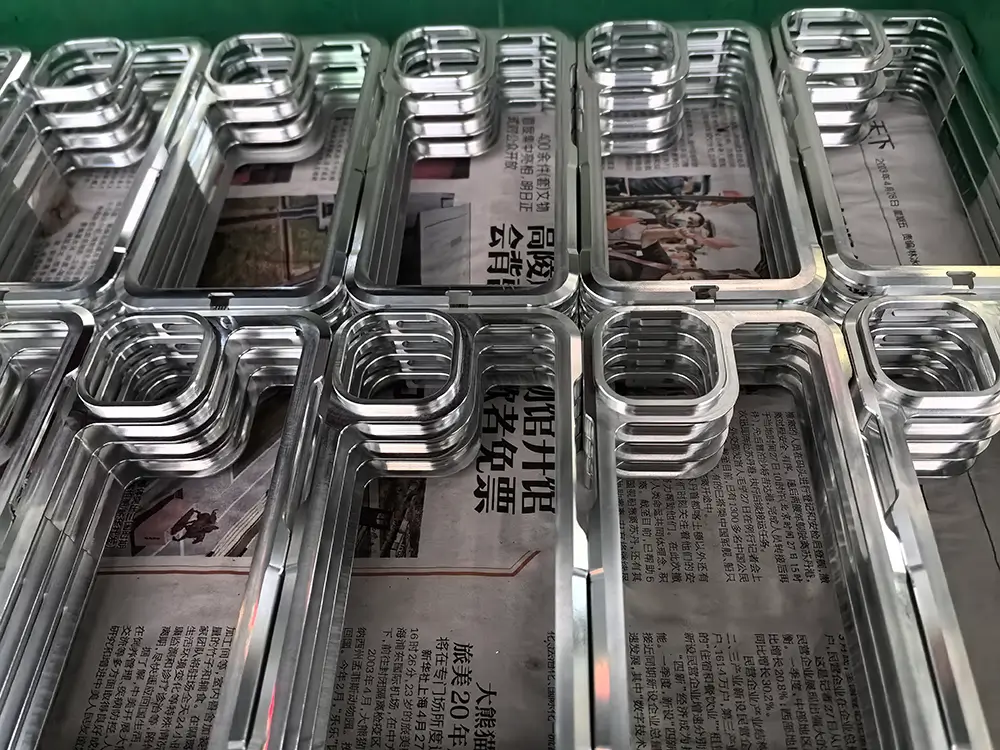
For a CNC machined aluminum housing with an open-frame design, inspection should focus on both geometry and appearance.
| Inspection Area | What to Check |
|---|---|
| Outer Profile | Overall dimensions and frame outline |
| Internal Openings | Opening dimensions and contour consistency |
| Mounting Features | Hole or slot positions and dimensions |
| Frame Sections | Wall condition and visible deformation |
| Machined Edges | Burrs, sharp edges, and edge consistency |
| Surface Finish | Sandblasting uniformity and visible machining marks |
| Anodized Surface | Color consistency, coverage, and visible defects |
The required dimensions and acceptance criteria should follow the customer’s engineering drawing. Actual inspection results and tolerances should only be stated when supported by project records.
Manufacturing Similar Aluminum Housings
This project demonstrates the manufacturing considerations involved in producing an open-frame aluminum component with multiple machined features and a cosmetic surface finish.
For similar parts, the most important factors are not only the choice of aluminum alloy or CNC machining process. Part geometry, workholding, internal corner design, edge preparation, and surface treatment all influence the final result.
Machmaster manufactures custom CNC machined aluminum housings and components, with in-house anodizing capabilities. For a similar project, a 3D CAD model or engineering drawing helps determine the machining approach, achievable features, and suitable surface finish.
Discuss Your Custom Aluminum CNC Machining Project
Send us your 2D drawings or 3D CAD files for a manufacturing review. Our team can review your part geometry, material, machining requirements, and surface finish.